
The winning approach pairs kiosk-based digital payments, checkout cameras, and remote AI-assisted review, since that combination catches most theft attempts without hiring a full-time attendant. Operators running this kind of layered setup often report shrink well under 2%, compared to the 3% to 7% range common in poorly monitored markets. If you only fix one thing this week, turn on your kiosk’s camera and confirm your video vendor keeps a searchable cloud audit log.
TL;DR:
- Most theft in micro markets is significantly reduced by layered security technologies, with under 2% shrink reported through kiosk cameras, AI analytics, and cloud storage.
- Site location and layout choices, such as placing kiosks in visible, high-traffic areas with signage, are crucial for deterrence, especially when combined with accessible monitoring.
- Implementing cashless payment systems greatly enhances security by creating traceable transactions, which are more effective than relying solely on cameras and signage.
- Incident response should follow a clear, written process, including evidence documentation, timely notification, and policy adjustments for recurrent patterns.
- Managed services like Jeeves Vending handle system setup, monitoring, and protocol enforcement, reducing staff workload and minimizing security gaps through upfront assessment and ongoing oversight.
Table of Contents
- Best Practices to Secure Your Micro Market
- Which Security Technologies Actually Stop Theft
- Operations, Monitoring Cadence, and Contract Terms
- Retention Rules and Legal Exposure You Can’t Ignore
- How a Managed Operator Puts Layered Security into Practice
- Employee Training and Protocols for Security Awareness
- Physical Barriers and Layout Design to Reduce Theft
- Incident Response and Recovery Procedures
- Data Privacy and Cybersecurity Measures for Digital Systems
- Access Control Systems: Electronic Locks and Biometric Options
- What the Data Actually Tells Operators to Prioritize
- Get a Managed Micro Market That Handles Security for You
- Sources
- FAQ
Best Practices to Secure Your Micro Market
Site selection is the first security decision you make, and most operators get it wrong. A micro market inside a badge-controlled office lobby or a hotel employee corridor already inherits a layer of access control you didn’t have to pay for. Placing the same setup in an open warehouse dock or an unmonitored public hallway strips that protection away before a single camera goes up.
Layout matters almost as much as location. Checkout should sit where a passerby, a receptionist, or a security guard can glance over and see it, not tucked behind a shelving unit in a back corner. A visible live monitor showing the camera feed in real time works as a deterrent on its own. People behave differently when they can see themselves on a screen next to the register.
Signage does quiet work that technology can’t replace. A clearly posted notice stating the area is under video surveillance and that all transactions are logged reinforces the idea that someone, or something, is watching. Trade guidance on securing micro markets consistently lists visible monitors and signage alongside kiosk cameras as the baseline deterrents that cost the least and pay off the fastest.
Payment policy is where the real leverage sits. Cash transactions leave no trail. Card, mobile wallet, and badge-based payments create a timestamped record tied to every sale, which means every walkout or failed transaction gets flagged automatically instead of vanishing into an unexplained inventory gap. Operator experience backs this up directly: shifting toward system-driven payment controls reduces the need for active physical policing, because the audit trail does the watching for you.
Practical checklist for a new or existing site:
- Confirm the market sits inside a location with some form of existing access control.
- Position the kiosk so checkout is visible from a main walkway or staffed area.
- Post signage naming video surveillance and transaction logging.
- Default to cashless payment and disable cash acceptance where the host allows it.
- Test camera sightlines from the actual customer approach angle, not just from behind the kiosk.
Pro Tip: Walk the market floor as if you were a customer trying to steal something. If you can find a blind spot in under thirty seconds, so can everyone else.
A micro market setup checklist built for facilities teams can help you catch these gaps before install day instead of after the first incident report.
Which Security Technologies Actually Stop Theft
Three technology categories do almost all the heavy lifting: kiosk cameras, AI-enabled analytics, and cloud storage with retrieval tools. Each solves a different piece of the problem.
Kiosk cameras sit at the point of sale and capture every transaction, including the ones that never finish. An abandoned cart or canceled sale triggers footage you can pull later, which turns a vague inventory shortfall into a specific, reviewable event. Camera placement matters here: mount at a height and angle that captures hands and product, not just a face, since face shots rarely resolve a disputed transaction.
AI-enabled analytics change what happens after the camera captures footage. Instead of an employee scrubbing through hours of video, the system assigns risk scores to flagged events and surfaces only the incidents worth a human’s attention. That’s the actual ROI argument for paying more for a smarter system: it’s not about catching more theft, it’s about not burning staff hours watching footage of nothing happening.
Cloud storage decisions come down to three tradeoffs:
- Retention length — how many days of footage stay accessible before they’re overwritten.
- Bandwidth and cost — higher resolution and longer retention both cost more to store and stream.
- Evidence sharing — how easily you can export a clip for a host business, an insurer, or law enforcement.
Cloud-connected systems that pair with proprietary theft-detection services go a step further, categorizing events and delivering a validated incident report instead of raw footage. That distinction, validated report versus raw clip, determines whether you handle incident review in-house with dedicated staff and a service-level agreement, or hand it to a managed vendor built to do exactly that.
Operations, Monitoring Cadence, and Contract Terms
Security only works if someone actually looks at the alerts. A practical triage workflow follows four steps:
- Automated alert — the system flags an abandoned cart, a canceled sale, or an unusual pattern.
- Human validation — a reviewer checks the flagged clip against the transaction log.
- Client notification — the host business gets a summary if the incident is confirmed.
- Remediation — pricing adjustment, restocking correction, or, for repeat cases, a policy change at that site.
Inventory reconciliation ties directly into this loop. Abandoned Cart and Cancelled Sale reports give you a paper trail for every discrepancy between what left the shelf and what got paid for, which turns “we’re missing some snacks” into a specific, investigable event with a timestamp.
Contracts should spell out who owns shrink above a set threshold, what counts as acceptable evidence for a disputed claim, and how fast the operator responds to a reported incident. Clear terms on shared responsibility for shrink let operators hold prices steady while protecting margin, and they head off disputes before they start.
Pro Tip: Put your incident response timeline in writing before you sign a host contract. “We’ll look into it” is not a service level.
Fully managed monitoring frees the host from staffing a review team, while hybrid setups split the load. Either way, a managed kiosk service shifts most of that workload off the facility team’s plate.
Retention Rules and Legal Exposure You Can’t Ignore
Video and transaction records aren’t just a security tool. In some jurisdictions they’re a regulatory requirement. Maryland’s COMAR 10.15.03.40 requires micro market operators to retain surveillance video and make it available to authorities within 24 hours, with a minimum retention window built into the rule.
Even where no such regulation applies, a defensible baseline makes sense: retain 14 to 30 days of synchronized video and transaction logs, and extend that window whenever an incident is under active dispute so evidence doesn’t expire mid-investigation.
Practical safeguards worth building into your policy:
- Restrict video and transaction access to named, logged users.
- Keep a written record of every external request for footage, including law enforcement or health department inquiries.
- Confirm your storage vendor meets the retention minimum for every jurisdiction you operate in, not just your home state.
How a Managed Operator Puts Layered Security into Practice
A managed model works because the security decisions get made once, correctly, instead of piecemeal by whoever installs the machine. Jeeves Vending installs micro markets at no upfront cost to the host business, which means the site assessment, camera placement, and signage decisions happen up front as part of the install, not as an afterthought after the first shrink report.
That model reduces risk at several touchpoints:
- Setup — location and layout get evaluated for sightlines and access control before the kiosk goes in.
- Monitoring — remote stock tracking flags depletion and payment issues without a host employee checking in daily.
- Maintenance — scheduled restocking keeps the market’s physical state consistent, which itself reduces the disorder that opportunistic theft thrives on.
- Reconciliation — incident reporting ties transaction data back to inventory counts.
Whatever vendor you work with, ask directly about audit logs, Abandoned Cart reporting, video retention windows, and written incident response timelines. Vague answers on any of those four points are a warning sign.
Employee Training and Protocols for Security Awareness
Technology catches theft after it happens. Training prevents the kind of casual, opportunistic theft that never trips a sensor in the first place, because it usually involves someone who has legitimate access to the space, like a delivery driver, a cleaning crew member, or an employee restocking the machine.
Anyone with a key, a badge, or restocking access needs a short, specific protocol: what to do if a kiosk camera looks obstructed, how to report a jammed or bypassed lock, and who to notify if inventory counts don’t match delivery records. This doesn’t require a formal security course. A one-page checklist reviewed at onboarding and refreshed annually covers most of it.
The most overlooked training gap involves the host business’s own staff, not the vending operator’s. Front desk employees, office managers, and building security often notice suspicious activity around a micro market long before a camera flags it. Make sure they know what to report and who to call. A quick heads-up from a receptionist who noticed someone loitering near the kiosk after hours is worth more than a week of raw footage nobody reviewed.
Documented protocols also matter for liability. If a dispute ever escalates, whether that’s an employee accused of theft or a customer disputing a charge, having a written, consistently applied training record protects both the operator and the host business. Ad hoc, undocumented practices tend to fall apart under scrutiny exactly when you need them to hold up.
Physical Barriers and Layout Design to Reduce Theft
Locks and shelving choices do more security work than most operators expect. Refrigerated units with locking doors that only release after a validated payment closes off one of the most common theft methods: grabbing product before the transaction completes. Open shelving without that lock sequence relies entirely on camera deterrence and honesty, which works most of the time but not always.
Shelf spacing affects sightlines more than people realize. Tall, dense shelving units create blind spots between rows, especially near the back of the market away from the checkout kiosk. Lower profile fixtures, or shelving arranged in an open grid rather than a maze, keep every aisle visible from more than one angle. That single design choice removes the cover that opportunistic theft depends on.

Kiosk placement itself is a physical barrier decision. A checkout station positioned near the market’s only entrance and exit forces every customer to pass it on the way out, which makes bypassing it obvious rather than easy. A kiosk tucked to one side, with a second exit path elsewhere in the room, defeats a lot of the deterrent value even with a great camera system behind it.
None of this requires expensive construction. Most of it comes down to furniture arrangement and lock selection decided during install, which is exactly why layout planning belongs in the setup conversation, not as a retrofit after the first incident.
Incident Response and Recovery Procedures
A confirmed theft or shrink event needs a defined sequence, not an improvised reaction. The moment a flagged incident gets validated by a human reviewer, someone should be responsible for three things: documenting the evidence, notifying the host business if the contract requires it, and deciding whether the incident warrants a policy change at that specific site.
Documentation means more than saving a video clip. Pair the footage with the transaction log entry, the timestamp, and a short written note describing what happened. That combination holds up far better in a dispute than a video clip alone, since it ties the visual evidence to the exact record of what the system logged as a canceled sale or an abandoned cart.
Recovery looks different depending on the pattern. A single isolated incident might need nothing beyond a note in the file. A repeated pattern at one site, three flagged incidents in a month at the same location, for example, usually calls for a layout change, additional signage, or a conversation with the host about access control in that area. Treating every incident as a one-off misses the sites where the problem is systemic rather than random.
Recovery timelines should be part of the contract, not decided case by case. A host business deserves to know, before anything goes wrong, how many days it takes to get a validated incident report after something is flagged. Vague turnaround expectations are one of the most common sources of friction between operators and host businesses after a real incident occurs.
Data Privacy and Cybersecurity Measures for Digital Systems
Every camera feed, payment terminal, and inventory system in a micro market runs on a network connection, and that connection is now part of your security perimeter whether you planned for it or not. A kiosk that accepts card payments has to meet the same baseline expectations as any other point-of-sale system: encrypted transaction data, no storage of full card numbers on local hardware, and a payment processor that handles compliance with card network standards.
Cloud-stored video and transaction logs carry their own exposure. Access should be restricted to named accounts, not a shared login everyone on the team uses, and every access event, who looked at what footage, when, should be logged automatically rather than left to memory. This isn’t just good practice. It’s often the difference between a defensible response and a liability problem if footage ever gets subpoenaed or disputed in a chargeback claim.
Software updates matter more here than most operators assume. A kiosk running outdated firmware on its payment terminal or camera system is a soft target, not because thieves are hacking vending machines, but because unpatched systems tend to fail in ways that create blind spots, from camera feeds that silently stop recording to payment logs that don’t sync properly with inventory data. Set a recurring schedule to confirm every connected device, kiosk, camera, and sensor, is running current software rather than assuming it happened automatically.
Access Control Systems: Electronic Locks and Biometric Options
Access control decides who can physically reach the market’s inventory outside of normal checkout, and it operates on two separate levels: who can enter the room or area, and who can open the machine itself for restocking or service.
Electronic locks tied to a badge system solve the first level cleanly. Instead of a shared physical key that gets copied or lost, a badge-based lock logs every entry with a timestamp and an identity, which turns “someone got into the storage room after hours” into a specific, answerable question. Many office and campus locations already have this infrastructure in place, so the smartest move is placing the micro market inside that existing access-controlled zone rather than building a separate system from scratch.
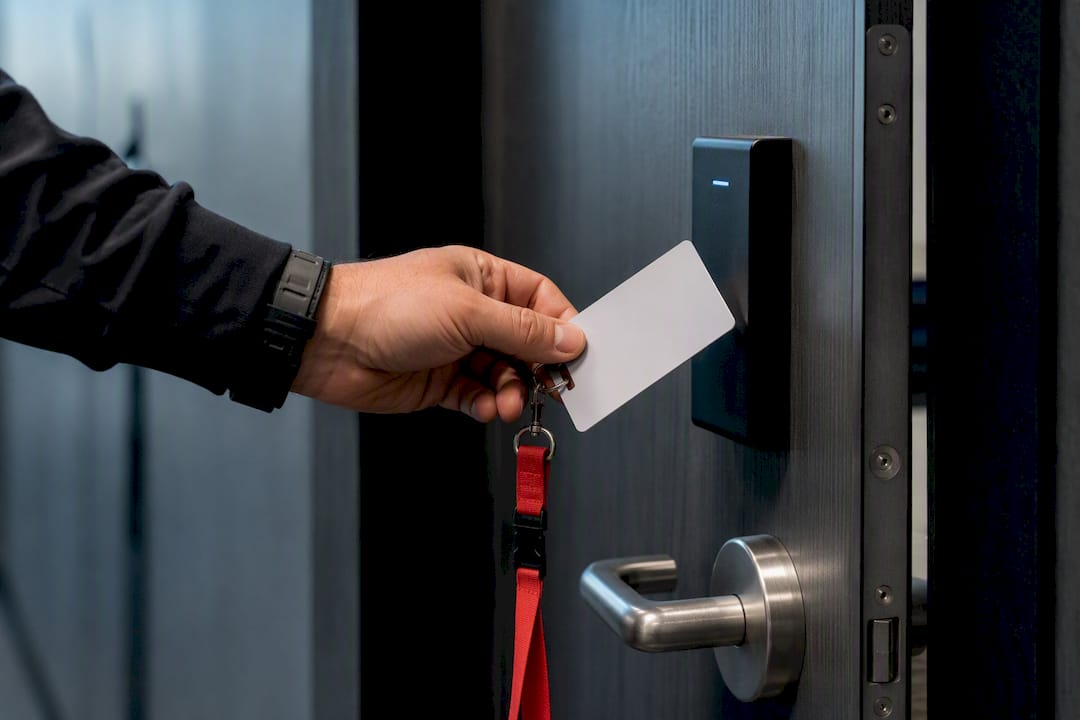
The second level, restocking and service access, benefits from a tighter control than a shared key or code. Biometric access, a fingerprint or similar check tied to a specific restocking technician, removes the risk of a shared code circulating beyond the people who should have it. Not every operator needs this level of control, but for high-value inventory, gourmet food items or premium beverage selections, it closes a gap that a simple key never addressed.
Neither system replaces the camera and payment audit trail already covering the customer side of the market. Access control protects the supply side. It’s the part of the security stack most often skipped because it’s invisible to the end customer, and also the part that matters most when a shrink pattern turns out to be an inside job rather than opportunistic customer theft.
What the Data Actually Tells Operators to Prioritize
Most of the theft-prevention advice circulating in this industry treats every tactic as equally important: get cameras, add signage, train staff, lock things down. That framing wastes operator attention. The evidence points to a clear hierarchy, and it starts with the payment system, not the camera.
A cashless default does more to stop shrink than any camera upgrade, because it converts every transaction into a data point instead of an anonymous event. Cameras and AI review matter most as the layer that catches what the payment system can’t, walkouts, tampering, and disputed abandoned carts, not as the primary defense on their own.
The conventional wisdom that heavier surveillance solves theft misses where the actual ROI sits. Risk-scoring systems earn their cost by cutting the hours a human spends reviewing footage, not by catching more incidents than a basic camera would. If you’re evaluating a vendor, ask about false-positive rates before you ask about camera resolution. A system that flags fifty non-events a week for every real incident isn’t saving anyone time.
Prioritize in this order: cashless payment first, kiosk cameras with cloud audit logs second, AI-assisted review third if your volume justifies the cost. Skip straight to advanced analytics before fixing payment policy, and you’re paying for smarter surveillance of a problem your payment system should have already solved.
— Gary
Get a Managed Micro Market That Handles Security for You
Running the full playbook yourself, site assessment, camera placement, cloud retention, contract language, takes real time most facility managers don’t have. Jeeves Vending installs and manages custom micro markets at no cost to the host business, building the layered approach covered above directly into the setup instead of leaving you to assemble it piece by piece.
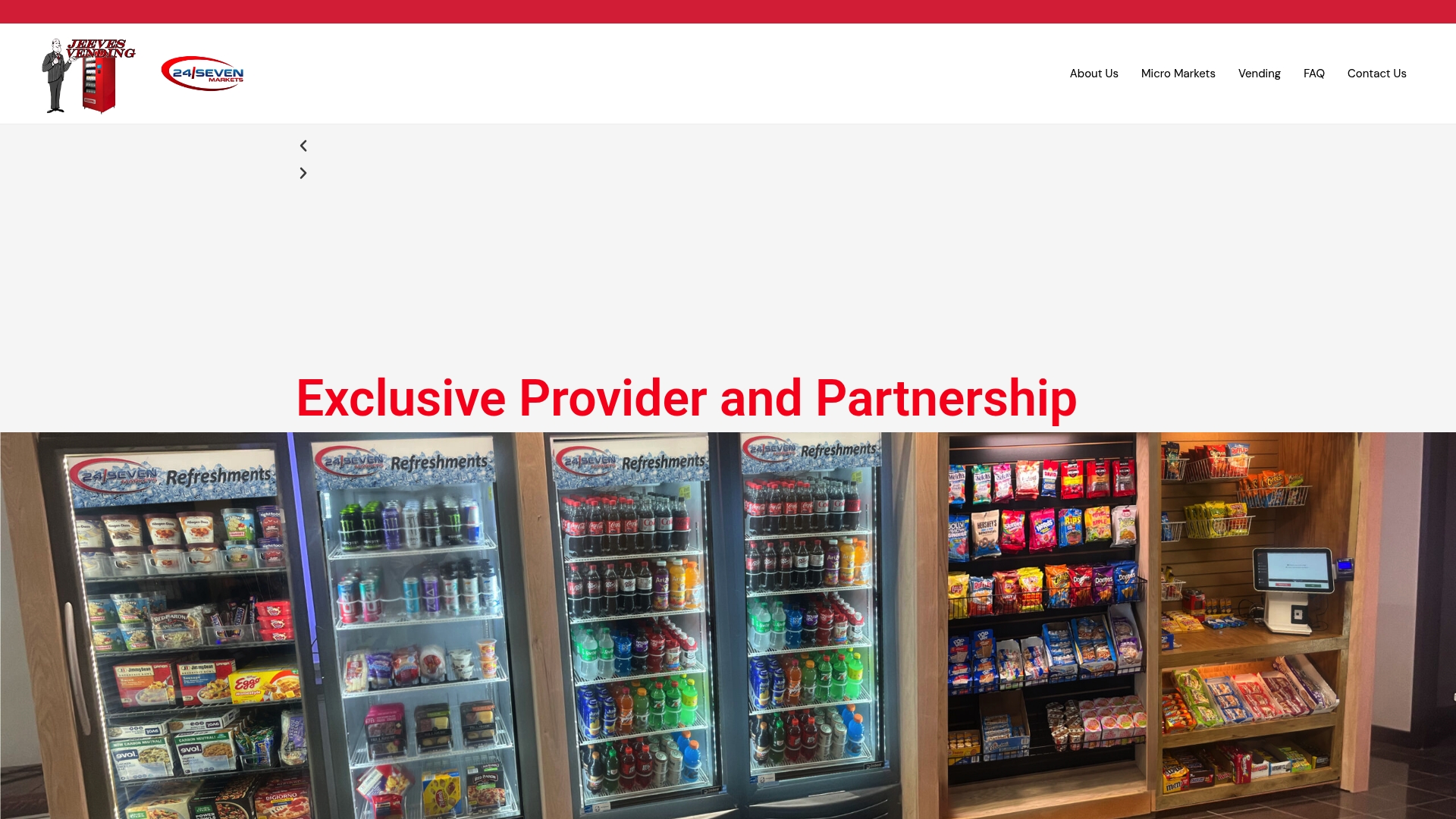
Typical installs include kiosk checkout with camera coverage, remote stock monitoring so shortages and irregularities get flagged automatically, and scheduled restocking that keeps the space orderly. Contract terms ideally spell out who handles what if an incident comes up, helping avoid disputes over shrink responsibility after something has gone wrong. If you manage an office, gym, hospital, or school breakroom and want a market that comes with security decisions already made, request a site assessment and see what a properly secured setup looks like at your location.
Sources
- Stepping up security
- Managing theft and security in micro markets
- Md. Code Regs. 10.15.03.40 – Micro Markets | LII
FAQ
What Is Considered a Micro Market?
A micro market is a self-checkout retail setup, usually inside an office, gym, or campus, offering snacks, drinks, and fresh food through open shelving and a kiosk register instead of vending machine slots. Public health guidance in jurisdictions like Los Angeles County treats them as closed-location, self-checkout food retail requiring specific surveillance and equipment standards.
What Is the Best Anti-Theft Approach for a Micro Market?
No single tool solves it alone. The strongest results come from combining a cashless payment default, kiosk checkout cameras, and AI-assisted review that flags abandoned carts and canceled sales for human validation.
How Much Does a Micro Market Cost to Set Up?
Under a managed model like Jeeves Vending’s, host businesses pay nothing upfront. Installation, equipment, and maintenance are provided at no cost, with revenue coming from the products purchased by employees or visitors at the market.
How Long Should I Keep Micro Market Surveillance Footage?
A defensible baseline is 14 to 30 days of synchronized video and transaction logs, extended whenever an incident is under investigation. Some states, including Maryland, set specific minimums and require footage to be available to authorities within a set timeframe.