
A micro market space is an unattended small retail area, open shelving and refrigerated cases paired with a self-checkout kiosk, that replaces or supplements a bank of vending machines. Because shoppers browse open displays instead of punching a code, micro markets support far more SKUs and typically post a higher average ticket than traditional vending. The sections below walk through site selection, equipment and permits, layout, operations, and the numbers that justify the investment.
TL;DR:
- Choose open cases for controlled sites with steady staff oversight; use a locked smart cooler where visitor turnover raises shrink risk.
- Under 100 square feet, use one shelving run and a compact cooler; 150 to 250 square feet can support 150 to 200 SKUs.
- Micro market transactions average about $3.02, compared with $2.01 for vending, with fresh food and broader assortment driving the difference.
- Operators using weight based sensors and locked coolers report shrink falling from high single digits toward low single digits, unlike camera only setups.
- Local health departments generally require an equipment list, refrigeration and handwashing locations, and an operations plan; potentially hazardous foods must stay at or below 41°F.
Table of Contents
- Best Locations and Site Selection for a Micro Market Space
- What You Need to Install a Micro Market: Equipment, Footprint, and Permits
- Designing a Micro Market for Small, Medium, and Large Footprints
- Operations and Loss Prevention: Keeping a Micro Market Running
- The Business Case: Ticket Size, Growth, and ROI Signals
- How Jeeves Vending Installs and Supports a Micro Market
- Open Markets vs. Smart Coolers: An Operator’s Rule of Thumb
- Get a Micro Market Site Survey Started
- FAQ
- Sources
Best Locations and Site Selection for a Micro Market Space
Not every room qualifies as a good micro market location. The strongest performers share three traits: steady foot traffic, controlled access, and predictable operating hours. Break rooms in office buildings, hospital staff lounges, and campus commons tend to outperform open lobbies because the population is known and the space is monitored by employees or security staff for most of the day.
Access control also shapes which refrigeration format makes sense. A site with cameras, badge readers, and a captive audience, like a corporate office or a hospital unit, can usually support an open-format market with standard refrigerated cases. A transit hub, a 24-hour warehouse floor, or any location with high visitor turnover carries more shrink exposure. That is where a locked AI smart cooler often replaces open shelving for the refrigerated portion of the market.
Before committing space, walk the site with this checklist:
- Confirm a dedicated 110-120V electrical circuit near the planned footprint, separate from other heavy equipment.
- Check sight lines from common walkways so the market is visible but not blocking emergency exits.
- Estimate daily foot traffic by headcount and shift schedule, not just square footage available.
- Verify a handwashing sink or food-prep area sits within the required proximity if fresh food will be stocked.
- Note existing camera coverage versus gaps that will need added surveillance.
Sites that fail two or more of these checks usually need a smart-cooler hybrid rather than a fully open market.
What You Need to Install a Micro Market: Equipment, Footprint, and Permits
A functioning micro market space combines hardware, software, and paperwork. Before budgeting square footage, confirm these pieces are accounted for:
- Self-checkout kiosk: touchscreen payment terminal supporting card, mobile pay, and loyalty integration.
- Refrigeration units: commercial-grade cases built to ANSI standards, with self-locking doors and temperature lockouts above 41°F for potentially hazardous foods, per LA County’s micro-market guidance.
- Open shelving or a hybrid smart cooler: shelving for shelf-stable snacks, a smart cooler where shrink risk is higher.
- Surveillance system: continuous video coverage of the retail area, a baseline requirement in most jurisdictions.
- POS and inventory software: tracks sales, triggers restock alerts, and supports remote monitoring of refrigeration uptime.
Footprint varies by site, but LA County’s standard guidance caps a typical micro-market footprint at around 300 square feet, a useful planning benchmark even outside that jurisdiction. Smaller lobby formats can work in under 100 square feet when paired with a smart cooler instead of open cases.
On the utility side, plan for a dedicated electrical circuit, floor drains near any ice or beverage equipment, and clear service access so a technician can reach the back of refrigeration units without rearranging furniture.
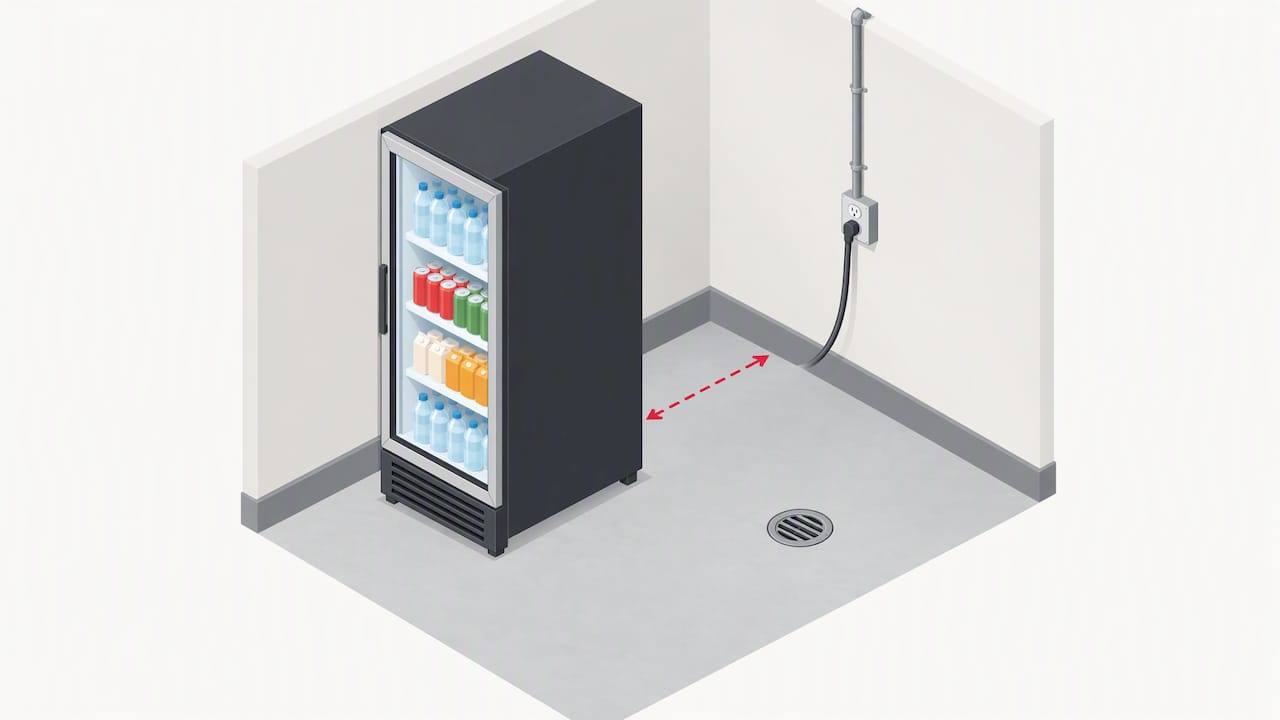
Permitting runs through the local health department and generally asks for an equipment make-and-model list, the location of refrigeration and handwash facilities, and a written operations plan naming who restocks, who responds to equipment failures, and how staff are trained. King County’s plan review cover sheet lays out this documentation in detail, and many departments offer standard-plan approval so a design already approved at one site can be repeated at others without a full review each time.
Designing a Micro Market for Small, Medium, and Large Footprints
Layout decisions matter as much as square footage. A lobby micro market under 100 square feet usually works best as a single run of shelving plus one compact cooler, stocked with grab-and-go snacks and beverages rather than fresh meals. A break room footprint in the 150-250 square foot range can support 150 to 200 SKUs, splitting the mix between shelf-stable snacks and a fresh case for sandwiches, salads, and yogurt. A full market at 300 square feet can add a dedicated coffee station and a wider fresh-food section.
SKU mix should follow the audience. A gym or hospital staff area tends to reward a protein and fresh-food emphasis, while a warehouse break room with shorter visit windows often does better snack-heavy with fast-grab items near the front.
A few layout principles hold across sizes:
- Place the kiosk near the exit, not the entrance, so browsing happens before checkout.
- Keep high-margin fresh items at eye level and near the front of the walking path.
- Leave at least 36 inches of aisle clearance to avoid congestion during shift-change rushes.
- Use a hybrid smart cooler instead of open cases whenever the site has unpredictable visitor traffic or thinner staff oversight.
Pro Tip: Put the highest-turnover snack category directly across from the kiosk screen, it catches the eye during the few seconds a shopper waits to pay.
Operations and Loss Prevention: Keeping a Micro Market Running
Day-to-day operations run on a route schedule: a technician restocks on a set cadence, checks expiration dates, and performs a quick cleaning and inspection pass each visit. Most sites designate one on-site contact, often a facilities coordinator, who can flag equipment issues between scheduled stops.
Loss prevention in an unattended format depends on layered tools rather than any single fix:
- Continuous video surveillance covering the full retail footprint.
- Clear signage reminding shoppers that the area is monitored and purchases are recorded.
- Periodic inventory audits comparing physical counts against POS sales data.
- Embedded intelligence, including weight-based shelf sensors and auto-locking smart coolers, that flags discrepancies without per-item tagging.
Weight-based sensors and locked coolers can meaningfully reduce shrink compared with camera-only setups, and operators who adopt that embedded intelligence report shrink moving from the high single digits toward low single digits once the equipment is in place.
Refrigeration uptime gets its own layer of monitoring. IoT-connected units can alert a service team the moment a case drifts out of safe range, and most commercial systems automatically lock the door and halt sales if the temperature fails to recover, a safeguard built around the 41°F threshold public health guidance requires for potentially hazardous foods. Recordkeeping from these alerts, along with cleaning logs and incident reports, is exactly what inspectors ask to see during a routine health department visit.
The Business Case: Ticket Size, Growth, and ROI Signals
The financial case for a micro market space rests on a simple comparison: shoppers spend more per visit than they do at a vending machine. Industry data puts the average micro market transaction near $3.02, compared with $2.01 for vending, a gap driven largely by the wider assortment and fresh-food options open formats allow.
That same reporting shows micro markets continuing to add locations through 2025 and into 2026, with smart coolers emerging as the fastest-growing adjacent format, expanding the format into sites that couldn’t previously support an open market.
A few patterns show up consistently in the data:
- Higher-margin fresh and protein SKUs account for a growing share of the ticket increase.
- Cashless and mobile payment adoption correlates with faster checkout and repeat visits.
- Smart coolers extend micro market viability into higher-shrink-risk locations like hospitals and transit corridors.
For a facility, the ROI case extends beyond raw transaction data: offering a well-stocked, fresh-food-forward break area is frequently cited as a factor in workplace satisfaction, alongside the direct revenue signal from higher per-visit spend.
How Jeeves Vending Installs and Supports a Micro Market
Getting a micro market space running typically follows a set sequence: a site survey to confirm power, drainage, and layout; permit support to help assemble the documentation a health department plan review asks for; equipment installation; initial stocking; and a short staff orientation so an on-site contact knows who to call if something goes wrong.
Our installation and service model is built around removing cost and complexity from that process:
- Equipment installation and the custom micro-market build come at no upfront cost to the host business.
- Ongoing restocking and maintenance run on a managed schedule, so facility staff aren’t doing route work themselves.
- Remote monitoring tracks refrigeration uptime and flags issues before they become service calls.
- We work directly with facility teams on permit documentation and plan review submissions where local health departments require them.
That combination lets a facility manager focus on running the building rather than running a retail operation.
Open Markets vs. Smart Coolers: An Operator’s Rule of Thumb
My rule of thumb: if the site has steady staff oversight and low visitor churn, open shelving wins on experience and SKU breadth. If access is loose or turnover is high, a smart cooler trades a little browsing freedom for materially lower shrink and permit friction. For most mixed-use sites, a managed hybrid, open snacks plus a locked cooler for perishables, lands the best balance.
— Gary
Get a Micro Market Site Survey Started
A micro market space costs nothing upfront when we build and install it: no equipment purchase, no lease, just a managed system stocked and maintained on your schedule. We handle the health department documentation, the refrigeration monitoring, and the restocking routes so your team never has to. Beyond the market itself, pairing it with a bean-to-cup setup like the options D&K Bean and Leaf curates for offices, or an occasional catered event from a partner like Zio Al’s, rounds out a break room without adding to your workload.
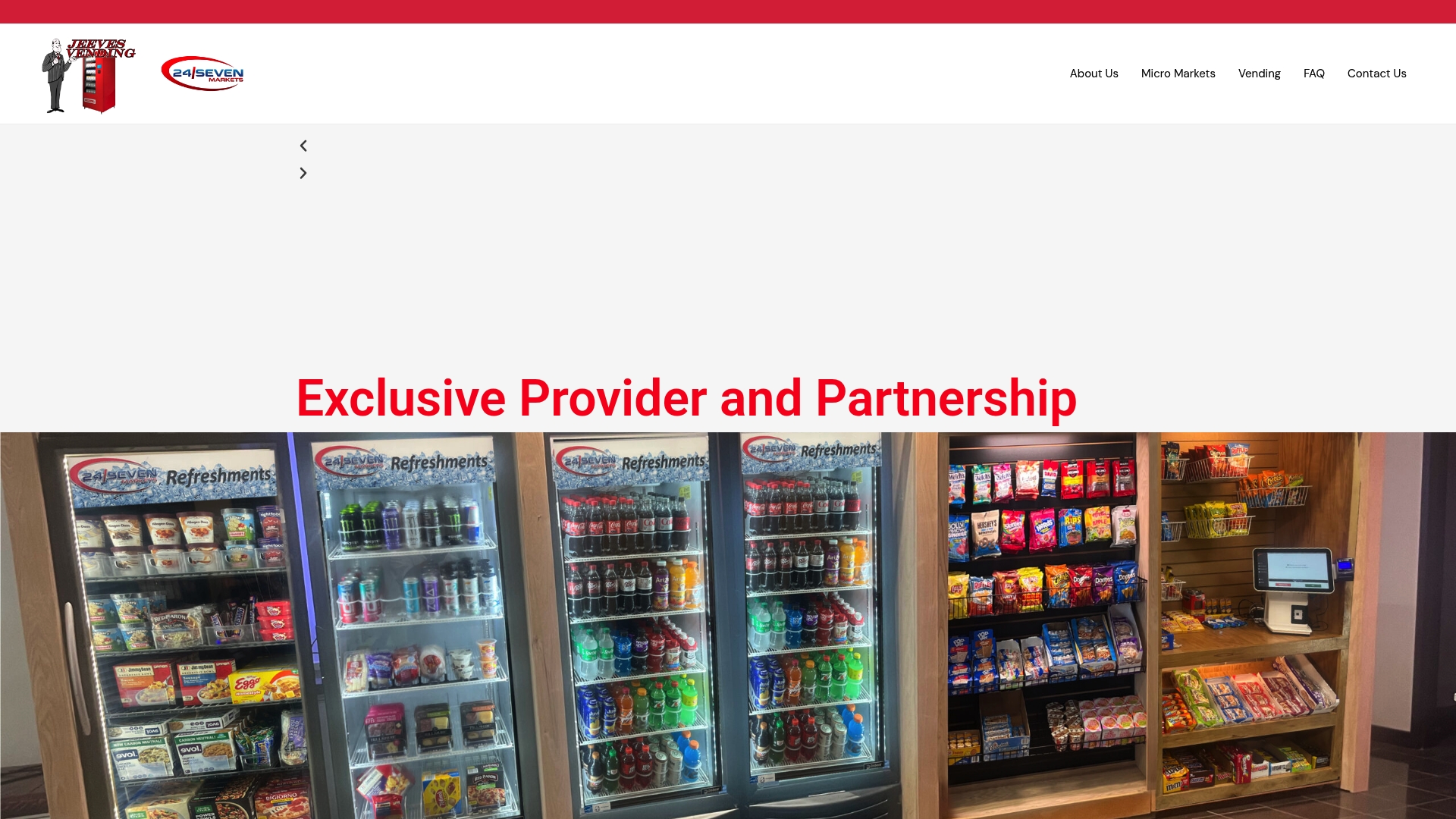
Ready to see what fits your space? Request a custom micro-market survey and quote and we’ll walk the site with you.
FAQ
What does micro market mean?
A micro market is an unattended small retail space with open shelving, refrigerated cases, and a self-checkout kiosk, built to serve a captive population like an office or hospital floor. It differs from vending in that shoppers browse a wider assortment rather than selecting from machine columns.
Is owning a vending machine a profitable business in 2026?
Vending can generate steady income, but industry data shows micro markets post higher average transactions than vending, largely due to broader product selection. Profitability depends heavily on location traffic, product mix, and how well shrink is controlled.
How much does a micro market vending setup cost?
Costs vary by provider and equipment scope, and pricing for a custom build is typically provided after a site survey. We install and manage micro-market equipment with revenue coming from product sales rather than fees charged to the site.
Can you give an example of a micro market?
A typical example is an office break room outfitted with open shelving for snacks, a refrigerated case for sandwiches and beverages, and a self-checkout kiosk accepting card and mobile payment. Hospital staff lounges and campus commons follow the same basic format, often scaled to a 150 to 300 square foot footprint.
Sources
- Guidelines and Standard Plan Approval and Frequently Asked Questions (FAQ’s) — Los Angeles County Department of Public Health
- Micro-Market (Unattended Retail) Plan Review Submittal Cover Sheet — King County
- Micropayment Trends Report 2026 — Cantaloupe
- Shekel