
Hospital vending is defined as a critical support service that must maintain constant product availability across a 24/7 facility serving patients, visitors, and staff on rotating shifts. Why hospital vending requires fast restocking comes down to one fact: demand never stops, and an empty machine in a hospital is not a minor inconvenience. It is a failure of operational continuity. Unlike corporate office vending, which tolerates a weekly restock cycle, hospital environments generate intense, unpredictable demand across multiple zones at all hours. Real-time telemetry and large-capacity machines are now the baseline standard for any serious hospital vending program.
Why does hospital usage pattern impact vending restocking frequency?
Hospital demand is not uniform. It spikes sharply during shift changes, visiting hours, and overnight stretches when cafeterias are closed. These peaks create consumption patterns that no weekly restock schedule can reliably cover.
High-volume hospital placements require 2–3 restocking visits per week. Staff break rooms and emergency waiting areas have the highest turnover. That frequency is roughly two to three times what a typical corporate office requires. The gap reflects a fundamental difference in how hospitals operate, not just how many people pass through.
Three distinct user groups drive this demand, and each one behaves differently:
- Clinical staff on shift rotations rely on vending during breaks that fall at irregular hours, often between midnight and 6 a.m. when no other food service is available. A stockout at 3 a.m. means a nurse goes without a meal.
- Patients and their families use lobby and floor vending for comfort items, snacks, and beverages during long waits. Their purchasing is emotionally driven and time-sensitive.
- Administrative and support staff follow more predictable schedules but still generate consistent mid-morning and mid-afternoon demand.
Each group requires a different product mix. A machine stocked for clinical staff needs high-protein snacks and caffeinated beverages. A lobby machine needs a broader variety including comfort foods and bottled water. Restocking the wrong products at the wrong location is as costly as not restocking at all. Tailoring inventory by zone is not optional. It is the difference between a machine that earns revenue and one that collects complaints.
What operational and technological approaches enable fast restocking and high uptime?
Speed in restocking starts before a technician ever enters the building. The technology behind the machine determines how quickly a problem is identified and how efficiently it is resolved.
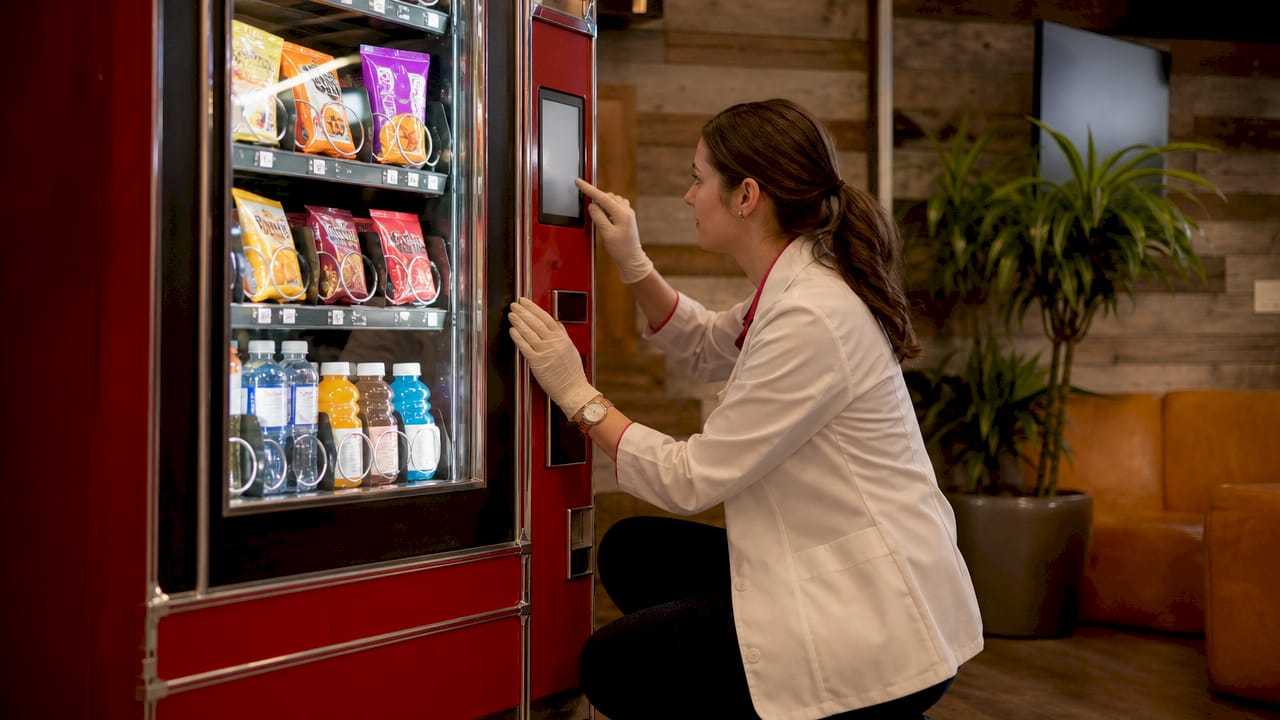
Smart vending systems use real-time telemetry and cloud-based monitoring to track inventory at the individual SKU level. When a specific item drops below a set threshold, the system flags it automatically. That proactive alert replaces reactive restocking, where a technician discovers an empty slot only after arriving on site. By 2026, this level of monitoring is an industry standard for U.S. hospital vending programs.
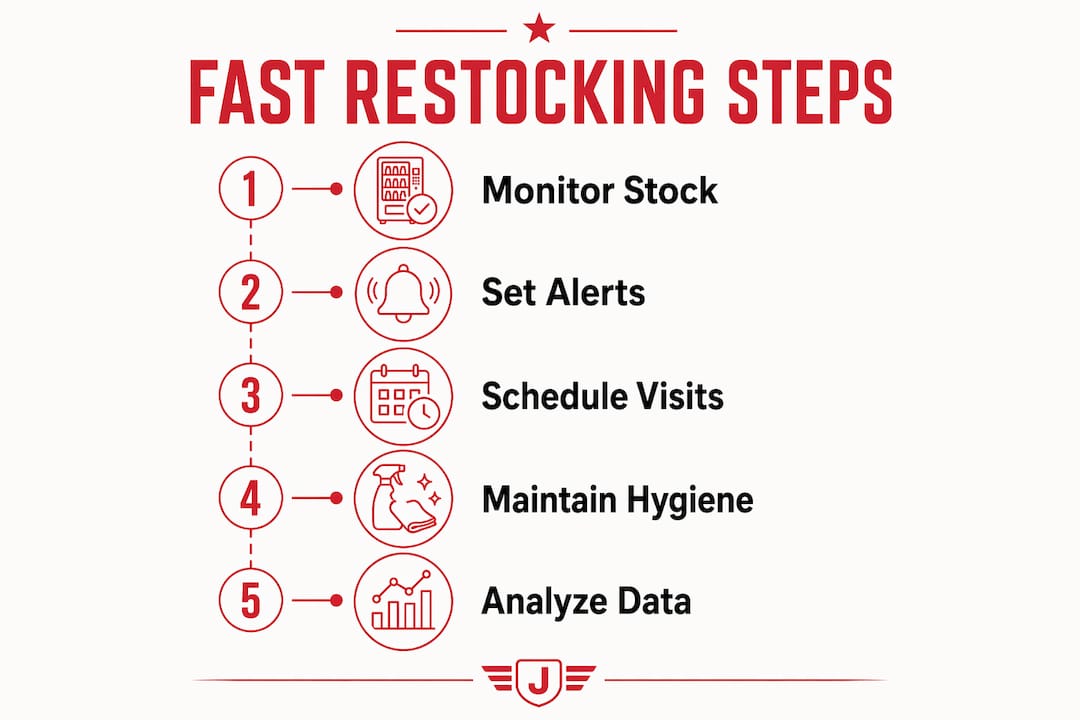
Machine capacity is the second major factor. Large-capacity units hold up to 384 products. That volume reduces how often a technician needs to enter a clinical area. Fewer visits mean less disruption to patients and staff, and a lower risk of hygiene breaches in sensitive zones.
Key operational practices that support fast, efficient restocking include:
- Route scheduling aligned with hospital rhythms. Restocking is most effective when scheduled mid-morning between 9 and 11 a.m. or mid-afternoon, avoiding early morning and late evening shift changes.
- Cashless and contactless payment systems. Cashless payment methods reduce transaction friction and support hygiene compliance in clinical areas. They also reduce machine downtime caused by bill jams or coin mechanism failures.
- Pre-loaded route data. Technicians who arrive with a precise list of what each machine needs to complete their visits faster and with fewer return trips.
- Redundant machine placement. Positioning two machines in high-traffic areas means one can cover demand if the other requires maintenance.
Pro Tip: Set telemetry alerts at 30% remaining stock rather than waiting for a machine to hit empty. That buffer gives your service team enough lead time to restock before any product actually runs out.
Why is hygiene and minimal disruption critical in hospital vending restocking?
Restocking a vending machine in a hospital is not the same as restocking one in an office lobby. The environment carries infection control requirements that directly affect how, when, and who performs the work.
Vendor badges and health clearances are mandatory before route technicians begin restocking assignments. Security badge access protocols protect sensitive clinical zones from unauthorized entry. These requirements are not bureaucratic friction. They are the minimum standard for operating inside a healthcare facility. Any vending provider that cannot meet them should not be servicing hospital accounts.
Scheduling restocks outside peak traffic periods protects both patients and staff. A technician restocking a machine in a busy ICU corridor during morning rounds creates real operational problems. Mid-morning and mid-afternoon windows, after the rush of shift handovers, are the accepted standard for minimizing that disruption.
Machine hygiene is a direct extension of the facility’s infection control program. Touchscreens, payment terminals, and product dispensing areas require regular cleaning with hospital-grade disinfectants. A machine that looks dirty signals neglect to every patient and visitor who walks past it. That perception affects satisfaction scores, and in healthcare settings, satisfaction scores carry financial consequences.
Pro Tip: Build a machine cleaning log into every restock visit. A dated record of cleaning activity protects your facility during compliance audits and demonstrates accountability to hospital administration.
How does fast restocking improve patient and staff satisfaction and hospital revenue?
Operational efficiency in vending translates directly into measurable outcomes for the facility. The connection between a stocked machine and staff morale is not abstract.
Regular restocking reduces complaints from staff and visitors, improves morale, and supports high-pressure healthcare environments by providing reliable access to nourishment. A nurse who can grab a meal during a 12-hour shift without leaving the floor is a more focused, less fatigued caregiver. That is a patient safety argument, not just a convenience argument.
Smart vending analytics allow administrators to track inventory, reduce expired stock, and align product mix with hospital wellness and nutrition policies. That data capability turns a vending machine from a passive revenue source into an actively managed asset. Administrators who use it can cut waste, increase sales per visit, and demonstrate compliance with nutritional guidelines.
The revenue impact of stockouts is also direct. An empty machine earns nothing. A machine that runs out of its top three selling items loses a significant share of its potential daily revenue, even if other products remain available. Fast restocking closes that gap.
| Outcome | Impact of Fast Restocking |
|---|---|
| Staff morale | Reliable food access during long shifts reduces fatigue and frustration |
| Visitor satisfaction | Stocked lobby machines reduce complaints during stressful wait times |
| Revenue per machine | Fewer stockouts mean higher daily transaction volume |
| Compliance | Aligned product mix supports hospital wellness and nutrition policies |
| Infection control | Scheduled restocks reduce unauthorized access to clinical zones |
Key Takeaways
Hospital vending requires fast restocking because 24/7 demand, diverse user groups, and strict hygiene standards make slow replenishment a direct threat to operational continuity and revenue.
| Point | Details |
|---|---|
| Restock frequency matters | High-volume hospital zones need 2–3 visits per week, not the standard weekly cycle. |
| Technology drives speed | Real-time telemetry at the SKU level prevents stockouts before they happen. |
| Machine capacity reduces disruption | Units holding up to 384 products cut intrusions into clinical areas. |
| Scheduling protects operations | Mid-morning and mid-afternoon restocks avoid shift-change disruptions. |
| Hygiene compliance is non-negotiable | Badge access, health clearances, and cleaning logs are required in hospital settings. |
What I have learned from watching hospital vending programs succeed and fail
The facilities that get hospital vending right share one habit: they treat the vending program like a clinical service, not a passive amenity. The ones that struggle treat it like a set-and-forget installation.
I have seen administrators sign contracts with providers who promise weekly restocking and then wonder why their break rooms are generating complaints by wednesday. The math is simple. A hospital break room serving three shifts of clinical staff will empty a standard machine in three to four days. Weekly restocking is not a service level. It is a liability.
The technology piece is often misunderstood. Telemetry is not a luxury upgrade. It is the mechanism that makes fast restocking possible without overstaffing a route. A provider without real-time monitoring is essentially guessing. That guesswork shows up in stockouts, expired products, and machines that sit half-empty because the wrong items were loaded.
The coordination piece is the one most administrators underestimate. Getting a vending technician badged, cleared, and scheduled around hospital security protocols takes time upfront. Facilities that invest in that setup process early avoid the constant friction of ad hoc access requests. The providers who do this well treat the hospital’s security team as a partner, not an obstacle.
My honest recommendation: before you sign any vending agreement, ask the provider to show you their telemetry dashboard and their average response time to a stockout alert. If they cannot answer both questions with specifics, the restocking speed they promise on paper will not show up in practice.
— Gary
Jeevesvending’s approach to hospital vending restocking
Hospital vending programs in the Dallas-Denton region have specific demands that generic providers consistently underserve. Jeevesvending addresses those demands directly.
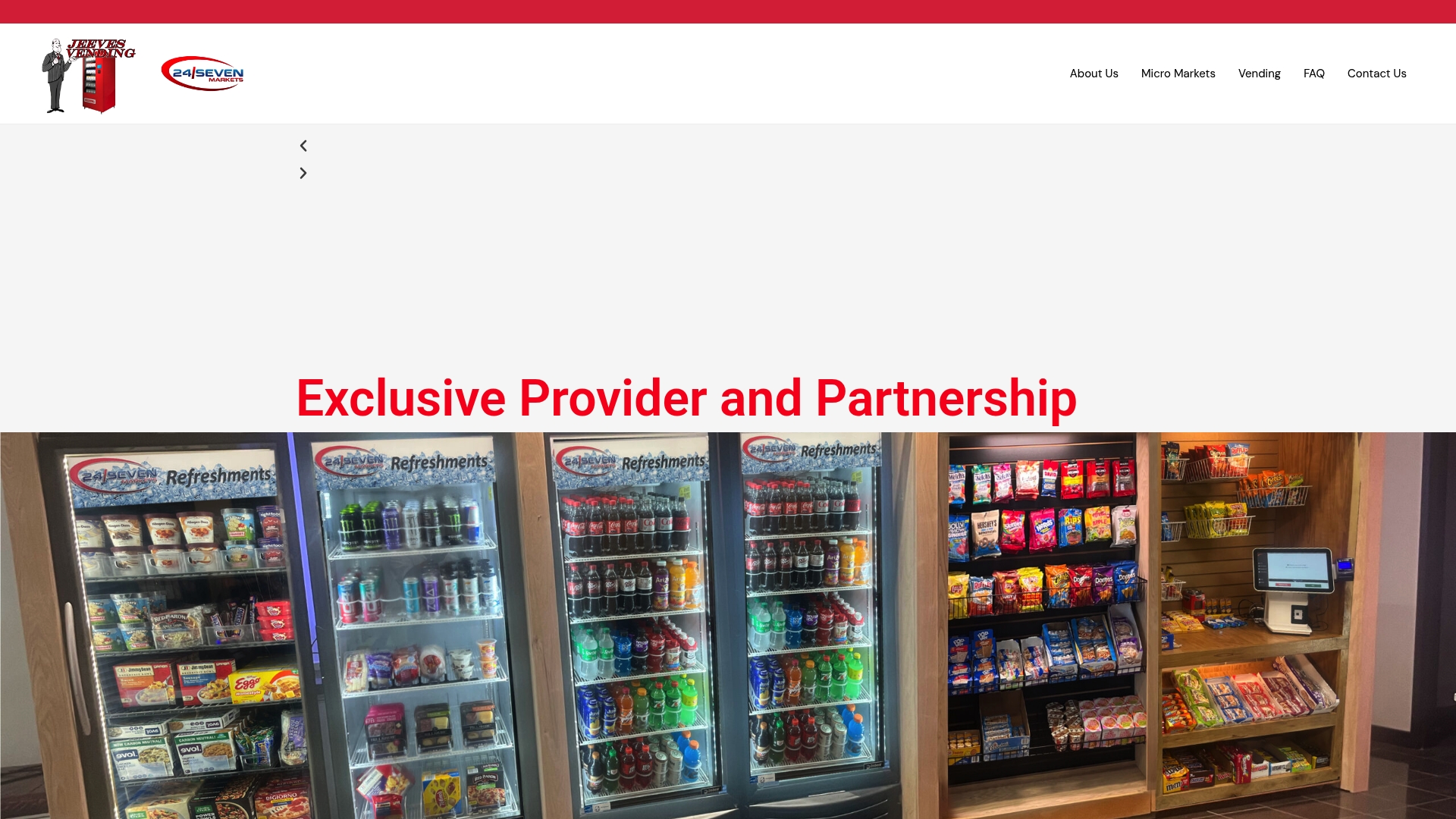
Jeevesvending installs smart vending machines with real-time monitoring at no cost to the facility, removing the capital barrier that often delays program upgrades. Restock schedules are built around each hospital’s specific shift patterns and security protocols, not a generic weekly route. Hygiene compliance and badge-access coordination are handled as standard practice, not add-ons. For healthcare administrators who need a vending partner that understands the operational demands of a 24/7 facility, Jeevesvending’s free vending program is built for exactly that environment.
FAQ
Why do hospitals need more frequent vending restocking than offices?
Hospitals operate 24/7 with multiple user groups consuming products across all hours. High-volume areas like emergency waiting rooms and staff break rooms require 2–3 restocking visits per week compared to the weekly cycle typical in corporate settings.
What technology supports fast hospital vending restocking?
Smart vending machines with real-time telemetry track inventory at the SKU level and send automatic alerts when stock drops below a set threshold. This prevents stockouts before they occur and allows technicians to arrive with precise restocking lists.
How does restocking scheduling protect hospital operations?
Restocking is most effective when scheduled mid-morning between 9 and 11 a.m. or mid-afternoon, avoiding early morning and late evening shift changes that create peak traffic in clinical corridors.
What compliance requirements apply to hospital vending technicians?
Vendor badges and health clearances are mandatory before route technicians begin restocking assignments. Security badge access protocols protect sensitive clinical zones and are a standard requirement across U.S. hospital vending programs.
How does fast restocking affect hospital revenue?
Stockouts eliminate revenue from affected products immediately. Consistent restocking maintains daily transaction volume, reduces complaints, and supports the product mix alignment required by hospital wellness and nutrition policies.