
Seasonal snack changes in warehouse vending are defined as the planned rotation of vending machine inventory to match employee preferences, physical demands, and seasonal demand cycles throughout the year. This practice is the most direct way to lift both employee satisfaction and vending revenue at the same time. Q4 holiday windows deliver 2–3x normal monthly revenue for operators who plan rotations in advance. Warehouse workers need more than impulse snacks. Their long, physically demanding shifts call for high-satiety and wellness snacks that fuel performance, not just fill a gap between tasks.
What seasonal snack changes work best in warehouse vending?
The right snack for a warehouse vending machine depends entirely on the time of year and the physical demands of the workforce. Seasonal product strategies shift from lighter fare in spring to heat-and-eat comfort foods in winter, and each transition serves a real employee need.
Here is a season-by-season breakdown of what performs best:
- Spring (march through may): Lighter options lead sales. Fresh fruit cups, plant-based protein bars, nut-free trail mixes, and gluten-free crackers move well. Employees coming off winter comfort foods respond to cleaner, fresher choices. Sparkling water and lightly flavored drinks pair naturally with this category.
- Summer (june through august): Cold beverages become the top priority. Mineral water, flavored iced teas, and fruit smoothies in refrigerated units sell at a premium. Cold sandwiches and chilled protein packs work well if your machine has reliable refrigeration. Hydration-focused products reduce fatigue on hot warehouse floors.
- Fall (september through november): This is the transition window. Introduce warming snacks like oatmeal cups, nut butter packs, and heartier granola bars. Fall is also the preparation window for Q4. Stock up on supplier relationships and test holiday-adjacent flavors like cinnamon, apple, and maple before december hits.
- Winter (december through february): Heat-and-eat items dominate. Soups, stews, hot chocolate, and holiday-themed snacks like gingerbread cookies and peppermint treats align with both comfort needs and the festive mood on the floor. Hot beverage options see the sharpest sales lift of any season.
Warehouse employees work physically harder than office workers. Their snack needs lean toward protein, complex carbohydrates, and calorie density. A vending machine stocked only with chips and candy will underperform in a warehouse setting regardless of the season. Matching snack type to season and workforce type is the foundation of a profitable warehouse snack selection.
How do you plan and execute seasonal snack rotations effectively?
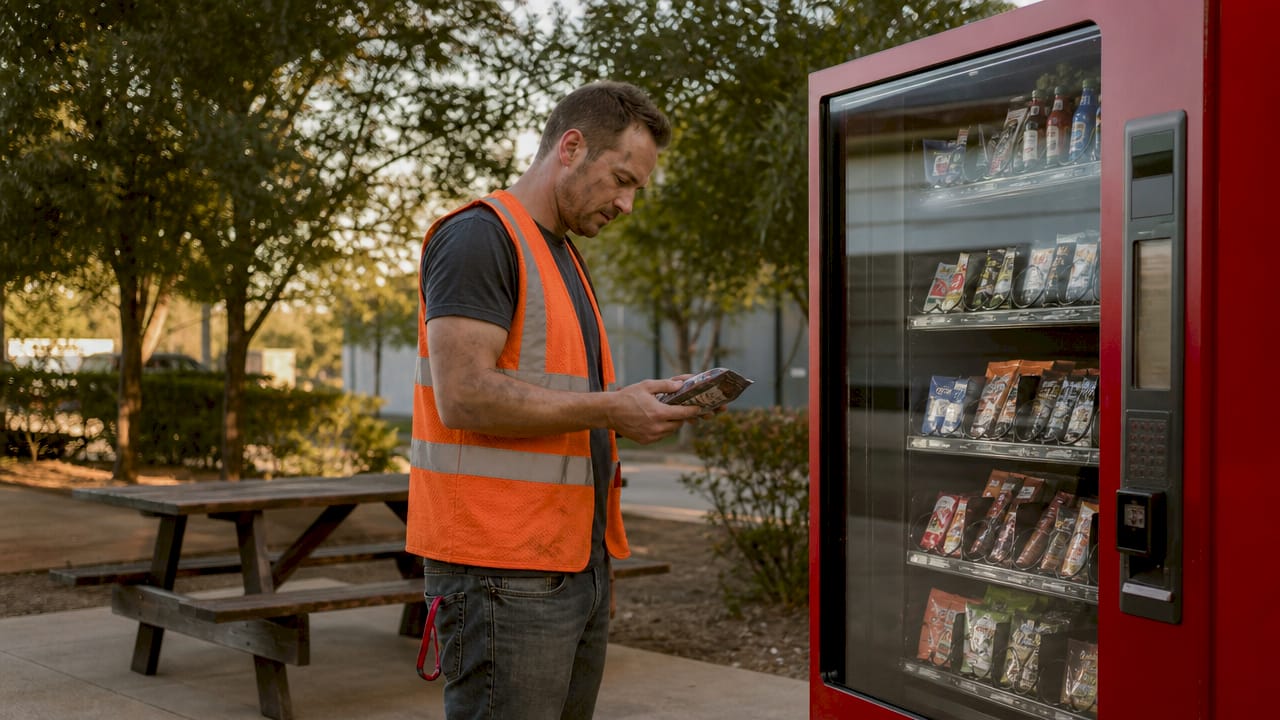
Effective seasonal vending rotation is an operational discipline, not a one-time swap. The most common mistake facility managers make is changing too much at once or waiting too long to prepare.
Follow these steps to execute rotations without disruption:
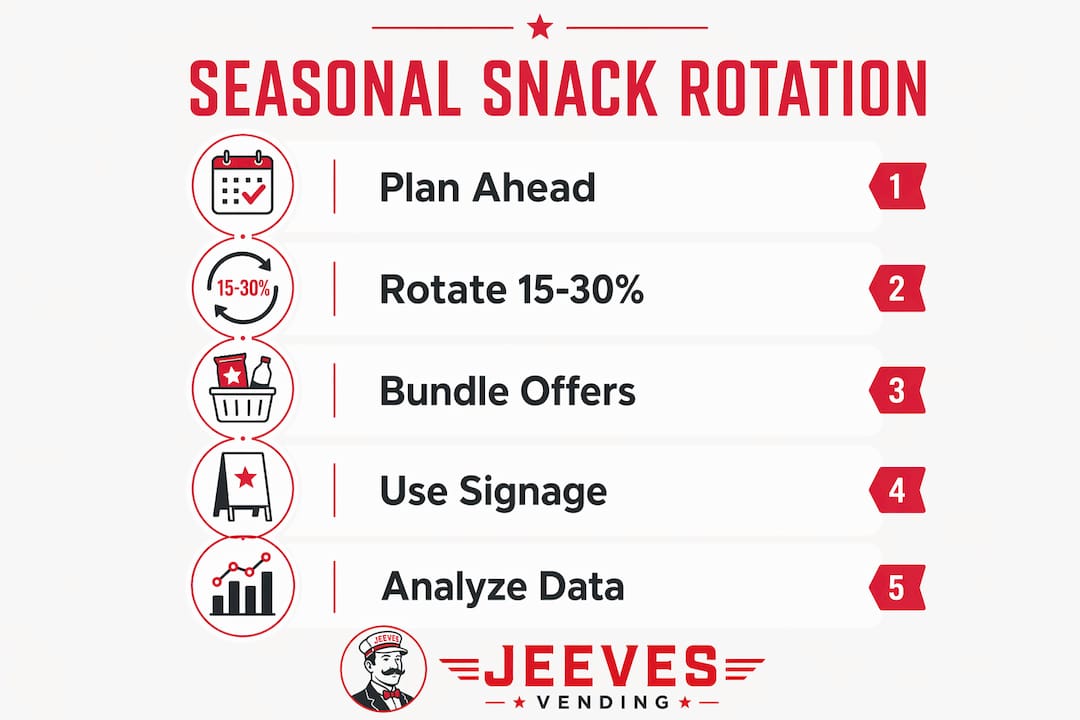
- Start preparation six to eight weeks early. October is the window to prepare for Q4. Contact suppliers, confirm lead times, and place initial orders before peak demand drives up costs or causes shortages.
- Keep 70–85% of your inventory as core best-sellers. Rotating 15–30% of inventory weekly or monthly introduces novelty without confusing regular buyers. Employees still find their favorites while discovering something new.
- Order seasonal items in smaller batches first. Test a new product with a single facing before committing to a full slot. This cuts expired stock and reduces waste on items that do not connect with your specific workforce.
- Use fresh labeling on seasonal items. Labels like “Spring Pick” or “Fresh Today” create a psychological treat mindset. Seasonal labels justify small price premiums and improve contribution margin without resistance from buyers.
- Build flexible supplier relationships. Seasonal demand spikes are predictable but volume can vary. Suppliers who can adjust order quantities on short notice protect you from both stockouts and overstock.
- Avoid over-rotating. Changing more than 30% of your inventory at once causes confusion and can spike waste. Employees who cannot find familiar items stop using the machine regularly.
Pro Tip: Bundle a seasonal snack with a core best-seller at a slight discount. A “Winter Combo” pairing hot soup with a familiar protein bar moves both items faster and introduces the seasonal product to employees who might otherwise skip it.
Signage matters more than most facility managers expect. A small card on the machine face that says “New this season” draws attention without requiring any technology investment. Pair it with a bundle offer and you have a low-cost merchandising tactic that works in any warehouse.
How does smart vending technology support seasonal snack management?
Technology turns seasonal snack rotation from a manual guessing game into a data-driven process. IoT-enabled vending machines allow operators to monitor stock and temperature remotely, adjust pricing dynamically, and track which seasonal items are actually selling.
Key technology capabilities that directly support seasonal transitions:
- Real-time inventory monitoring: Alerts notify operators when a seasonal item is running low, preventing stockouts during peak demand periods. This is especially valuable during Q4 when set-release events generate 3–5x normal revenue over short windows.
- Remote price adjustment: Operators can apply small premiums to fresh or seasonal items without a physical visit. This supports the seasonal labeling strategy and protects margins without requiring staff on-site.
- Multi-zone cooling: Machines with separate temperature zones can carry cold summer drinks alongside ambient snacks in the same unit. This flexibility reduces the need for multiple machines during seasonal transitions.
- Sell-through rate tracking: Data shows exactly which seasonal products move and which sit. This informs the next rotation cycle and eliminates repeat mistakes.
- Reduced restocking visits: Remote monitoring and price adjustment cut unnecessary trips to the machine. Operators visit when stock actually needs replenishing, not on a fixed schedule that ignores real demand.
| Technology feature | Seasonal benefit |
|---|---|
| Real-time stock alerts | Prevents stockouts during peak seasonal demand |
| Remote pricing | Applies seasonal premiums without physical visits |
| Temperature zone control | Supports cold drinks in summer and hot items in winter |
| Sell-through analytics | Identifies top seasonal performers for future planning |
Pro Tip: Pull sell-through data from the previous year’s Q4 before placing this year’s winter orders. The data removes guesswork and tells you exactly which holiday items earned their slot.
Jeevesvending equips warehouse facilities in the Dallas-Denton region with smart vending machines that include remote inventory management and pricing tools built for exactly this kind of seasonal planning.
How do seasonal snack changes improve employee satisfaction and vending profitability?
Seasonal variety directly addresses taste fatigue, which is the single biggest reason employees stop using a vending machine regularly. When the same products sit in the same slots for months, usage drops. Rotating the inventory resets attention and gives workers a reason to check the machine again.
The financial case is equally strong:
- Winter swaps to hot meals lift weekly revenue by 20–30% for operators who execute the transition with fresh labels and bundle offers.
- Q4 holiday windows deliver 2–3x normal monthly revenue when seasonal items are stocked and promoted correctly.
- Seasonal rotations cut expired stock and improve cash flow by keeping inventory moving rather than sitting.
- Seasonal labels allow small price premiums that improve contribution margin without reducing purchase frequency.
- Sustainability-conscious packaging on seasonal items, such as compostable wrappers on spring salad kits, supports facility-wide environmental goals and resonates with employees who care about those values.
“Warehouse workers who have access to satisfying, seasonally relevant snacks during breaks report higher morale and return to their stations with more energy. The vending machine is not just a convenience. It is a visible signal that the facility cares about the people working in it.”
The break room experience shapes how employees feel about their workplace. A well-stocked breakroom with seasonal variety communicates investment in the workforce. That perception has real retention value in a labor market where warehouse workers have options.
Key Takeaways
Seasonal snack rotation is the most direct way to raise both employee satisfaction and vending revenue in a warehouse setting.
| Point | Details |
|---|---|
| Rotate 15–30% of inventory | Keep core best-sellers stable while introducing seasonal novelty to reduce waste and maintain variety. |
| Prepare six to eight weeks early | Start supplier coordination in october for Q4 to avoid stockouts during peak revenue windows. |
| Use seasonal labeling | Labels like “Spring Pick” justify small price premiums and improve contribution margin. |
| Match snacks to physical demands | Warehouse workers need high-satiety, protein-rich options, not just impulse snacks. |
| Use technology to track performance | Real-time sell-through data removes guesswork from future seasonal rotation decisions. |
What I have learned from watching seasonal vending succeed and fail in warehouses
Warehouse managers often ask me whether seasonal rotation is worth the operational effort. My honest answer is yes, but only if you resist the urge to over-rotate.
The facilities that struggle are the ones that swap out half the machine at once, confuse their regulars, and then blame the season when sales drop. The ones that succeed treat the 15–30% rotation rule as a hard ceiling, not a suggestion. They change enough to create excitement without disrupting the habits that drive daily revenue.
The other thing I have seen consistently is that technology helps, but it does not replace knowing your workforce. A data dashboard will tell you that a product is not selling. It will not tell you that your night shift crew prefers savory over sweet, or that your dock workers skip anything that requires refrigeration because the break room microwave is always occupied. That knowledge comes from talking to people on the floor.
My strongest advice is to run a seasonal bundle experiment before committing to a full rotation. Pair one new seasonal item with a proven best-seller, price it as a combo, and watch what happens over two weeks. The result will tell you more than any industry average.
— Gary
Jeevesvending’s approach to warehouse vending and seasonal variety
Warehouse facilities in the Dallas-Denton area have a direct option for seasonal snack management without the operational overhead.
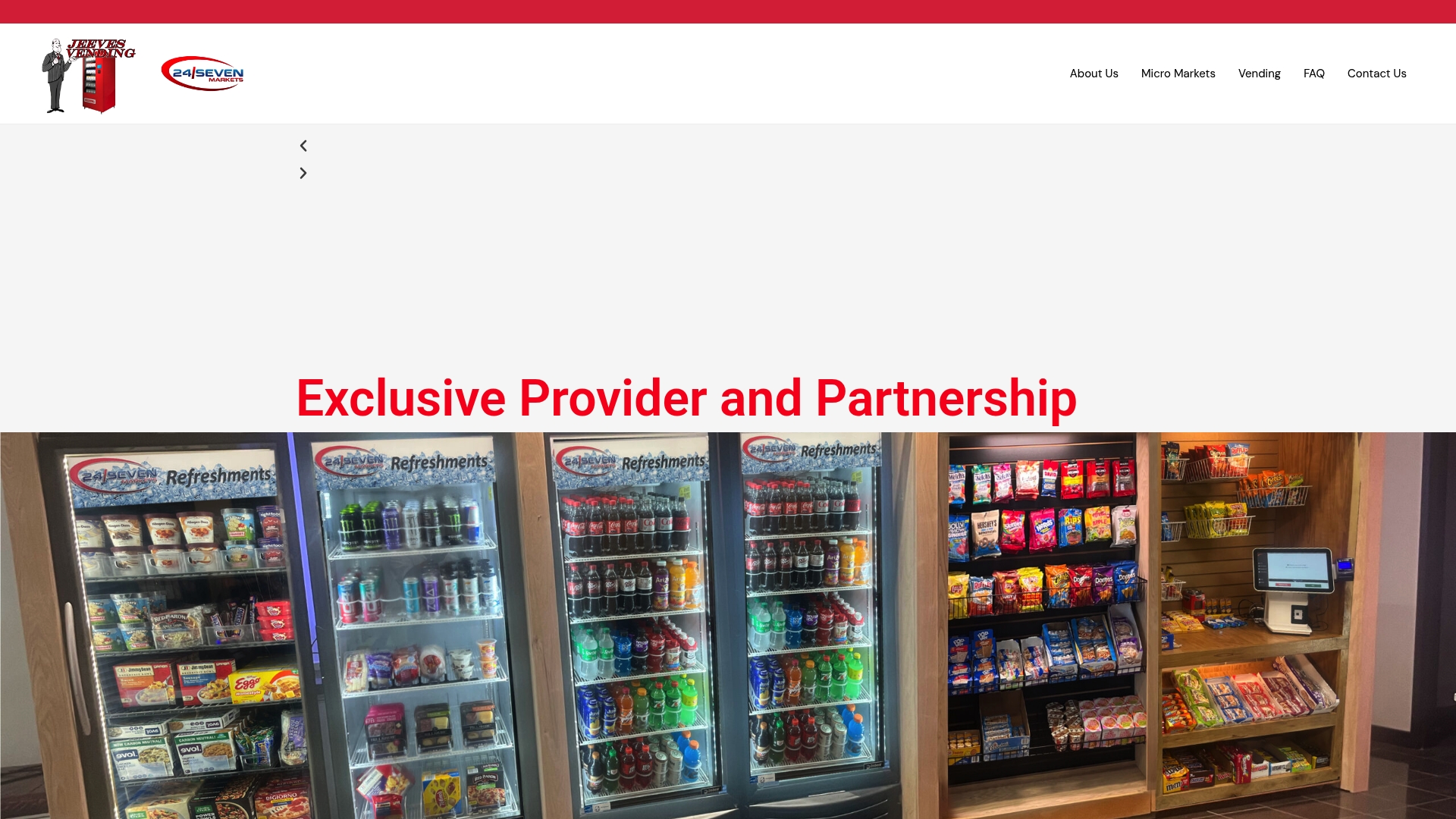
Jeevesvending installs and maintains vending machines at no cost to the business, with product selection tailored to the specific workforce and season. Their machines support remote inventory monitoring and pricing adjustments, which means your seasonal transitions happen without requiring your team to manage restocking logistics. Facility operators can explore the full range of vending machine options or browse available machines for purchase to find the right fit for their breakroom. Jeevesvending handles the details so your team stays focused on operations.
FAQ
What is the best rotation schedule for seasonal vending snacks?
Rotating 15–30% of inventory monthly while keeping 70–85% as core best-sellers is the proven standard. This balance introduces variety without disrupting the buying habits of regular users.
When should warehouse managers start planning for Q4 snack changes?
October is the preparation window for Q4. Starting six to eight weeks before december gives operators time to confirm supplier orders and avoid stockouts during the highest-revenue period of the year.
Do seasonal snacks actually increase vending revenue?
Yes. Winter hot meal swaps lift weekly revenue by 20–30%, and Q4 holiday windows can deliver 2–3x normal monthly revenue for operators who stock and label seasonal items correctly.
Why do warehouse vending machines need different snacks than office machines?
Warehouse employees perform physically demanding work and need high-satiety, nutrition-focused snacks rather than impulse-based light options. Protein bars, heat-and-eat meals, and calorie-dense snacks outperform candy and chips in warehouse settings.
Can seasonal labels really justify higher prices?
Yes. Seasonal labeling creates a treat mindset that makes small price premiums feel reasonable to buyers. This improves contribution margin without reducing purchase frequency when the label is paired with a genuinely relevant seasonal product.