
A distributed vending setup is a coordinated network of vending machines managed as a single system through centralized cloud software, real-time telemetry, and data-driven logistics. Unlike a collection of standalone machines, this model treats every unit as a node in a larger operational program. Businesses that adopt this approach gain visibility across all locations simultaneously, enabling smarter restocking, faster service, and better product decisions. Jeevesvending builds exactly this kind of network for workplaces across the Dallas-Denton region, providing the technology and service infrastructure that makes distributed vending work at scale. Understanding how vending networks work is the first step toward choosing the right setup for your organization.
What is a distributed vending setup and how does it differ from traditional operations?
Traditional vending operates on a simple model: a machine sits in a location, a technician visits on a fixed schedule, and the operator learns what sold only after opening the door. That model works for one or two machines. It breaks down fast when you manage ten, twenty, or fifty locations across a campus, office park, or multi-building facility.
A distributed vending setup replaces fixed schedules with real-time intelligence. Each machine transmits sales and inventory data continuously through cellular or Wi-Fi connections. A cloud platform aggregates that data across every unit, giving operators a live picture of stock levels, machine health, and revenue by location. Centralized cloud management for multi-site operations is the defining feature that separates a true distributed network from a loose collection of machines.
The operational differences are significant:
- Servicing model: Traditional machines run on calendar-based routes. Distributed networks use demand-triggered dispatch, sending technicians only when a machine actually needs attention.
- Inventory visibility: Standalone machines offer zero data between visits. Distributed machines report slot-level sales in real time.
- Labor efficiency: Real-time telemetry reduces unnecessary service trips by 20–35%, cutting fuel costs and freeing technicians for higher-value work.
- Governance: Cloud platforms support role-based access, meaning a regional manager sees all locations while a local technician sees only their assigned route.
- Pricing control: Operators can update prices across every machine from a single dashboard, instantly.
Pro Tip: Before switching to a distributed model, audit your current machines for DEX port availability. Machines without a DEX port cannot feed granular sales data into a telemetry system, which limits the value of any cloud platform you deploy.
The shift from isolated machines to a distributed network is not just a technology upgrade. It is a change in how you think about vending. The machine stops being the unit of management. The network becomes it.
What are the key technologies that enable distributed vending operations?
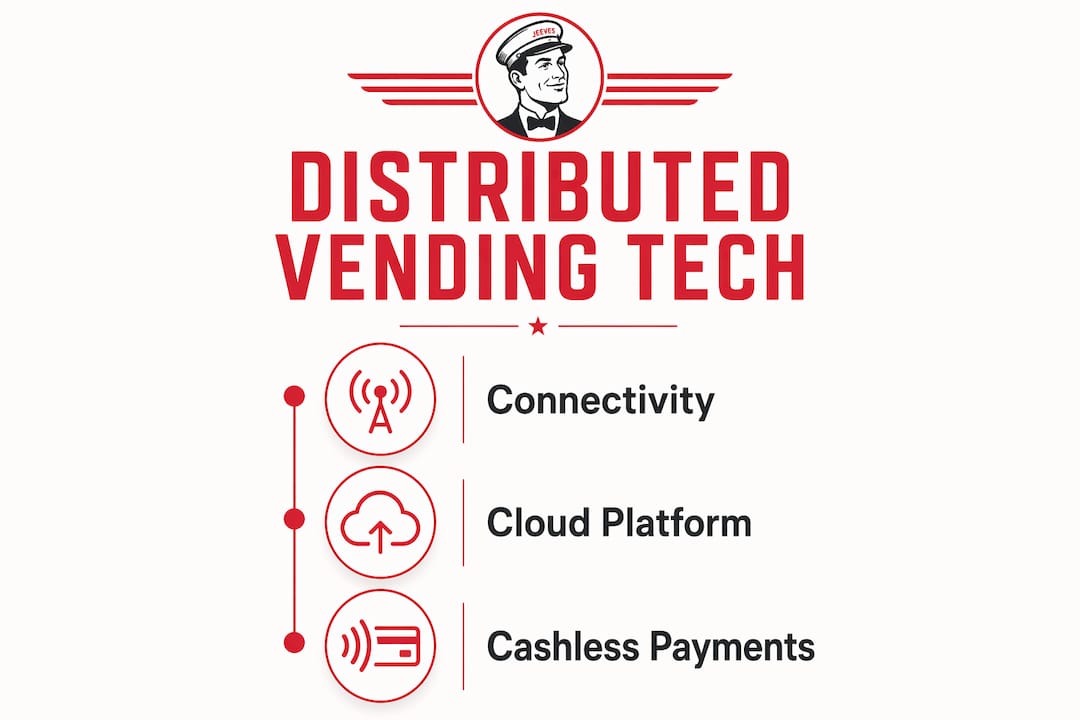
Three technology layers make a distributed vending system function: connectivity hardware, a cloud management platform, and payment infrastructure. Each layer depends on the others. Remove one, and the system loses its core advantage.
Connectivity and telemetry
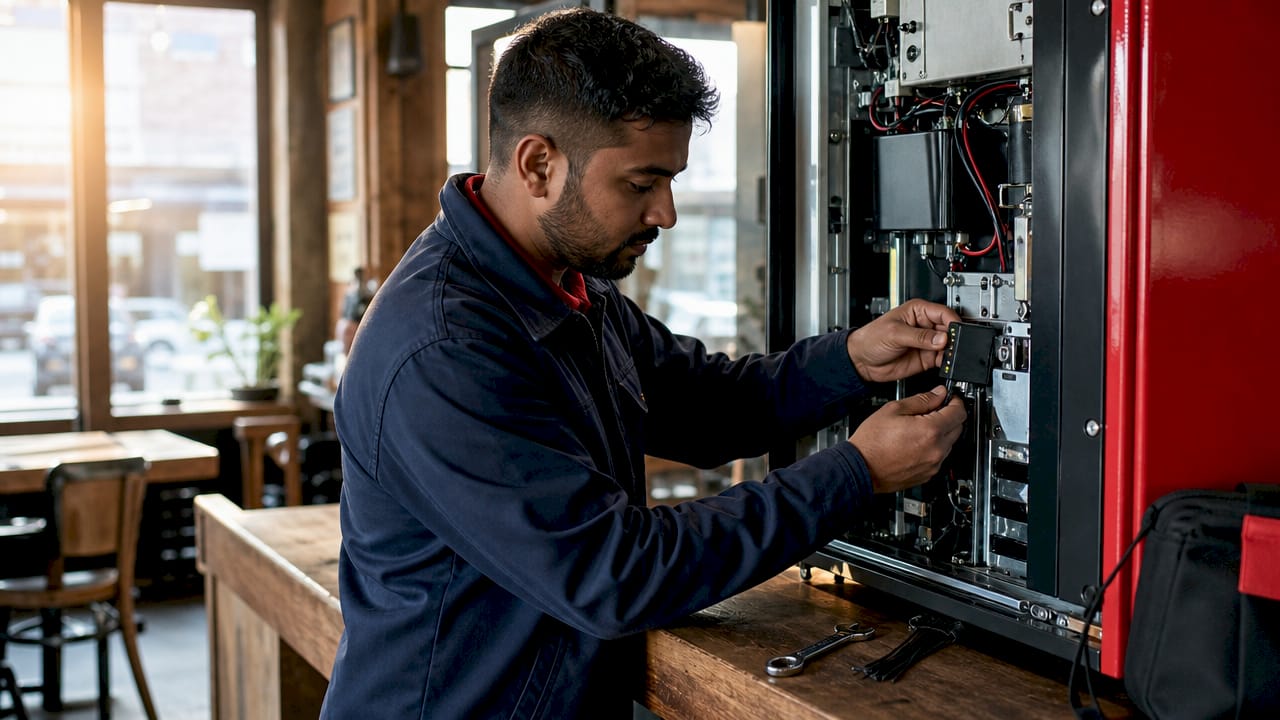
Telemetry modules attach to each machine and transmit data over cellular or Wi-Fi networks. They report sales by slot, current inventory levels, temperature readings, and error codes. Telemetry modules cost $150–$300 per unit with data plans running $5–$10 per month. That cost is modest relative to the labor savings from eliminating unnecessary service visits.
The DEX port is the physical connection point between the telemetry module and the machine’s internal controller. Machines without a DEX port cannot provide slot-level transactional data, which means your telemetry system receives only surface-level signals. Verifying DEX compatibility before purchasing or deploying machines is a non-negotiable step in building a functional distributed network.
Cloud management platforms
The cloud platform is the brain of the operation. It collects telemetry feeds from every machine, organizes them into dashboards, and enables operators to manage inventory, pricing, and maintenance schedules from one interface. Smart vending machines run embedded Linux or Android operating systems that connect directly to these platforms, enabling remote configuration and real-time analytics. The platform also supports route optimization software, which groups service stops by geography and sales velocity to minimize drive time.
Cashless payment systems
Cashless payment adoption in vending increases transaction volume and reduces cash handling risk. Modern distributed machines accept NFC payments, mobile wallets, corporate RFID cards, and QR codes. For workplace deployments, corporate RFID cards are particularly effective because they integrate with employee benefit programs and spending accounts.
Pro Tip: When evaluating cloud platforms, confirm that the system supports multi-site inventory management, not just single-machine monitoring. A platform that cannot aggregate data across locations forces you to manage each machine individually, which defeats the purpose of a distributed setup.
| Technology layer | Function | Key requirement |
|---|---|---|
| Telemetry module | Transmits real-time machine data | DEX port compatibility |
| Cloud platform | Aggregates data, manages operations | Multi-site architecture |
| Cashless payment | Processes transactions without cash | NFC, RFID, or QR support |
| Route optimization | Plans efficient service schedules | Integration with telemetry feed |
What are the advantages of adopting a distributed vending setup for workplace snack services?
The advantages of distributed vending machines go beyond convenience. For operations managers, the gains show up in labor costs, product availability, and employee satisfaction simultaneously.
- Lower service costs: Dynamic route management sends technicians only when machines need attention. This cuts unnecessary trips and reduces fuel and labor expenses across the entire fleet.
- Higher in-stock rates: Real-time inventory monitoring means a machine never runs out of a top-selling item without the operator knowing. Stockouts drop, and employee satisfaction rises.
- Pre-kitting efficiency: Pre-kitting inventory per route based on live data is the most effective way to minimize waste and reduce repeated visits. Technicians load exactly what each machine needs before leaving the warehouse.
- Data-driven product decisions: Sales data by slot, location, and time of day tells you which products perform and which do not. You can adjust the product mix across all machines from a single dashboard without guessing.
- Consistent employee experience: Distributed networks deliver the same product availability and payment options at every machine in your facility, whether it is in the lobby, the break room, or a remote building.
- Scalability without complexity: Adding a new machine to a distributed network means connecting it to the existing cloud platform. The governance structure, pricing rules, and reporting dashboards extend automatically to the new unit.
The advantages of distributed vending are cumulative. Each benefit reinforces the others. Better data leads to better pre-kitting. Better pre-kitting leads to fewer trips. Fewer trips lower costs. Lower costs fund better machines and better products.
How do businesses implement and manage distributed vending setups efficiently?
Implementation follows a clear sequence. Skipping steps creates integration problems that compound as the network grows.
-
Standardize your hardware fleet. Hardware standardization is critical for integration. Machines using different communication protocols create delays and system complexity that slow down every subsequent step. Choose one machine family with confirmed DEX port support and stick with it across your deployment.
-
Select a cloud platform with multi-site architecture. The platform must manage inventory, pricing, and machine health across all locations simultaneously. Single-machine monitoring tools will not scale. Confirm the platform supports role-based access so regional managers and local technicians each see the right level of detail.
-
Design routes by geography and sales velocity. Profitability in distributed vending lives at the route level, not the individual machine. Group service stops by physical proximity first, then layer in sales velocity data to prioritize high-demand machines. This combination maximizes stops per hour and minimizes total drive time.
-
Build a pre-kitting process around live data. Before each service run, pull current inventory data from the cloud platform and load technician vehicles with exactly what each machine needs. This eliminates guesswork, reduces waste, and prevents the stockouts that frustrate employees.
-
Expand in clusters, not randomly. Scaling from one machine to a network requires strategic site selection and coordinated route design. Adding machines in geographic clusters keeps service routes tight and prevents the route sprawl that erodes profitability. Standardize your product SKUs across new locations before adding location-specific items.
-
Review route profitability monthly. Use the cloud platform’s analytics to identify underperforming machines, over-serviced stops, and product mix mismatches. Adjust service intervals and product selections based on actual data, not assumptions.
Vending service agreements that define service intervals, response times, and performance metrics give your organization the governance structure to hold operators accountable at every step.
Key Takeaways
A distributed vending setup succeeds when centralized cloud management, DEX-compatible hardware, and demand-driven route design work together as a unified program rather than separate tools.
| Point | Details |
|---|---|
| Centralized cloud management | A single platform managing all machines is the foundation of any distributed vending network. |
| DEX port compatibility | Verify DEX ports on all machines before investing in telemetry to get slot-level sales data. |
| Route-level profitability | Design service routes by geography and sales velocity to maximize stops per hour. |
| Pre-kitting with live data | Load technician vehicles based on real-time inventory feeds to cut waste and prevent stockouts. |
| Treat vending as a program | Organizations that govern vending as a coordinated program scale faster and with fewer integration problems. |
Why most vending networks underperform their potential
The most common mistake I see organizations make is treating distributed vending as a technology purchase rather than an operational program. They buy machines, install a telemetry module, and expect the data to manage itself. It does not.
The real work is in the governance layer. Who reviews the analytics each week? Who decides when a product gets pulled from a location? Who owns the route design? Without clear answers, the cloud platform becomes an expensive dashboard that nobody acts on. Treating vending as a coordinated program with centralized oversight and defined roles is what separates operators who scale profitably from those who stall at ten machines.
Hardware standardization is the second place networks fail. I have seen facilities with four different machine brands, three different telemetry systems, and two cloud platforms that do not talk to each other. Every integration problem costs time and money. Standardizing on one machine family and one platform from the start is not exciting advice, but it is the single decision that pays the most dividends over time.
The technology trends worth watching are cashless payment expansion and AI-driven dynamic pricing. Both are already available in enterprise-grade machines and will become standard across mid-market deployments within the next two years. Organizations that build their networks on platforms capable of supporting these features now will not need to re-platform later.
— Gary
How Jeevesvending helps workplaces build distributed vending networks
Jeevesvending installs and manages distributed vending networks for businesses across the Dallas-Denton region at no cost to the organization. Every deployment includes modern machines with telemetry connectivity, cashless payment options, and centralized management through a cloud platform that gives your team real-time visibility across all locations.
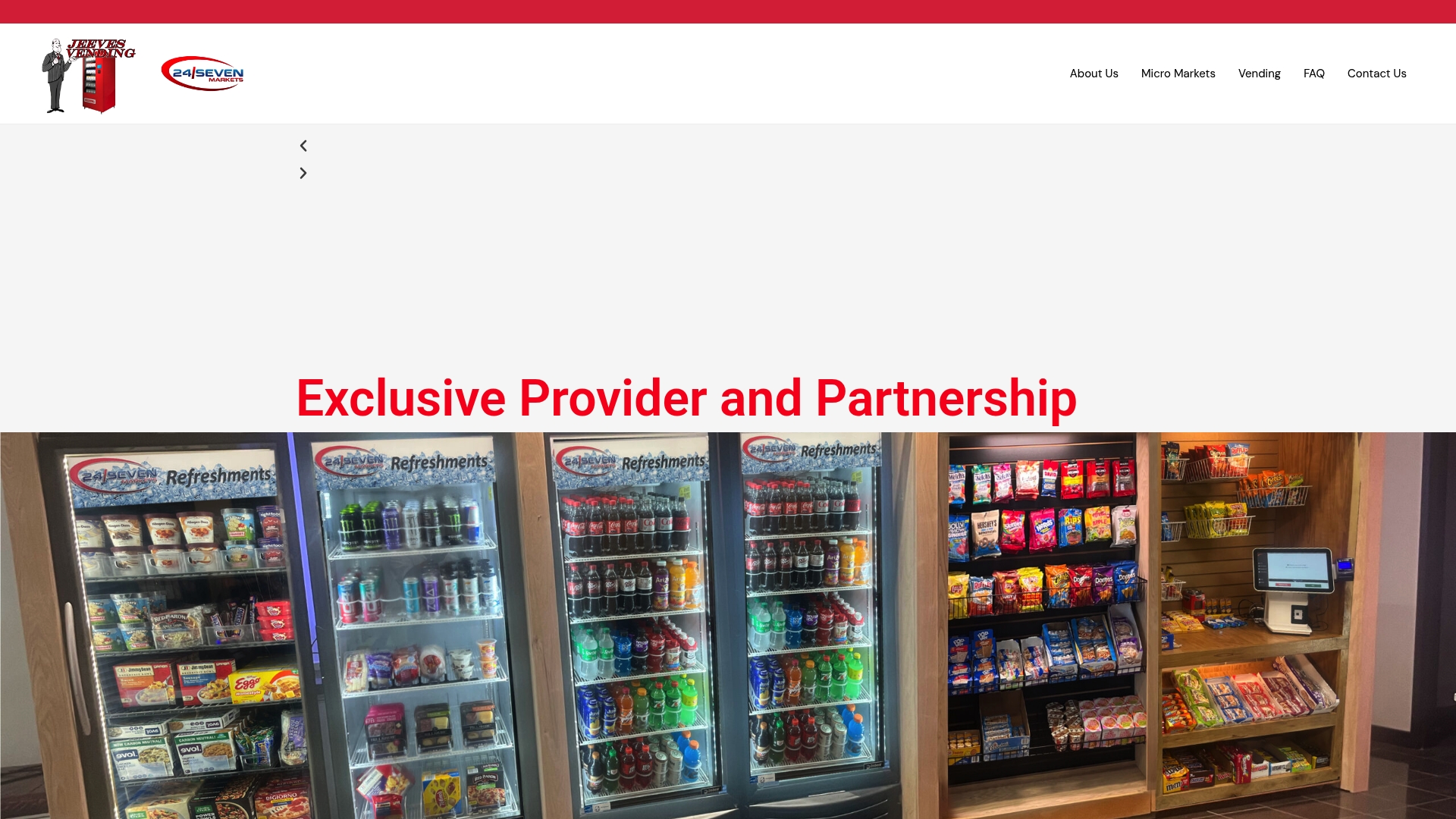
Whether your facility needs three machines or thirty, Jeevesvending designs the service program around your locations, your employees, and your operational goals. The smart vending machines in the Jeevesvending fleet support DEX-compatible telemetry, NFC payments, and remote configuration. You can also explore the full vending machine overview to understand exactly what technology powers each unit. Contact Jeevesvending to schedule a site assessment and get a network design built around your workplace.
FAQ
What is a distributed vending setup in simple terms?
A distributed vending setup is a network of vending machines connected to a central cloud platform that manages inventory, pricing, and service across all locations simultaneously. Each machine transmits real-time data, allowing operators to make decisions for the entire network from one dashboard.
How do distributed vending machines communicate with each other?
Distributed vending machines do not communicate directly with each other. Each machine sends data to a central cloud platform via cellular or Wi-Fi telemetry modules, and the platform aggregates that data into a unified view for the operator.
What is a DEX port and why does it matter?
A DEX port is a physical connection on a vending machine that allows a telemetry module to extract slot-level sales data. Machines without a DEX port can only provide limited signals, which significantly reduces the value of any cloud management system you deploy.
How many machines do you need to justify a distributed vending setup?
There is no fixed minimum, but the operational benefits of centralized management, dynamic routing, and pre-kitting become most significant at five or more machines across multiple locations. Smaller deployments can still benefit from telemetry and cashless payments.
What is the biggest advantage of distributed vending for workplace operations?
The biggest advantage is the shift from calendar-based servicing to demand-driven restocking. Real-time telemetry reduces unnecessary service trips by 20–35%, which lowers labor costs and keeps machines stocked with products employees actually want.