
Beverage vending in warehouse settings is defined as on-site automated drink dispensing that gives workers continuous access to hydration without leaving the facility. The role of beverage vending in warehouse settings goes well beyond convenience. Warehouses running multi-shift and 24/7 operations cannot afford the productivity loss that comes from workers leaving the site for drinks during breaks. Properly placed vending machines eliminate that problem entirely. Facilities that treat beverage access as infrastructure, not a perk, see measurable gains in break efficiency, worker satisfaction, and operational stability.
How beverage vending reduces downtime in warehouse operations
The single biggest operational argument for vending machines in warehouses is the elimination of “walk-away” time. 24/7 beverage access lets workers secure refreshments within short, structured breaks without leaving the site. That matters enormously in facilities running night shifts or weekend rotations, where off-site options are limited or nonexistent.
Staggered breaks are standard practice in high-volume warehouses, and vending machines support that structure directly. When drinks are available on the floor or in satellite break rooms, workers return to their stations faster. The workflow stays continuous rather than fragmenting around a single centralized break room that creates a bottleneck at shift change.
The cost case is equally strong. Automated vending setups reduce consumable inventory spend by 20–30% compared to manual systems, with facilities reporting those savings within the first year of installation. That figure reflects both reduced waste and tighter consumption tracking made possible by modern machine technology.
- Workers on 10-hour or 12-hour shifts need multiple hydration opportunities, not just one break.
- Night shift teams often have zero off-site food or drink options within a reasonable distance.
- Vending machines near loading docks or picking zones cut transit time during breaks to under two minutes.
- Staggered access prevents the crowding that slows down a single centralized break area.
Pro Tip: Map your facility’s highest-traffic zones before placing machines. A machine near the shipping dock serves more workers per hour than one placed near the administrative offices.
What beverages actually sustain warehouse workers through a shift
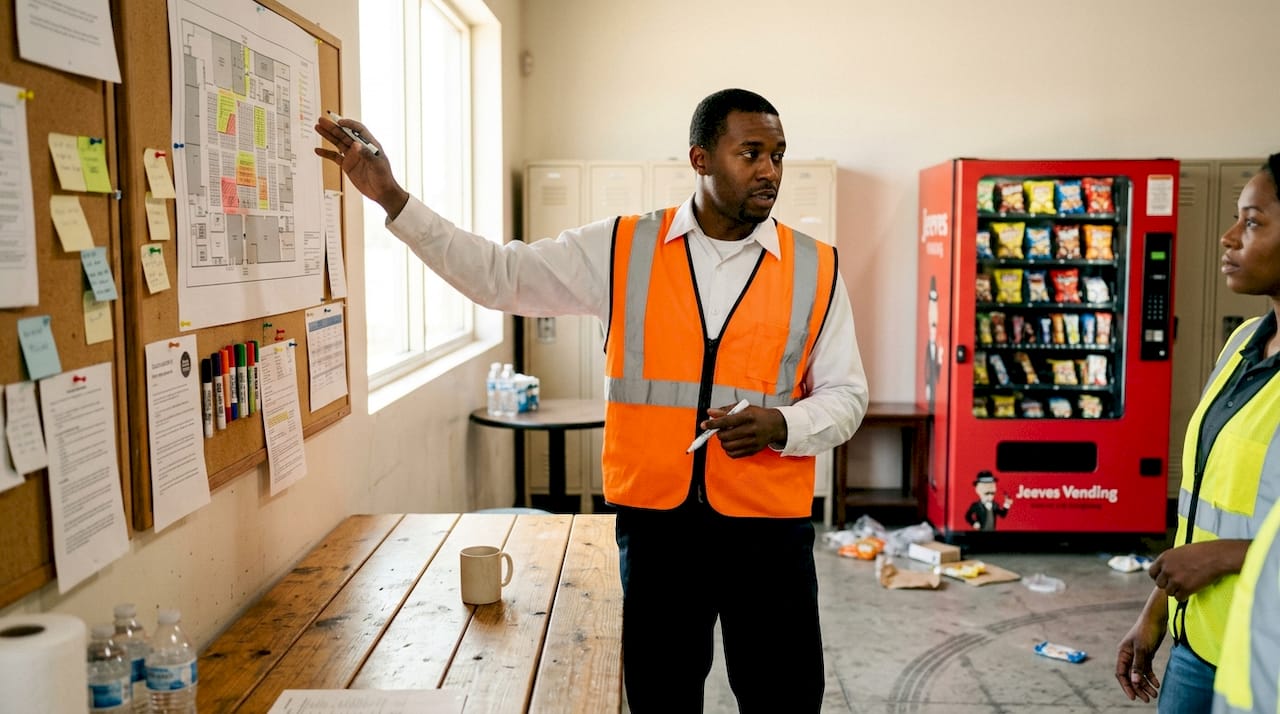
Warehouse workers are physically closer to athletes than to office employees. Their bodies burn more calories, lose more fluid through sweat, and need sustained energy across shifts that can run 10–12 hours. The trend in warehouse vending now treats workers as high-performance athletes requiring sustained energy, not just a quick caffeine hit.
Traditional vending drink selections leaned heavily on high-sugar sodas and energy drinks with short-lived effects. Modern beverage programs replace or supplement those with water, electrolyte drinks, low-sugar sports beverages, and functional hydration options. The shift matters because a sugar crash at hour eight of a picking shift creates real safety risk, not just discomfort.
The role of calorie information in vending is more significant than most managers expect. Workers making fast decisions at a vending machine benefit from clear nutritional labels that help them choose drinks aligned with their energy needs. Calorie-dense options like protein shakes serve as meal-replacement vending choices for workers who skip formal meal breaks. Low-calorie hydration options serve workers focused on fluid replacement rather than energy.
- Water and sparkling water: The baseline for hydration, especially in warm or physically demanding zones.
- Electrolyte drinks: Gatorade, Liquid I.V. powder packs, and similar products replace sodium and potassium lost through sweat.
- Low-sugar energy drinks: Provide a controlled caffeine lift without the spike-and-crash cycle of high-sugar alternatives.
- Protein shakes and meal-replacement drinks: Fill the gap for workers who cannot take a full meal break.
- Coffee and tea options: Support alertness on night shifts without the calorie load of blended café drinks.
Pro Tip: Rotate your seasonal beverage selection quarterly. Cold electrolyte drinks move faster in summer; hot coffee and tea drive more sales in winter months.
How modern vending technology improves management and control
The vending machine sitting in your break room today is not the same machine from a decade ago. Cloud-based dashboards now allow warehouse managers to monitor inventory levels, set shift-based entitlements, and receive restocking alerts without physically checking each machine. That capability removes a layer of manual oversight that previously fell on operations staff.
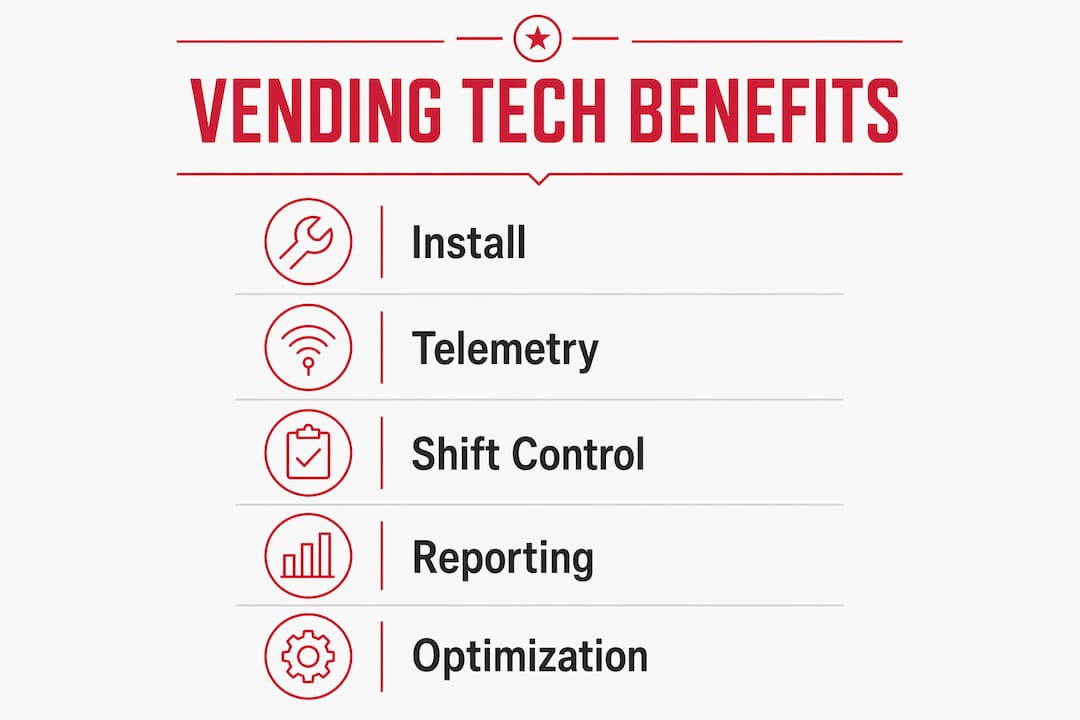
Telemetry is the technology that makes this possible. Vending telemetry provides audit-ready consumption logs that track exactly which beverages are selling, when, and at what rate. That data integrates with warehouse inventory systems and gives managers a precise picture of consumption patterns by shift, by zone, and by season.
Shift-aware programming takes the technology further. Machines can be configured to offer subsidized beverages to specific departments or shifts automatically, without manual intervention. A night shift team might receive a subsidized energy drink allowance while the day shift gets a different entitlement. The cloud dashboard manages all of it.
| Feature | Operational benefit |
|---|---|
| Telemetry and consumption logs | Tracks beverage usage by shift and zone for cost control |
| Cloud inventory dashboard | Sends restocking alerts before machines run out |
| Shift-based entitlements | Automates subsidized drink programs per department |
| Contactless payment | Speeds up transactions and reduces cash handling |
| Remote machine monitoring | Flags technical issues before they cause downtime |
Pro Tip: Request a telemetry report from your vending provider after the first 90 days. The consumption data will tell you which beverages to add, which to cut, and whether your machine placement is working.
Strategic placement and product mix for warehouse vending machines
Machine location determines whether a vending program succeeds or fails. Satellite break areas outperform centralized locations because they reduce congestion and cut the time workers spend walking to and from a machine. A single central machine serving 200 workers creates a line. Four machines distributed across the facility serve the same workers in a fraction of the time.
Captive demand predicts vending success more accurately than total headcount. A remote warehouse with 80 workers and no nearby stores will generate more vending revenue than a suburban facility with 200 workers who can walk to a gas station. Shift density matters too. A facility running three shifts of 60 workers each generates more consistent vending demand than one running a single shift of 180.
Industrial-grade machines are built for warehouse conditions. Standard office machines fail quickly in environments with dust, vibration, and temperature swings. Specifying the right equipment for the environment is not optional; it is the difference between a machine that runs reliably for years and one that needs constant service calls.
Product mix planning should account for shift composition, physical demand level, and seasonal temperature. High-volume warehouse snack examples that pair well with beverages include protein bars, trail mix, and jerky. These calorie-dense snacks complement functional beverages and reduce the need for workers to bring food from home.
- Place machines within 90 seconds of the highest-density work zones.
- Avoid locations near loading dock doors where temperature fluctuates significantly.
- Use vending placement guidelines to assess electrical access and floor space before committing to a location.
- Review product mix every quarter using telemetry data rather than guessing.
- Add a dedicated water or hydration station setup in zones where workers cannot leave their stations easily.
Key Takeaways
Beverage vending in warehouse settings works best when machines are placed near high-density work zones, stocked with functional hydration options, and managed through telemetry-driven cloud dashboards that remove guesswork from restocking.
| Point | Details |
|---|---|
| Eliminate walk-away time | On-site beverage access keeps workers on the floor during structured breaks. |
| Choose functional beverages | Electrolyte drinks, protein shakes, and low-sugar options sustain energy better than high-sugar sodas. |
| Use telemetry data | Consumption logs reveal which products to stock and whether placement is working. |
| Place machines strategically | Satellite locations near work zones outperform single centralized machines. |
| Zero-cost installation is available | Vending operators often cover equipment and restocking costs; the facility provides space and electricity. |
What I’ve learned from watching warehouse vending programs succeed and fail
Most warehouse managers I’ve spoken with make the same mistake at the start: they treat vending as a facilities afterthought rather than an operational decision. They pick a corner, drop in a machine, and wonder why usage is low six months later. The machine is in the wrong place, stocked with the wrong products, and nobody is reading the telemetry data.
The managers who get it right think about vending the way they think about break scheduling. They ask where workers actually congregate, what shifts run the longest, and what the facility’s nearest off-site food option is. Facility captivity is the real driver of vending value. The more isolated your facility, the more your workers depend on what you put in front of them.
The other mistake is ignoring the product mix after installation. A vending program that launched with the right beverages in january can be completely wrong by july if nobody adjusts for summer heat and increased sweat loss. Telemetry makes that adjustment easy. The data tells you what to do. The problem is that most teams never look at it.
Vending services at zero operational cost to the warehouse are genuinely available in most markets. The operator covers equipment, installation, and restocking. The facility provides space and electricity. That model removes the financial barrier entirely, which means the only real decision is choosing the right provider and holding them accountable to product quality and service response times.
Vending machines are not a perk. They are productivity infrastructure. Treat them that way, and they will pay for themselves in reduced downtime and better worker retention.
— Gary
Jeevesvending’s warehouse beverage vending solutions
Warehouse managers in the Dallas-Denton region have a direct option for no-cost, full-service beverage vending built for demanding environments.
Jeevesvending installs and maintains modern vending machines and micro-markets at no cost to your business. Their cloud-connected machines support shift-based entitlements, telemetry reporting, and contactless payment out of the box. You get a fully stocked, monitored beverage program without adding it to your operations team’s workload. Learn more about how vending machine solutions work, or contact Jeevesvending directly to discuss a setup built around your shift schedule and workforce size.
FAQ
What is the role of beverage vending in warehouse settings?
Beverage vending in warehouse settings provides workers with continuous, on-site access to drinks without requiring them to leave the facility. This reduces break-related downtime and supports hydration across multi-shift and 24/7 operations.
How does vending machine placement affect warehouse productivity?
Satellite placement near high-density work zones reduces congestion and cuts break transit time significantly. A single centralized machine creates bottlenecks; distributed machines keep break flow moving.
What beverages work best for physically demanding warehouse shifts?
Electrolyte drinks, low-sugar sports beverages, protein shakes, and water are the most effective choices for workers on long physical shifts. High-sugar sodas cause energy crashes that increase fatigue and safety risk.
Can a warehouse get vending machines at no cost?
Yes. Many vending operators cover equipment, installation, and restocking costs entirely. The facility provides space and electricity, and negotiations focus on product mix rather than fees.
How does telemetry improve beverage vending management?
Vending telemetry generates audit-ready consumption logs that track which beverages sell, when, and at what rate. Managers use that data to adjust product mix, trigger restocking, and control costs without manual machine checks.