Employee satisfaction snack amenities are workplace food and beverage programs designed to improve employee wellness, morale, and convenience through thoughtful selection and consistent service. HR professionals increasingly treat these programs as workplace infrastructure rather than optional perks. Intentional snack programs that reflect real employee preferences drive consistent daily use. When done right, snack amenities signal employer care, support productivity, and give your office a tangible retention edge.
1. What snack varieties most effectively improve employee snack satisfaction?
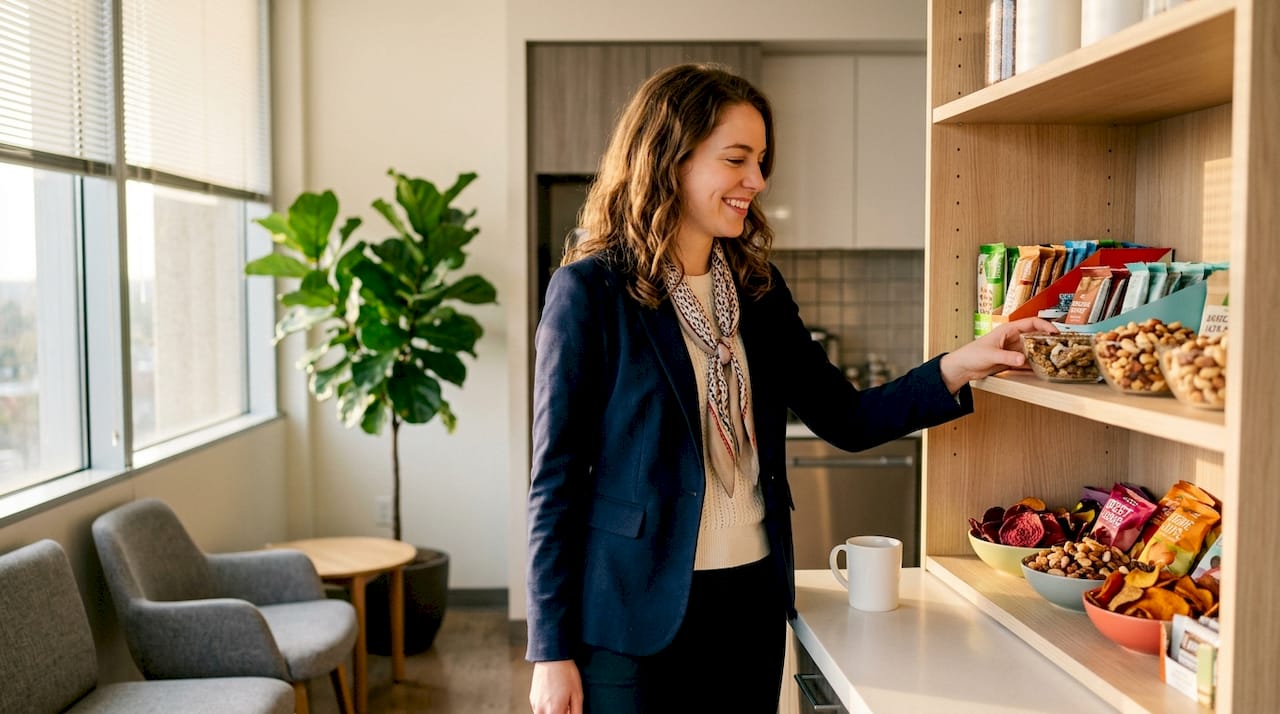
The snack categories that drive the highest employee satisfaction combine health-conscious choices with genuine variety. A program that only stocks protein bars or only offers chips will lose engagement within weeks.
The most effective programs include:
- Healthy options: vegan, gluten-free, and keto-friendly snacks that cover major dietary needs
- Balanced flavor profiles: sweet, savory, and indulgent options alongside better-for-you alternatives
- Shelf-stable and refrigerated items: nuts, dried fruit, and granola bars alongside fresh fruit, yogurt, and cheese
- Rotating selections: swapping in new products monthly to maintain interest and reduce waste
Real ingredients and dietary inclusion are the baseline for any quality managed program. Employees notice when a program stocks clean, recognizable ingredients versus heavily processed filler items.
Pro Tip: Rotate at least 20% of your snack selection each month. Employees disengage from programs that feel stale, and rotation signals that someone is paying attention.
2. How beverages complement snack amenities to boost employee wellness
Beverages are not an add-on to a snack program. They are half the experience. Cold beverages and specialty coffee are now core expectations in any well-regarded office refreshment setup.
The beverage categories that matter most include:
- Specialty coffee: whole bean, single-serve, and cold brew options that go beyond a basic drip machine
- Sparkling water and flavored seltzers: popular with employees who avoid sugary drinks
- Energy drinks and functional beverages: options with adaptogens, electrolytes, or natural caffeine for afternoon energy
- Juices and smoothie pouches: fruit-forward options that pair well with morning snack selections
- Caffeine-free and sugar-free alternatives: critical for dietary inclusivity and wellness program alignment
A beverage program that ignores dietary preferences will frustrate a meaningful portion of your workforce. Offering both caffeinated and caffeine-free options, as well as sugar-free variants, covers the widest range of employee needs without requiring a massive budget increase.
Pro Tip: Partner with a local coffee roaster or specialty beverage brand for at least one offering. Employees perceive locally sourced or specialty products as higher quality, which raises overall program satisfaction.
3. Best practices for designing and managing snack amenities
A well-managed snack program requires discipline. More options do not automatically mean better outcomes. Curated variety and rotating selections increase engagement and reduce waste by keeping the offering focused and relevant.
The most effective management practices follow a clear sequence:
- Audit employee preferences first. Survey your team before launching or overhauling a program. Ask about dietary restrictions, flavor preferences, and snack timing habits.
- Curate, do not pile on. Offer 15–25 well-chosen SKUs rather than 60 mediocre ones. Choice fatigue is real and it kills program engagement.
- Label allergens clearly. Every item should display its top allergens. This is both a legal consideration and a trust signal for employees with dietary restrictions.
- Position snacks for healthy defaults. Place fruit, nuts, and protein-forward options at eye level. Reserve the bottom shelf for indulgent items. Research on cafeteria design consistently shows that placement drives selection.
- Collect consumption data. Track which items sell out versus which sit untouched. Use that data to refine the next rotation cycle.
- Maintain service consistency. An empty vending machine or a stale micro-market destroys program credibility faster than any other factor. Service reliability is non-negotiable.
- Build in contract flexibility. Programs that lock HR managers into rigid, multi-year contracts with no adjustment windows fail to adapt to workforce changes.
4. How snack amenities impact employee wellness and workplace culture
Snack amenities do more than feed people. They communicate company values every single day. Healthy snacks combining protein, fiber, and healthy fats help employees stay full and focused, which directly supports productivity goals.
The table below maps specific snack program features to their measurable workplace outcomes:
| Snack program feature | Workplace outcome |
|---|---|
| Protein and fiber-rich options | Sustained energy and reduced afternoon slumps |
| Dietary-inclusive selection | Higher program participation across the full workforce |
| Rotating variety | Reduced waste and sustained employee engagement |
| Clear allergen labeling | Increased trust and reduced liability exposure |
| Sustainability-integrated sourcing | Higher employee participation and stronger cultural alignment |
A snack program that integrates sustainability, such as minimal packaging and locally sourced items, earns stronger buy-in from employees who care about environmental responsibility. That buy-in translates directly into higher daily usage rates. The program becomes part of the workplace identity rather than a forgotten corner of the break room.
Aligning snack offerings with your broader employee wellness programs also creates a coherent message. When the snack program reinforces the same values as your health benefits and fitness stipends, employees experience the workplace as genuinely invested in their wellbeing.
5. What snack amenity options fit different workplace sizes and budgets?
Budget is the most common barrier HR managers cite when evaluating office food perks. The good news is that the cost range is wide enough to accommodate nearly any organization.
Quality snack programs cost $5–$8 per employee per day for healthy managed options. Coffee-only programs run $1–$3 per employee per day. Premium full-service programs with fresh food and specialty beverages start at $10 per employee per day. Those benchmarks come from 2026 data across more than 180 providers.
The three main service models each suit a different organizational profile:
- Vending machines: best for organizations with 25 or more employees, shift-based schedules, or 24/7 operations. Low overhead, consistent availability, and no staffing required. Modern vending machines now support cashless payment and real-time inventory tracking.
- Managed pantry programs: best for white-collar offices that want a curated, open-shelf experience. Higher per-employee cost but stronger perceived value.
- Micro-markets: best for mid-to-large offices that want the widest product variety and a self-checkout experience. Micro-market solutions offer the broadest product range and the most data on employee purchasing behavior.
Pro Tip: Most reputable providers offer 30-day pilot programs before requiring a long-term commitment. Use the pilot to test product mix, placement, and employee response before scaling.
Key Takeaways
The most effective employee satisfaction snack amenities combine dietary inclusivity, curated variety, and consistent service to drive measurable gains in morale and productivity.
| Point | Details |
|---|---|
| Dietary inclusivity is non-negotiable | Programs must cover vegan, gluten-free, and keto options to reach the full workforce. |
| Curated variety beats volume | Offering 15–25 well-chosen products outperforms stocking 60 mediocre ones. |
| Beverages are core, not optional | Specialty coffee, sparkling water, and caffeine-free options are now baseline expectations. |
| Service consistency drives trust | Empty or stale offerings destroy program credibility faster than any other factor. |
| Pilot before committing | A 30-day trial lets you test product mix and employee response before a long-term contract. |
Why snack programs deserve the same attention as your benefits package
Most HR teams I talk with treat snack amenities as a nice-to-have. They budget for them last, delegate them to office managers, and revisit them only when someone complains. That approach is a mistake.
A snack program is one of the few workplace benefits employees interact with every single day. Your health insurance matters enormously, but most employees only think about it when something goes wrong. The break room? That is a daily touchpoint. When it is well-stocked, fresh, and inclusive, it quietly reinforces that the company pays attention to the details of employee experience. When it is empty or stale, it sends the opposite message.
The most common mistake I see is over-indexing on health at the expense of enjoyment. A break room stocked exclusively with kale chips and protein shakes will not get used. Employees want options. They want to feel like adults who can choose a cookie on a hard Tuesday without judgment. The best programs I have seen balance genuinely nutritious choices with a few indulgent ones, and they do not moralize about the difference.
The second mistake is treating the program as a one-time setup. Employee preferences shift. New hires bring new dietary needs. Seasonal demand changes what people want in july versus january. Programs that refresh their selection based on real consumption data consistently outperform those that set it and forget it.
Treat your snack amenities like you treat your onboarding process: design it intentionally, measure it regularly, and refine it based on what you actually observe.
— Gary
Jeevesvending: snack amenity solutions for Dallas-area workplaces
Jeevesvending installs and manages vending machines and micro-market solutions at no cost to businesses in the Dallas-Denton region. Every program includes curated product selection, dietary-inclusive options, and reliable restocking so your break room never runs empty.
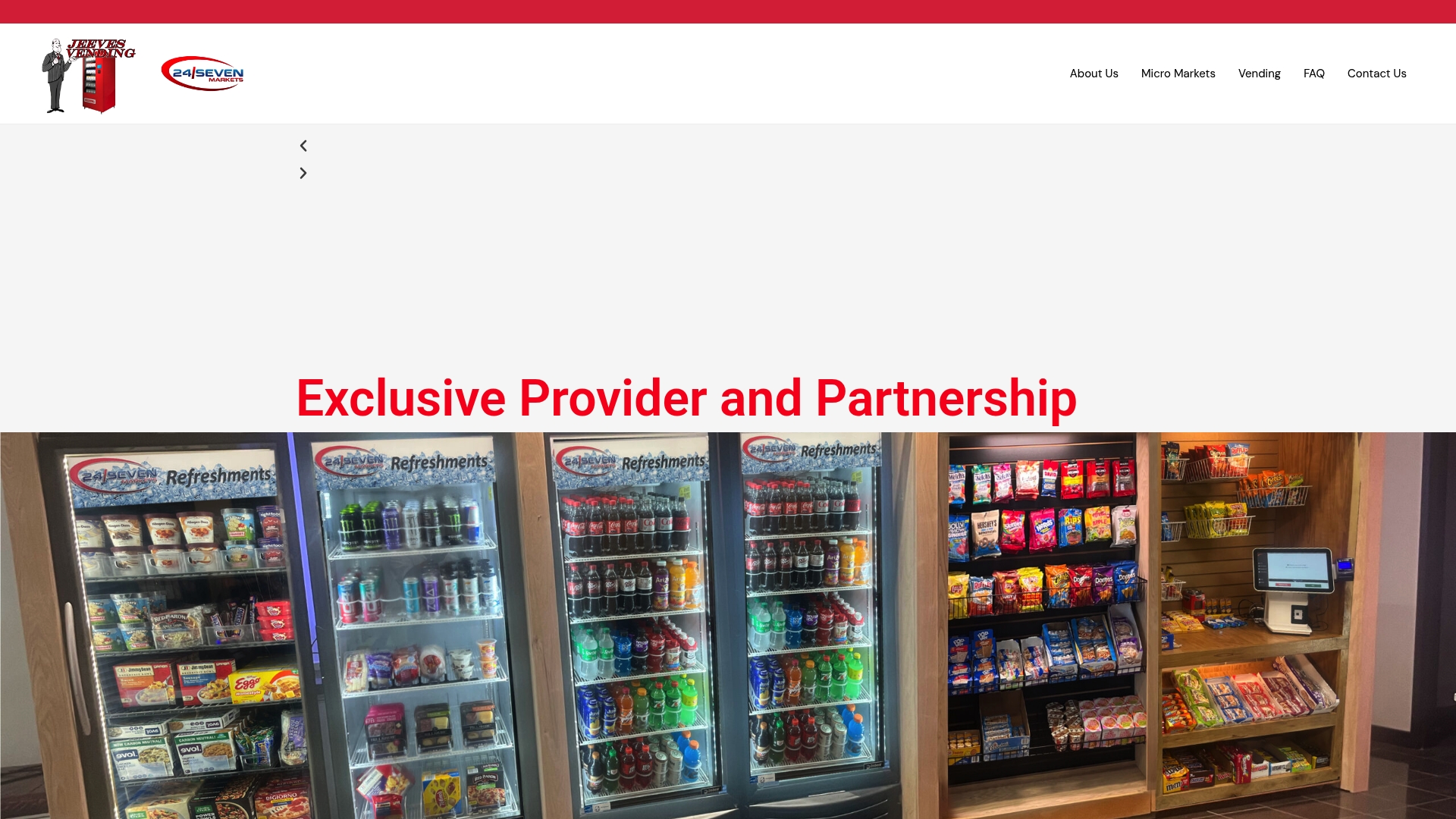
Whether your office has 30 employees or 300, Jeevesvending builds a program around your team’s actual preferences and your budget. The setup process is straightforward, and the ongoing service keeps the program running without demanding your time. Explore Jeevesvending’s solutions to find the right fit for your workplace, or contact the team directly to ask about a no-commitment pilot program.
FAQ
What are employee satisfaction snack amenities?
Employee satisfaction snack amenities are workplace food and beverage programs designed to improve morale, wellness, and convenience through curated snack and drink selections. They include vending machines, managed pantries, and micro-markets.
How much does a workplace snack program cost per employee?
Healthy snack programs cost $5–$8 per employee per day, while coffee-only programs run $1–$3 and premium options start at $10, based on 2026 benchmarks across 180-plus providers.
What snacks do employees actually want at work?
Snacks that combine protein, fiber, and healthy fats keep employees full and focused, but the most-used programs also include a mix of savory, sweet, and indulgent options to satisfy diverse preferences.
How do I start a snack program without a large budget?
Start with a vending machine or a small managed pantry focused on 15–20 high-demand items. Most providers offer a 30-day pilot before any long-term contract, which limits your financial risk while you test employee response.
Do snack amenities actually improve employee retention?
Intentional refreshment programs that reflect real employee preferences increase consistent use and signal employer investment in daily wellbeing, both of which contribute to stronger retention and engagement scores.