
The most practical examples of automated workplace refreshments you can deploy today include smart vending machines, micro-markets with self-checkout kiosks, automated coffee kiosks, AI smart coolers, fresh-food kiosks, hydration stations, and grab-and-go pantry systems. Each solves a different operational problem, and choosing the wrong one for your site type is the most common mistake managers make.
Here is a quick scan of what fits where:
- Smart vending machines: Offices, warehouses, and gyms with limited floor space and high snack/beverage turnover
- Micro-markets (self-checkout stores): Large multi-shift facilities, distribution centers, and campuses needing 24/7 fresh-food access
- Automated coffee kiosks: Reception areas, office hubs, and break rooms where hot-beverage demand is high but staffing a café is impractical
- AI smart coolers: Satellite break rooms, lobbies, and gym floors where a compact, cashless grab-and-go option fits better than a full machine
- Fresh-food kiosks: Warehouses and hospitals where employees need real meals, not just snacks, during short breaks
- Hydration stations: Physically demanding environments like warehouses, manufacturing floors, and gyms where water access is a safety and performance concern
- Grab-and-go pantry systems: Smaller offices that want a curated, subsidized snack experience without full vending infrastructure
- Contactless self-checkout kiosks: Any site upgrading from cash-only machines to badge, mobile, or card payment
OSHA’s general-duty standards require employers to provide a safe and healthy workplace, and on-site refreshment access increasingly factors into that conversation, particularly for heat-intensive environments. Jeeves Vending operates across the Dallas-Denton region and covers all of these solution types with tailored installations.
Table of Contents
- 9 examples of automated workplace refreshments and what each one actually does
- How the technology inside these machines actually works
- What workplaces actually gain from automated refreshments
- How to evaluate, pilot, and deploy a solution
- How Jeeves Vending implements automated refreshment programs
- Key Takeaways
- What actually makes a refreshment program succeed
- Jeeves Vending serves the Dallas-Denton region with no-cost installations
- Useful sources and further reading
9 examples of automated workplace refreshments and what each one actually does
1. Smart vending machines
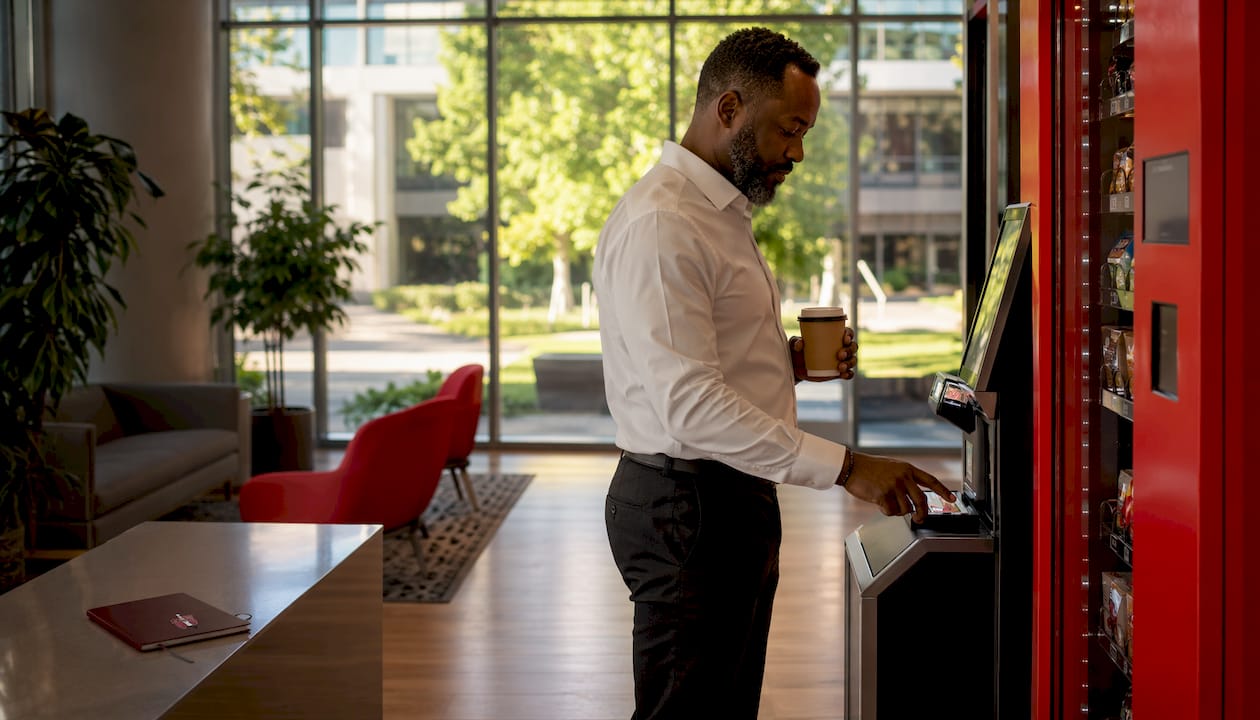
A smart vending machine looks like a traditional unit but runs on cloud-connected software that tracks every transaction, monitors temperature, and sends restock alerts before a slot goes empty. Touchscreen interfaces let employees browse nutritional info, pay by card or phone, and get a refund without calling anyone. For warehouses and distribution centers, combining vending with micro-markets gives the broadest coverage across multiple shift patterns. Assortments typically include chips, candy, protein bars, cold drinks, and energy beverages, though the best operators customize by shift.
2. Micro-markets and self-checkout stores
A micro-market is an open, unattended retail space with shelving, refrigerated coolers, and a self-checkout kiosk, running 24/7 with no staff required. Employees grab fresh sandwiches, salads, protein pots, and hot drinks, then scan and pay at the kiosk. Micro-markets improve satisfaction in warehouses specifically because they offer the variety of a convenience store without the overhead. They suit larger sites with sufficient floor space for an open layout. Jeeves Vending’s micro-market solutions include self-checkout kiosks and managed restocking for Dallas-area facilities.
3. Automated coffee kiosks
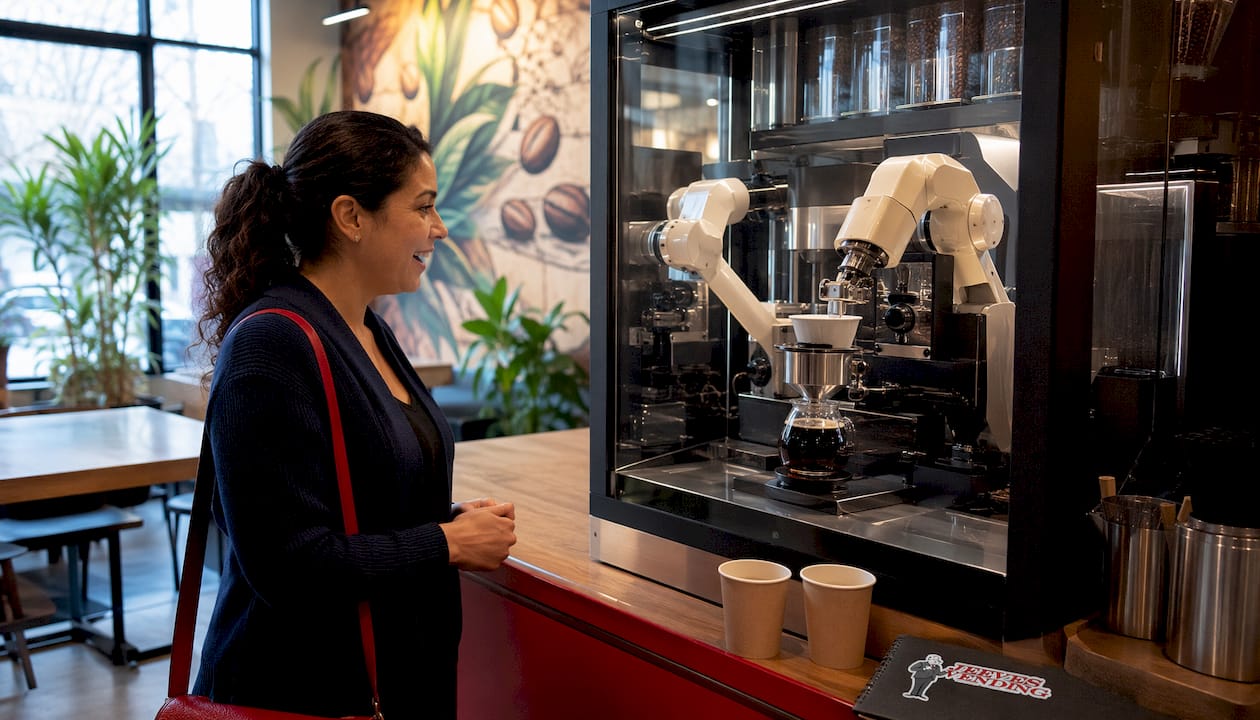
These range from bean-to-cup machines that grind fresh per order to fully robotic kiosks that brew, lid, and dispense a cup with zero human involvement. For office hubs and reception areas, a quality automated coffee kiosk reduces the mid-morning exodus to the nearest coffee shop, which is a real productivity drain. Night-shift warehouse teams benefit from high-capacity coffee setups positioned near break room entry points, since designing vending for night shift requires thinking about both layout and product mix. Understanding coffee preferences by role helps when selecting roast profiles and drink types for your assortment.
4. AI smart coolers
An AI smart cooler uses computer vision and weight sensors to track what gets taken from each shelf in real time, then charges the employee’s badge or mobile wallet automatically. No scanning, no checkout line. These units are compact enough for a satellite break room or a gym floor, and they handle fresh items like yogurt, fruit cups, and cold brew without the footprint of a full micro-market. The AI component also flags unusual removal patterns, which helps with loss prevention.
5. Fresh-food kiosks
Fresh-food kiosks go beyond snacks. They stock hot meals, wraps, grain bowls, and refrigerated entrées, typically with a built-in microwave or heating element so employees can eat a real meal in a short break window. For warehouses and hospitals where a 30-minute break is the norm, this matters. Expanded assortments that include fresh meals, allergen-friendly options, and international choices are increasingly standard in high-volume industrial settings. Pair a fresh-food kiosk with a beverage machine and you have a functional break room with no kitchen staff.
6. Hydration stations
A hydration station is a dedicated water access point, often bottleless, that connects to the building’s water line and provides cold, filtered or purified water and ice on demand. For warehouses, manufacturing floors, and gyms, this is not a luxury. Dehydration in physically demanding roles contributes to fatigue and errors, and a water cooler in the corner is not enough when employees are moving fast across a large footprint. High-capacity units with bottle-filling spouts, ice dispensers, and sanitary touchless activation are the right spec for these environments. Multiple placement points across a large floor beat one central unit every time.
7. Beverage vending machines
Dedicated beverage machines stock cold drinks, energy drinks, sports beverages, and water in a high-capacity format built for heavy use. They work well alongside food vending or micro-markets rather than as standalone solutions. For warehouse and gym settings, the beverage vending strategy should weight electrolyte drinks and water heavily, with energy drinks as a secondary category. Payment flexibility matters here: badge-tap and mobile pay reduce transaction time during short breaks when lines can form quickly.
8. Grab-and-go pantry systems
A pantry program stocks a dedicated shelf or cabinet with curated snacks and drinks, often subsidized or free to employees, with an honor-system or RFID checkout. These suit smaller offices of 20–60 people where a full vending machine feels oversized. The tradeoff is inventory management: without telemetry, restocking relies on manual checks, which means stockouts happen. Some managed pantry providers include a basic inventory app, but it is less sophisticated than a full vending telemetry system.
9. Contactless self-checkout kiosks
A standalone self-checkout kiosk lets employees scan items from an adjacent open shelf or cooler and pay by card, phone, or badge without any cashier. These are common in micro-market setups but can also anchor a smaller grab-and-go corner in an office lobby or gym. ADA-compliant kiosk heights, screen contrast settings, and audio prompts make these accessible to a wider range of employees. For visitor areas, a kiosk with guest credit card access removes the need for employee badge enrollment.
Comparison: which solution fits your site
| Solution | Best for | Space needed | Key features |
|---|---|---|---|
| Smart vending machine | Offices, warehouses, gyms | 6–10 sq ft | Touchscreen, cashless, telemetry |
| Micro-market | Large multi-shift sites | 20 to 40 sq ft | Open shelving, fresh food, self-checkout |
| Automated coffee kiosk | Office hubs, reception | 4–8 sq ft | Bean-to-cup, cashless, high volume |
| AI smart cooler | Satellite rooms, gyms | 4–6 sq ft | Computer vision, auto-charge, compact |
| Fresh-food kiosk | Warehouses, hospitals | 10–20 sq ft | Hot/cold meals, heating element |
| Hydration station | Warehouses, manufacturing, gyms | 2–4 sq ft | Filtered water, ice, bottle-fill |
| Beverage vending | High-traffic break rooms | 6–10 sq ft | Cold drinks, high capacity, badge pay |
| Grab-and-go pantry | Small offices | 4–8 sq ft | Curated snacks, RFID or honor system |
| Self-checkout kiosk | Lobbies, open-shelf areas | 2–4 sq ft | Card/badge/mobile, ADA-compliant |
Vendor models to know: The free machine plus revenue-share model costs you nothing upfront and the vendor earns from sales, which works well when your headcount is high enough to generate consistent volume. A leased model gives you more control over pricing and assortment. Purchasing outright makes sense for organizations that want full ownership and have internal maintenance capacity. Managed micro-markets typically combine equipment, restocking, and reporting under one contract.
Pro Tip: Before signing any vendor agreement, ask specifically whether the contract includes a minimum restock frequency guarantee and a defined SLA for machine downtime. Vague “as needed” language on restocking is the most common source of dissatisfaction after installation.
How the technology inside these machines actually works
Every modern automated refreshment solution runs on a combination of IoT telemetry, cloud-based point-of-sale software, cashless payment processing, and, increasingly, AI-driven demand forecasting. Understanding what each layer does helps you ask better questions during vendor selection.
- IoT telemetry: Sensors in the machine report inventory levels, temperature, and transaction data to a cloud dashboard in real time. Your vendor sees a stockout before you do, and remote diagnostics can catch a refrigeration issue before product spoils.
- Cashless payment processing: NFC readers accept Apple Pay, Google Pay, credit cards, and employee badge tap. This removes the cash-handling friction that slows down short breaks and reduces theft risk.
- AI demand forecasting: Sales data by SKU, time of day, and day of week feeds a model that predicts what to restock and when. The practical result is fewer stockouts on your top sellers and less waste on slow movers.
- Computer vision and weight sensors: Used in AI smart coolers and some micro-markets to identify which items were taken without requiring a scan. This also supports loss prevention by flagging unusual patterns.
- Remote temperature monitoring: Refrigerated units report temperature continuously. If a cooler drifts out of safe range, the system alerts the vendor and logs the event, which matters for food safety compliance.
An AI-run vending experiment at Anthropic’s office scaled into AI-run stores and cafes within a year, illustrating how quickly agent-driven retail formats can expand once the underlying telemetry and payment infrastructure is in place.
Pro Tip: Ask your vendor for a sample telemetry dashboard before you sign. The metrics that matter most in the first 90 days are sales per SKU, stockout frequency by slot, transaction time by payment method, and utilization by shift. If the vendor cannot show you those four in a single view, their reporting is not mature enough for a data-driven pilot.
On data privacy: telemetry systems collect transaction-level data, and micro-market cameras used for loss prevention capture video in the break room. Ask vendors for their data retention policy, encryption standards, and whether badge-payment data is stored on-site or in the cloud. For any camera-equipped system, post clear signage and confirm the setup complies with your state’s workplace privacy laws.
What workplaces actually gain from automated refreshments
The clearest benefit is time. On-site refreshment solutions reduce the time employees spend leaving the facility for food and drinks, which directly improves operational efficiency. Employees typically spend noticeably less time on off-site break trips once a practical on-site solution is available, and that time savings accumulates across multiple shifts and a large headcount.
Beyond time, the benefits break down into four categories:
- Convenience and morale: Employees who can grab a meal or coffee without leaving the building report higher satisfaction. Providing reliable on-site food access is a visible signal that the organization prioritizes employee wellbeing, and that signal tends to show up in engagement and retention.
- Healthier options on demand: Fresh-food kiosks and micro-markets make it practical to stock protein-rich meals, allergen-friendly items, and hydration options that a standard snack machine cannot carry.
- Inventory efficiency: Telemetry-driven restocking means vendors replenish based on actual sales data, not a fixed schedule. Slow-moving SKUs get replaced; top sellers stay stocked.
- Shift coverage: A 24/7 micro-market or smart vending setup serves night-shift employees who have no other on-site food option, which is a retention issue in manufacturing and logistics.
Metrics to track during a pilot:
- Break-related time saved per shift (survey-based or badge-in/badge-out comparison)
- Sales per employee per week
- SKU sell-through rate by slot
- Stockout frequency (how often a slot hits zero before restock)
- Utilization by shift (day vs. night vs. weekend)
- Average transaction value and payment method mix
Set 30-day targets before launch. If a SKU is not selling in the first 30 days, swap it. If a payment method accounts for less than 5% of transactions, investigate whether the hardware is working or whether employees simply do not know it is available.
How to evaluate, pilot, and deploy a solution
Run a short pilot before committing to a full rollout. The goal is to test placement, payment methods, and assortment with real employees before locking in a multi-year contract.
- Site survey (Week 1–2): Map employee traffic patterns, identify break room locations, measure available floor space, and note power and water access points. Flag any ADA clearance requirements.
- Pilot design (Week 2–3): Choose one or two solution types based on headcount and shift patterns. Define your assortment, set pilot metrics, and confirm vendor SLAs in writing.
- Installation (Week 3–4): Coordinate with the vendor on delivery, electrical, and network setup. Brief employees on payment options and how to report issues.
- 30-day pilot (Weeks 4–8): Run the solution with minimal intervention. Collect telemetry data and gather informal employee feedback.
- Data review (Week 8–9): Compare actual sales data against your pilot targets. Identify underperforming SKUs, payment friction points, and placement issues.
- Scale decision (Week 9–10): Expand to additional locations, upgrade to a micro-market, or adjust the assortment based on what the data shows.
Vendor selection criteria to check before signing:
- Restock cadence guarantee (how often, and what triggers an emergency restock)
- Cold-chain management and temperature logging for refrigerated units
- Payment flexibility: badge, mobile, card, and cash fallback
- Reporting dashboard access for the facility manager, not just the vendor
- Liability and insurance coverage for machine damage or food safety incidents
- Machine downtime SLA: what is the guaranteed response time for a broken unit?
Placement matters more than most managers expect. Keep machines away from main walking paths, PPE storage areas, and door approaches. Good sightlines during shift changes reduce both safety risks and loss. For gyms and visitor lobbies, position units near natural pause points, not tucked in corners.
Pro Tip: Negotiate a 60-day SKU testing period into your contract. This gives you the right to swap underperforming products without penalty during the pilot window, which is the fastest way to build an assortment employees actually use.
How Jeeves Vending implements automated refreshment programs
Jeeves Vending’s approach starts with a site assessment, not a catalog. The team evaluates headcount, shift patterns, floor layout, and existing break room infrastructure before recommending a solution mix.
A typical Jeeves implementation for a mid-size Dallas-area facility includes:
- Site assessment: Traffic mapping, space measurement, power and network confirmation, and ADA clearance review
- Customized assortment: SKU selection based on workforce demographics, shift patterns, and any dietary or allergen requirements
- Remote telemetry setup: Cloud-connected inventory and temperature monitoring configured before the first day of operation
- Restock SLA: A defined restock frequency tied to sales velocity, not a fixed calendar schedule
- Employee onboarding: Signage, payment method instructions, and a feedback channel so employees can request products
Jeeves offers modern vending machines and AI smart coolers for Dallas-Denton businesses, with no upfront cost to the facility under the revenue-share model. The micro-market installations include self-checkout kiosks and managed restocking.
The Anthropic example noted earlier, where an AI-run vending pilot scaled into full stores within a year, reflects the same trajectory Jeeves sees locally: a single well-placed machine or cooler often becomes the proof of concept that justifies a larger micro-market install.
Key Takeaways
Automated refreshment solutions work best when the solution type, placement, and assortment are matched to the specific workforce and shift pattern, not chosen from a default catalog.
| Point | Details |
|---|---|
| Match solution to site size | Small offices fit smart vending or AI coolers; large multi-shift sites need micro-markets for 24/7 fresh-food access. |
| Pilot before committing | Run a 30–90 day pilot with defined metrics (stockout rate, SKU sell-through, shift utilization) before signing a long-term contract. |
| Telemetry is non-negotiable | Ask for dashboard access showing sales per SKU, stockout frequency, and temperature logs before you agree to any vendor terms. |
| Assortment drives adoption | Shift-tailored menus, hydration options for physical roles, and regular SKU swaps based on sales data determine whether employees actually use the solution. |
| Jeeves Vending local option | Jeeves Vending provides no-cost installations, AI smart coolers, and managed micro-markets across the Dallas-Denton region with defined restock SLAs. |
What actually makes a refreshment program succeed
The conventional wisdom says “put in a vending machine and employees will be happy.” That is not wrong, but it is incomplete. The programs that actually move the needle on morale and retention are the ones where the assortment feels like someone thought about who works there.
Overnight warehouse teams do not want the same mix as a daytime office. They want something warm, something caffeinated, and something that feels like a small comfort at 3 AM. Day-shift gym staff want protein and hydration, not a wall of chips. The facility managers who get this right are the ones who look at their sales data after 30 days and actually swap out what is not moving, rather than waiting for the annual contract review.
Transparent reporting is the other piece most managers underestimate. A vendor who gives you real dashboard access, not just a monthly PDF summary, is a vendor you can hold accountable. If you cannot see stockout frequency by slot, you cannot tell whether the machine is being restocked on schedule. Ask for it upfront, and if the vendor hesitates, that tells you something.
Partnership expectations matter too. The best vendor relationships work because the facility manager and the operator are looking at the same data and making decisions together. That means a defined escalation path for machine issues, a named account contact, and a restock SLA that has teeth.
Jeeves Vending serves the Dallas-Denton region with no-cost installations
Zero upfront cost is the sharpest contrast Jeeves Vending offers compared to purchasing or leasing equipment yourself. Under the revenue-share model, Jeeves installs and maintains the machines at no charge to your facility, handles restocking based on telemetry data, and manages all service calls. You get a functioning refreshment program without capital expenditure or internal maintenance burden.
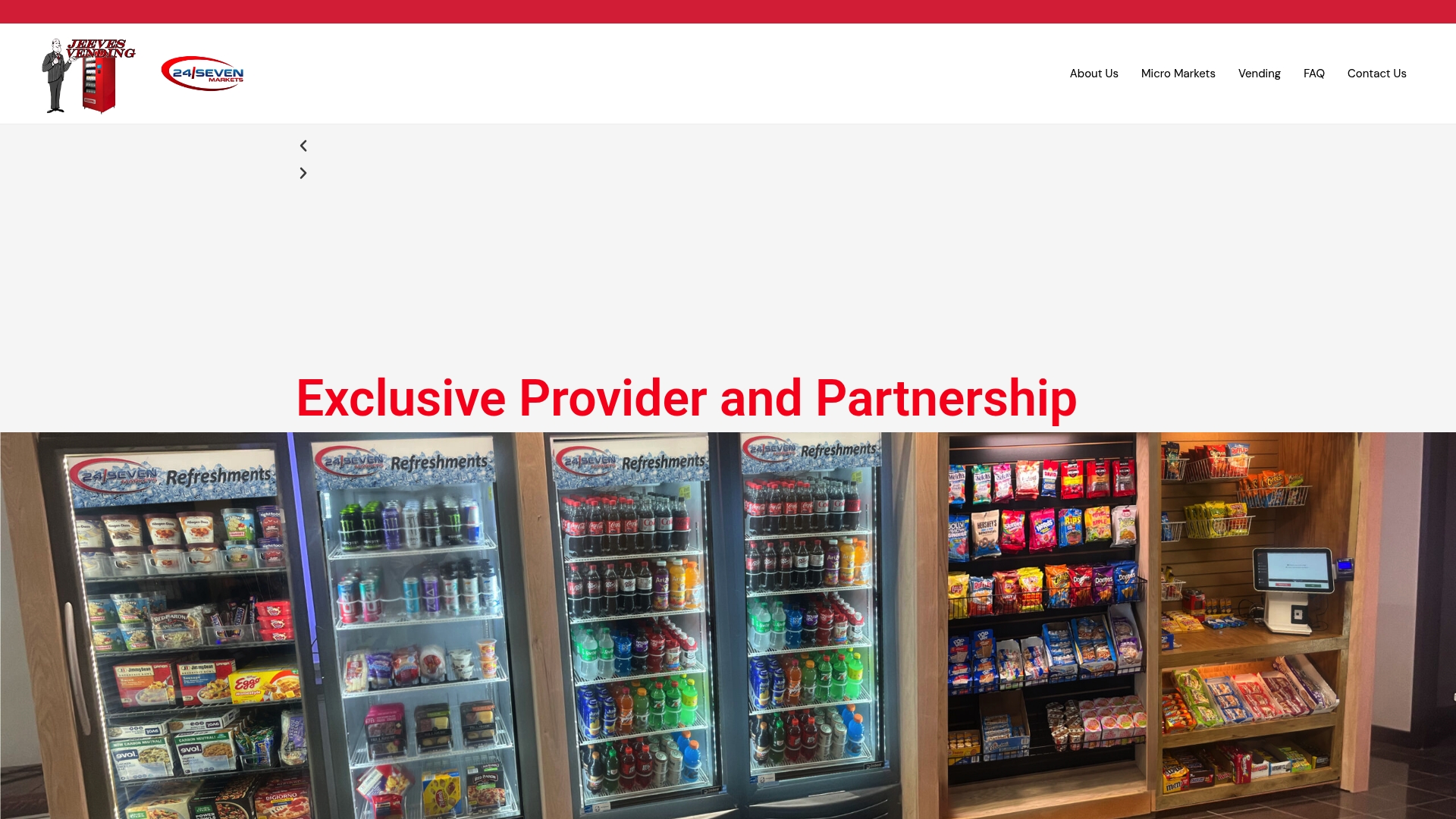
What the onboarding process looks like in practice: Jeeves conducts a site assessment, builds a customized product menu for your workforce, sets up remote telemetry, and trains your team on payment options and the feedback process. Whether you need a single AI smart cooler for a satellite break room or a full micro-market with self-checkout for a large warehouse, the installation is handled locally by a team that knows the Dallas-Denton market. Managers who want to understand the full range of machine types before committing can review the vending machine options to compare formats and business models. To get started, contact Jeeves Vending and request a site survey.
Useful sources and further reading
These sources offer practical guidance for managers evaluating automated refreshment options, from technology explanations to shift-specific implementation advice.
- Modern Vending Machines and AI Smart Coolers, Jeeves Vending: Product and capability overview for Dallas-area facilities, including AI smart cooler specs and vending options.
- Micro Markets in Dallas, Jeeves Vending: Micro-market and self-checkout deployment details for large or multi-shift sites.
- Beverage Vending in Warehouse Settings: A Manager’s Guide, Jeeves Vending: Hydration-focused guidance on product mix and restock strategy for physical workplaces.
- What Is a Hydration Station Vending Setup? Jeeves Vending: Explains high-capacity water and hydration station options for demanding environments.
- Vending Machines for Warehouses, EM Smart Vending: Covers hybrid vending and micro-market approaches for large distribution and warehouse sites.
- How Micro Markets Improve Employee Satisfaction in Warehouses, New England Vending Services: Documents the variety and shift-coverage benefits of micro-markets in industrial settings.
- Designing Break Room Vending for Night Shift Teams, Barrett Vending: Practical layout and assortment recommendations for overnight operations.
- Anthropic’s AI-Run Vending Experiment, Fortune: Documents how an AI-run vending pilot scaled into stores and cafes within a year, illustrating technology-driven adoption timelines.
- Employee Satisfaction Snack Amenities: 2026 HR Guide, Jeeves Vending: HR-facing resource linking on-site refreshments to employee satisfaction and retention metrics.
- Warehouse Water Station: Summer Hydration Guide, Da-Com: Detailed planning guide for high-capacity water and ice setups in warehouse and manufacturing environments.