
For most warehouses, a micro-market is the strongest overnight option when space and security allow it, with smart coolers or hybrid vending as the better fit for compact or tightly controlled sites. Round-the-clock access to food and drinks supports fatigue management and safety on the night shift. The fastest next step is requesting a site review from a full-service vendor, such as Jeeves Vending.
TL;DR:
- Choose compact vending for tight or secured spaces, smart coolers for chilled meals, and micro markets where space and oversight support open access.
- Packaged snack and drink machines need service several times weekly, while fresh food coolers may need daily visits; remote monitoring helps prevent overnight stockouts.
- Stock caffeinated drinks for the first half of each shift, then move water and decaffeinated choices forward to limit sleep disruption afterward.
- NIOSH estimates injury risk is 147% higher on shifts exceeding 12 hours than on shifts lasting 8 hours, and recommends food access among fatigue controls.
- Many providers install equipment at no upfront cost and earn through sales, but warehouses should confirm service terms and hidden power, waste, and refrigeration costs.
Table of Contents
- Which format fits your warehouse: vending machines, smart coolers, or micro-markets
- What to stock for third-shift workers: nutrition, caffeine, and timing
- Restocking, maintenance, and service expectations for overnight operations
- How vending access supports fatigue management and safety
- Cost, revenue, and ROI considerations (including free-install programs)
- Practical 6-step checklist to implement or improve third-shift vending at your warehouse
- Publisher perspective: why full-service solutions fit third-shift warehouses
- How we can set up third-shift vending or a micro-market for your warehouse
- FAQ
- Sources
Which format fits your warehouse: vending machines, smart coolers, or micro-markets
The right format depends on your floor plan, your security setup, and how much variety your crew actually wants at 2 a.m.
Compact vending machines work best where floor space is tight or where a secured, enclosed unit matters more than product range. They handle packaged snacks and drinks reliably and need little supervision. Smart coolers fill the gap for chilled grab-and-go items, prepacked fresh foods, and quick card or app-based checkout, without the footprint of a full market setup. Micro-markets make sense in larger break areas where you want self-checkout, open shelving, and a wider mix that includes fresh foods, because employees can see and choose items directly rather than guessing from a machine window.
Before picking a format, walk through a short list of site constraints:
- Footprint: how much usable breakroom or corridor space you can dedicate.
- Power and lighting: outlets near the area and adequate overnight lighting for safety and visibility.
- Staffing and supervision: whether anyone is present to monitor an open market setup.
- Security: camera coverage, badge access, or enclosed placement needs.
- ADA access: clear approach space and reachable controls for all employees.
Many operators land on a hybrid: a vending machine for packaged goods paired with a smart cooler or small market for fresh items, which industry data shows is an increasingly common way operators tailor solutions by site size and security need.
What to stock for third-shift workers: nutrition, caffeine, and timing
Third-shift crews eat differently than day-shift employees. A stocking plan built for 2 a.m. hunger looks different from a typical office vending lineup.
- Protein-forward items such as jerky, protein bars, and nut packs that support sustained energy without a sugar crash.
- Light meals like wraps, sandwiches, or microwaveable bowls for a real dinner break mid-shift.
- Hydration options including water, electrolyte drinks, and low-sugar beverages.
- Caffeine choices positioned for the first half of the shift rather than the final hours before clock-out.
- Healthy snacks like fruit cups, granola, and trail mix to balance out the sweets.
Caffeine timing matters more than most operators realize. Loading caffeinated options for consumption early in the shift helps alertness when fatigue typically sets in, while limiting late-shift caffeine availability reduces the odds of disrupted sleep once the shift ends. Fresh items need clear date labeling and shorter rotation cycles since overnight breakrooms don’t get the same foot traffic as a daytime office kitchen. Seasonal rotation, covered in more detail in our guide to seasonal snack changes, keeps product mix from going stale in employees’ eyes as well as on the shelf.
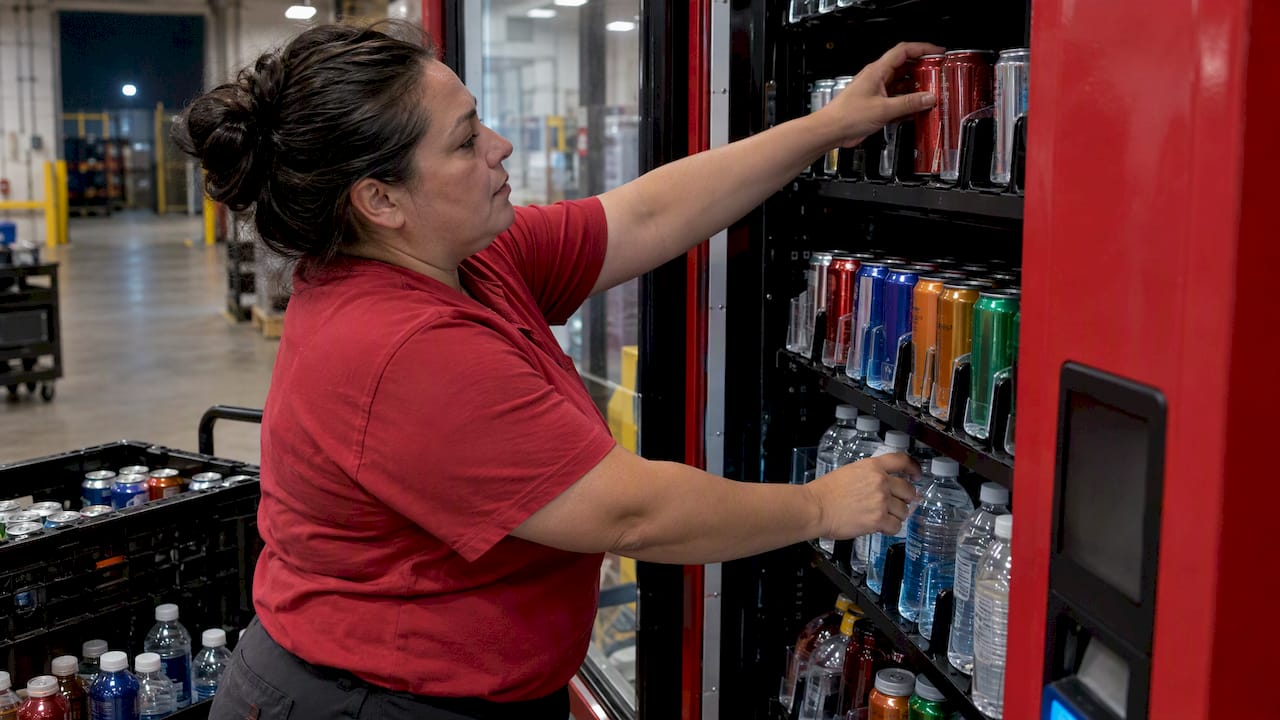
Pro Tip: Place caffeinated drinks at eye level during the first stocking cycle of the night and move decaf or water options forward as the shift progresses.
Restocking, maintenance, and service expectations for overnight operations
Overnight vending lives or dies on restocking discipline. A machine that runs out of water at 3 a.m. with no one to call is worse than no machine at all.
- Restock cadence: high-traffic snack and drink machines typically need restocking several times a week; fresh-food coolers or markets often need daily or near-daily visits depending on throughput.
- Telemetry benefits: remote stock monitoring flags low inventory before it becomes an empty slot, cuts emergency callouts, and gives you real sales data to adjust the product mix.
- Service-level expectations: ask any provider for a defined restocking window and an emergency restock option for high-demand items that sell out early.
- Food safety basics: refrigerated units need consistent temperature logs, and spoilage-prone items need shorter shelf windows than packaged snacks.
Scheduling restocks for late afternoon or early evening, ahead of the overnight shift, means machines start the night fully stocked rather than running on leftovers from the previous day.
How vending access supports fatigue management and safety
Night work carries a documented fatigue cost. NIOSH guidance notes that the risk of occupational injury is estimated to be 147% higher on shifts longer than 12 hours compared with traditional 8-hour shifts, and recommends that employers provide controls including rest breaks and food access to offset that risk.
A 2021 study found that eating a snack during simulated night work reduced physiological stress indices and helped manage performance declines tied to prolonged wakefulness, which supports on-site food access as a practical, low-cost intervention that can help manage fatigue during night work.
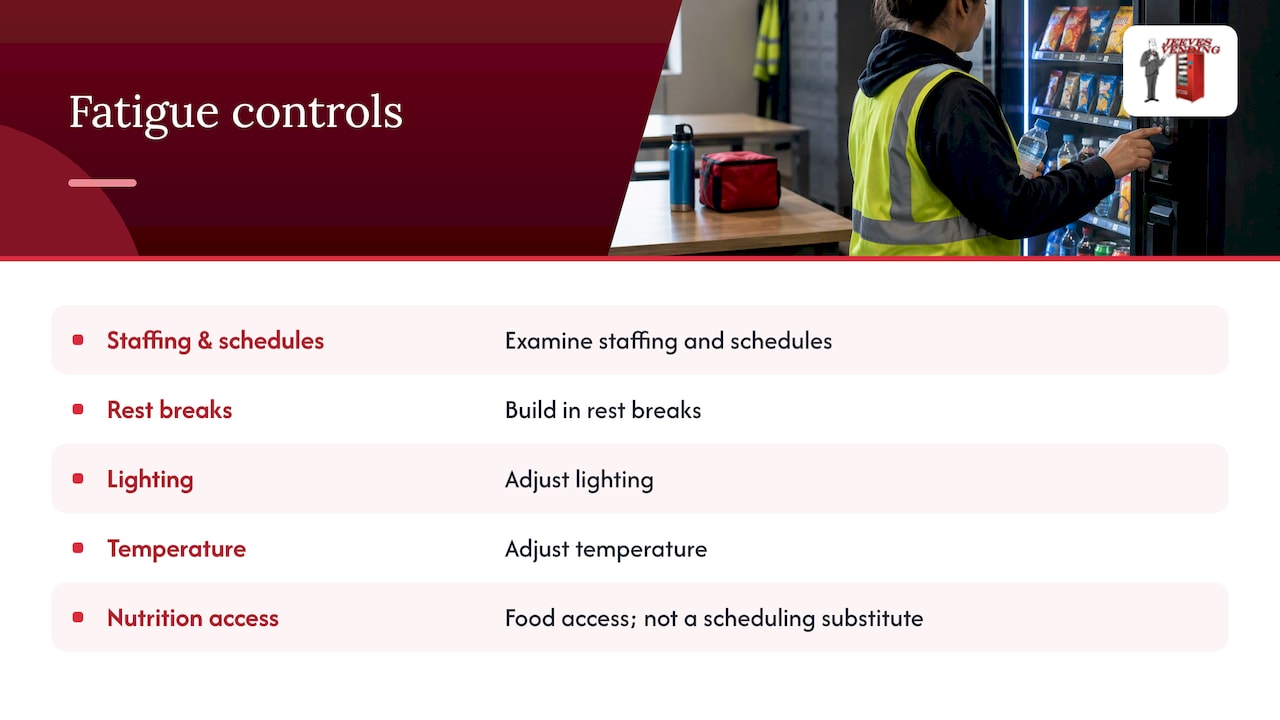
OSHA’s fatigue prevention guidance frames this as one control among several: examining staffing and schedules, building in rest breaks, adjusting lighting and temperature, and giving workers nutrition access. Vending and micro-markets are not a substitute for sound scheduling, but they are one of the more reliable levers an operator can pull without touching headcount.
Cost, revenue, and ROI considerations (including free-install programs)
Most warehouses never pay for the equipment itself. The common commercial models are free placement with revenue share, outright purchase, and micro-market commission structures, where the provider earns from product sales rather than a service fee charged to you.
ROI math is straightforward once you know your numbers: multiply the number of third-shift workers by expected daily transactions and average ticket size to estimate revenue potential, which in turn shapes how a provider stocks and prices your machine.
Before signing on, check for hidden costs that aren’t always obvious upfront:
- Power draw for refrigerated units or coolers running continuously overnight.
- Waste removal for expired fresh items if turnover is slower than expected.
- Refrigeration load on existing HVAC if units sit in a conditioned space.
- Seasonal promotions that may require temporary product changes or added signage.
Practical 6-step checklist to implement or improve third-shift vending at your warehouse
Getting from decision to a live, stocked machine doesn’t need to take months.
- Assess the site: check power access, available space, lighting, and security coverage in your breakroom layout.
- Select format and mix: choose vending, smart cooler, or micro-market based on the stocking and space guidance above.
- Agree on service terms: lock in telemetry access, restocking cadence, and an emergency SLA in writing.
- Communicate to staff: post clear signage on payment methods and point out healthy options.
- Measure results: track sales data, stockout frequency, and direct employee feedback in the first month.
- Iterate: rotate products seasonally and test shift-specific promotions based on what sells.
Pro Tip: Run your first 30 days as a trial period and ask your provider for sales-by-hour data so you can see exactly when third-shift demand peaks.
Publisher perspective: why full-service solutions fit third-shift warehouses
Overnight vending breaks down fastest when restocking is inconsistent or when nobody notices a dead machine until a worker complains. We built our model around that exact failure point: state-of-the-art vending machines and custom micro-markets installed at no cost to the business, with remote monitoring that flags low stock before a shift starts, not after it ends.
For warehouse clients, that means restocking visits timed to actual usage patterns rather than a fixed calendar, and product mixes we adjust seasonally so a crew eating protein bars in July isn’t stuck with the same lineup in December. Overnight shifts have different hunger patterns than a 9-to-5 office, and we treat the product mix as something to tune, not something to set once and forget.
— Gary
How we can set up third-shift vending or a micro-market for your warehouse
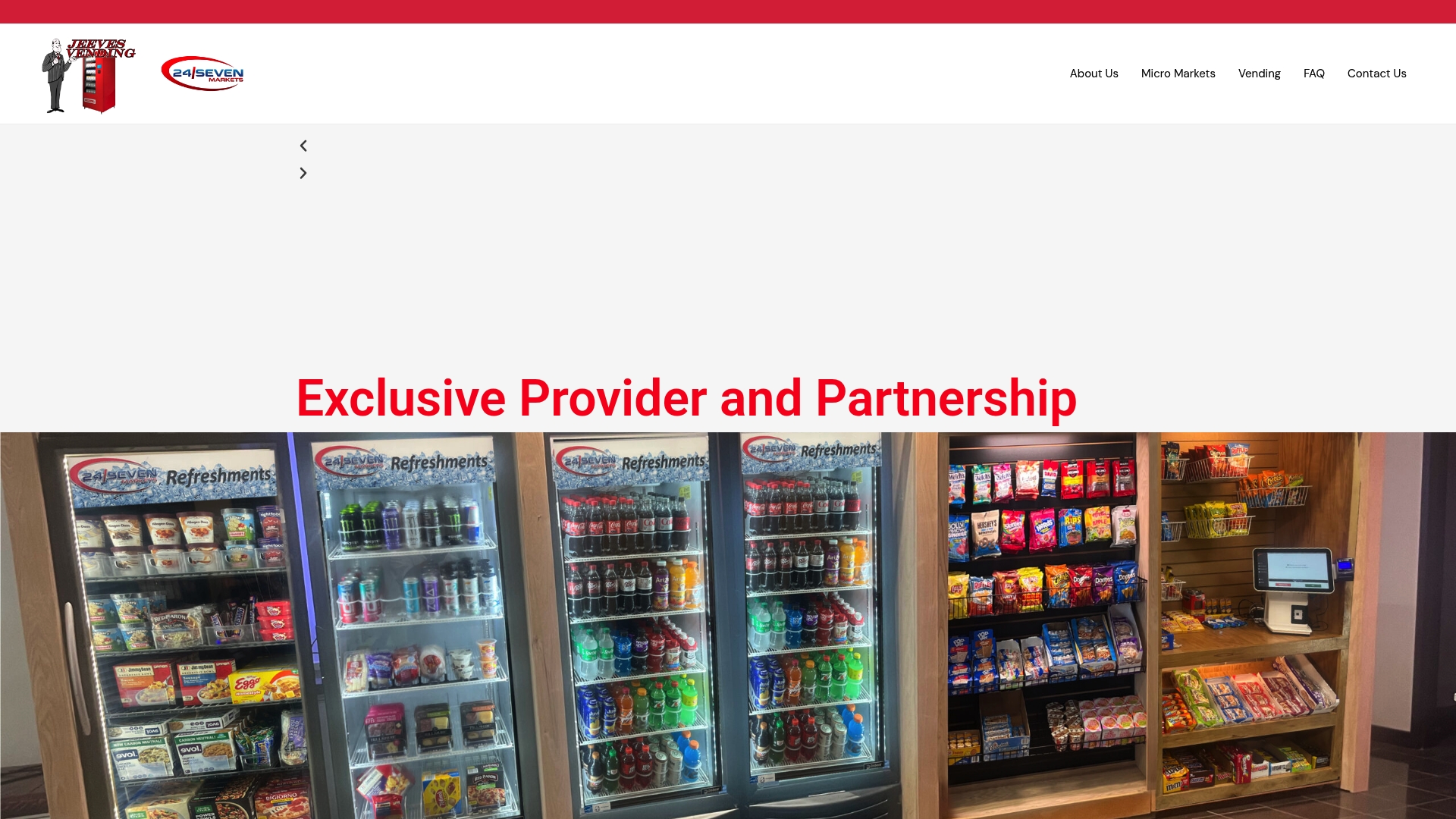
We cover the installation and ongoing management, so your only job is approving a product mix and giving us a space to put it. Our free full-service vending program includes remote telemetry, flexible restocking, and either traditional vending or a custom micro-market depending on your floor plan.
When you request a proposal, ask for specifics on:
- Restocking SLA and emergency restock options for overnight stockouts.
- Telemetry access so you can see inventory levels without a site visit.
- Payment options including card, mobile, and cash where applicable.
- Fresh-food handling practices if you want chilled or perishable items on-site.
Request a site review from Jeeves Vending and we’ll scope the right format for your overnight crew.
FAQ
What’s the best vending option for a 24-hour warehouse?
A micro-market works well where space and security allow self-checkout, while compact vending or a smart cooler fits tighter or more secure sites. Many warehouses run a hybrid of packaged vending plus a chilled cooler for fresh items.
How often should vending machines be restocked overnight?
Restocking frequency depends on throughput: snack and drink machines often need service several times a week, while fresh-food coolers or markets may need daily or near-daily visits. Remote telemetry helps providers time restocks to actual usage rather than a fixed schedule.
Does on-site food access actually help with night-shift fatigue?
NIOSH guidance recommends food access as one practical control for fatigue risk among employers managing night shifts, alongside scheduling and rest breaks. A 2021 study also found that snacking during simulated night work reduced stress indices tied to prolonged wakefulness.
How much does it cost a warehouse to install vending or a micro-market?
Most providers, including our free full-service program, install equipment at no cost to the business and earn revenue from product sales rather than a service fee. Pricing for outright equipment purchase is available on request through a direct proposal.
What should I look for when choosing a vending provider for overnight shifts?
Ask for a defined restocking SLA, remote telemetry access, and an emergency restock option for high-demand items. Also confirm how the provider handles fresh-food safety and seasonal product rotation for your specific shift patterns.
Sources
- Working Hours and Fatigue: Meeting the Needs of American Workers and Employers | NIOSH Science Bulletin | CDC
- Study on snacking during night work and stress/performance (PubMed 2021)
- Long Work Hours, Extended or Irregular Shifts, and Worker Fatigue – Prevention | OSHA
- New Census Shows Convenience Services Outpacing Much of Foodservice and Shifting Toward Tech‑Enabled, Health‑Forward Offerings