
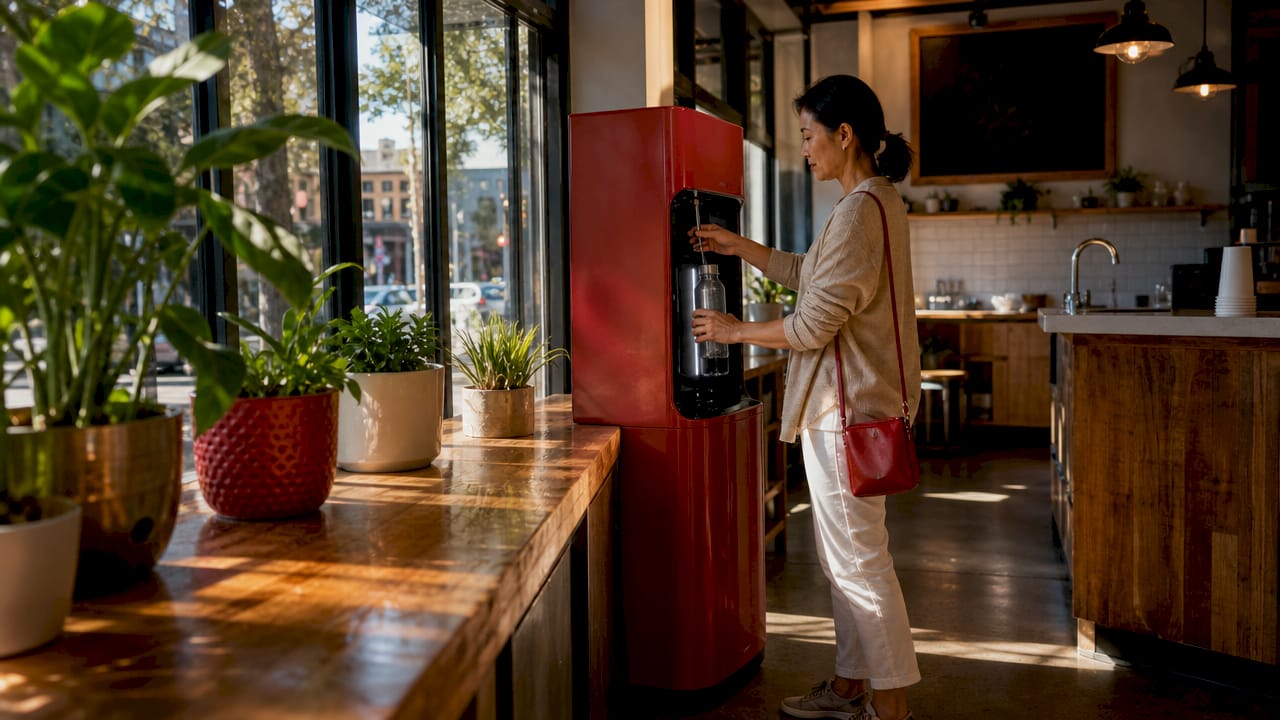
A hydration station vending setup is a self-service water dispensing system that delivers filtered, chilled, and often enhanced water directly into reusable containers, replacing single-use plastic bottles at the point of consumption. The industry term for this category is “point-of-use water vending,” and it covers everything from wall-mounted bottle fillers to freestanding smart dispensers with touchless controls. Organizations across workplaces, schools, gyms, and event venues are adopting these systems because 2% fluid loss measurably decreases cognitive and physical performance. That single fact explains why facilities managers, HR teams, and school administrators treat hydration infrastructure as a health priority, not a perk. Jeevesvending serves this need directly in the Dallas-Denton region, providing modern hydration vending solutions at no cost to businesses.
What is a hydration station vending setup made of?
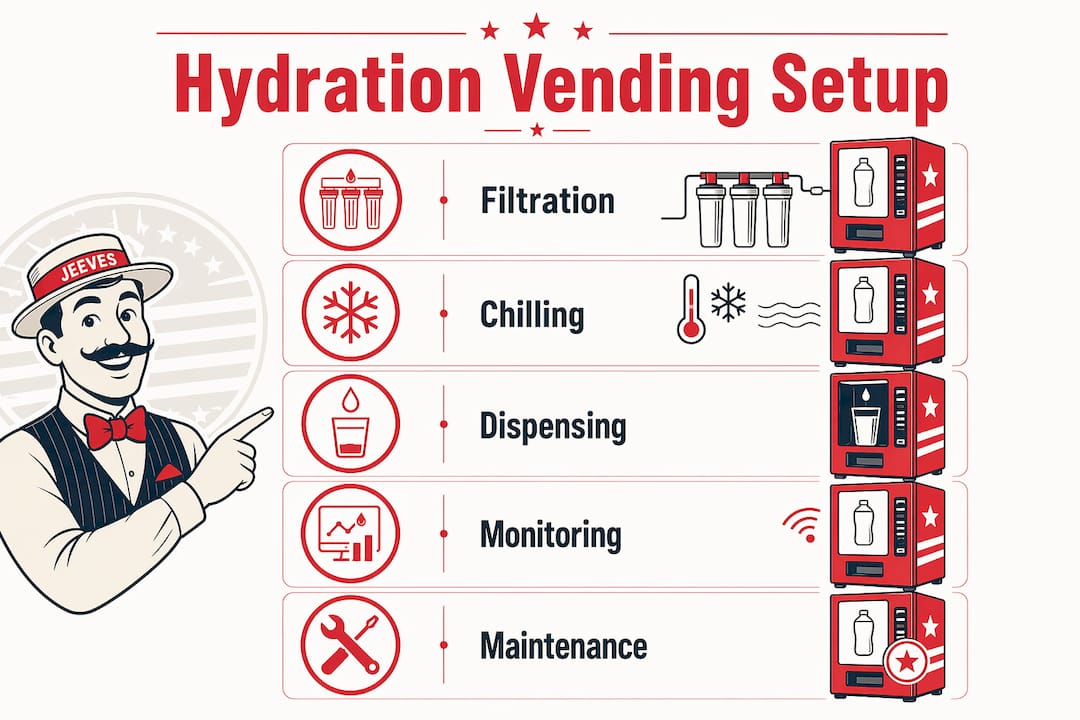
A hydration station vending setup combines four core systems: filtration, chilling, dispensing, and monitoring. Each component determines water quality, user experience, and long-term operating cost.
Filtration is the foundation. Most professional units use multi-stage carbon block filtration to remove chlorine, sediment, and volatile organic compounds. Higher-end models add UV light treatment to neutralize bacteria and viruses without chemicals. Some systems incorporate proprietary filtration technologies that target specific contaminants common in municipal water supplies. The result is water that tastes noticeably cleaner than tap water straight from the faucet.
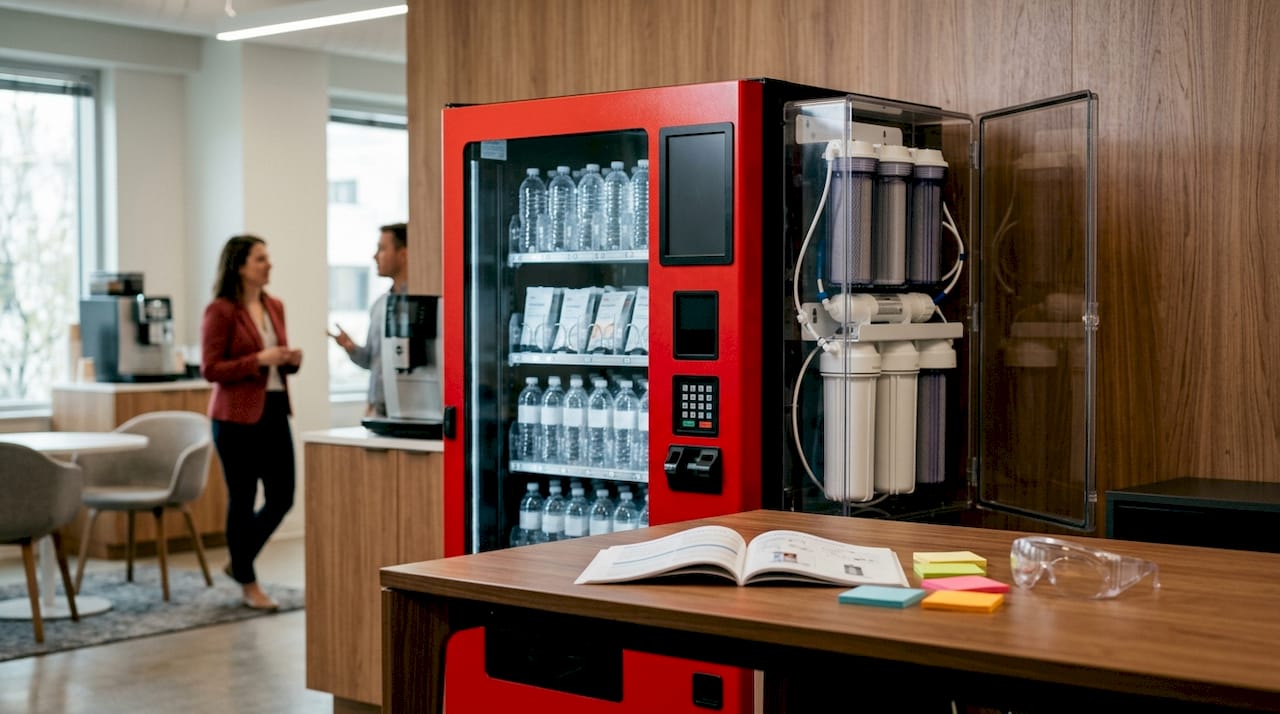
Chilling and carbonation come next. Standard units chill water to between 34°F and 50°F using a refrigeration coil. Premium configurations add a carbonation module, letting users choose still, sparkling, or ambient temperature water from a single machine. This flexibility increases usage rates because it accommodates more personal preferences.
Smart features separate modern units from older bottle fillers. Touchless controls and real-time consumption monitoring let facility managers track how much water the system dispenses daily, when filters need attention, and whether usage patterns shift by time of day. This telemetry data is useful for justifying equipment placement decisions and demonstrating wellness program impact to leadership.
Key hardware requirements for a permanent installation include:
- A cold-water mains connection with adequate pressure (typically 20–80 PSI)
- A dedicated 120V or 240V power outlet within reach of the unit
- A floor drain or drip tray for condensation and overflow
- A stable, level surface rated for the unit’s filled weight
Pro Tip: Request a water quality report from your municipal supplier before selecting a filtration grade. Buildings with older copper or galvanized pipes may need a unit with lead-reduction certification, such as NSF/ANSI Standard 53 compliance.
Portable units skip the plumbing connection entirely. They rely on pre-filled tanks and require regular refilling and sanitation. Most professional-grade hydration vending units install within one business day using plug-and-play infrastructure, making them practical for events, construction sites, and temporary facilities.
What are the installation and maintenance requirements?
Installation of a permanent hydration station follows a straightforward sequence, but skipping steps creates problems that are expensive to fix later.
- Site assessment. Confirm the location has a cold-water mains connection, adequate electrical supply, and a drain. Measure the space to verify the unit fits with clearance for servicing.
- Surface preparation. The floor or countertop must be level and structurally sound. A full 35-gallon portable unit weighs about 300 pounds when filled. Permanent units are lighter but still require verified load ratings for elevated installations.
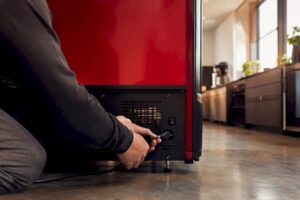
- Plumbing and electrical connection. A licensed plumber connects the water supply line and installs a shutoff valve. An electrician confirms the outlet is grounded and on a dedicated circuit.
- Initial flush and testing. Run water through the system for the manufacturer-specified flush period before allowing use. Test water quality with a basic TDS meter or send a sample to a certified lab.
- User orientation. Post clear instructions near the unit. Usage drops when people are unsure how the machine works or whether the water is safe.
OSHA recommends 24–32 oz of water per hour for workers in high-heat environments. That standard sets a concrete benchmark for how many dispensing points a facility needs relative to its workforce size.
Maintenance is where most organizations underinvest. Filters need replacement every six to twelve months to maintain water quality, though high-usage sites may need more frequent changes. Sanitation of the dispensing nozzle and drip tray should happen weekly. Water quality testing should occur at least quarterly.
Pro Tip: Set calendar reminders for filter replacements on the day of installation. Waiting until water tastes off means the filter has already been overdue for weeks.
Portable units add a layer of logistics. They need drainage and backsplash planning to prevent slip hazards, and the water tank must be sanitized between each refill cycle. Ignoring this step creates contamination risk that defeats the purpose of the system entirely.
What are the health and environmental benefits?
The health case for hydration station vending setups is direct and well-documented. Structured workplace hydration programs can reduce heat-related illness incidents by up to 50%. That reduction translates to fewer workers’ compensation claims, less absenteeism, and measurably higher output on physically demanding tasks.
Dehydration at just 2% fluid loss impairs reaction time, short-term memory, and decision-making. For office workers, that means slower problem-solving. For warehouse or construction crews, it means elevated injury risk.
The environmental case is equally strong. Every refill at a hydration station replaces a single-use plastic bottle. At scale, across a 200-person office or a school campus, the volume of plastic eliminated adds up to thousands of bottles per year. Modern hydration stations recast water as a sustainable resource service, enabling organizations to report concrete plastic reduction numbers in ESG and sustainability disclosures.
Water quality is another underappreciated benefit. CDC and local water regulations ensure municipal water safety, but hydration stations add a secondary filtration layer that addresses contamination risks from aging building pipes. Employees and students who trust the water quality drink more of it. That behavioral shift is the actual mechanism behind improved hydration outcomes.
The payback window on hydration station investments can be surprisingly short when factoring in eliminated bottled water purchases and health-related productivity gains. Organizations that previously spent thousands of dollars annually on bottled water delivery often recover their equipment costs within months.
How to place hydration stations for maximum impact
Location determines whether a hydration station gets used or ignored. Usage drops sharply when units are placed in low-traffic or hidden locations, regardless of how good the equipment is. The technology inside the machine matters far less than whether people walk past it ten times a day.
High-impact placement locations include:
- Break rooms and cafeterias, where people already stop to eat and drink
- Building lobbies and main corridors with heavy foot traffic
- Gym floors and locker room entrances
- School hallways near classrooms, not tucked in a back utility room
- Warehouse floors near workstations, not only near the exit
Success in schools and hospitals depends on intentional infrastructure with visual cues, signage, and educational campaigns beyond just installing equipment. A sign that reads “Filtered water. Free refills. Bring your bottle.” costs almost nothing and meaningfully increases usage.
The table below compares placement strategies across common environments:
| Environment | Best placement | Key consideration |
|---|---|---|
| Office | Break room, main corridor | Visibility from workstations |
| School | Hallway near classrooms | Accessible during passing periods |
| Gym | Floor entry, locker room | Post-workout traffic flow |
| Warehouse | Near workstations | OSHA heat exposure compliance |
| Event venue | Entry points, food areas | Portable units with drainage planning |
Pairing station placement with a reusable bottle distribution program accelerates adoption. Facilities management professionals recommend combining hydration stations with educational tools and reusable bottles to build a culture of hydration rather than a one-time infrastructure upgrade. Organizations that hand out branded reusable bottles on day one of a new station installation consistently report higher usage rates than those that simply install and wait.
Jeevesvending applies this placement logic directly when setting up vending solutions in Dallas, matching unit type and location to the specific traffic patterns of each facility.
Key Takeaways
A hydration station vending setup delivers measurable health, environmental, and financial returns only when the right equipment is installed in the right location and maintained consistently.
| Point | Details |
|---|---|
| Core definition | A hydration station vending setup dispenses filtered, chilled water into reusable containers at the point of use. |
| Health impact | Even 2% fluid loss impairs performance; structured programs can cut heat illness by up to 50%. |
| Installation basics | Permanent units need water mains access, dedicated power, and a drain; portable units need regular sanitation. |
| Placement is critical | High-traffic, visible locations drive usage; hidden units underperform regardless of equipment quality. |
| Maintenance schedule | Replace filters every 6–12 months and sanitize dispensing nozzles weekly to maintain water quality and trust. |
What I’ve learned after watching dozens of hydration station rollouts
Most organizations get the equipment decision right and the placement decision wrong. I’ve seen facilities spend real money on multi-stage filtration units with telemetry dashboards, then tuck them in a back hallway because that’s where the plumbing was easiest to run. Usage was negligible within three months. The machines weren’t the problem.
The uncomfortable truth about hydration station vending setups is that they are a behavior change project, not an equipment project. The filtration grade matters. The chilling capacity matters. But neither of those factors moves the needle if employees don’t walk past the unit twice a day. Placement should drive the plumbing plan, not the other way around.
Maintenance is the second place I see organizations fail. The initial installation gets attention and budget. Filter replacements six months later get forgotten. Water that tastes off kills trust fast, and once people stop using a station, getting them back is harder than the original adoption push.
The trend I find genuinely interesting is the shift toward consumption data. Smart telemetry that shows how many liters a station dispenses per day gives facilities managers a concrete number to put in front of leadership. That data closes the loop between the investment and the outcome. Organizations that track usage improve it, because they can see exactly which stations are underperforming and why.
My recommendation: treat the first 90 days after installation as an active campaign, not a passive rollout. Put up signage. Distribute reusable bottles. Share usage data with the team. The stations that become habits in the first three months stay habits for years.
— Gary
Jeevesvending’s approach to hydration vending in Dallas
Jeevesvending installs modern, AI-powered hydration vending machines at no cost to businesses in the Dallas-Denton region, handling setup, stocking, and ongoing maintenance so your team focuses on operations rather than equipment logistics.
Whether you manage a corporate office, a school campus, a gym, or a warehouse, Jeevesvending matches the right unit to your traffic patterns and compliance needs. The service covers everything from initial site assessment through filter replacement schedules, with continuous support built in. Organizations looking to reduce plastic waste, meet OSHA hydration guidelines, or improve employee wellness can contact Jeevesvending for a personalized setup consultation at no obligation.
FAQ
What is a hydration station vending setup?
A hydration station vending setup is a point-of-use water dispensing system that delivers filtered, chilled water into reusable containers, replacing single-use plastic bottles. Most professional units install within one business day using plug-and-play plumbing and electrical connections.
How often do hydration station filters need replacing?
Filters should be replaced every six to twelve months, depending on usage volume and local water quality. High-traffic sites may need more frequent changes to maintain taste and safety standards.
What does OSHA say about workplace hydration?
OSHA recommends 24–32 oz of water per hour for workers in high-heat environments. A hydration station vending setup placed near workstations is one of the most direct ways to meet that guideline.
Where should a hydration station be placed?
High-traffic, visible locations such as break rooms, gym floors, school hallways, and warehouse workstations produce the highest usage rates. Stations placed in low-traffic or hidden areas consistently underperform regardless of equipment quality.
Can a hydration station reduce plastic waste?
Yes. Each refill at a hydration station directly replaces a single-use plastic bottle. At the scale of a 200-person workplace or school campus, that adds up to thousands of bottles eliminated per year, supporting measurable ESG and sustainability reporting.