
Regular restocking is the operational backbone of any successful school vending program. When machines run empty, students lose access to food between meals, satisfaction drops, and the school’s reputation for reliable amenities takes a hit. The question of why school vending needs regular restocking goes beyond convenience. It connects directly to student health, nutritional compliance under USDA Smart Snacks in School standards, and the financial health of the program itself. Schools that treat restocking as an afterthought consistently underperform on all three fronts.
How often should schools restock vending machines?
Restocking frequency is not a one-size-fits-all decision. The right answer depends on machine traffic, product mix, and the school calendar. A machine near a gym or cafeteria exit will sell out faster than one in a quiet hallway. Getting the timing right is the single most direct way to protect both student satisfaction and program revenue.
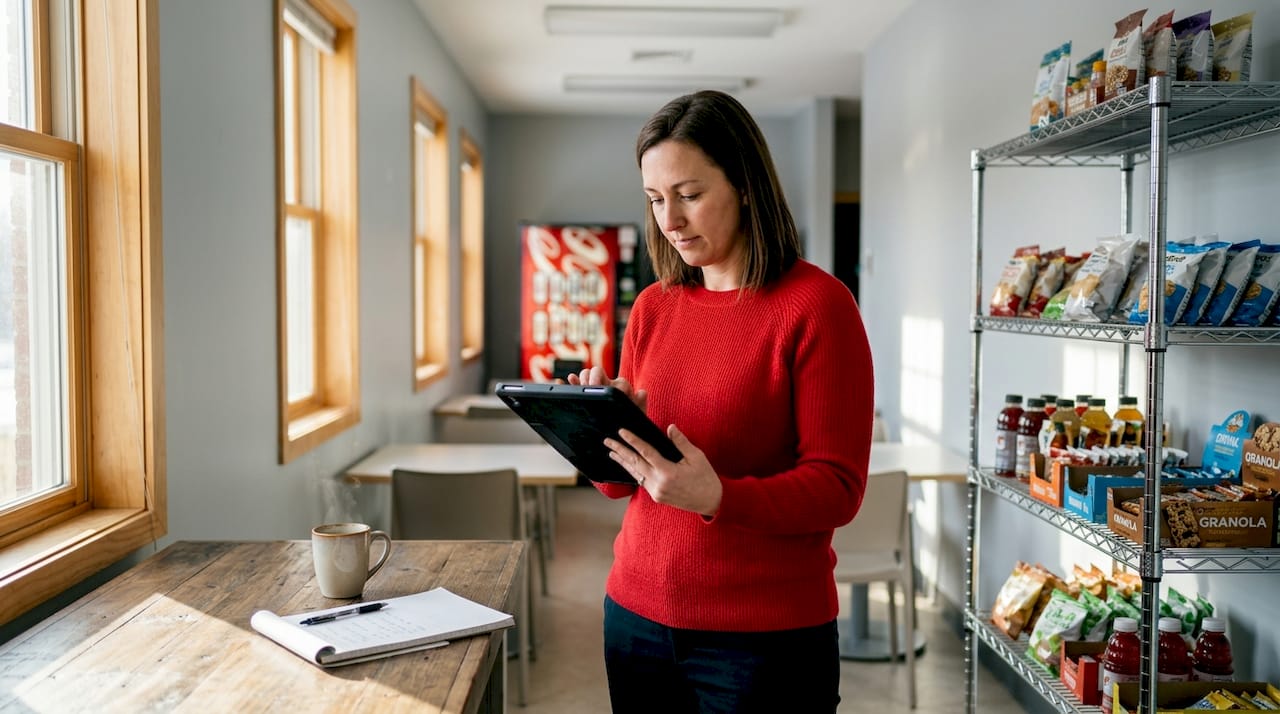
The industry standard for high-traffic school machines is restocking based on consumption data rather than a fixed weekly schedule. Sales data and consumption patterns should drive the schedule. Popular machines selling 50 or more units weekly need a restock when inventory drops to around 15 units. Slower machines can go longer between visits without risking stockouts. That data-driven approach prevents both over-visiting and the more costly problem of running dry.
Here are the most common restocking intervals schools use, matched to demand levels:
- High-traffic machines (near cafeterias, gyms, or main hallways): restock 2–3 times per week, especially around lunch periods and after-school activities.
- Medium-traffic machines (classroom wings, libraries): restock once per week, adjusted upward during exam periods or school events.
- Low-traffic machines (administrative areas, small wings): restock every 10–14 days, monitored remotely for unexpected spikes.
- Event-driven restocking: schedule extra visits before large school events, sports days, or parent nights when foot traffic surges.
- Seasonal adjustments: increase frequency in warmer months when beverage demand rises sharply.
Pro Tip: Track which products hit zero first and which sit untouched. That data tells you more about your restock schedule than any calendar ever will. Adjust product mix and visit frequency together, not separately.
What role does smart vending technology play in restocking?
Modern vending machines with remote monitoring eliminate most of the guesswork in inventory management. Administrators no longer need to wait for a complaint to know a machine is empty. The technology surfaces that information automatically, often before students even notice a problem.
Smart vending systems offer several features that directly improve restocking accuracy and compliance:
- Live inventory dashboards that show exact stock levels for each product slot in real time, accessible from any device.
- Remote low-stock alerts that notify operators when a specific item drops below a set threshold, triggering a targeted restock rather than a full visit.
- Sales trend reports that identify which products sell fastest by day of week, time of day, and season, enabling precise ordering.
- Nutritional compliance enforcement built into the machine’s product catalog, ensuring only USDA-approved items appear in approved slots. Smart vending dashboards enforce nutritional restrictions and provide full transparency to administrators.
- Route optimization data that groups restocking visits by location and urgency, cutting fuel and labor costs.
The administrative benefit is significant. School staff spend zero time manually checking machine levels or fielding student complaints about empty slots. The operator handles everything, and the school gets a clear record of what was stocked, when, and in what quantities.
Pro Tip: Ask your vending operator for monthly inventory reports. Reviewing them quarterly helps you spot demand shifts early, especially before the school year starts or after a menu change.
The shift in how schools think about vending reflects this technology’s impact. The conversation has moved from “should we have vending machines?” to “how do we govern them well?” That shift reflects modern priorities: balancing convenience with health, and access with accountability.
Why do fully managed vending programs benefit schools?
A fully managed vending program is one where the operator takes complete responsibility for restocking, cleaning, maintenance, and compliance. The school provides the location and access. The operator handles everything else. This model exists specifically because school administrators have enough to manage without adding vending logistics to the list.
Fully managed vending delivers zero operational burden to school staff, consistent adherence to nutrition guidelines, and fast resolution of any machine issues. The benefits for administrators are concrete:
- No staff time spent on vending: custodians, office staff, and teachers are never pulled into machine issues.
- Guaranteed restocking schedules: operators commit to visit frequencies in the service agreement, creating accountability.
- Nutritional compliance built in: the operator manages product selection within USDA guidelines, removing that burden from the school.
- Revenue sharing: school vending contracts typically return 10–25% commissions to the school, funding programs or activities without any additional cost.
- Faster issue resolution: a managed operator responds to machine faults within agreed timeframes, keeping uptime high.
The City of Frisco’s experience with Jeevesvending as their vending partner illustrates this model in practice. A fully managed program removed operational complexity entirely while maintaining consistent product availability across multiple locations.
What are the common challenges in school vending restocking?
Restocking sounds straightforward until you account for the real variables: fluctuating demand, access restrictions during school hours, seasonal swings, and the cost of getting it wrong. Inefficient restocking routes cause significant financial losses. One operator with 150 machines identified $2,800 monthly in losses from unnecessary trips and $4,200 from stockouts, totaling $84,000 annually. That number makes the case for precision better than any argument about convenience.
| Challenge | Impact | Solution |
|---|---|---|
| Inaccurate demand forecasting | Stockouts or overstocking of slow sellers | Use par-level management and sales data |
| Route inefficiency | Wasted fuel and labor costs | Optimize routes using location-specific sales trends |
| Access restrictions | Missed restock windows during class hours | Schedule visits before school, at lunch, or after dismissal |
| Seasonal demand spikes | Machines empty faster in warm months | Increase visit frequency and adjust product mix proactively |
| Poor supplier communication | Delayed product delivery disrupts schedules | Maintain backup stock and communicate lead times clearly |
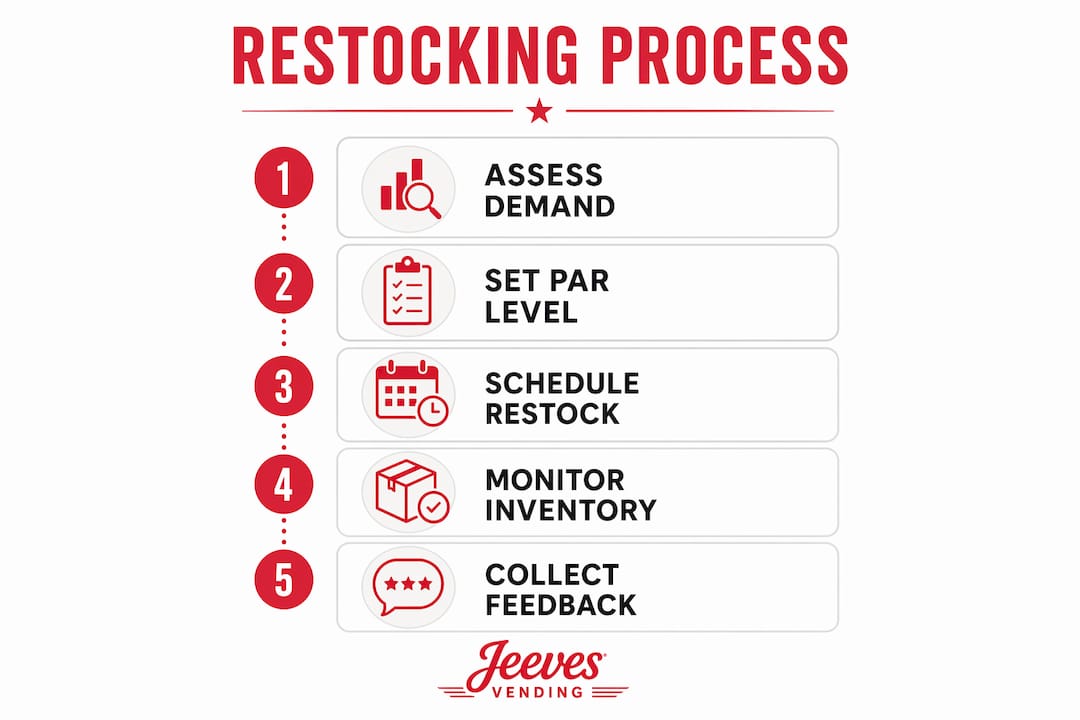
Par-level management is the most underused solution in school vending. Setting par levels prevents overstocking slow-selling items and stockouts of popular products, and can save 20–40 minutes per machine visit by eliminating guesswork. That time saving compounds across dozens of machines and dozens of visits per month.
Pro Tip: Collect student feedback twice a year through a simple survey. Students will tell you exactly which products they want and which they skip. That input costs nothing and dramatically improves sell-through rates.
Machines that remain empty or malfunctioning harm the school’s reputation more than having no vending at all. Students who find empty machines repeatedly stop using them entirely, and the program loses both revenue and goodwill. Solving the restocking challenge is not optional. It is the foundation of a vending program that actually works.
Key Takeaways
Regular school vending restocking protects student health, maintains nutritional compliance, and prevents the revenue losses that come from empty machines and inefficient routes.
| Point | Details |
|---|---|
| Data-driven scheduling | Restock based on sales data and par levels, not fixed weekly calendars. |
| Smart technology reduces burden | Live dashboards and remote alerts eliminate manual stock checks for school staff. |
| Fully managed programs work | Operators handle all restocking and compliance, freeing administrators entirely. |
| Empty machines damage reputation | Students who find empty machines repeatedly stop using the program altogether. |
| Financial stakes are real | Inefficient restocking costs operators thousands monthly in lost sales and wasted trips. |
What I’ve learned from watching school vending programs succeed and fail
The schools that get vending right share one habit: they treat the vending program as a service, not a fixture. A fixture gets ignored until it breaks. A service gets monitored, adjusted, and held to a standard.
The programs that struggle almost always have the same problem. Nobody owns the relationship with the operator. Machines get restocked on a schedule that made sense when the contract was signed, but nobody updated it when enrollment grew or the gym schedule changed. Students adapt by bringing their own snacks or skipping the machines entirely. The school loses revenue it never knew it was leaving on the table.
Well-stocked vending machines are directly linked to higher satisfaction and loyalty in school and workplace populations. That finding aligns with what I observe consistently. When students trust that a machine will have what they want, they use it. When they don’t, they don’t. Trust is built one successful transaction at a time, and it is destroyed by one empty slot at the wrong moment.
My advice to school administrators is simple. Demand monthly reporting from your operator. Review it. Ask why certain products are not moving. Ask why certain machines are being visited more than others. That conversation, held regularly, is worth more than any contract clause about restocking frequency.
The best vending operators welcome that scrutiny. They use it to improve their own routes and product mix. The ones who resist it are telling you something important about how they run their programs.
— Gary
Jeevesvending’s approach to school vending and restocking
Schools in the Dallas-Denton region have a direct option for fully managed vending that removes every operational burden described in this article.
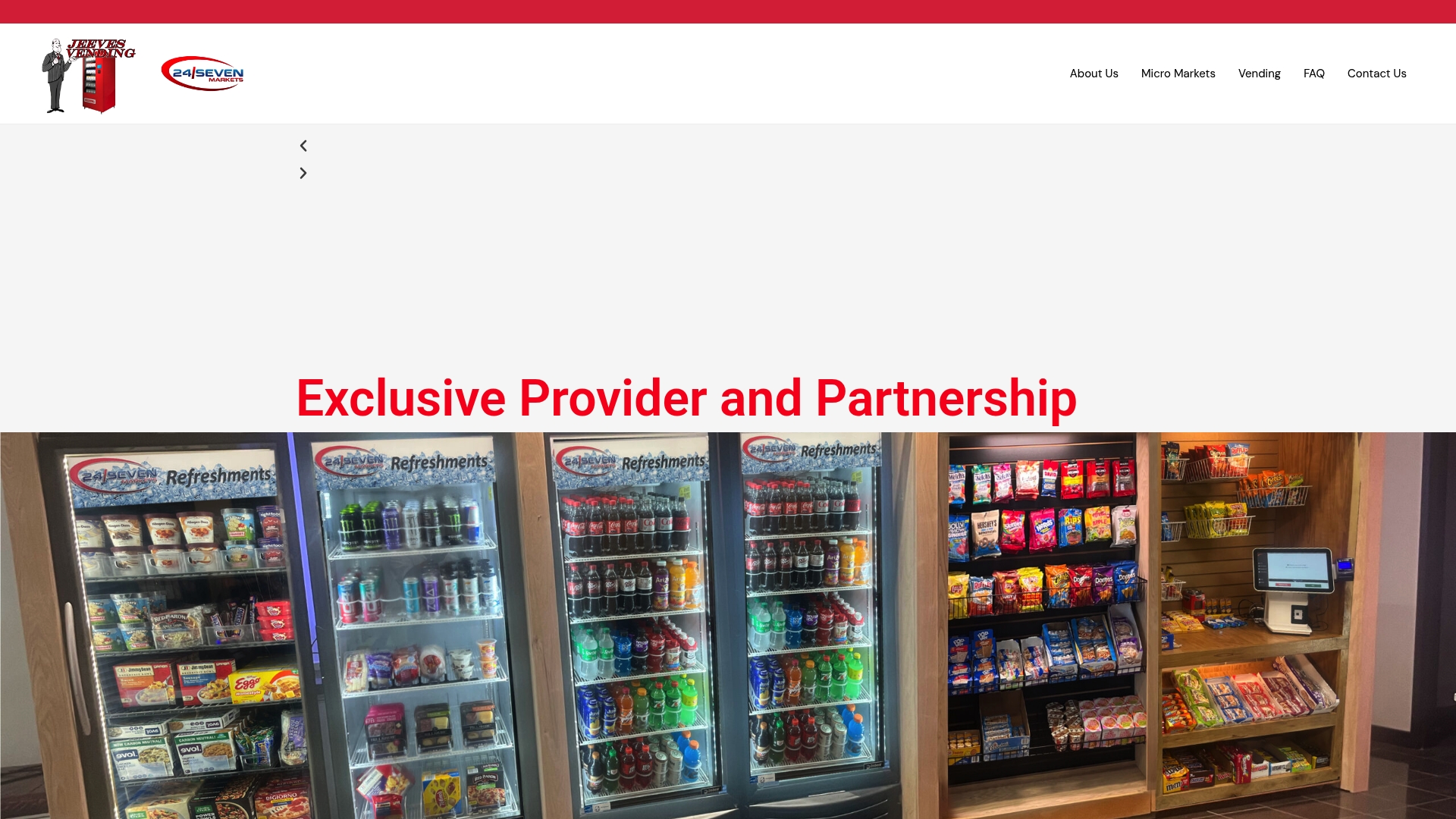
Jeevesvending provides smart vending machines at no cost to schools, with remote monitoring, live inventory tracking, and restocking schedules built around each school’s specific demand patterns. Every machine meets nutritional compliance requirements, and administrators receive clear reporting without having to ask for it. The full-service vending program covers restocking, maintenance, and product management from day one. Schools get reliable access for students and a revenue share, with zero staff time required. Contact Jeevesvending to discuss what a managed program looks like for your campus.
FAQ
Why do school vending machines need regular restocking?
Regular restocking keeps machines stocked with healthy options between meal times, supporting student wellbeing and preventing the reputation damage that comes from empty or unreliable machines.
How often should a school vending machine be restocked?
High-traffic machines need restocking 2–3 times per week, while lower-traffic units can be visited weekly or biweekly. Consumption data should drive the schedule rather than a fixed calendar.
What happens when school vending machines are not restocked on time?
Empty machines reduce student satisfaction, generate complaints, and cause direct revenue loss. Operators with poor restocking discipline lose thousands of dollars monthly in avoidable stockouts.
What is par-level management in vending restocking?
Par-level management sets a minimum inventory threshold for each product. When stock drops to that level, a restock is triggered. Par-level systems save 20–40 minutes per machine visit by removing guesswork from every trip.
Do smart vending machines help schools manage restocking better?
Smart machines with live dashboards and remote alerts notify operators before machines run empty, reducing stockouts and cutting unnecessary visits. They also enforce nutritional compliance automatically, which reduces administrative oversight for school staff.