
What dietary-friendly hospital vending options actually deliver
The evidence is clear: replacing standard vending products with health-compliant alternatives reduces calories sold by 61% without triggering compensatory purchases at nearby food outlets. That single finding reframes the entire conversation for hospital administrators who worry that healthier vending means unhappy staff and lost revenue.
Dietary-friendly hospital vending, in practice, means stocking machines with items that meet defined nutritional thresholds for fat, sugar, sodium, and allergens. Think low-sodium trail mix, sugar-free beverages, protein bars, fresh fruit cups, and diabetic-friendly snacks alongside standard options. These selections serve three distinct groups simultaneously: staff fueling long shifts, patients with specific dietary restrictions, and visitors who need something real to eat at 2 AM.
Key benefits hospitals see from diet-conscious vending programs:
- Measurable calorie reduction without driving people to less healthy alternatives nearby
- Higher rates of healthy purchasing when compliant items make up a larger share of the machine
- Alignment with hospital wellness policies and evolving FDA labeling requirements
- Support for patients managing conditions like diabetes, hypertension, and celiac disease
- Round-the-clock access to nutritious food options when cafeterias are closed
Table of Contents
- How to implement dietary-friendly vending that actually works
- What modern vending technology does for hospital operations
- How Jeeves Vending approaches hospital dietary needs
- Key Takeaways
- Jeeves Vending brings dietary-focused vending to your facility at no cost
How to implement dietary-friendly vending that actually works
Getting the product mix right is the starting point, but execution determines whether the program sticks.
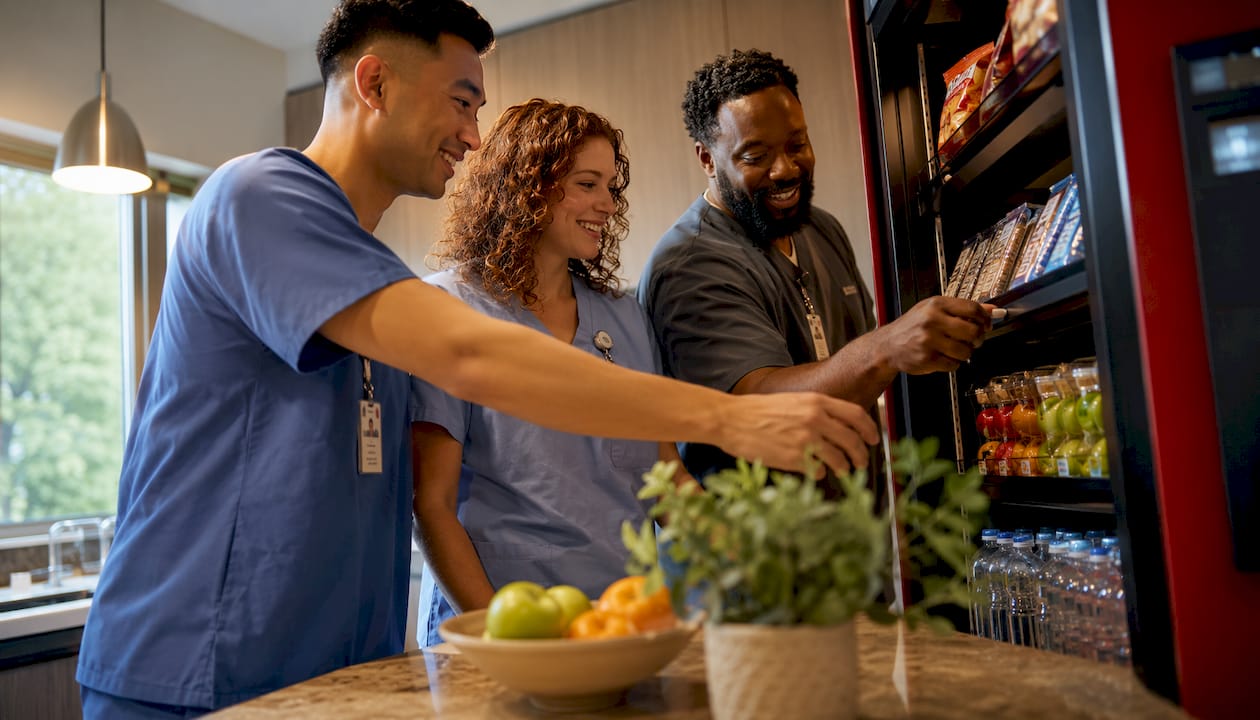
Select products against defined criteria. Items should meet thresholds for saturated fat, added sugar, sodium, and common allergens. Diabetic-friendly options, gluten-free snacks, and low-sodium selections are not optional add-ons. They are the baseline for a hospital setting. Partnering with vendors who carry certified products, and who understand the difference between a hospital and an office breakroom, saves significant time during setup.
Increase healthy item availability meaningfully. A hospital intervention study found that raising the proportion of healthy items in vending machines pushed healthy purchases from 22% to 39%. Simply swapping one or two items is not enough. The share of compliant products in the machine needs to shift substantially for behavior to follow.
Use pricing to nudge choices. Price is consistently the top factor driving vending decisions. Subsidizing healthy items, even modestly, produces real results. Research shows that price reductions of 10%, 25%, and 50% on low-fat products increased their sales by 1.0%, 4.2%, and 10.1% respectively, with no revenue loss. A 25% tax on unhealthy items in a separate trial increased healthy selections by 13.6%.
Educate staff and patients at the point of sale. Nutrition labeling and promotional messaging at the machine positively shift purchasing behavior. Traffic-light labels, health claims, and visual cues all increase the perceived attractiveness of healthier products. A small sign explaining that a snack is diabetic-friendly or low-sodium can move the needle more than most administrators expect.
Monitor outcomes and adjust. Track sales data by product category, not just total revenue. Measure healthy versus standard item ratios monthly. Survey staff and visitors on satisfaction. This data tells you whether the program is working or whether the product mix needs adjustment.
Pro Tip: Eye-level placement matters as much as product selection. Positioning healthy items at the most prominent, eye-level slots in the machine significantly increases their selection rates. Moving compliant items to the bottom row is one of the most common mistakes hospitals make when launching a healthy vending program.
For hospitals looking to customize vending menus for staff, the product mix should reflect shift patterns, dietary demographics, and any clinical dietary policies already in place.
What modern vending technology does for hospital operations
The machines themselves have changed considerably. Modern hospital vending units are not the coin-operated boxes of twenty years ago.
Smart inventory management is the most operationally significant upgrade. Machines connected to real-time data systems alert operators when specific items run low, reducing the chance that the only diabetic-friendly option is sold out by noon. Data-driven restocking based on occupancy lets operators align stock levels with patient census and shift schedules, cutting both waste and stockouts.
Micro-markets represent the next step beyond traditional machines. These self-checkout setups offer a broader product range, including fresh sandwiches, yogurt, and refrigerated meals, during staffed hours, then revert to standard vending access overnight. For large hospitals with high foot traffic, a micro-market in a staff lounge or public lobby covers dietary needs that a single machine cannot.
| Technology feature | Operational benefit for hospitals |
|---|---|
| Real-time inventory alerts | Prevents stockouts of high-demand dietary items |
| Occupancy-based restocking | Aligns supply with patient census and shift volume |
| Refrigerated fresh food capacity | Expands options beyond shelf-stable snacks |
| Cashless and contactless payment | Faster transactions, better hygiene compliance |
| Remote diagnostics | Reduces maintenance downtime and service calls |
| Micro-market self-checkout | Broader product range with 24/7 access |
Hospitals adopting these technologies also report sustainability benefits. Smarter stocking means less expired product pulled from machines, which directly reduces food waste. For facilities with environmental goals, that is a concrete operational win, not just a talking point.
For a closer look at how AI-enabled vending machines handle fresh food delivery and inventory in real time, the technology has moved well past basic temperature control.
How Jeeves Vending approaches hospital dietary needs
Jeeves Vending serves hospitals and healthcare facilities in the Dallas-Denton region with vending machines and custom micro-markets installed at no cost to the facility. The model is built around the reality that hospital vending is categorically different from office or retail vending.
Product selection at Jeeves Vending is tailored to the specific dietary requirements of each facility. Low-sodium snacks, sugar-free beverages, gluten-free options, and diabetic-friendly choices are standard inclusions, not afterthoughts. The team works directly with facility administrators to build a product mix that covers staff on long shifts, patients with dietary restrictions, and visitors who need accessible food at any hour.
The machines themselves use modern technology for smart inventory tracking and efficient restocking. Jeeves Vending handles installation, maintenance, and ongoing product management, so hospital administrators are not adding vending operations to their workload. The fast restocking model is particularly relevant for hospitals where a depleted machine during a night shift is not just inconvenient but a genuine staff welfare issue.
Jeeves Vending also offers custom micro-market solutions for larger facilities, giving hospitals the flexibility to provide a wider range of fresh and dietary-specific products beyond what a standard machine can hold.
Key Takeaways
Dietary-friendly hospital vending reduces calorie consumption significantly while keeping revenue impact statistically insignificant over time, making it a viable and health-positive choice for hospital administrators.
| Point | Details |
|---|---|
| Calorie reduction is proven | Healthy vending cuts calories sold by 61% with no compensatory buying at nearby outlets. |
| Availability drives behavior | Raising healthy item share pushed healthy purchases from 22% to 39% in one hospital study. |
| Pricing is the top lever | Price reductions on healthy vending items meaningfully increase their sales proportion, with no revenue loss. |
| Technology supports operations | Smart restocking, occupancy-based stocking, and micro-markets reduce waste and prevent stockouts. |
| Jeeves Vending fits hospital needs | Jeeves Vending installs tailored, dietary-inclusive vending and micro-markets at no cost to Dallas-area hospitals. |
Jeeves Vending brings dietary-focused vending to your facility at no cost
Hospital administrators in the Dallas-Denton area get a concrete advantage with Jeeves Vending: fully managed, dietary-inclusive vending and custom micro-markets installed at zero cost to the facility. No capital outlay, no maintenance burden, and no generic product mix that ignores the dietary realities of a healthcare environment.
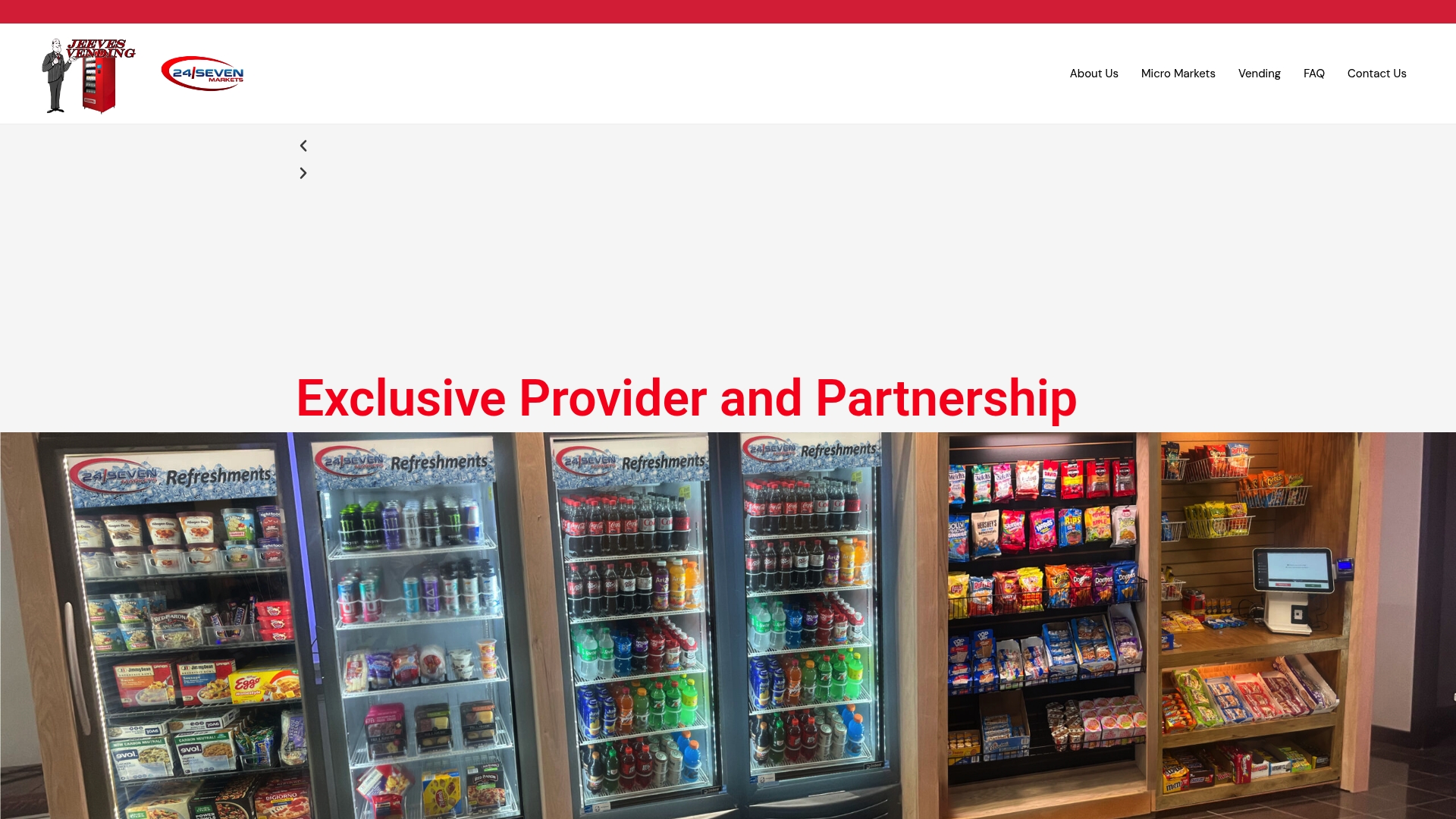
Jeeves Vending builds the product selection around your facility’s specific needs, whether that means prioritizing low-sodium snacks for cardiac units, stocking sugar-free beverages for diabetic patients, or ensuring gluten-free options are consistently available for staff. The machines run 24/7, and restocking is handled proactively so the machine is never empty when a night-shift nurse needs fuel at 3 AM.
Ready to put the right food in front of the right people at the right time? Contact Jeeves Vending to discuss a setup tailored to your hospital’s dietary requirements and traffic patterns.