
Six feature groups separate a modern vending fleet from a coin box with a light inside it: telemetry and connectivity, cashless payment, touchscreen merchandising, sensors and AI, temperature control, and remote management with integrations. Prioritize telemetry and payments first, since they cut empty-machine visits and checkout friction fastest, then layer in touchscreen upsells and, for high-traffic sites, AI grab-and-go. Get those right and operators typically see fewer stockouts, higher average tickets, and less windshield time per stop, the same trend Kiosk Industry tracks across the broader automation market.
TL;DR:
- Telemetry and cellular connectivity are essential for reliable real-time data on vend activity, temperature, and faults, especially in high-traffic venues.
- Cashless payment options like EMV cards, NFC, and RFID significantly reduce checkout friction and can increase average transaction size through upselling.
- Sensors and AI enable accurate item recognition, grab-and-go checkout, and loss prevention, but require thorough testing in real-world conditions before large deployment.
- Demand-based restocking using weight sensors and RFID can greatly decrease unnecessary visits and prevent stockouts at busy locations.
- The most immediate return on investment comes from telemetry and cashless payment upgrades, while AI vision and grab-and-go solutions should be reserved for high-volume sites.
Table of Contents
- What Are the Core Smart Vending Features Operators Should Know?
- How Do These Features Improve Operations and Customer Experience?
- How to Choose and Roll Out Smart Vending Features
- What Do Smart Vending Features Cost, and What’s the Payback?
- Personalization and Loyalty Program Integration
- Restocking Automation and Inventory Tracking Technologies
- Jeeves Vending’s Field Perspective on Smart Features
- Why Smart Vending Still Gets Underestimated
- Get Smart Vending Features Installed at No Upfront Cost
- Sources
What Are the Core Smart Vending Features Operators Should Know?
A smart vending machine is really a small computer with a refrigeration unit attached. It pairs sensors and connectivity with a cloud dashboard so an operator sees vend events, stock counts, temperatures, and fault codes without driving to the site. That single shift, from guessing to knowing, is what separates smart vending features from a legacy coil machine.
Connectivity and telemetry. Machines connect over cellular or the venue’s Wi-Fi, and cellular usually wins for reliability since it doesn’t depend on a facility’s IT department keeping a guest network alive. Telemetry payloads report vend-by-vend sales, refrigeration temperatures, door-open events, and power faults in near real time, which is the backbone of every other feature on this list.
Payments. EMV chip readers, NFC taps for Apple Pay and Google Pay, and corporate RFID or prepay accounts have mostly replaced bill validators as the primary transaction method. Contactless and mobile wallet support are now baseline expectations for cashless vending, not premium add-ons, and cashierless flows let a shopper tap, grab, and walk without a cashier or a line.
User interface and merchandising. A well-designed touchscreen uses large product tiles, visible pricing, and strategic promotion placement near the checkout step, the same principles that make grocery end caps work. Accessibility matters here too: voice prompts and larger touch targets extend usability to shoppers with visual or motor impairments, which most legacy button-and-coil machines never addressed.
Sensors and AI. Weight sensors detect when an item leaves a shelf, optical sensors and computer vision confirm which item it was, and together they enable grab-and-go checkout, planogram verification, and loss prevention. Vendor testing on AI grab-and-go coolers reports about 99% recognition accuracy under controlled conditions, though real-world results depend heavily on lighting, product packaging, and how often the shelf gets restocked with lookalike SKUs.
Temperature control and food safety. Chilled compartments for perishables need continuous monitoring, not spot checks, because a compressor fault at 2 a.m. can spoil a full cooler by morning. Temperature alarms that page a route manager the moment a reading drifts out of range are the difference between a $40 loss and a $400 one.
Remote management platform. This is the layer that turns raw sensor data into decisions: a fleet-wide dashboard, price changes pushed remotely, and alerts routed to whoever’s on call. Most platforms expose API endpoints for inventory sync, corporate billing, and finance reconciliation, letting the vending data flow into systems an operator already uses.
- Telemetry and connectivity: real-time vend, temperature, and fault data
- Cashless and contactless payments: EMV, mobile wallets, RFID accounts
- Touchscreen merchandising: product tiles, pricing clarity, upsell placement
- Sensors and AI: weight and optical detection, computer vision, loss prevention
- Temperature control: chilled compartments, alarms, continuous monitoring
- Remote management: fleet dashboards, alerts, API integrations
How Do These Features Improve Operations and Customer Experience?
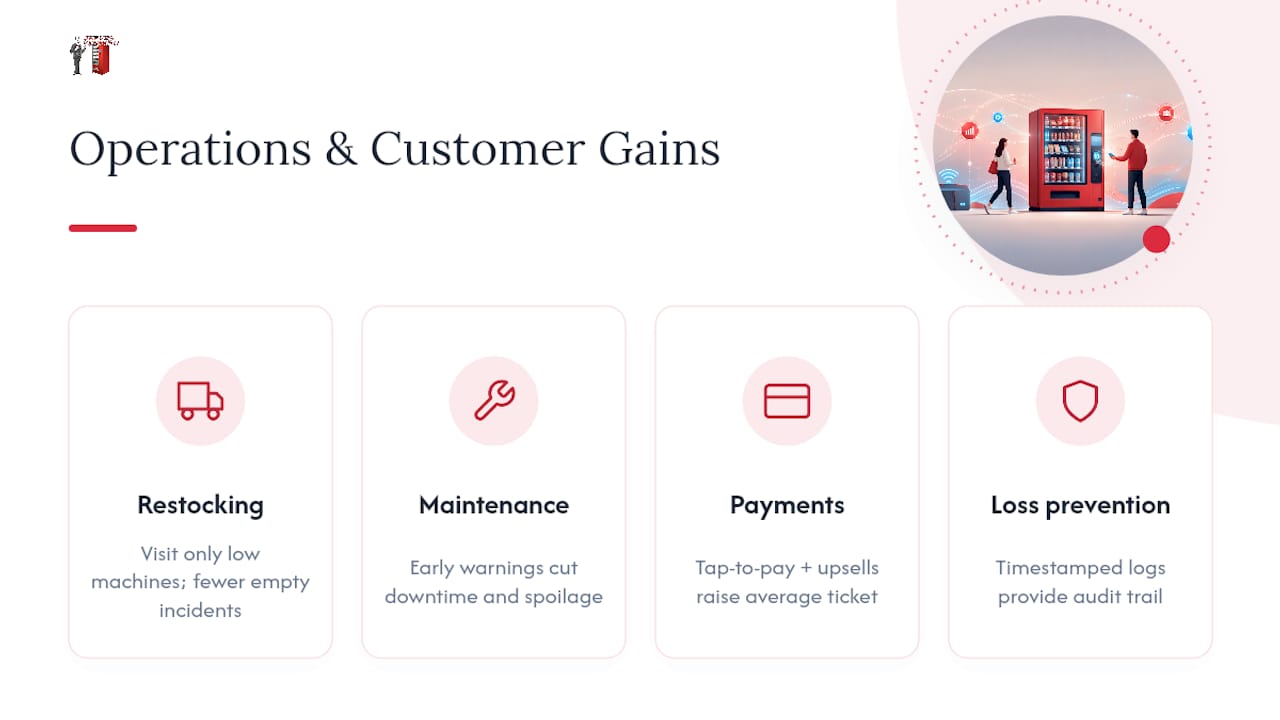
Telemetry-driven restocking is the single biggest efficiency lever most operators underuse. Instead of running a fixed weekly route regardless of demand, a driver checks the dashboard and visits only the machines actually running low, which reduces both empty-machine incidents and wasted stops at machines that didn’t need a visit at all.
Predictive maintenance follows the same logic. A compressor drawing more power than its baseline, or a motor cycling longer than normal, throws a warning before it fails outright. That early flag cuts both downtime and the spoilage costs tied to a silent refrigeration failure.
Payment friction reduction shows up directly in conversion rates. A shopper who can’t find exact change simply walks away from a coin-only machine; a tap-to-pay reader removes that entire decision point. Combine that with touchscreen upsells, a suggested add-on at checkout, or a loyalty discount tied to a repeat purchase, and average ticket size climbs without adding a single new SKU.
Loss prevention benefits from the same event logs that drive restocking. Every vend, every door open, and every payment attempt gets timestamped, which gives an operator a clean audit trail when a reconciliation doesn’t match expected revenue. That kind of visibility was simply unavailable on older mechanical machines.
How to Choose and Roll Out Smart Vending Features
Match complexity to the venue before committing capital. A break room with 40 employees doesn’t need AI grab-and-go; a hospital lobby or a 500-person office floor might justify it. Here’s a practical sequence for evaluating and testing new features:
- Assess venue throughput. Small, low-traffic sites do fine with telemetry plus cashless payment. High-volume venues, gyms, hospitals, large offices, justify touchscreen merchandising and eventually computer vision.
- Pick connectivity deliberately. Cellular costs a bit more monthly but avoids depending on a host’s guest Wi-Fi, which frequently drops or gets firewalled against machine-to-cloud traffic.
- Prioritize integrations. Line up API access for inventory sync, corporate billing accounts, and any loyalty program before signing, not after.
- Confirm payment compliance. EMV and PCI standards apply to any card-accepting machine; using a certified payment terminal, rather than building custom card handling, keeps PCI scope narrow.
- Run a small pilot. Deploy on two or three machines, track uptime, fill rate, and average ticket for 30, 60, and 90 days, and train route staff on the dashboard before scaling the fleet.
Pro Tip: Don’t judge a computer-vision cooler by the vendor’s demo numbers alone. Recognition accuracy quoted by a manufacturer often reflects controlled test conditions, so ask for a 60-day pilot in your own venue before signing a multi-unit contract.
What Do Smart Vending Features Cost, and What’s the Payback?
Entry-level touchscreen machines with basic telemetry and cashless payment typically start in the low thousands of dollars. Mid-range machines with fuller sensor packages sit higher, and premium AI grab-and-go coolers run into the high five figures, plus ongoing software and connectivity subscriptions layered on top of the hardware price.
The ROI math comes from four levers: higher average ticket from merchandising and upsells, lower route costs from telemetry-guided restocking, reduced shrink from event logging, and less waste from demand-based pricing. Payback is simple in concept: divide the added monthly gross margin (extra tickets plus route savings) by the incremental monthly cost of the smart features, and you get a rough number of months to break even.
Vendor-published data on smart cooler deployments cite average-ticket lifts as high as 30 to 50 percent compared to traditional coil machines, a figure worth validating against your own pilot before betting the fleet on it.
For most operators, telemetry and cashless payment deliver the fastest near-term return; AI vision earns its cost mainly at high-throughput sites.
Personalization and Loyalty Program Integration
A touchscreen that recognizes a repeat corporate badge or a loyalty app login can surface different promotions than it shows a first-time buyer. That’s the practical version of personalization in vending: not a recommendation engine, but a system that remembers a purchase history tied to a payment credential and adjusts what appears on screen.
Loyalty integration usually rides on the same rails as corporate prepay accounts. An employer funds a monthly credit, an employee taps a badge, and the machine both processes payment and logs the transaction against that loyalty account. Points-based rewards, a free item after ten purchases, work the same way and tend to lift purchase frequency more than they lift ticket size.
The operational catch is data plumbing. Personalization only works if the payment system, the loyalty platform, and the vending dashboard all share identifiers cleanly. A machine that can’t pass a loyalty ID back to the host’s HR or wellness platform is a dead end for personalization, no matter how good its touchscreen looks. Ask any vendor pitching loyalty features exactly which systems their platform integrates with before assuming it will plug into what you already run.
Restocking Automation and Inventory Tracking Technologies
Weight sensors on each shelf slot report stock depletion continuously, replacing the old habit of restocking on a fixed calendar regardless of actual demand. Paired with telemetry, that data feeds directly into route-planning software that tells a driver which machines are genuinely low and which can wait another week.
RFID tagging adds a second layer, particularly useful in micro-markets where individual items need identification beyond just shelf position. Some platforms also use vision-based shelf scanning to verify planogram compliance, confirming the right product sits in the right slot after a restock, which catches misloads before a customer ever notices a mismatch between the display and the price.
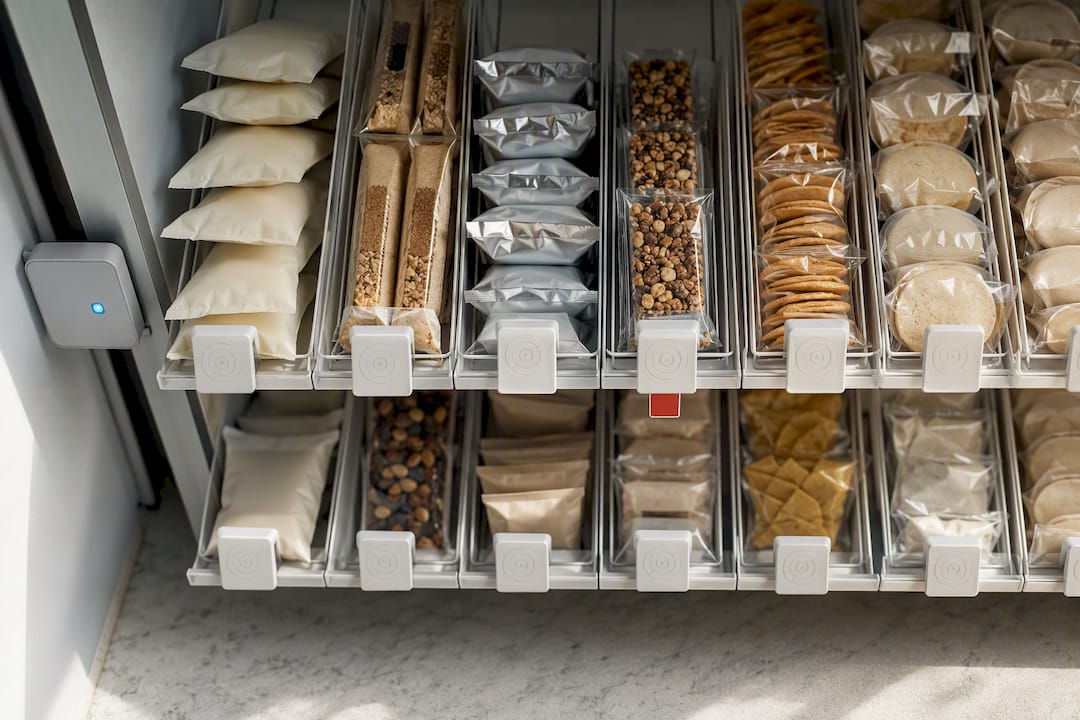
The practical payoff is a shift from calendar-based restocking to demand-based restocking. A machine near a gym that empties every three days shouldn’t get the same weekly visit as a slow break-room unit two floors up. Automation that surfaces this difference on a single dashboard is what actually cuts unnecessary stops without risking a stockout at the busier location.
Jeeves Vending’s Field Perspective on Smart Features
Some vending service providers install touchscreen machines and custom micro-markets at no upfront cost to the host business, handling stocking, maintenance, and remote monitoring so operators don’t manage hardware themselves. Across deployments in offices, schools, gyms, and hospitals, the pattern holds: sites with telemetry and cashless payment see fewer empty-machine complaints and lower unnecessary route visits, while staff report less time spent chasing change or reporting outages manually.
Why Smart Vending Still Gets Underestimated
Most operators treat smart vending features as a single upgrade decision, buy the new machine, get everything at once, when it’s really six separate bets with six different payback timelines. Telemetry pays for itself almost immediately because it eliminates wasted driving. AI grab-and-go, by contrast, only earns its keep at genuinely high-volume locations, and plenty of operators overbuy it because a demo looked impressive.
The bigger blind spot is connectivity. Everyone focuses on the sensor or the screen and assumes the machine will just talk to the cloud reliably. In practice, a machine riding a facility’s guest Wi-Fi is one router reboot away from going dark on the dashboard, which quietly undermines every other feature built on top of it. Cellular costs more monthly, but it’s the one decision that determines whether the rest of the stack actually works when it matters.
The honest read: buy telemetry and payment upgrades first, everywhere. Buy vision and grab-and-go selectively, only where the traffic justifies it. That sequencing, not the flashiest single feature, is what separates a fleet that pays for itself from one that just looks modern.
— Gary
Get Smart Vending Features Installed at No Upfront Cost
Certain vending companies offer installation of telemetry, cashless payment, touchscreen merchandising, and temperature-monitored coolers at no upfront cost, and manage restocking and maintenance. This service typically provides a single point of contact who assesses the site and matches machine type to the actual foot traffic.
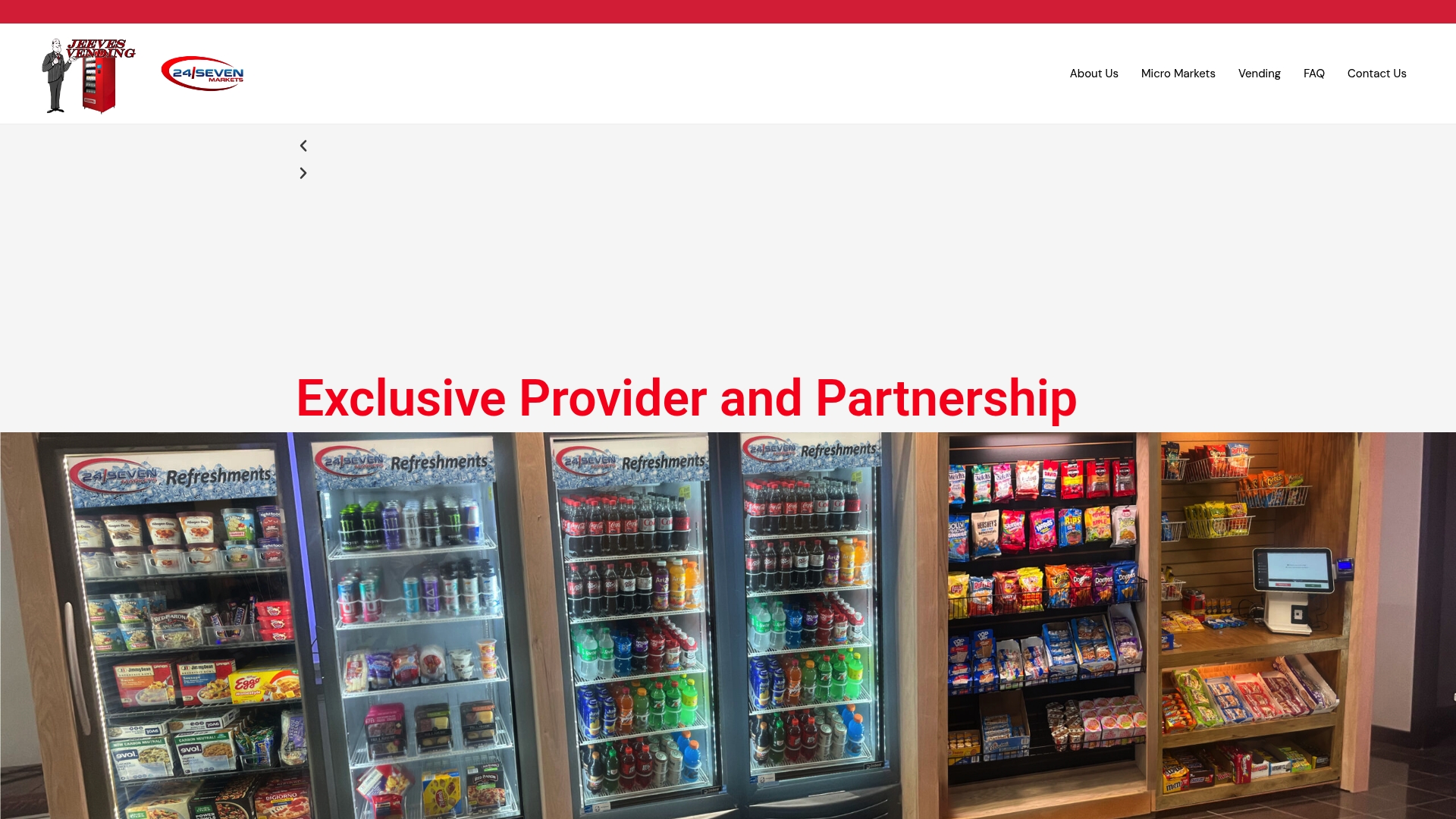
For a break room or lobby that would benefit from a modern touchscreen machine or a self-checkout micro-market, request a free site assessment and vending machine consultation to see which feature set fits your location, foot traffic, and budget before committing to anything.
Sources
- What Is a Smart Vending Machine? (2026 Guide) | Wendor
- VendPro Smart Cooler – AI-powered grab-and-go smart cooler | VendPro
- What Is a Smart Vending Machine? Definition, Components, and How It Works
- Smart Vending Machine Automation Market | Kiosk Industry