
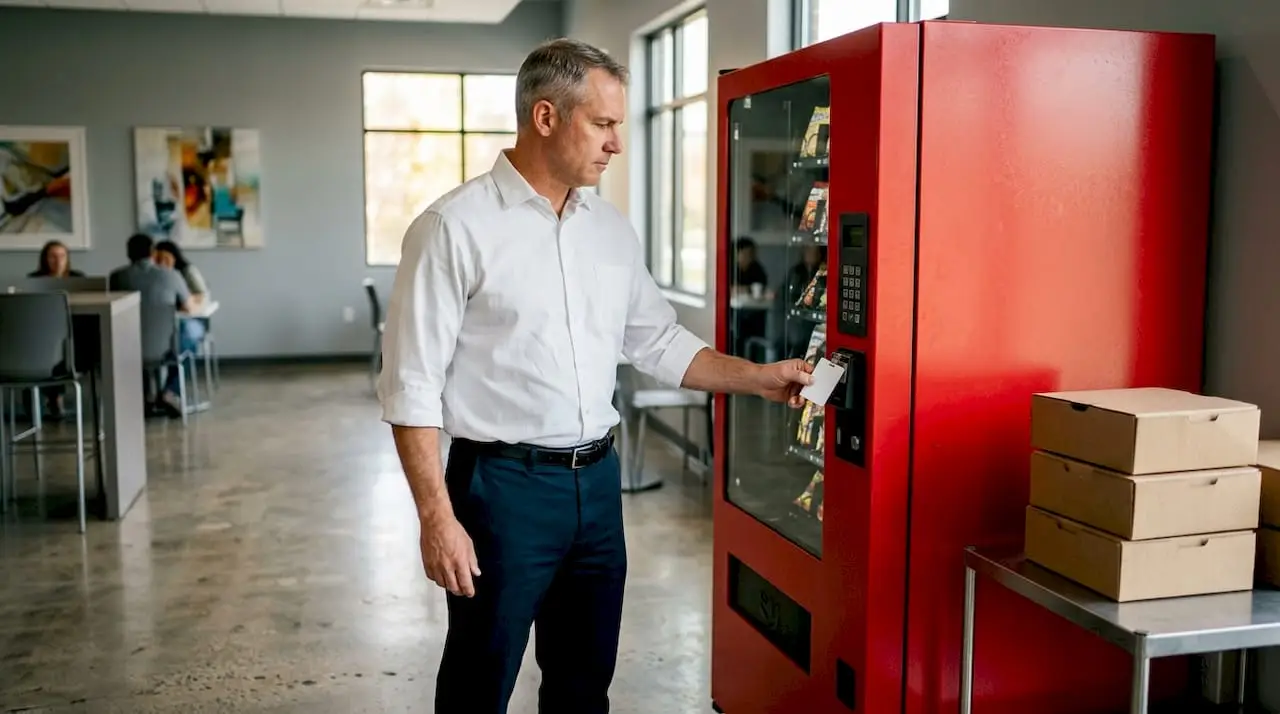
Supervised vending access is defined as the controlled dispensing of products through a vending machine where human oversight or authentication technology restricts who can access the machine and what they can take. This approach goes beyond a standard vending setup by treating the machine as an extension of a licensed or secure environment. Business owners and facility managers use it to meet legal requirements, reduce theft, and give employees reliable access to supplies around the clock. Understanding what supervised vending access means in practice is the first step toward choosing the right vending solution for your facility.
What is supervised vending access and how is it defined?
Supervised vending access is the industry term for any vending system where product dispensing is gated by verified authorization, whether from a staff member or an automated credential check. The core requirement is accountability. Every transaction must be traceable to a specific user, and the machine must prevent unauthorized access before dispensing anything.
Many states mandate continuous human oversight or integrated age verification for regulated product vending machines, including states like Massachusetts and Florida. That legal pressure is what pushed the industry toward building authentication directly into vending hardware. The result is a machine that functions less like a snack dispenser and more like a controlled-access supply cabinet.
The distinction from standard vending matters most when the products carry legal, safety, or financial risk. A standard machine dispenses to anyone with cash or a card. A supervised machine checks credentials first, logs the transaction, and in some cases requires a staff member to authorize the vend before the product releases.
How does supervised vending work in practice?
The mechanism behind supervised vending combines physical hardware with software that manages credentials, logs, and inventory in real time. Authentication happens at the machine before any product moves.
Common authentication methods include:
- Badge readers that scan employee ID cards or access cards already in use at your facility
- RFID tags assigned to individual workers, enabling touchless credential verification
- PIN codes entered on a keypad, often combined with a badge scan for two-factor access
- Biometric options such as fingerprint readers for high-security environments
Once a credential clears, the machine records who accessed it, at what time, and which product was selected. Cloud-based platforms connect these logs to enterprise tools like Zendesk or ServiceNow, automating reorder triggers and generating audit-ready reports.
Hardware plays an equally important role. Vend sensor verification uses infrared beam sensors to confirm that a product actually dispensed. If the item fails to drop, the system triggers a refund or an error alert automatically. This prevents inventory discrepancies and eliminates the frustration of paying for a product that never arrived.
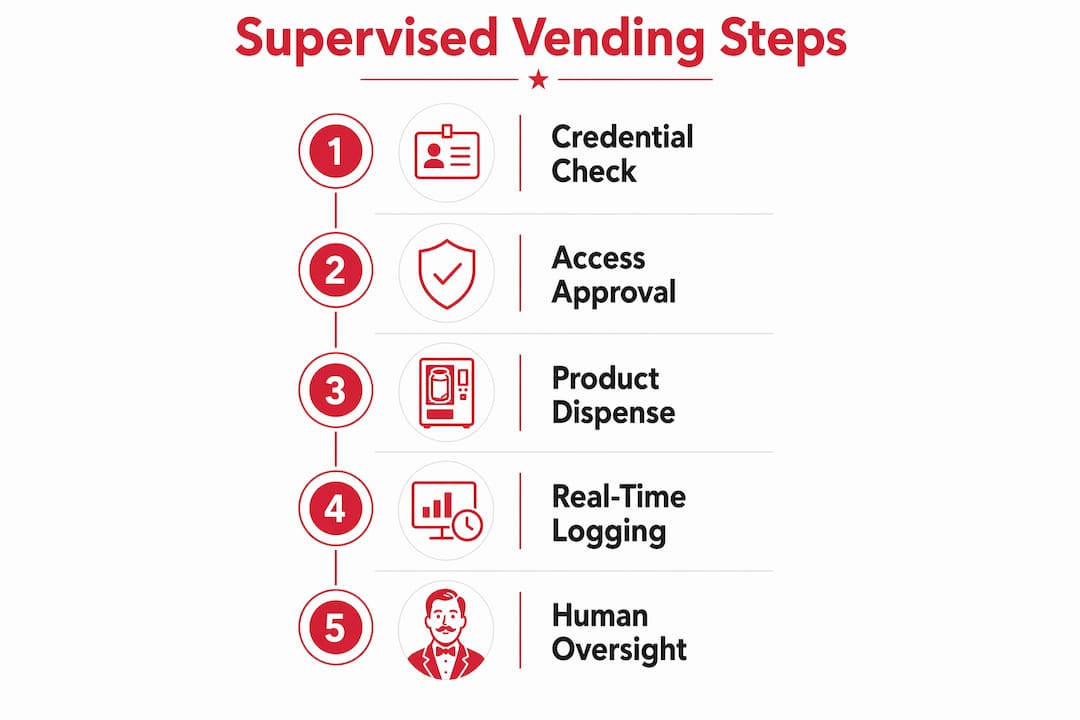
Human supervision does not disappear in automated systems. Regulators in many jurisdictions require staff to retain final access authority even when technology handles the credential check. The machine handles speed and logging; the employee handles judgment calls.
Pro Tip: Map your existing employee badge system before selecting a supervised vending machine. Most modern units support standard HID or MIFARE card formats, which means you can often integrate without issuing new credentials.
What are the benefits of supervised vending solutions for businesses?
Supervised vending solutions deliver measurable gains in compliance, inventory accuracy, and employee satisfaction. The benefits stack across multiple operational areas, which is why adoption has grown well beyond regulated retail into warehouses, offices, and healthcare facilities.
Inventory control and loss reduction
Automated user-level tracking cuts waste and loss by 15%–30% compared to manual systems. That range reflects the difference between facilities with tight oversight and those that previously relied on honor systems or paper logs. Switching from manual stock counting to automated tracking also lifts inventory accuracy from roughly 63% to over 99%. The practical effect is fewer emergency orders, less shrinkage, and a cleaner picture of what your team actually consumes.
Compliance and legal protection
PPE vending machines with badge authentication create audit-ready safety compliance records aligned with OSHA requirements and reduce theft by over 20%. For facility managers in manufacturing or construction, that audit trail is not optional. It is the difference between passing an inspection and facing a citation.
Around-the-clock employee access
Standard vending already offers 24/7 availability. Supervised vending adds accountability to that availability. Night shift workers get access to PPE, tools, or supplies without waiting for a stockroom to open. The machine logs every transaction, so managers review usage patterns without physically monitoring the floor.
Key operational benefits at a glance:
- Reduced shrinkage through per-user transaction logs
- Automated replenishment alerts tied to real consumption data
- Compliance documentation generated without manual record-keeping
- Role-based access that limits certain products to authorized personnel only
- Multi-site visibility through centralized control panels
Centralized control panels enable role-based access and usage pattern visibility across entire facility networks. For businesses operating across multiple locations, that single-pane view replaces a patchwork of spreadsheets and phone calls.
What types of products and settings use supervised vending access?
Supervised vending fits any environment where product access carries legal, financial, or safety consequences. The product category determines the level of supervision required; the facility type shapes how the machine is configured and placed.
Products commonly distributed through supervised vending
- Tobacco and vape products requiring age verification
- Alcohol, where state law often mandates employee authorization before dispensing
- PPE including gloves, safety glasses, and respirators tracked for OSHA compliance
- IT peripherals such as cables, adapters, and batteries issued to specific employees
- Cutting tools, drill bits, and other consumable shop supplies
- Pharmaceuticals and medical supplies in healthcare settings
- High-value electronics or components in manufacturing lines
Settings where supervised vending is most effective
| Setting | Primary use case | Key compliance driver |
|---|---|---|
| Warehouse or distribution center | PPE and tool dispensing | OSHA safety records |
| Healthcare facility | Medical supplies and PPE | Regulatory audit trails |
| Manufacturing plant | Consumable tools and parts | Cost control and shrinkage |
| Office environment | IT supplies and snacks | Budget accountability |
| Regulated retail | Tobacco, alcohol, vape products | Age-restriction laws |
Placement requirements for supervised vending machines differ from standard units. Regulated product machines often must be positioned within line of sight of a staff member or in a locked area accessible only after credential verification. Local ordinances and state law govern exact placement rules, so checking jurisdiction-specific requirements before installation is non-negotiable.
The core difference between supervised and standard vending in these settings is risk ownership. Supervised vending treats the machine as an extension of licensed premises, placing legal responsibility on the operator to control access behavior and outcomes.
What are the best practices for implementing supervised vending access?
Getting supervised vending right requires more than buying the right machine. The implementation process determines whether the system delivers compliance and efficiency or creates new headaches.
-
Audit your product categories first. Identify which items carry legal restrictions, high theft risk, or safety implications. This determines the authentication level you need and whether human oversight must be built into your policy.
-
Match authentication to your workforce. Badge-based systems work well in facilities where employees already carry access cards. PIN systems suit smaller teams. Biometric options fit high-security environments but require more onboarding time.
-
Integrate with existing enterprise software. Connecting vending machines to your inventory or facilities management platform converts the machine from a passive dispenser into a data-tracking asset. Automated reorder triggers eliminate manual stock checks.
-
Establish a clear human oversight policy. Even the most automated system needs a defined role for staff. Decide who reviews access logs, who handles disputes, and who holds final authority for access decisions on regulated products.
-
Train employees before go-live. Workers need to understand why credentials are required and how to handle a failed vend. Clear communication reduces workarounds and keeps your audit trail clean.
-
Review usage data monthly. Consumption patterns reveal which products move fastest, which employees use the most, and where waste is occurring. That data feeds better forecasting and tighter budget control.
Pro Tip: Run a 30-day pilot with one machine before rolling out across your facility. Usage data from that first month will reshape your product mix and access rules in ways you cannot predict from a spreadsheet.
Warehouse managers who have implemented supervised vending report that the biggest early win is not theft reduction. It is the elimination of the “I didn’t know we were out” problem. Real-time inventory visibility ends reactive restocking entirely.
Key Takeaways
Supervised vending access works because it combines credential-based authentication, real-time inventory tracking, and human oversight to create a fully accountable dispensing system.
| Point | Details |
|---|---|
| Authentication is the foundation | Badge readers, RFID, PIN codes, and biometrics gate access before any product dispenses. |
| Inventory accuracy improves dramatically | Automated tracking lifts accuracy from roughly 63% to over 99%, cutting waste and shrinkage. |
| Legal compliance requires human oversight | Regulations in many states require staff to retain final access authority even with automated systems. |
| Product type drives supervision level | Regulated items like tobacco, alcohol, and PPE require stricter authentication than standard consumables. |
| Data turns vending into a management tool | Usage logs and reorder alerts convert machines from passive dispensers into inventory control assets. |
Why supervised vending changed how I think about workplace supply management
I spent years watching facility managers treat vending as a convenience afterthought. The machine got restocked when it ran out, and nobody tracked who took what. Then I started seeing what happened when businesses introduced supervised vending systems, and the shift was significant.
The most surprising outcome was not the compliance improvement. It was the behavioral change. When employees know their access is logged, consumption patterns normalize. The person grabbing three pairs of safety glasses “just in case” stops doing that when their name is attached to every transaction. That accountability effect alone often justifies the investment before you even calculate the inventory savings.
What I find underappreciated is the predictive power of the data these systems generate. Most operators focus on access control and miss the forecasting opportunity sitting in their usage logs. A machine that tracks 90 days of consumption by product, by shift, and by department gives you a demand forecast that no manual process can match. That is where supervised vending moves from a compliance tool to a genuine operational advantage.
The human oversight requirement frustrates some managers who want full automation. My view is that the requirement is actually a feature. It forces you to assign clear responsibility for access decisions, which tightens your overall supply chain accountability. Automation handles speed and logging. People handle judgment. That division works.
The next wave in supervised vending will likely center on predictive restocking driven by machine learning, where the system flags reorder needs before the shelf empties rather than after. Facilities that build good data habits now will be positioned to use those tools immediately when they arrive.
— Gary
Jeevesvending’s approach to supervised vending for Dallas-area businesses
Jeevesvending installs modern vending machines and custom micro-markets at no cost to businesses across the Dallas-Denton region, including units built for controlled access and real-time inventory tracking. The machines support multiple authentication methods and connect to management dashboards that give facility managers visibility into usage patterns across their locations.
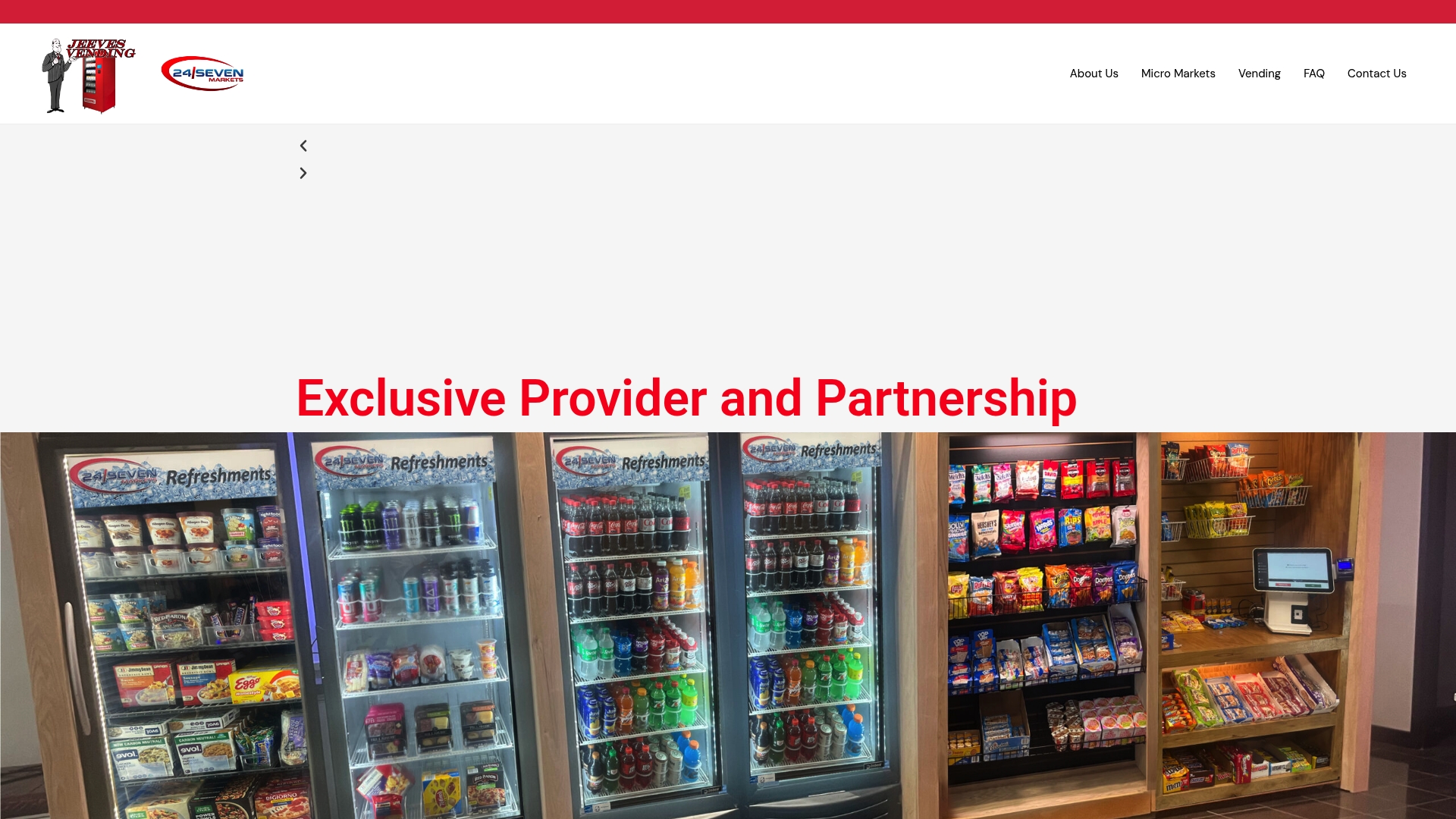
For business owners who want to add supervised vending without the capital expense or maintenance burden, Jeevesvending handles installation, stocking, and ongoing service. The full-service vending program is designed for facilities that need reliable, accountable product access without adding operational overhead. Contact Jeevesvending to find out which supervised vending configuration fits your facility’s compliance requirements and employee needs.
FAQ
What is supervised vending access in simple terms?
Supervised vending access is a vending system where credential verification, such as a badge scan or PIN, controls who can use the machine, and every transaction is logged for accountability.
How does supervised vending work for regulated products like tobacco or alcohol?
The machine requires employee authorization or age-verified credentials before dispensing. Many states require a staff member to retain final access authority even when automated authentication handles the initial check.
What authentication methods do supervised vending systems use?
Most systems support badge readers, RFID tags, PIN codes, and biometric scanners. The right method depends on your workforce size, existing access infrastructure, and the security level your products require.
Can supervised vending machines integrate with existing business software?
Yes. Modern supervised vending systems connect to enterprise platforms and automate reorder processes while generating audit logs that track who accessed what and when.
How much can supervised vending reduce inventory waste?
Automated tracking cuts waste and loss by 15%–30% compared to manual systems, and inventory accuracy typically rises from roughly 63% to over 99% after implementation.