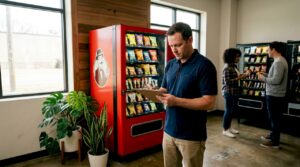

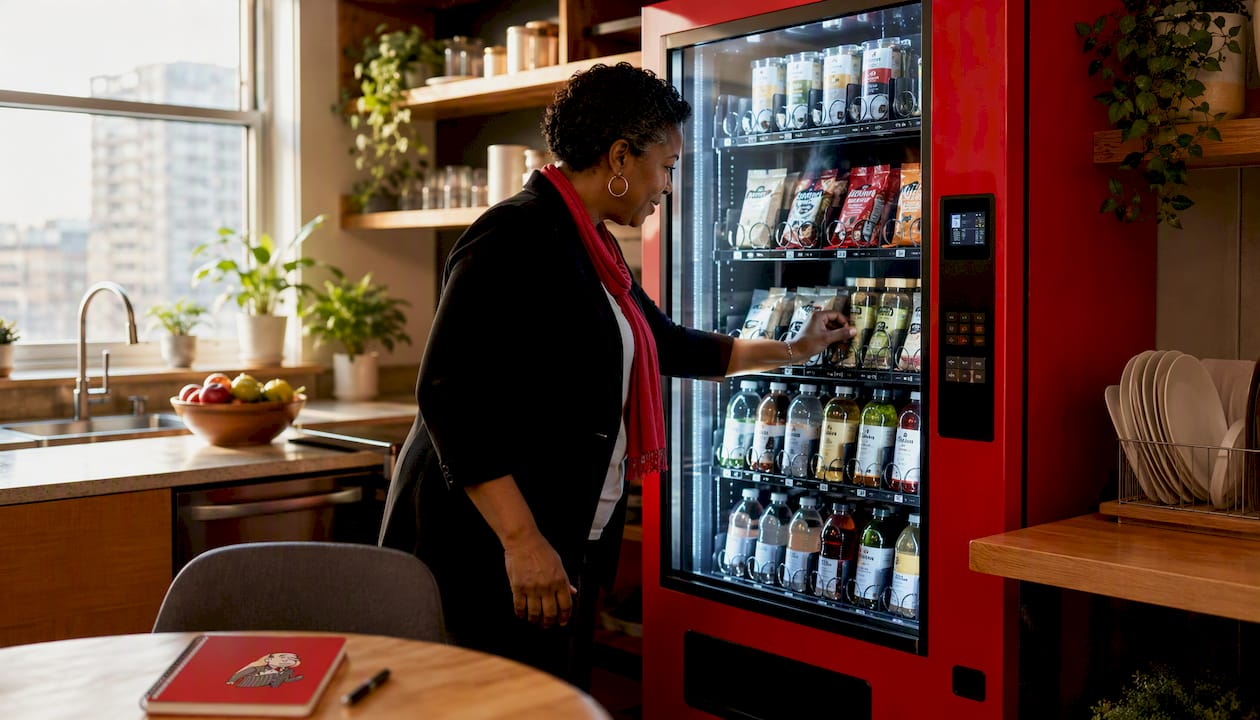
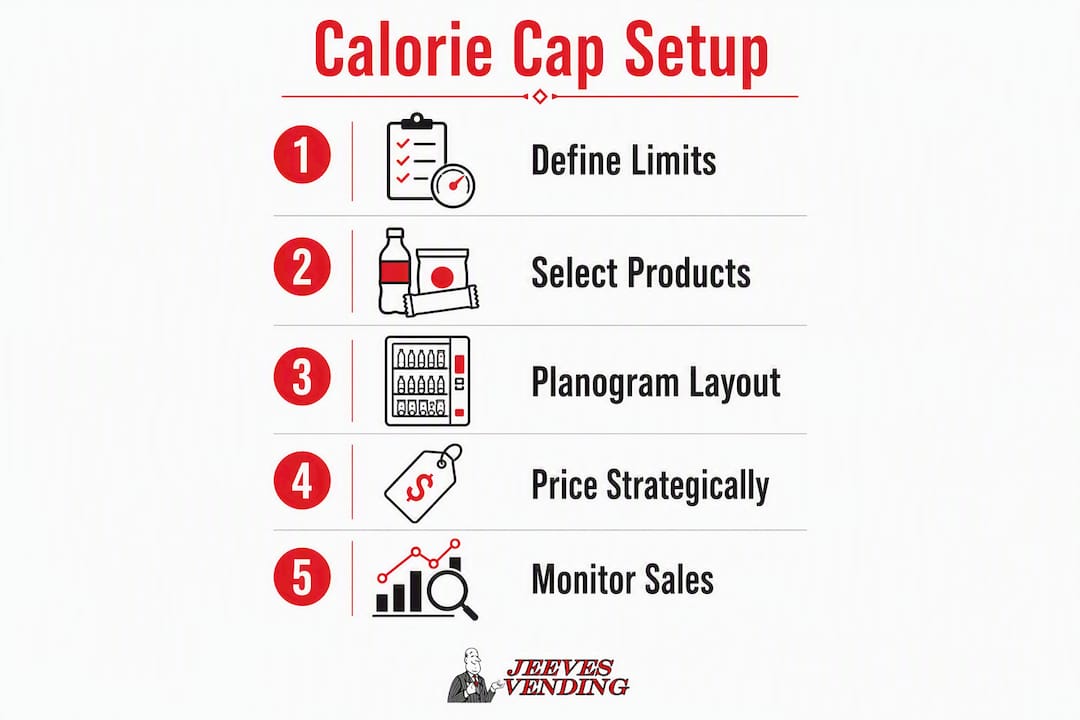
Calorie-capped vending is a deliberately stocked vending or micro-market assortment where every sellable item falls at or below a preselected calorie limit, making healthier choices the automatic default. The industry term for this approach is calorie-controlled vending, and it covers four core elements: a preset calorie threshold (often 200–250 calories for snacks, 120 calories for beverages), inventory rules that exclude items exceeding that threshold, a planogram that places compliant products at eye level, and vendor performance expectations tied to restocking and monitoring.
This model fits workplaces with active wellness goals, schools, gyms, and healthcare sites. If your organization is weighing a pilot, the decision usually comes down to two questions: does your vendor have remote stock monitoring, and are you willing to run a 4–12 week test before committing to a full rollout?
- Preset calorie threshold per item (single-serve packaging is the unit of measure)
- Inventory rules excluding non-compliant SKUs
- Planogram placement prioritizing compliant items at eye level and in the right-hand column
- Vendor SLAs covering restock cadence, outage response, and nutrition data verification
Table of Contents
- Why do employers adopt calorie-capped assortments?
- How do calorie thresholds, planograms, and product selection actually work?
- What should you require from a vending or micro-market partner?
- How do you roll out a calorie-capped program from pilot to scale?
- How do you measure whether the program is working?
- What are the real operator concerns, and how do you handle them?
- Key Takeaways
- Why calorie-capped programs deserve more credit than they get
- Jeeves Vending makes calorie-capped programs low-friction for Dallas-Denton sites
Why do employers adopt calorie-capped assortments?
The behavioral rationale is straightforward: environmental defaults shift food choices more reliably than nutrition education alone. When employees walk up to a machine and every option is compliant, they pick a compliant item. No willpower required.
A controlled hospital study found that removing unhealthy items entirely drove 53% of purchases toward products under 100 calories, a result that education-only programs rarely approach. A separate hospital pilot increased the healthy-item share from 22% to 39%, though total sales dipped 18.81% during the short study window. That revenue dip is real, but it is not permanent. An American Heart Association pilot at its National Center reported that mean monthly snack revenue increased once pricing was kept competitive and planogram nudges were applied consistently.
Statistic to know: In one controlled vending intervention, healthy-item purchases rose from 22% to 39% of total sales after assortment changes, with revenue recovering once pricing and variety were adjusted.
Program goals that calorie-capped vending supports include reducing average calories dispensed per transaction, aligning the food environment with wellness benefits, and giving HR teams a visible, low-friction proof point for their wellness programs.
Pro Tip: Expect a 4–8 week adjustment period before sales data stabilizes. Employees who relied on a specific high-calorie item will test alternatives, and some will leave the machine empty-handed at first. Patience and iterative planogram adjustments, not a one-time swap, are what drive lasting uptake.
How do calorie thresholds, planograms, and product selection actually work?
Setting the thresholds
Sample healthy vending policies commonly use a 250-calorie cap per snack package and beverage standards that favor water, low-fat milk, and low-calorie drinks. Some stricter programs set a 200-calorie snack cap or a 100-calorie cap for items classified as “best choice.” The table below shows how thresholds typically map across categories.
| Category | Common cap | Example compliant items |
|---|---|---|
| Snacks (best choice) | ≤100 cal | Nuts (single-serve), fruit pouches, rice cakes |
| Snacks (standard) | ≤200–250 cal | Protein bars, baked chips, trail mix |
| Single-serve meals | ≤400 cal | Grain bowls, wraps, salads |
| Beverages | ≤120 cal | Sparkling water, unsweetened tea, low-fat milk |
What counts as an “item”
The unit of measure is single-serve packaging. A 1.5-oz bag of almonds is one item; a 3-oz bag is a separate SKU that may or may not clear the threshold. Multi-serve packages should be excluded from the planogram entirely, not split at the machine. Customizable items (build-your-own snack kits) count at their assembled calorie total.
Planogram placement and pricing
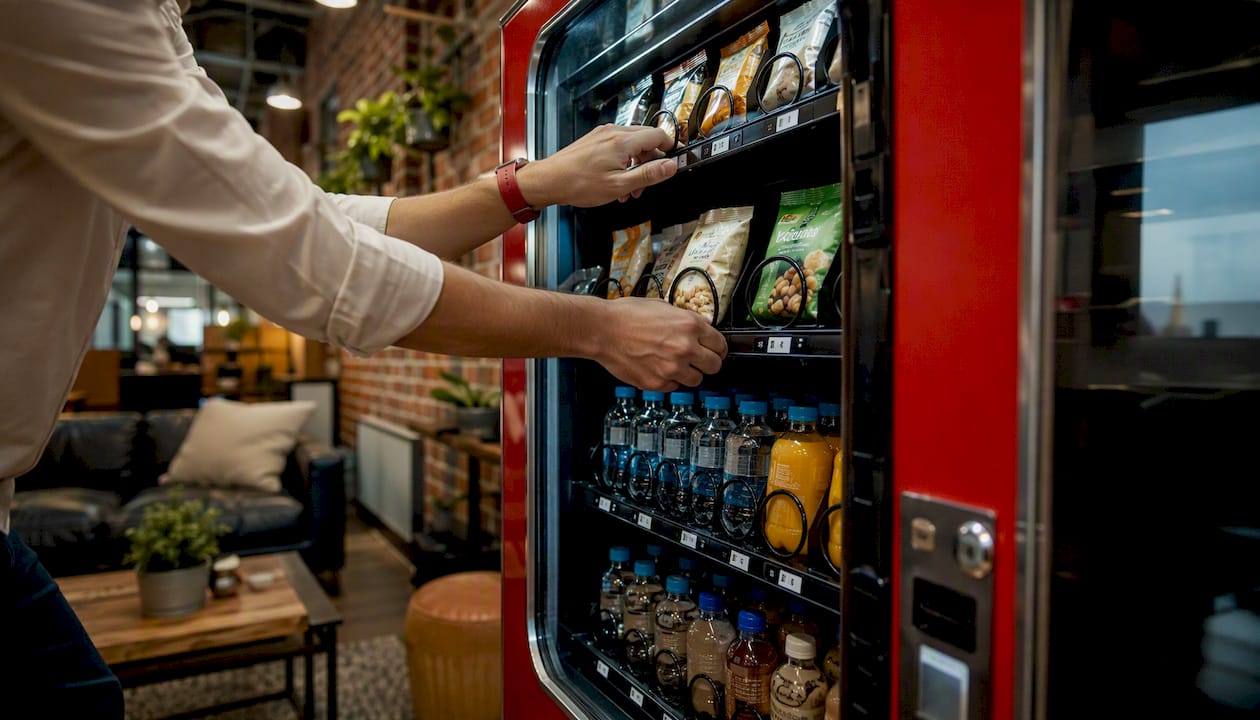
Eye-level and right-column placements consistently increase purchase rates for targeted items. Stage your highest-compliance SKUs in the top third of the machine. For protein-forward snacks that also sell well, the right-hand column is prime real estate.
Pricing matters more than most operators expect. Keeping healthy options at market-standard or slightly lower prices retains repeat buyers. Raise prices on compliant items and you will see substitution drop, not increase.
- Highest-compliance SKUs: top third and right column
- Mid-tier compliant items: center rows
- Beverages: dedicated section with calorie labels visible through the glass
- Shelf tags: display calorie count and any wellness certification (FitPick, USDA Smart Snacks)
Pro Tip: Use your vendor’s POS data to identify the two or three slots with the highest dwell time. Those are your conversion slots. Put your best-performing healthy SKU there, not the item you think employees should want.
What should you require from a vending or micro-market partner?
Technical and operational requirements are where most RFPs fall short. A vendor who cannot provide real-time stock data cannot run a calorie-capped program reliably.
- Remote stock monitoring: real-time inventory feeds so you know when a compliant SKU is running low before it stocks out
- POS sales feeds: daily transaction data broken down by SKU, so you can track healthy-item uptake without waiting for a monthly report
- Outage alerts: automatic notification when a machine goes offline or a slot empties, with a defined response-time SLA
- Flexible planogram software: ability to update slot assignments remotely without a service visit
- Nutrition data integration: verified calorie and allergen data for every SKU in the assortment, not just a spreadsheet on request
On the operational side, require a restocking cadence matched to your traffic volume (daily for high-traffic sites, every 48 hours minimum for standard offices), a written nutrition sourcing verification process, and a labeling compliance check at every restock. Consistent restocking is the single biggest factor in whether healthy items stay available long enough to change habits.
Contract items worth including: healthy-item uptake KPIs, host access to the sales dashboard, and a clause allowing assortment or pricing changes within 30 days of a pilot review.
Pro Tip: Ask any prospective vendor to show you a live dashboard demo, not a screenshot. If they cannot pull up real-time slot-level inventory on demand, their monitoring capability is not what they are claiming.
How do you roll out a calorie-capped program from pilot to scale?
A realistic rollout runs 10–16 weeks from site survey to scale decision.
- Weeks 1–2: Site survey, freight access check, door clearance confirmation. Installation surprises almost always trace back to freight elevator capacity or corridor width. Confirm dimensions before the truck arrives.
- Week 3: Installation and baseline data collection. Record current sales mix and average calories per transaction before any assortment change.
- Weeks 4–12: Pilot phase. Run the calorie-capped assortment, collect weekly POS data, and hold a mid-pilot planogram review at week 6.
- Weeks 13–14: Analyze pilot KPIs, adjust planogram, and present findings to stakeholders.
- Week 15–16: Scale decision and full rollout or extended pilot.
On cost models: the no-equipment-cost commission model (Jeeves Vending’s standard approach in the Dallas-Denton area) means the host site pays nothing for hardware or installation. Revenue comes from product sales, so the vendor’s incentive is to keep machines stocked and selling. Revenue-share models work similarly. Micro-market kiosk setups may carry a small monthly service fee but allow a wider assortment and self-checkout, which suits larger sites.
Stakeholder roles: the wellness coordinator or HR lead owns the policy and approves the planogram. Facilities handles installation logistics. The vendor runs communications support and sampling events.
Pro Tip: Schedule a sampling event in the first week after installation. Employees who try a new healthy SKU in person are far more likely to purchase it again than those who encounter it cold in a machine.
How do you measure whether the program is working?
Primary KPIs
| KPI | What to track | Sample target |
|---|---|---|
| Healthy-item uptake rate | % of total units sold that meet the calorie cap | Aim for 39% or higher based on hospital pilot outcomes by week 12 |
| Average calories per item sold | Mean calories across all transactions | Trending down vs. baseline |
| Overall revenue vs. baseline | Total sales compared to pre-pilot period | Within 10% of baseline |
| Stockout frequency | Number of compliant SKU outages per week | ≤1 per machine per week |
Secondary KPIs and reporting cadence
Secondary metrics worth tracking: substitution rate (did compliant items replace non-compliant purchases, or did total transactions drop), employee satisfaction scores from a short pulse survey, and sampling event attendance.
- Daily: automated sales feed from vendor POS
- Weekly: slot-level stockout report
- Monthly: full pilot review covering all primary KPIs, planogram performance, and employee feedback
- SLA trigger: if healthy-item uptake drops below 30% in any two consecutive weeks, require a planogram review within five business days
What are the real operator concerns, and how do you handle them?
Revenue drop: The 18.81% sales dip seen in one hospital pilot is the number that makes operators nervous. The American Heart Association pilot shows it does not have to be permanent. Competitive pricing and variety management are the levers. Do not cut variety to only five SKUs and expect revenue to hold.
Employee pushback: Phased pilots help. Start with one machine, communicate the change in advance, and run a sampling event. Customizing the menu with HR input before launch reduces resistance significantly. Transparent shelf labeling (calorie counts visible, not buried) builds trust rather than resentment.
- Outages: remote monitoring prevents the scenario where the only compliant items are sold out by 10 AM and employees default to whatever is left
- Planogram fatigue: rotate 2–3 SKUs per month based on sales data; use seasonal assortment changes to keep the selection feeling fresh
- Stated vs. actual preferences: employees often say they want healthy options but purchase familiar items. Let POS data, not surveys, drive planogram decisions.
Pro Tip: Post a short QR code on the machine linking to a two-question feedback form. You will get more actionable input from 20 real purchasers than from a 50-person all-hands survey.
Key Takeaways
Calorie-capped vending works when preset thresholds, data-driven planograms, remote monitoring, and competitive pricing operate together from day one of the pilot.
| Point | Details |
|---|---|
| Define thresholds before launch | Use 200–250 cal for snacks and 120 cal for beverages as a starting baseline, then adjust from pilot data. |
| Planogram placement drives uptake | Eye-level and right-column slots for compliant SKUs consistently increase healthy-item purchase rates. |
| Remote monitoring is non-negotiable | Stockouts of healthy SKUs are the fastest way to lose behavioral gains; require real-time inventory alerts in your SLA. |
| Revenue recovers with pricing discipline | Keeping healthy options price-competitive prevents the revenue dip from becoming permanent, as the American Heart Association pilot demonstrated. |
| Jeeves Vending as your pilot partner | Jeeves Vending provides no-equipment-cost installation, remote stock monitoring, and planogram testing for Dallas-Denton workplaces, schools, gyms, and healthcare sites. |
Why calorie-capped programs deserve more credit than they get
Most wellness programs treat vending as an afterthought. A poster about healthy eating next to a machine full of 400-calorie candy bars is not a wellness strategy. Calorie-capped vending is one of the few interventions that change behavior at the moment of decision, without asking employees to do anything differently.
The conventional wisdom says healthy vending always costs revenue. That is only true when operators cut variety, raise prices on compliant items, or skip the pilot phase entirely and swap the whole assortment overnight. The programs that work do the opposite: they test one machine, price competitively, rotate SKUs based on what actually sells, and give employees a few weeks to adjust.
What most guides underestimate is the role of planogram discipline. Stocking a machine with 30% healthy items and placing them in the bottom row is not calorie-capped vending. It is a token gesture. The placement rules matter as much as the threshold rules. An eye-level slot for a protein bar outperforms a bottom-row slot for the same bar by a margin that shows up clearly in weekly POS data.
The other underrated factor is vendor accountability. A vendor without real-time monitoring cannot run this program. Full stop. If a popular healthy SKU stocks out by Tuesday and the next restock is Friday, employees will buy whatever is available. The behavioral gain disappears in 72 hours. Remote monitoring is not a nice feature. It is the operational backbone of the whole model.
Jeeves Vending makes calorie-capped programs low-friction for Dallas-Denton sites
Zero equipment cost is the sharpest contrast between Jeeves Vending and the typical vending procurement process. No capital outlay, no installation fee, no long-term hardware commitment. Jeeves Vending handles the site survey, confirms freight access and door clearances before installation day, and sets up remote stock monitoring from day one.
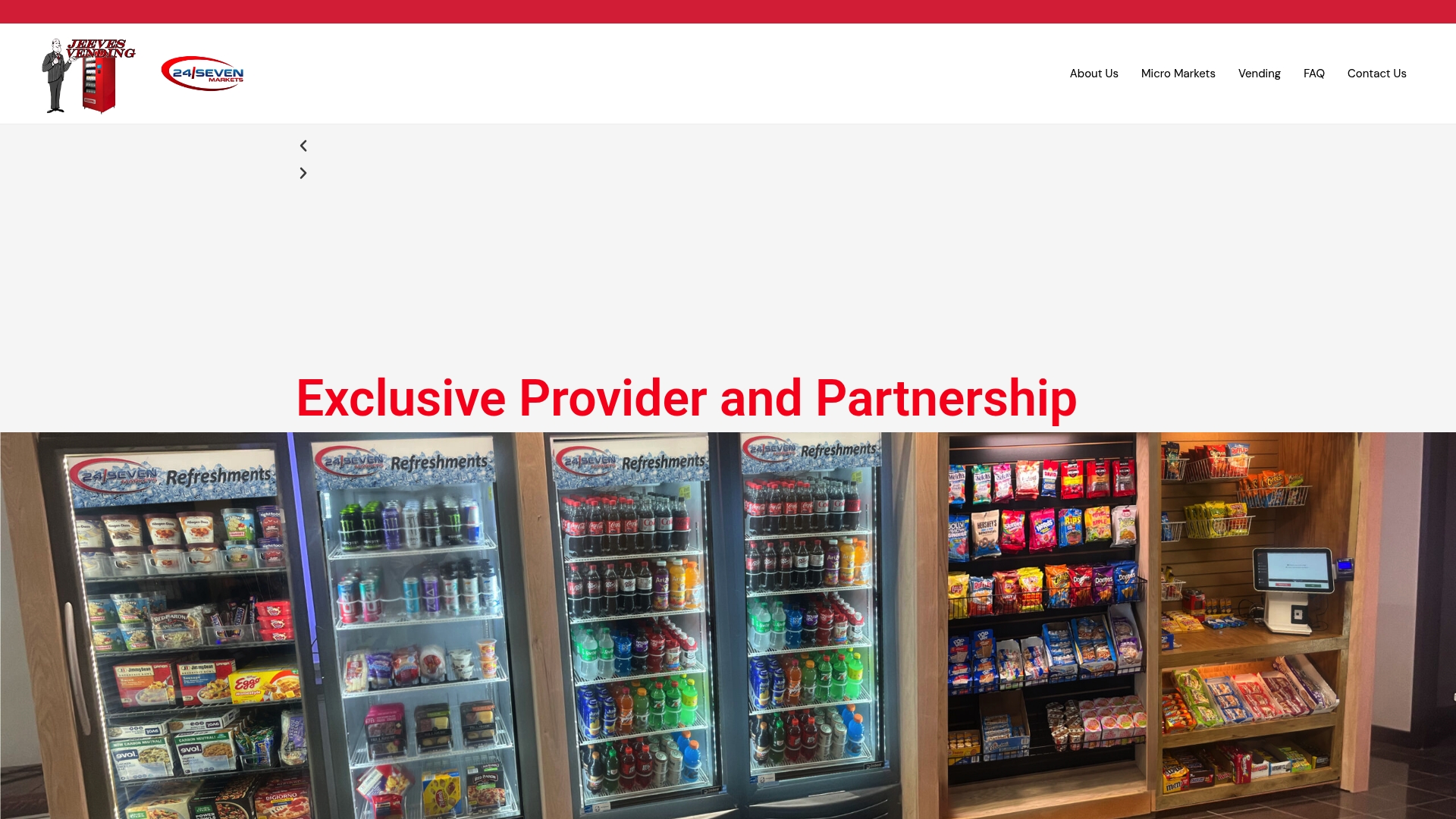
For HR and wellness coordinators, Jeeves Vending provides planogram A/B testing driven by live POS data, employee communications support, and sampling event coordination, leveraging gym class promotion screen strategies to enhance rollout and engagement. For facility managers, the micro-market option scales to larger sites with self-checkout and a wider calorie-compliant assortment. Every machine runs on a digital POS and kiosk system with real-time inventory visibility, so stockouts of your top healthy SKUs trigger an alert before employees notice.
Ready to see what a calorie-capped assortment looks like for your specific site? Request a site survey from Jeeves Vending and get a pilot proposal built around your traffic volume, space, and wellness goals.