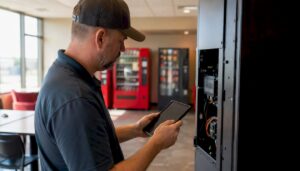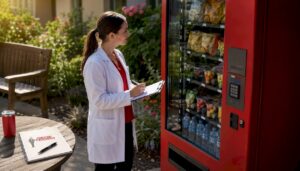

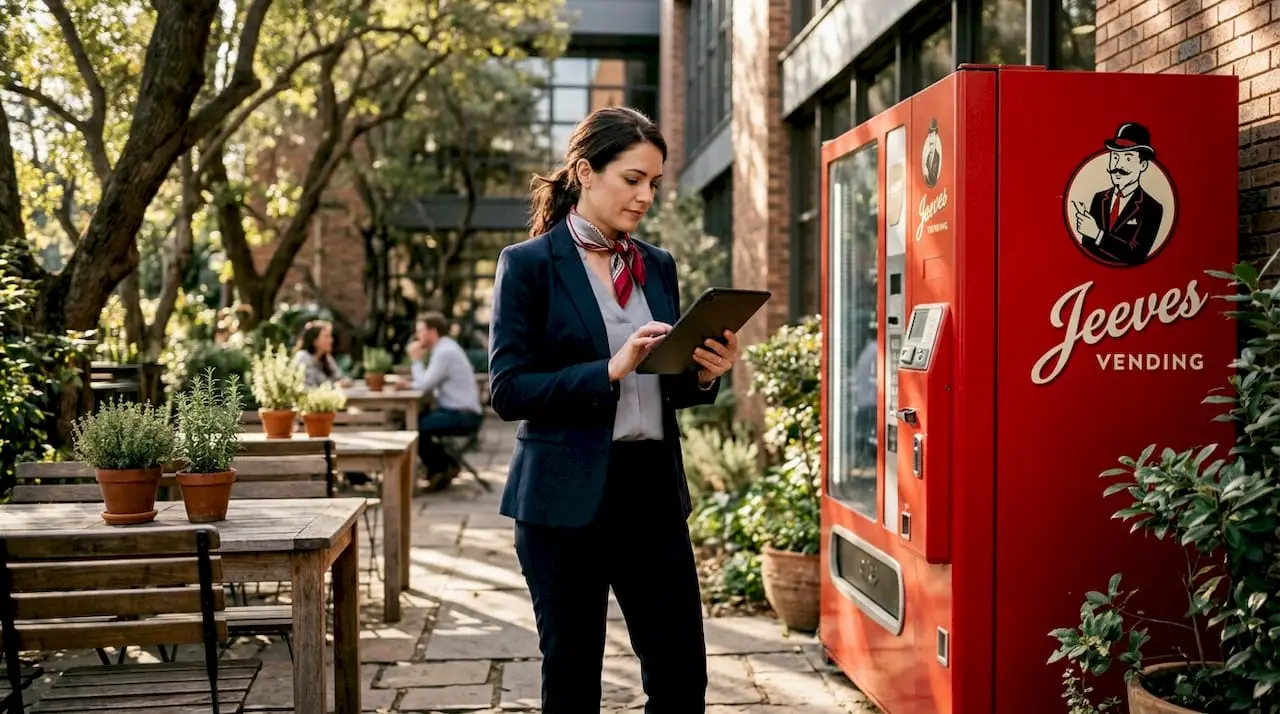
Free vending machines are placed in businesses at no upfront cost through placement agreements where operators cover all expenses and earn revenue by selling products directly from the machine. This model, known in the industry as a free placement or zero-cost vending program, answers why free vending machines exist: the operator profits from product sales margins, not from charging the host. Around 60% of vending operators use this revenue-sharing structure, making it the dominant model in commercial vending. Jeevesvending operates exactly this way across the Dallas-Denton region, placing fully serviced machines in offices, schools, hospitals, and gyms at zero cost to the business.
Why do free vending machines exist?
Free vending machines exist because value is created through machine usage rather than by charging site hosts upfront. The operator installs, stocks, and maintains the machine entirely at their own expense. In return, every product sold generates a margin that covers those costs and produces profit. The host location provides the one thing the operator cannot buy outright: a captive audience of regular buyers.
This model works because both parties gain something concrete. The business gets a free full-service vending program with no capital outlay, no maintenance headaches, and a potential commission income. The operator gets reliable access to foot traffic that converts into daily sales. Neither party needs to subsidize the other. The economics are self-sustaining.
How do vending operators profit while offering free machines?
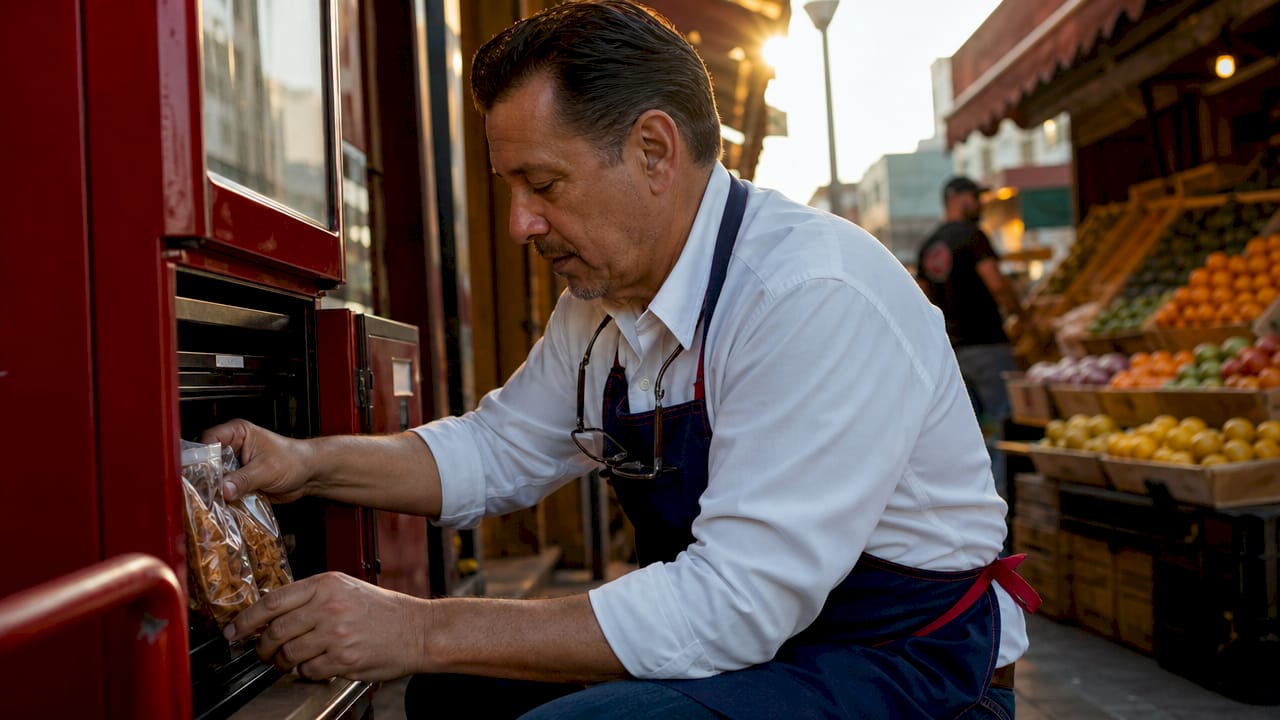
The operator’s profit comes entirely from the margin between the wholesale cost of products and the retail price charged at the machine. That margin must cover equipment depreciation, stocking labor, fuel for service routes, repairs, and technology upgrades. What remains after those costs is the operator’s net profit.
Commission sharing is the mechanism that ties the host into the arrangement. Commission deals range from 5% to 25% of monthly gross sales, depending on location traffic, contract length, and negotiation. A location generating $2,000 in monthly sales at a 10% commission rate returns $200 per month to the host with zero effort required.
High product turnover is the engine of the whole model. An operator placing a machine in a low-traffic break room with 20 daily users will struggle to cover costs. The same machine in a hospital lobby with 400 daily visitors generates enough volume to pay for itself, share commission, and still return a healthy margin.
Pro Tip: Ask your operator for a monthly sales report. Transparent reporting lets you verify commission accuracy and track whether the machine’s product mix is performing well for your location.
Here is a simplified view of how the revenue split typically works:
| Monthly Gross Sales | Commission Rate | Host Earns | Operator Retains |
|---|---|---|---|
| $1,000 | 5% | $50 | $950 (before costs) |
| $2,000 | 10% | $200 | $1,800 (before costs) |
| $4,000 | 15% | $600 | $3,400 (before costs) |
| $6,000 | 25% | $1,500 | $4,500 (before costs) |
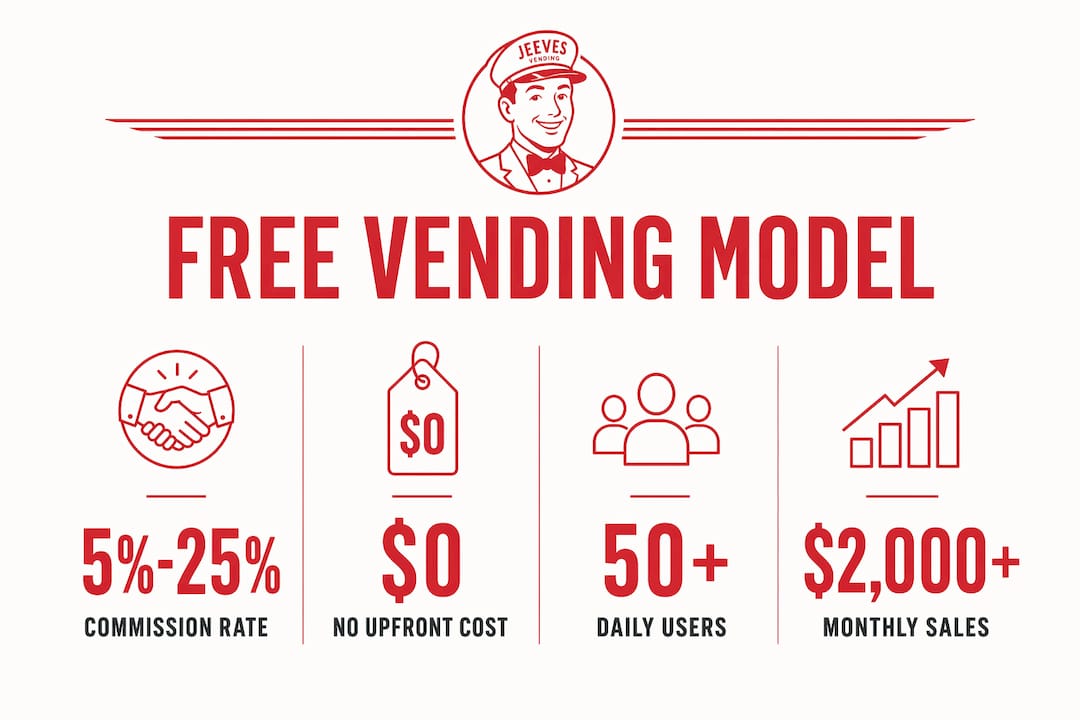
The operator’s retained amount is gross, not net. After stocking, maintenance, and equipment costs, actual net margins are thinner. That is why volume and location quality matter so much to every operator offering a free placement.
What criteria do businesses need to meet for free placement?
Operators do not place machines everywhere. Free placement is a business decision for the operator, and they apply clear criteria before committing equipment and service resources to a location.
-
Minimum daily foot traffic. Businesses typically need 50 or more daily users to qualify for a free placement. Locations with fewer regular visitors rarely generate enough sales to justify the operator’s costs.
-
Dwell time. Foot traffic alone is not enough. Locations with 200–500 daily visitors spending 3–5 minutes on site generate the highest commissions, often $300–$800 per month. A lobby where people pass through in 30 seconds produces far fewer purchases than a break room where employees sit for 15 minutes.
-
Demographic and product fit. A gym needs protein bars and electrolyte drinks. A school needs snacks and water. An operator will assess whether their product catalog matches the buying habits of your specific audience. Mismatched products mean low sales for everyone.
-
Site accessibility. The operator needs to restock and service the machine regularly. Locations that require special access clearances, have no loading access, or are difficult to reach on a service route increase the operator’s costs and reduce the attractiveness of the placement.
-
Contract and exclusivity terms. Most placement agreements run 1 to 3 years, often with trial or exit clauses that can be negotiated. Some operators request exclusivity, meaning no competing machines from other providers on the premises.
Review the placement requirements in detail before approaching an operator. Knowing your own traffic numbers and site layout puts you in a much stronger position during initial conversations.
Pro Tip: Count your actual daily foot traffic for one full week before contacting an operator. Real numbers, not estimates, speed up the qualification process and improve your negotiation position.
What are the operational benefits for businesses hosting free vending machines?
The most direct benefit is zero capital outlay. The business pays nothing for the machine, installation, stocking, or repairs. That financial risk sits entirely with the operator.
- No maintenance burden. Operators handle stocking, repairs, and maintenance to protect their own revenue. The host never needs to call a technician, manage inventory, or coordinate a service visit.
- Passive commission income. Every sale generates a small return to the host with no additional work required. Over a full year, that income can offset other facility costs.
- Improved employee and visitor amenities. Vending machines are increasingly viewed as social infrastructure that provides essential goods and improves staff satisfaction. Free snacks in offices and accessible refreshments in waiting areas raise the perceived quality of a workplace or facility.
- Risk transfer. Free vending programs transfer all operational risks to the operator, including equipment depreciation, service costs, and restocking logistics. The host carries none of those liabilities.
- Technology upgrades at no cost. Reputable operators replace aging machines with newer models as part of their own equipment refresh cycles. The host benefits from modern technology without funding it.
The customizable vending menu options available through full-service operators also mean the product selection can be tailored to your workforce, which directly increases purchase frequency and commission returns.
What practical factors should businesses consider before accepting a free machine?
Accepting a free vending machine is a low-risk decision, but it is not a zero-consideration one. A few practical factors deserve attention before signing any agreement.
- Electricity costs. Refrigerated vending machines typically add $30 to $50 monthly in electricity costs. Some operators cover this within the contract. Others pass it to the host. Clarify this point before signing.
- Contract length and exit terms. Agreements typically run 1 to 3 years. Negotiate a trial period of 60 to 90 days with a clear exit clause if sales targets are not met. This protects you from being locked into an underperforming placement.
- Product pricing control. In most free placement models, the operator sets retail prices. If your audience is price-sensitive, confirm the pricing structure upfront. High prices reduce purchase frequency and lower your commission.
- Space and placement logistics. Confirm the machine dimensions and power requirements before installation. A machine placed in a poorly lit corner or away from natural foot flow will underperform regardless of location traffic.
- Operator reputation and service reliability. The operator’s incentive to maintain the machine is strong because their revenue depends on uptime. Still, verify their service response times and read reviews from other host locations before committing.
| Factor | What to clarify |
|---|---|
| Electricity cost | Who pays the monthly utility cost for the machine |
| Commission rate | Percentage of gross sales returned to the host monthly |
| Contract length | Duration and exit or trial clause terms |
| Product pricing | Who controls retail prices and how changes are communicated |
| Service response | Typical repair and restocking turnaround time |
The office vending setup process covers many of these logistics in detail and is worth reviewing before your first operator conversation.
Key Takeaways
Free vending machines exist because operators profit from product sales margins, not from charging hosts, making the model financially viable for both parties when location traffic is sufficient.
| Point | Details |
|---|---|
| Revenue-sharing model | Operators cover all costs and earn profit from product sales, sharing 5%–25% commission with the host. |
| Traffic threshold matters | Locations need at least 50 daily users; 200–500 with longer dwell time generate the highest returns. |
| Zero operational burden | Hosts pay nothing for equipment, stocking, or maintenance. The operator absorbs all costs and risks. |
| Electricity costs need clarification | Refrigerated machines add $30–$50 monthly. Confirm who pays this before signing any agreement. |
| Contract terms are negotiable | Most agreements run 1–3 years. A 60 to 90-day trial clause protects hosts from underperforming placements. |
What I’ve learned about the real leverage in free vending deals
Most businesses I speak with assume they have little negotiating power because the machine costs them nothing. That assumption is wrong, and it costs them real money.
The operator needs your location more than you might think. A high-traffic office, hospital, or gym is a productive asset for their route. They will negotiate on commission rates, product selection, and contract terms if you come prepared with real traffic data and a clear understanding of your audience’s preferences.
The mistake I see most often is hosts accepting the first offer without asking for a trial period. Successful vending partnerships focus on reliable service and product alignment rather than on squeezing the highest commission percentage. A machine stocked with the wrong products at the right commission rate still underperforms. Push for product customization first. The commission will follow once sales volume is established.
Free vending machine benefits are real, but they are maximized only when the operator genuinely understands your location. Ask for references from similar sites. Ask how often they restock and what their average service response time is. Those questions separate operators who treat your location as a number on a route from those who treat it as a partnership worth maintaining.
— Gary
How Jeevesvending serves businesses with no-cost vending placement
Jeevesvending places fully serviced vending machines and custom micro-markets in businesses across the Dallas-Denton region at no upfront cost to the host. Equipment, installation, stocking, and maintenance are all covered by Jeevesvending. Hosts receive transparent commission reporting and product selections tailored to their specific workforce or visitor demographics.
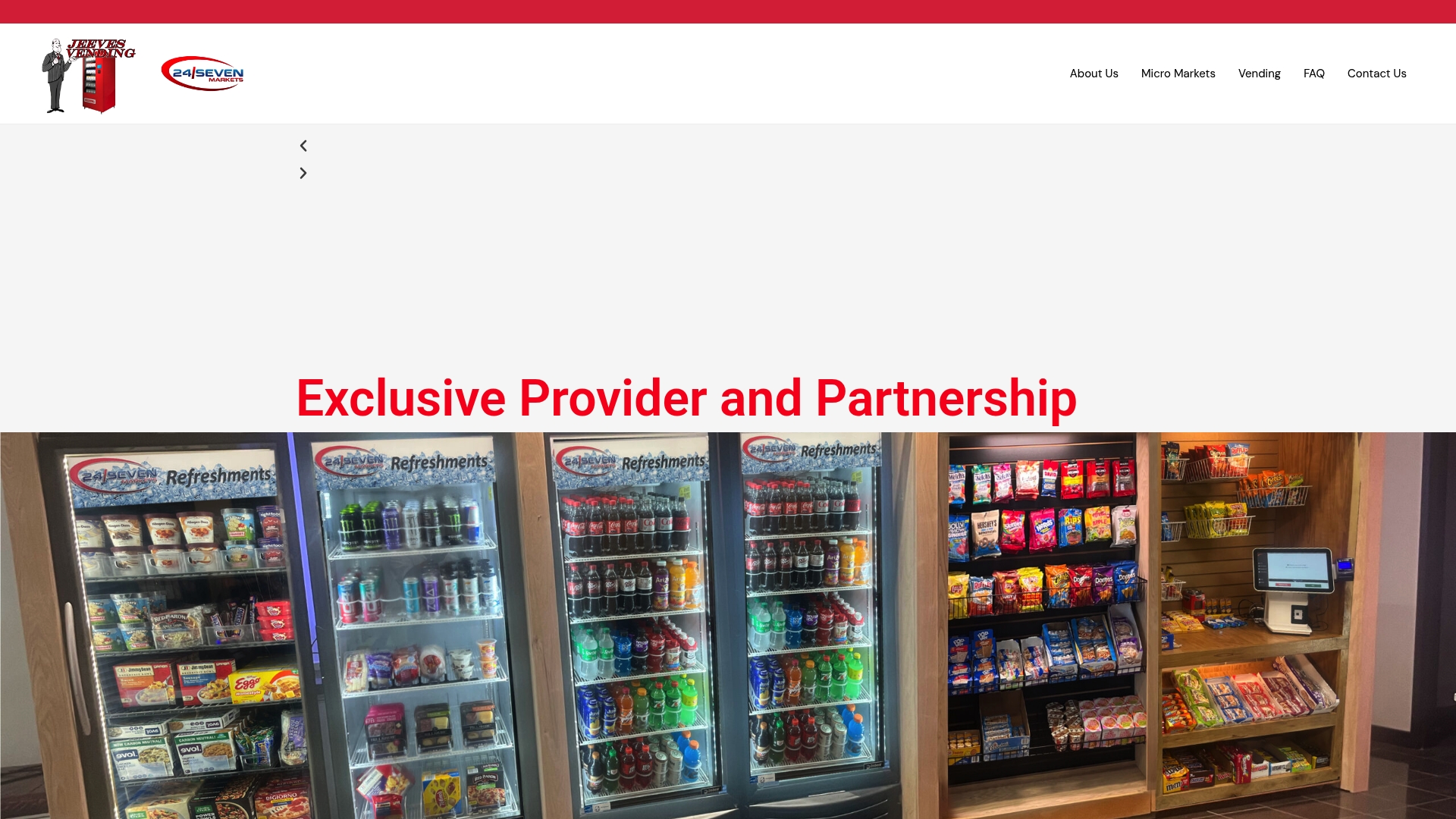
Whether your facility is an office, warehouse, school, or medical center, Jeevesvending matches the right machine and product mix to your location’s actual traffic and needs. The full-service vending program is designed for businesses that want the amenity without the administrative load. Contact Jeevesvending to find out whether your location qualifies and what commission structure fits your site.
FAQ
Why are vending machines offered for free to businesses?
Vending operators provide machines at no cost because they profit from product sales margins rather than from charging the host. The host location provides the foot traffic that makes those sales possible.
How do free vending machines work financially?
The operator covers all equipment, stocking, and maintenance costs and earns revenue from every product sold. A portion of gross sales, typically 5%–25%, is paid to the host as a commission.
What foot traffic does a business need for a free vending machine?
Most operators require a minimum of 50 daily users to justify a free placement. Locations with 200–500 daily visitors and longer dwell times generate the strongest sales and highest commissions.
Are free vending machines actually profitable for the host?
Yes. Hosts earn passive commission income with no capital investment or operational effort. A location generating $2,000 in monthly sales at a 10% commission rate returns $200 per month to the business.
What should businesses watch out for in free vending contracts?
Clarify who pays electricity costs ($30–$50 monthly for refrigerated units), confirm the contract length and exit terms, and negotiate a trial period before committing to a multi-year agreement.