
What are the best alternatives to deliotx.com for Dallas-Fort Worth workplace vending?
The strongest deliotx.com alternatives for DFW facility managers are providers offering AI-powered vending machines, smart coolers, and full micro markets with cashless payment and real-time inventory tracking. Jeeves Vending leads that list for the Dallas-Denton corridor, placing equipment at no cost to the business and covering everything from restocking to maintenance. The table below maps the key decision criteria across service formats.
| Criteria | AI Vending Machines | Smart Coolers | Micro Markets |
|---|---|---|---|
| Service offerings | Snacks, drinks, combo | Fresh food, beverages | Full product range, fresh meals |
| Technology integration | AI, cashless, inventory alerts | IoT tracking, cashless | Self-checkout kiosk, cashless |
| Pricing model | Free placement (operator-funded) | Free placement (operator-funded) | Free placement (operator-funded) |
| DFW service coverage | Yes (Jeeves Vending) | Yes (Jeeves Vending) | Yes (Jeeves Vending) |
| Customer support | Scheduled restocking, on-call | Scheduled restocking, on-call | Dedicated route service |
In 2024, 71% of US vending transactions were cashless, up 17% from 2023. Any provider still running cash-only equipment is already behind.
Table of Contents
- How do top deliotx.com competitors compare on features and service?
- How do you choose the right workplace vending provider?
- What types of workplace vending alternatives exist today?
- How long does onboarding and setup take with a new vending provider?
- What do real workplaces say about switching vending providers?
- Jeeves Vending: no-cost break room service built for DFW businesses
- Key Takeaways
How do top deliotx.com competitors compare on features and service?
The gap between older vending setups and modern alternatives shows up fast when you look at three areas: what the machines can do, how the operator manages inventory, and what the business actually pays upfront.
Service offerings and format variety
Modern alternatives cover three distinct formats. AI-powered vending machines handle snacks and drinks in tight spaces. Smart coolers fill the gap between a single machine and a full market, using IoT-driven inventory tracking in a smaller footprint. Micro markets function like unstaffed convenience stores, with open shelving, refrigerated cases, and a self-checkout kiosk. The US convenience services market has reached a multi-billion-dollar size, driven in part by growing smart cooler adoption and steady micro market growth.
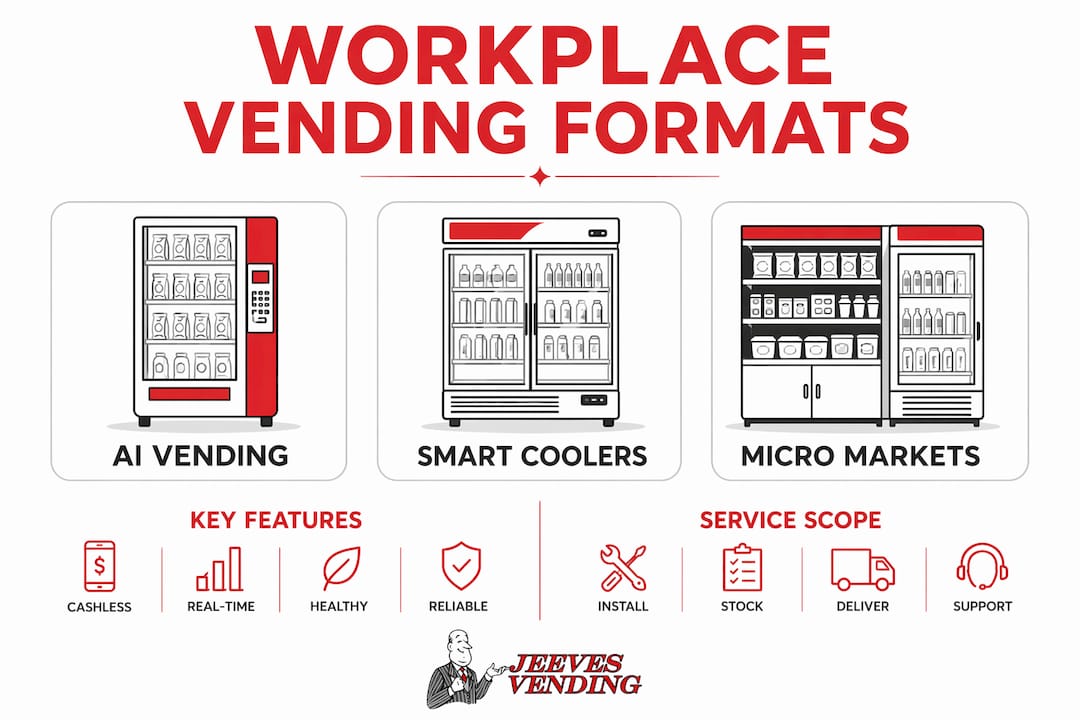
Jeeves Vending deploys all three formats across Dallas-Fort Worth, tailoring the setup to workforce size, available space, and employee preferences. A hospital break room and a gym lobby have very different needs; the right provider sizes the solution accordingly.
Technology integration
Cashless systems increase revenue by 20–30% and cut downtime from mechanical jams. The best alternatives run tap-to-pay, card, and mobile wallet acceptance as a default, not an add-on. Real-time inventory monitoring lets operators restock before a machine runs empty rather than after a complaint. Data-driven planograms, where the product mix is adjusted based on actual sales data, separate serious operators from those still guessing at what sells.
Pricing and contract terms
Most reputable operators cover all equipment and installation costs, recouping through sales margins. An upfront equipment fee is a red flag. Flexible contract terms matter too: a provider willing to adjust service frequency or swap formats as your workforce grows is worth more than a locked-in multi-year deal with no exit.
| Feature | Strong alternative | Weak alternative |
|---|---|---|
| Equipment cost to business | — | Upfront fee required |
| Payment technology | Cashless by default | Cash-only or add-on |
| Inventory management | Real-time, data-driven | Manual, reactive |
| Contract flexibility | Month-to-month or flexible | Long-term lock-in |
| DFW local coverage | Yes | Limited or none |
How do you choose the right workplace vending provider?
Start with the basics: how many employees you have, how much break room space is available, and what shift patterns look like. Those three variables determine whether a single AI vending machine, a smart cooler, or a full micro market makes sense. Providers worth talking to will ask these questions before recommending anything.
What to evaluate in any provider:
- Does the operator conduct a site assessment before installation?
- Is all equipment placed at no cost to your facility?
- What payment methods does the equipment accept?
- How often does the operator restock, and is that schedule guaranteed?
- Does the provider share sales data and adjust the product mix based on it?
- What are the contract terms, and how easy is it to exit or upgrade?
Site placement is the single biggest performance lever in vending. Machines in 24/7 high-traffic areas can generate triple the revenue of standard break room placement. A provider who skips a proper site survey is leaving money on the table, yours and theirs.
Effective workplace vending often combines formats. A hybrid setup with a micro market anchoring the main break room, supplemented by smart coolers or vending machines in secondary spaces, delivers the widest product variety without overbuilding in low-traffic areas.
Pro Tip: Ask any prospective vendor to show you a sample planogram and explain how they update it. Providers using real sales data to drive product decisions will have a clear, specific answer. Those who don’t will be vague.
Facility coordinators should prioritize providers with data-driven planograms, consistent service schedules, and real-time inventory monitoring over brand recognition alone.
What types of workplace vending alternatives exist today?
The category has expanded well beyond the traditional coil machine. Three formats now cover most workplace scenarios.
AI-powered vending machines use computer vision and sensor technology to track inventory in real time, flag low stock automatically, and accept every major cashless payment method. They work in nearly any space with a standard electrical outlet.
Smart coolers sit between a vending machine and a micro market in both size and capability. A customer taps a card to unlock the door, takes what they want, and the cooler charges automatically. They’re particularly useful for fresh food and beverages in spaces too small for a full market setup.
Micro markets are the highest-revenue format for larger workplaces. With open shelving, refrigerated cases, and a self-checkout kiosk, they function like a small convenience store. Workplaces with 75 or more employees on site tend to see the strongest return from this format. The key trade-off is floor space: a micro market needs a dedicated break room area, not a hallway corner.
For DFW businesses evaluating sites like deliotx.com, the practical question is which format, or combination of formats, matches the actual workforce and space. Jeeves Vending’s micro market solutions and AI vending machines cover all three formats across the Dallas-Denton region.
How long does onboarding and setup take with a new vending provider?
The timeline from first conversation to operational equipment typically runs two to four weeks with a well-organized provider. Here’s how that usually breaks down.
Week 1: Initial consultation covering workforce size, shift patterns, available space, and employee preferences. The provider conducts a site assessment and recommends a format or combination.
Week 2: Equipment selection, product mix planning, and scheduling the installation date. For micro markets, this phase may include minor buildout coordination (shelving, kiosk placement, electrical access).
Weeks 3–4: Equipment delivery and installation. A reputable operator handles all of this at no cost to the facility. For a single AI vending machine or smart cooler, installation often takes a few hours. A full micro market setup may take a full day.
After installation, the first restocking visit typically happens within the first week to confirm the product mix is landing well with employees. From there, the operator moves to a regular service schedule based on sales velocity.
Jeeves Vending handles the full process, from site assessment through installation and ongoing restocking, without any equipment cost to the business.
What do real workplaces say about switching vending providers?
Published feedback from DFW businesses that have upgraded from older vending setups to modern alternatives consistently points to three improvements: faster restocking, better product variety, and fewer machine outages.
Offices that moved from cash-only machines to cashless AI vending report that employees actually use the machines more often, which makes sense given that cashless transactions now represent the clear majority of vending purchases in the US. Hospitals and gyms with 24/7 operations particularly value providers who monitor inventory remotely and restock proactively rather than waiting for a complaint.
The most common frustration with lower-tier providers is reactive service: machines run empty, calls go unreturned, and the product mix never changes. The businesses that report the strongest satisfaction with their vending provider share one thing in common: the operator uses real sales data to manage the account, not guesswork.
Jeeves Vending serves schools, offices, hospitals, and gyms across Dallas-Fort Worth, with a service model built around scheduled visits and data-driven restocking. That consistency is what separates a good vending partner from a machine drop-off.
Jeeves Vending: no-cost break room service built for DFW businesses
If you’ve been evaluating alternatives to deliotx.com and similar sites, Jeeves Vending offers something most providers don’t: zero equipment cost, zero installation fee, and a full-service model that covers restocking, maintenance, and product mix optimization from day one.
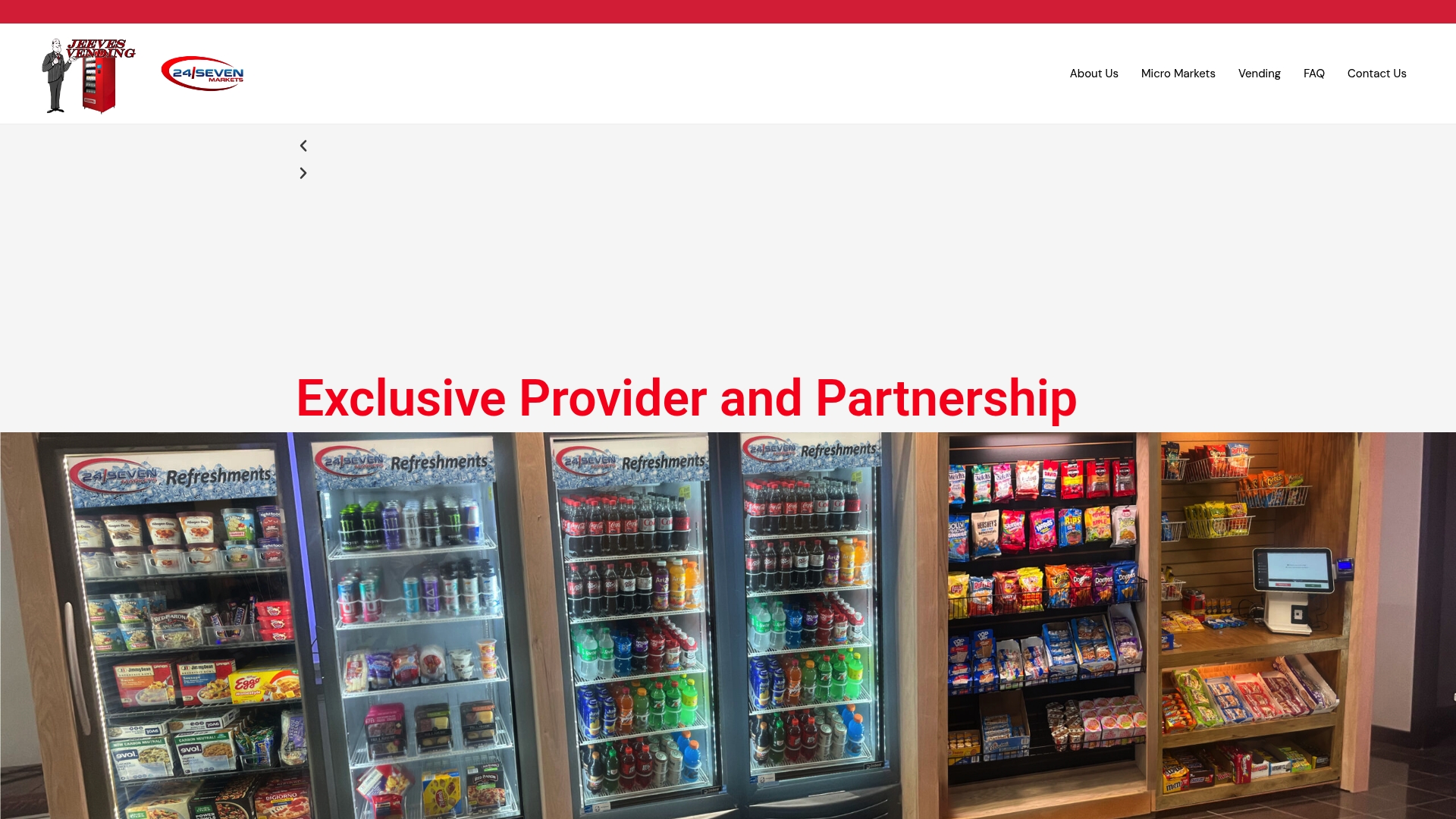
Jeeves Vending places AI-powered vending machines, smart coolers, and custom micro markets at businesses across Dallas and Denton, at no cost to the facility. The operator owns and services the equipment; your team just enjoys the break room. Schools, medical facilities, corporate offices, and gyms across DFW already run on this model. The product mix is built from actual sales data, not a generic catalog, and the service schedule is consistent, not reactive.
Contact Jeeves Vending to get a site assessment and find out which format fits your workforce. Or explore the full range of AI vending machines and smart coolers available for Dallas-area businesses.
Key Takeaways
The strongest deliotx.com alternatives for DFW facility managers combine zero-cost equipment placement, cashless payment technology, and data-driven inventory management to deliver measurably better break room performance than older vending setups.
| Point | Details |
|---|---|
| Cashless payment is standard | 71% of US vending transactions were cashless in 2024; any provider without it costs you revenue. |
| No upfront cost is the norm | Reputable operators cover all equipment and installation; an upfront fee signals a weak provider. |
| Format should match workforce size | AI machines suit small teams; smart coolers add fresh options; micro markets serve 75+ employees best. |
| Site placement drives performance | High-traffic placement can yield up to 3x the revenue of a standard break room location. |
| Jeeves Vending covers all three formats | Jeeves Vending places AI vending machines, smart coolers, and micro markets across DFW at no cost to the business. |