
Run a short, 8 to 12 question snack survey this week to capture preferences, dietary needs, and satisfaction, then use a ready-made template and a 3-week field plan to get results you can act on. Aim for a strong response rate in a small office and a moderate response rate in a larger, distributed team before you start analyzing. Once responses are in, the next step is turning numbers into a stocking plan.
TL;DR:
- Short surveys of 8 to 12 questions maximize response rates and should focus on clear, single-attribute questions to ensure actionable data.
- Anonymous responses encourage honesty on sensitive topics like pricing or dietary restrictions but limit targeted follow-up opportunities.
- Key metrics, such as top categories and dietary needs, guide stock rotations toward popular items like fresh fruit or protein snacks and support allergy-friendly options.
- Positive survey results are best translated into specific adjustments, including rotating preferred categories and reviewing pricing if usage remains high despite dissatisfaction.
- Using established benchmarks like 200 calories and 200 milligrams of sodium per snack helps define healthy options aligned with dietary restrictions and preferences.
Table of Contents
- 1. Build a plug-and-play snack survey template
- 2. Run the survey: timeline, reminders, and privacy tradeoffs
- 3. Analyze results and convert findings into snack program changes
- 4. Choose the right scales, coding rules, and sample metrics
- 5. Lean on established survey and nutrition standards
- 6. What typically goes wrong with snack surveys
- How a vending partner can act on your survey results
- FAQ
- Sources
1. Build a plug-and-play snack survey template
A good snack survey moves from easy to answer toward more personal. Start with simple classification and frequency questions, move into preferences and satisfaction, then close with dietary needs and an open comment box. This order keeps early drop-off low because nobody has to think hard before they have already invested a minute in the survey.
Here is a block order that works for most offices:
- Classification: department, shift, or location (only if you plan to segment results).
- Frequency: how often the respondent uses the snack or vending area.
- Preference: which categories they want more of.
- Satisfaction: how they rate current variety, freshness, and price.
- Dietary needs: allergies, restrictions, or health goals.
- Open comment: one free-text field for anything the scaled items missed.
Sample items, with the response format that fits each one:
- “How often do you get a snack or drink from the break room or vending area?” (Daily, Several times a week, 1 to 2 times a week, Less than once a week)
- “Which snack categories would you like to see more of?” (Select all: chips, sweets, fresh fruit, protein snacks, baked goods, coffee or tea, frozen items)
- “How satisfied are you with the current snack variety?” (5-point scale: Very dissatisfied to Very satisfied)
- “How satisfied are you with current snack pricing?” (5-point scale)
- “Do you have any dietary restrictions or allergies we should account for?” (Yes, with text field, or No)
- “What is one change that would make the snack program better for you?” (Open text)
Two wording mistakes quietly ruin a lot of snack surveys. The first is the double-barreled question, something like “Are you satisfied with the variety and freshness of snacks?” That forces one answer onto two different judgments, and you cannot tell which one drove a low score. Questionnaire design guidance recommends splitting each attribute into its own item so the data stays clean. The second mistake is relying on vague adverbs like “often” or “rarely” instead of numeric bands. “Several times a week” is something everyone interprets the same way; “often” is not.
2. Run the survey: timeline, reminders, and privacy tradeoffs
A pulse survey this size does not need months of lead time, but it does need a plan. A workable 3-week schedule looks like this: launch in week one with a clear deadline, send a reminder 3 to 4 days after launch, send a second reminder at the one-week mark, and send a final push 2 to 3 days before the survey closes. Studies on survey methodology link short questionnaires and spaced reminders to meaningfully better participation than a single blast email.
You also need to decide between anonymous and confidential collection before you write a single question. Anonymous surveys tend to produce more candid feedback on sensitive topics like pricing complaints, but you lose the ability to send targeted reminders to non-respondents. Confidential surveys let you track who has responded and follow up individually, though you then need clear rules about who can see identified data and how long it is kept.
Before launch, run through a short checklist:
- Validate your employee roster so invitations reach current staff at the right locations.
- Test the survey link on both desktop and mobile before sending it company-wide.
- Confirm the survey renders cleanly on mobile, since most quick pulse surveys get completed on a phone.
- Name one helpdesk contact for technical questions so IT requests do not pile up in your inbox.
Pro Tip: Send the first reminder only to non-respondents, not the whole list. It keeps response rates up without annoying people who already answered.
3. Analyze results and convert findings into snack program changes
Once the survey closes, a handful of calculations turn raw answers into decisions. Compute percent positive for each satisfaction item (the share answering “Satisfied” or “Very satisfied”), the share selecting each category in your select-all question, the percentage reporting a dietary restriction, and the distribution across your frequency bands.
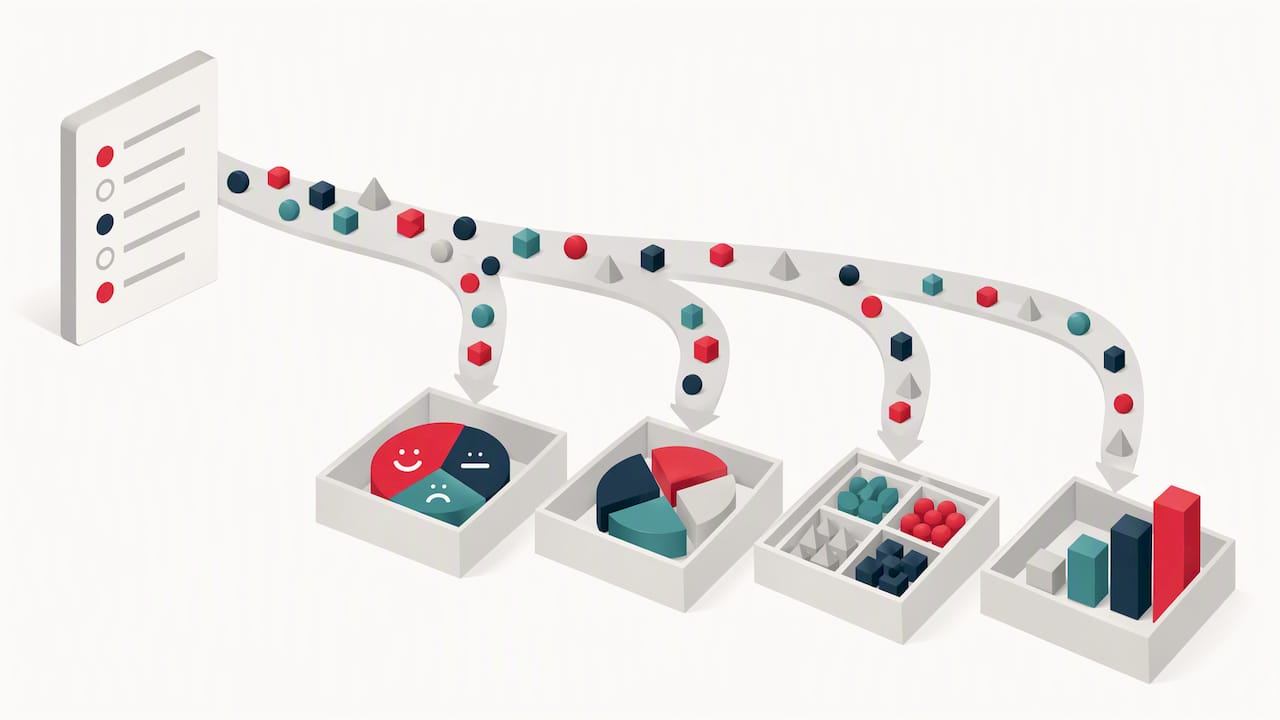
If you segment by department, shift, or location, apply a suppression rule before sharing results: OPM’s Employee Survey Playbook recommends withholding results for any subgroup with fewer than 10 respondents to avoid exposing individuals. That one rule protects both your data integrity and your coworkers’ privacy.
Translate the numbers into action with a simple mapping:
- A top-3 category shift toward fresh fruit or protein snacks signals it is time to rotate stock, or add a healthy vending machine snacks everyone should try section.
- A high share reporting dietary restrictions supports adding a labeled allergen-free or gluten-free option.
- Low satisfaction on pricing, paired with high usage frequency, points to a pricing review rather than a variety fix.
- A low response rate itself is a signal: shorten the next survey or change the delivery channel.
4. Choose the right scales, coding rules, and sample metrics
Analyzable data starts with the response format you pick for each question. Use these rules consistently:
- Use a 5-point Likert scale for any satisfaction or agreement item (Very dissatisfied to Very satisfied).
- Use numeric frequency bands, not adverbs, for usage questions: Daily, Several times a week, 1 to 2 times a week, Less than once a week.
- Code select-all items as a binary flag (0 or 1) per category, then calculate percent-support and top-3 share across the whole response set.
- Build a simple snack satisfaction index by averaging three related satisfaction items (variety, freshness, pricing) into one score you can track survey over survey.
These four rules make it possible to compare this quarter’s results to the next one instead of starting from scratch every time.
5. Lean on established survey and nutrition standards
You do not have to invent survey methodology from nothing. OPM’s Employee Survey Playbook outlines a launch-plus-reminder field schedule and reporting guidance built for much larger federal surveys, and the same structure scales down cleanly for a single office.
For nutrition targets, the Food@Work Survey sets packaged-snack benchmarks you can borrow when defining a healthy-item goal, including 200 calories or less and 200 milligrams of sodium or less per packaged snack, which gives HR teams a concrete line to stock against rather than a vague “healthier options” goal.
Three questionnaire-design rules are worth repeating before you finalize any survey:
- Avoid double-barreled items that bundle two judgments into one question.
- Pilot test with a handful of coworkers before sending it company-wide.
- Place demographic and classification items last, not first, so respondents answer the substance before the paperwork.
Our Office Snack Station Checklist covers the operational side, inventory, labeling, and restock cadence, once your survey results are in hand.
6. What typically goes wrong with snack surveys
The most common failure is length. A 25-question survey kills response rates before anyone reads past question 10, so keep a pulse survey to 12 questions or fewer. The second failure is bundling two attributes into one question, which makes the results impossible to act on cleanly. The third is silence after the survey closes: sharing what changed because of the feedback is what makes people answer the next one honestly.
— Gary
How a vending partner can act on your survey results
Once your survey tells you what people actually want, someone still has to stock it. We build custom vending solutions and micro-markets around exactly that kind of feedback: rotating categories based on top-3 preference shifts, adding healthy sections when dietary data calls for it, and reporting stock levels remotely so you are not guessing between surveys.
If your results point toward fresh food, coffee, or healthier snack categories, our fresh foods and coffee options cover that ground directly, and setup comes at no cost to your business. Request a site assessment or check out our free full-service vending program to see what a survey-driven refresh could look like in your break room.
FAQ
How many questions should an employee snack survey have?
Keep it to 8 to 12 questions so it takes most people under five minutes. Shorter surveys consistently see better completion rates than longer ones, which matters more than squeezing in every possible question.
Should an employee snack survey be anonymous?
Anonymous surveys tend to produce more honest feedback on sensitive topics like pricing, but they prevent you from sending reminders to specific non-respondents. Confidential surveys let you follow up individually, as long as you set clear rules about who can access identified responses.
What response rate should we expect from a snack survey?
If you fall short, a shorter survey and a mid-week reminder to non-respondents usually help more than extending the deadline.
How do we decide which snack categories to add after a survey?
Look at which categories earned the highest share in your select-all preference question and cross-check that against your dietary restriction responses. A category that ranks in the top three and aligns with reported dietary needs, like fresh fruit or protein snacks, is a strong first candidate for a menu change.
What nutrition benchmarks should guide healthy snack choices?
The Food@Work Survey sets packaged-snack criteria of 200 calories or less and 200 milligrams of sodium or less per snack, giving HR a concrete standard for a healthy-items target instead of a vague goal. Pairing that benchmark with your survey’s dietary-restriction data helps narrow down which specific products to add.
Sources
- Employee Survey Playbook: A Guide for Federal Agencies to Design, Administer, and Report Employee Feedback
- Who chooses ‘healthy’ meals? An analysis of lunchtime meal quality in a workplace cafeteria
- Food@Work Survey
- Questionnaire design: Writing survey questions that work