
The fastest, lowest-risk way to offer reliable fresh and healthy food at your location is a turnkey managed deployment: a refrigerated food vending machine or custom micro-market installed at no equipment cost to your business, stocked and maintained by a local operator. For most offices, campuses, hospitals, and gyms in the Dallas–Denton area, the decision comes down to three steps: choose your deployment model (managed vending machine vs. micro-market), confirm site power and internet connectivity, then request a placement proposal and demo from a local provider. Jeeves Vending handles all three steps with you, including remote inventory monitoring, flexible restock cadence, and on-site warranty support.
Key Takeaways
A turnkey managed fresh-food vending deployment with remote inventory tracking and no upfront equipment cost is the lowest-risk, fastest path to reliable healthy food service for offices, campuses, hospitals, and gyms.
| Point | Details |
|---|---|
| Choose the right deployment model | Match machine type to daily user count: single refrigerated unit under 50 users, micro-market over 150. |
| Revenue benchmarks | VendSoft data shows $150–$400 monthly gross revenue per machine, with net margins of 25–35%. |
| Compliance is operator-owned | Health permits for perishable vending vary by state; confirm requirements before signing a placement agreement. |
| Expiry tracking is non-negotiable | A cloud dashboard with slot-level expiry alerts prevents food waste, reduces inspection risk, and protects your brand. |
| Jeeves Vending for Dallas–Denton | No equipment cost to the host, local service network, and remote inventory management across the Dallas–Denton area. |
Table of Contents
- What modern food vending machines actually are today
- Where fresh-food vending performs best by location
- What features actually matter when evaluating a machine or provider
- How fresh-food vending operations run day to day
- What does fresh-food vending actually cost, and what can you earn?
- U.S. health-code basics every operator needs to know
- Installation, warranty, and what good support looks like
- How to choose the right vending deployment for your location
- Why Jeeves Vending stands out for Dallas–Denton deployments
- Jeeves Vending: no-cost fresh food vending for your Dallas–Denton location
- Sources
What modern food vending machines actually are today
The term “food vending machine” covers a wide range of automated food dispensing machines, from a basic mechanical snack vending machine with coil-driven delivery to a cloud-connected refrigerated unit with contactless payment, expiry tracking, and a remote operator dashboard. The industry term for the full category is automated retail, and modern units sit at the managed-technology end of that spectrum.
Four solution types dominate U.S. commercial deployments right now.
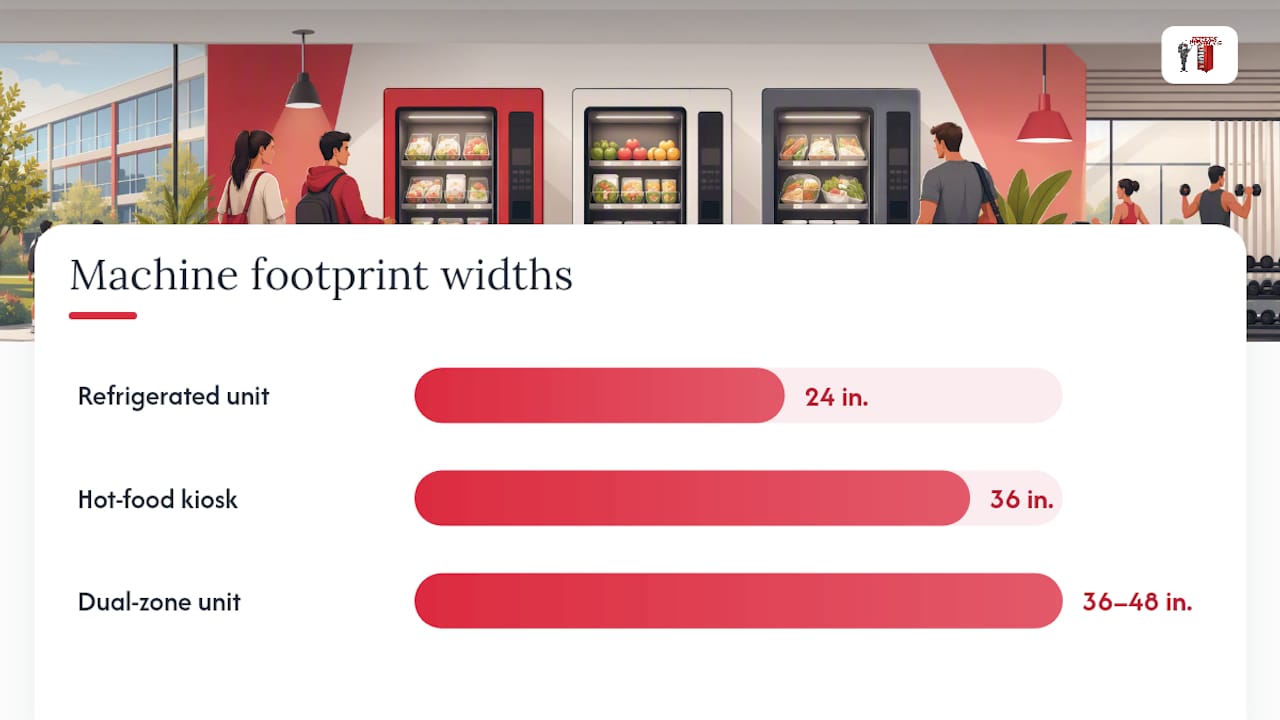
Refrigerated fresh-food vending units hold chilled meals, salads, wraps, and beverages at temperatures generally required by food safety regulations (typically 41°F or below). They suit offices, hospitals, and campuses where employees want a real meal, not just a snack. Footprint is roughly two feet wide; restock cadence runs daily to every other day for high-turn fresh items.
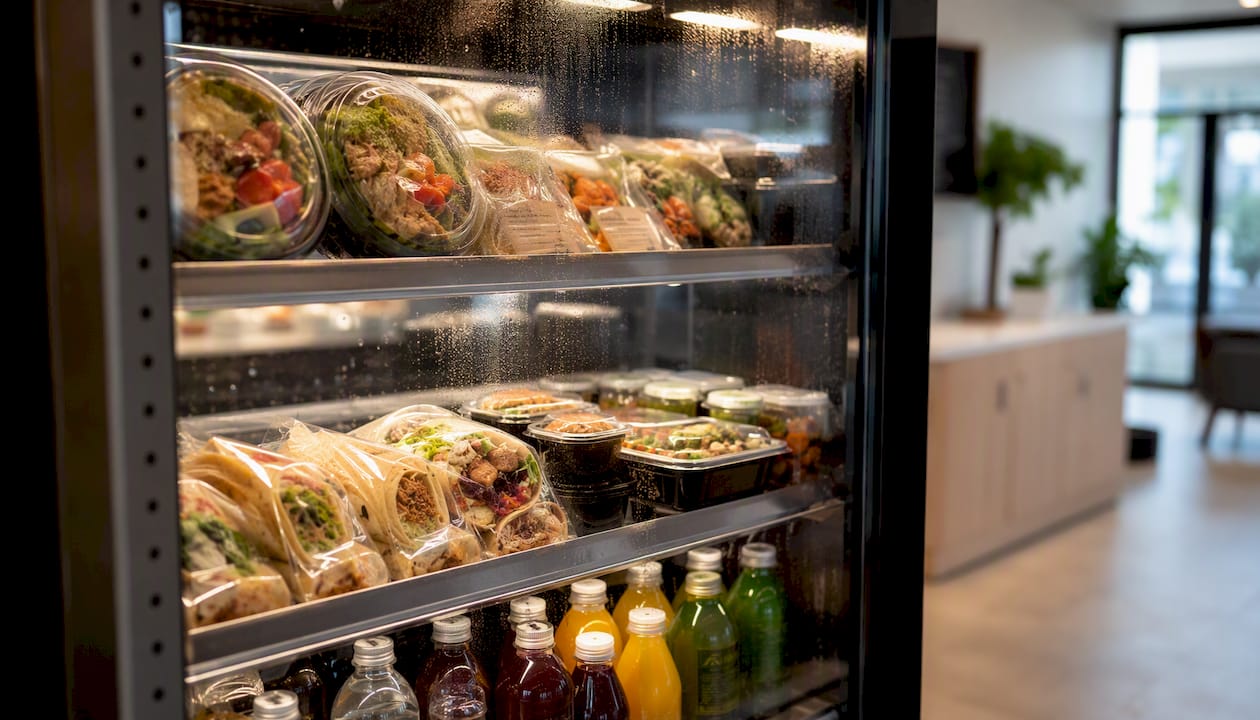
Hot-food kiosks stock chilled or ambient items and heat them on demand at purchase using integrated smart ovens. Operators can stock chilled items that are heated on demand, which extends product variety without sacrificing food safety. These work well in 24/7 locations like hospital lobbies and transit hubs where a warm meal late at night matters.
Dual-zone or combined systems split the cabinet into a refrigerated zone and an ambient zone, letting one machine serve both fresh meals and shelf-stable snacks. The trade-off is a smaller per-zone capacity, so they fit mid-traffic sites better than high-volume ones.
Micro-markets and self-checkout pantry models replace a single machine with an open-shelf cooler, snack rack, and self-checkout kiosk. They handle significantly higher transaction volumes and support a broader product range, making them the right call for locations with 150+ daily users. Jeeves Vending’s micro-market solutions are designed specifically for high-traffic sites where a single machine creates a bottleneck.
| Solution type | Best footprint | Typical restock cadence | Product fragility risk |
|---|---|---|---|
| Refrigerated fresh-food vending | Single machine, 24 in. wide | Daily to every 2 days | High (chilled meals, salads) |
| Hot-food kiosk | Single machine, 36 in. wide | Every 2–3 days | Medium (chilled items heated on demand) |
| Dual-zone combined | Single machine, 36–48 in. wide | 2–3x per week | Medium |
| Micro-market | Multi-unit open layout | Daily to 3x per week | Variable by product |
Pro Tip: Pick the machine type based on what your people will actually buy, not on cabinet size. Protein bowls and recovery drinks move fast at gyms; allergen-labeled grab-and-go wraps are the priority at hospitals. A large dual-zone machine stocked with the wrong product mix will underperform a smaller refrigerated unit with the right one.
Where fresh-food vending performs best by location
Location shapes everything: traffic volume, buying windows, price sensitivity, and product preferences all shift dramatically from one site to the next.
- Office breakrooms run on predictable day-shift demand with a lunchtime peak. Grab-and-go meals priced at $7–$12 move well; employees want variety across the week, so a rotating menu matters more than raw machine capacity. Automated workplace refreshment examples show how offices with 50–200 employees typically start with one refrigerated unit and add a snack machine once the fresh-food unit proves demand.
- Campus deployments face high foot traffic, late-night demand, and student price sensitivity. A dual-zone machine near a library or student union can serve both a $4 granola bar at midnight and a $9 sandwich at noon. Student vending habits on campus show that peak buying windows cluster around class transitions, not traditional meal times.
- Hospitals and healthcare facilities need 24/7 availability, clear allergen labeling, and products that work for both staff on a 12-hour shift and a visitor grabbing something quick. Staff buying patterns skew toward high-protein, low-sugar options during night shifts. A refrigerated unit with labeled allergen information and a hot-food kiosk nearby covers both needs.
- Gyms and wellness centers want protein-focused assortments: bars, shakes, small-pack chilled items, and electrolyte drinks. Purchases happen in a tight window after workouts, so fast dispense and contactless payment are non-negotiable. Protein snacks for vending that move well in gym settings include single-serve Greek yogurt, hard-boiled eggs, and high-protein bars priced at $3–$6.
- Airports and transit hubs demand the highest machine uptime and the widest price band. Fresh meals at $10–$14 sit alongside $2 snacks; the machine needs elevator-style delivery to protect fragile packaging.
What features actually matter when evaluating a machine or provider
Not every spec on a product sheet translates to real operational value. These are the ones that do.
- Temperature control and zone monitoring. A refrigerated unit must hold temperatures at or below the recommended food safety limit, typically 41°F, consistently, not just on average. Look for real-time temperature alerts sent to the operator dashboard, not just a local alarm on the machine. Dual-zone units need independent monitoring for each zone.
- Inventory and expiry tracking. A cloud dashboard with remote inventory tracking lets operators see stock levels, flag low-inventory slots, and track expiration dates without a physical visit. FIFO (first-in, first-out) support in the software prevents older stock from sitting behind newer product.
- Delivery and dispense mechanism. Coil delivery works for shelf-stable snacks. Elevator-style delivery is required for fragile packaging like salad containers and meal bowls. Heated delivery chambers are specific to hot-food kiosks. Configuring the delivery mechanism to match your product dimensions prevents jams and waste.
- Payment and POS. Contactless payment (tap-to-pay, Apple Pay, Google Pay), employee badge/card integration, and PCI-compliant processing are currently considered essential features for deployment. App-based payment with digital receipts matters for corporate expense tracking.
- Security. Deadbolt cabinet locks, internal cameras, and sensor-based theft detection reduce shrinkage, especially in open micro-market setups.
- Service-level expectations. Ask for a documented response-time SLA for repairs, a clear warranty term (commonly 1–2 years on parts and labor), and confirmation that the provider has local technicians, not just a national call center.
Pro Tip: Ask the provider to show you a live expiry-tracking demo before signing anything. If they can’t pull up a real-time dashboard showing product expiration dates by slot, that’s a gap that will cost you in food waste and compliance risk.
How fresh-food vending operations run day to day
Understanding the operational rhythm helps you plan staffing, service agreements, and site logistics before the machine arrives.
- Restock cadence by location type. High-turn fresh meals at a hospital or large office need daily restocking. A gym with 80 members might need service every 2–3 days. Low-traffic offices with mostly shelf-stable snacks can run on a weekly cadence. The operator sets this schedule based on sell-through data from the first 2–4 weeks.
- Remote monitoring and routing. Telemetry from the machine sends real-time sales and inventory data to the operator dashboard. When a slot hits a low-stock threshold, the system flags it and the operator routes a restock visit. This eliminates unnecessary trips and prevents stockouts between scheduled visits.
- Inventory rotation and expiry handling. FIFO loading ensures the oldest product dispenses first. The dashboard flags items approaching their expiration date so the operator can pull them before they expire on-shelf. Pulled items are logged for waste tracking, which also supports health-inspection documentation.
- Maintenance and service calls. Preventive maintenance (cleaning, sensor calibration, payment terminal checks) runs on a scheduled basis, typically monthly or quarterly. Reactive service calls for jams, payment failures, or temperature alerts are covered under the SLA. A provider with local technicians in your market resolves most issues within 24–48 hours.
What does fresh-food vending actually cost, and what can you earn?
The commercial model you choose shapes your upfront exposure and your ongoing margin more than any other single decision.
Three common models:
- Outright purchase. You buy the machine, own the asset, and keep all revenue. Higher upfront cost, full control, full responsibility for service and stocking.
- Lease-to-own. Monthly payments over 24–60 months; you own the machine at the end. Preserves cash but adds a fixed monthly obligation.
- Revenue-share managed model. The operator (like Jeeves Vending) installs and maintains the machine at no equipment cost to the host. Revenue is split between the operator and the host, or the host simply receives a free service while the operator earns from product sales. This is the lowest-risk entry point for most facility managers.
Revenue and margin benchmarks:
According to VendSoft’s vending profit benchmarks, a typical vending machine generates $150–$400 in monthly gross revenue, with net margins commonly in the 25–35% range. Fresh-food machines at high-traffic locations can exceed that range; low-traffic or poorly placed machines fall below it.
Fresh meals priced in a moderate range carry better gross margin per transaction than low-cost chips, but they also carry higher COGS, shorter shelf life, and higher restock labor. The math works when daily sell-through is consistent.
Sample scenario (one refrigerated unit, mid-traffic office):
| Metric | Assumption |
|---|---|
| Daily transactions | a moderate range |
| Average transaction value | $7–$12 |
| Monthly gross revenue | a moderate range |
| COGS (est. 50%) | $2,400–$3,600 |
| Restock labor and delivery | moderate monthly cost |
| Estimated net margin | moderate net margin of gross |
These figures use the VendSoft benchmark range as a reference point. Actual results depend on location traffic, product mix, and the commercial model in place. Operators considering purchase options can review machine specs and pricing at Jeeves Vending’s shop.
U.S. health-code basics every operator needs to know
Food safety compliance is not optional, and the rules vary more than most operators expect.
States and local jurisdictions often require a health permit specifically for vending machines that dispense potentially hazardous or perishable foods. The VendSoft state-by-state vending permit directory is a practical starting point for identifying what your state and county require before you deploy.
Key regulatory baseline for perishable vending in the U.S.: Refrigerated items must be held at 41°F or below (FDA Food Code standard). Hot-held items must stay at 135°F or above. Required labeling typically includes ingredient lists and major allergen statements (per FDA labeling rules for packaged foods). Operators are responsible for documenting product traceability, pull dates, and temperature logs — all of which reduce inspection risk when your expiry-tracking dashboard generates automatic records.
Operator responsibilities extend beyond the machine itself. You need documented procedures for pulling expired product, logging waste, and maintaining temperature records. A cloud-based expiry-tracking system handles most of this automatically, but you still need to confirm that your provider’s documentation meets your local health authority’s format requirements.
Health permits are typically tied to the operator, not the host business, in most states. Confirm this with your local health department before deployment, because the permit holder is the party responsible for inspections.
Installation, warranty, and what good support looks like
A machine that arrives without a clear support plan is a liability, not an asset. Here is what to confirm before the truck shows up.
Site readiness checklist:
- Dedicated 120V outlet within 6 feet of the machine location (some units require 20A circuits)
- Wi-Fi or cellular signal strong enough for telemetry (confirm with the provider’s spec sheet)
- Floor clearance: level surface, and a minimum front clearance to meet ADA compliance and enable restocking access
- Delivery route: confirm elevator dimensions or ramp access if the machine is not on the ground floor
- Ventilation: refrigerated units need 4–6 inches of clearance on sides and back
The office vending setup guide from Jeeves Vending covers power, connectivity, and placement considerations in detail for HR teams coordinating a first deployment.
Delivery options typically range from curbside drop (you handle placement) to white-glove installation (provider delivers, positions, connects, and tests on-site). For refrigerated units, white-glove is worth the cost because improper leveling affects compressor performance.
Warranty and service SLAs to ask about: standard warranty length (1–2 years is typical), extended warranty availability, parts coverage vs. labor coverage, and documented response time for emergency calls (temperature failures should trigger a same-day or next-day response).
Onboarding should include dashboard access and training, a merchandising kit or planogram for initial product placement, and first-month stocking support so you can validate sell-through before locking in a restock schedule.
How to choose the right vending deployment for your location
Work through this checklist before you request proposals. It will sharpen your RFP and help you spot weak vendor responses.
Decision checklist (in priority order):
- Estimate daily demand. Count the number of people who will realistically use the machine daily. Under 50 users: start with one refrigerated unit. 50–150 users: consider a dual-zone or two-machine setup. Over 150 users: evaluate a micro-market.
- Define your price band. Match expected price points to your audience. Gym members tolerate $5–$8 for a protein item; hospital staff on a break budget closer to $6–$10 for a meal.
- Assess product fragility. Salads and meal bowls need elevator delivery. Bars and packaged snacks work with coil delivery. Get this wrong and you’ll have jams and damaged product from day one.
- Map restock logistics. Who restocks, how often, and from where? A managed provider handles this entirely; a self-operated machine requires your own supply chain.
- Confirm compliance needs. Identify your state’s health permit requirements before signing a placement agreement.
- Choose your funding model. No upfront cost (managed/revenue-share) vs. purchase or lease.
Questions to ask every vendor:
- What is your documented uptime SLA, and how do you measure it?
- Can you show me a live expiry-tracking demo on your operator dashboard?
- Who handles the health permit, and which states do you cover?
- What does onboarding look like, and how long from signed agreement to live machine?
- Do you offer a pilot period before a long-term commitment?
Red flags to walk away from:
- No remote telemetry or cloud dashboard
- No documented expiry-tracking process
- Vague warranty language (“we’ll take care of it”)
- No local technicians in your market
Typical deployment timeline: Site assessment and proposal: 1–2 weeks. Agreement and permit confirmation: 1–2 weeks. Machine delivery and installation: 1–3 days. First restock and go-live: same week as installation. Total from first conversation to live machine: 3–6 weeks for a straightforward single-machine deployment.
Why Jeeves Vending stands out for Dallas–Denton deployments
Jeeves Vending operates turnkey vending and micro-market deployments across the Dallas–Denton area with no equipment cost to the host business. The service model covers installation, ongoing stocking, maintenance, and remote inventory management, so facility managers and HR teams don’t carry operational responsibility for the machine.
Capabilities and trust signals:
- Cloud-connected machines with real-time inventory tracking and expiry alerts, accessible through an operator dashboard
- Custom micro-market options for high-traffic locations, including open-shelf coolers, snack racks, and self-checkout kiosks
- Flexible product assortments: snacks, fresh meals, beverages, coffee, and healthy options tailored to your location’s demographics
- Digital POS with contactless payment, employee card integration, and PCI-compliant processing
- Warranty coverage and a local service network for repairs and preventive maintenance
- Onboarding support including dashboard training, merchandising guidance, and first-month stocking assistance
Pro Tip: Ask Jeeves Vending for a demo of the expiry-tracking dashboard before your site assessment. Seeing real-time slot-level data in action is the fastest way to evaluate whether a provider’s technology matches their claims.
What works in practice: lessons from real deployments
The deployments that perform best share one trait: the operator matched the product mix to the audience before the machine was installed, not after. A gym that opens with protein bars, Greek yogurt, and electrolyte drinks will outsell a gym that opens with a generic snack assortment every time, even if the machines are identical.
Starting with a pilot location is almost always the right call. Four weeks of daily sales data from one machine tells you more about your audience’s price sensitivity and product preferences than any survey. That data shapes the second and third machine deployments far more accurately than assumptions do.
The most common operational mistakes I see: wrong product mix for the location, poor machine placement (tucked in a corner with low visibility), and no expiry-tracking process. The last one is the most avoidable. A managed provider with a real cloud dashboard eliminates it entirely. For facility teams that are already stretched, handing the full operation to a managed partner is not a shortcut; it is the operationally sound choice.
Jeeves Vending: no-cost fresh food vending for your Dallas–Denton location
Zero equipment cost, zero operational burden, and a machine that’s stocked and maintained by a local team who knows the Dallas–Denton market. That’s the concrete difference Jeeves Vending offers compared to buying or leasing a machine and managing it yourself.
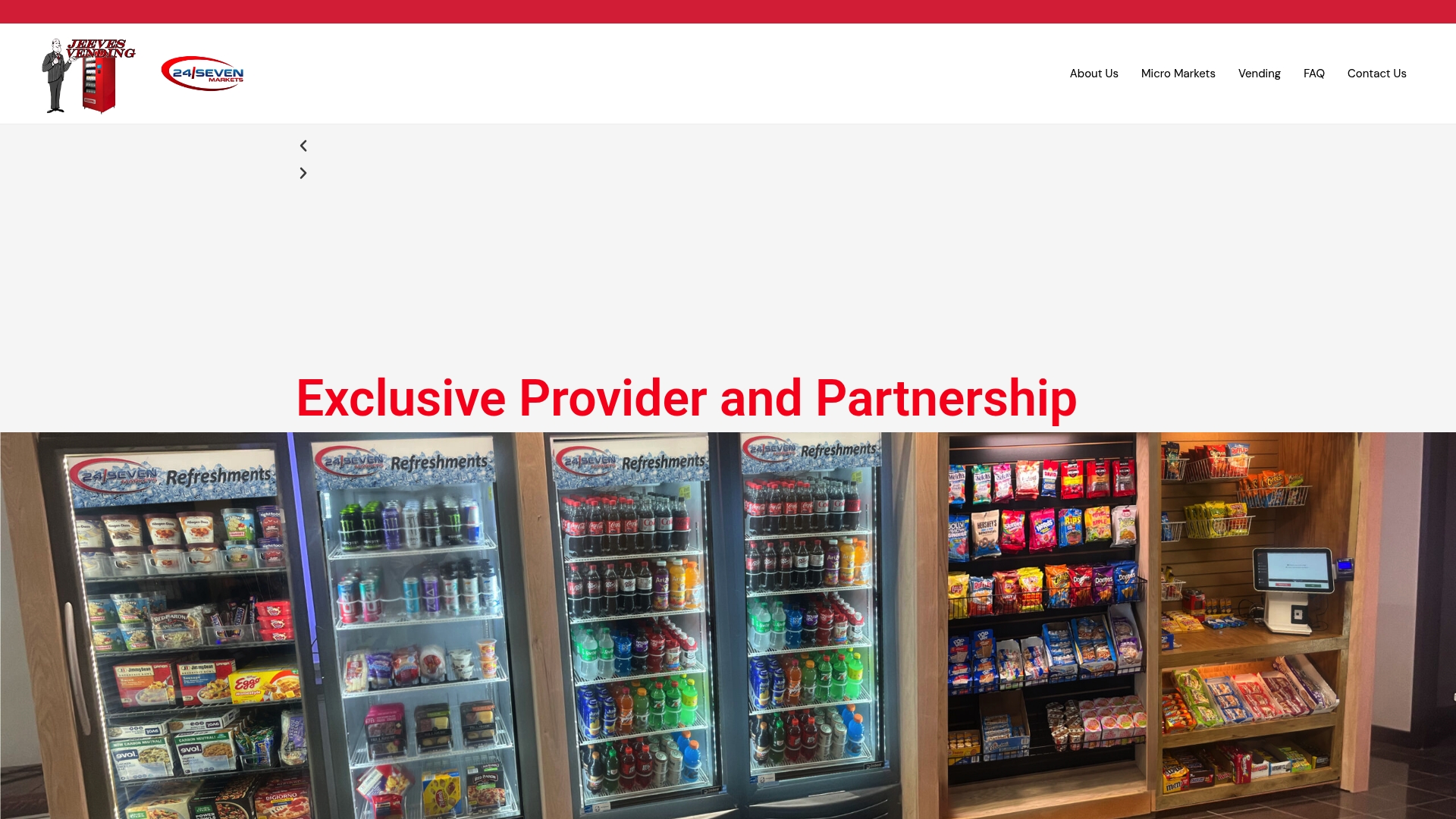
Jeeves Vending installs cloud-connected vending machines and micro-markets at offices, campuses, hospitals, gyms, and other commercial locations across Dallas and Denton at no upfront cost to the host. You get fresh and healthy food options for your employees or members, remote inventory tracking, contactless payment, and a local service team handling restocking and repairs. The host business pays nothing for equipment or service; revenue comes from product sales to your end users.
Ready to see what a deployment looks like for your specific location? Schedule a demo or request a placement proposal and Jeeves Vending will assess your site, recommend the right machine or micro-market configuration, and walk you through the full onboarding timeline.
Sources
- Vending Machine Profit: Real Numbers for 2026 | VendSoft