
Hospital micro markets are a net benefit because they give staff, patients, and visitors food access at any hour, fresher choices, and a new retail revenue stream. CDC and NIOSH shift-worker guidance supports nutrient-dense options for night teams, and one hospital reported a 35% increase in sales transactions. We at Jeeves Vending install and manage them for hospitals.
TL;DR:
- Princess Royal Hospital reported a 35% increase in transactions, with 37% occurring outside office hours, indicating whether a pilot is filling cafeteria gaps.
- NIOSH favors vegetables, salads, whole grain sandwiches, yogurt, eggs, and nuts, and advises avoiding food from midnight to 6 a.m. when possible.
- Methodist Hospital Atascosa averaged about $700 in weekly sales while requiring roughly 16 restocking labor hours, offering a modest site planning benchmark.
- Agree on pilot criteria and a review date before launch, then track daily transactions, revenue per square foot, cafeteria closure purchases, and restocking labor.
Table of Contents
- What benefits can hospital administrators expect from a micro market?
- How does a hospital micro market work day to day?
- How do micro markets help night-shift staff, patients, and visitors?
- What is the financial case for a hospital micro market?
- How do you plan and launch a hospital micro market?
- What should a hospital micro market stock?
- What technology and security should you require?
- What do real hospital examples show?
- Why we think micro markets suit hospitals
- Request a hospital micro market assessment from Jeeves Vending
- FAQ
- Sources
What benefits can hospital administrators expect from a micro market?
Think of the benefits in five buckets you can actually measure: access, nutrition, productivity, experience, and revenue.
- Access: a micro market stays open when the cafeteria closes, so night and early-morning staff are no longer limited to whatever is left in a standard vending machine.
- Nutrition: fresh sandwiches, salads, yogurt, fruit, and protein boxes give people a realistic way to eat well on a shift.
- Productivity: self-checkout can make it easier to use a short break, so a nurse can eat instead of driving off-site.
- Experience: families waiting through a long night can buy a real meal without leaving the building.
- Revenue: a wider assortment and higher-value items tend to lift the average purchase compared with a coil machine.
One hospital deployment shows what the access piece looks like in practice: 37% of transactions happened outside traditional office hours.
At Princess Royal Hospital, 90% shopper satisfaction was reported alongside average shopping trips of under two minutes, which is the speed busy clinical teams need.
Trade sources also describe micro markets as offering fresh prepared foods, wider variety, and 24/7 access compared with traditional vending.
How does a hospital micro market work day to day?
A micro market is unattended, self-checkout retail with open shelving, refrigerated cases, and a kiosk where shoppers scan items and pay. It can fit into a corner, a lounge, or a lobby alcove.
- Footprint: small-format, multi-SKU displays that hold far more variety than a row of machines.
- Checkout: shoppers scan their items at a kiosk and pay cashless, with technology supporting inventory management.
- Cold storage: refrigerated shelving stores perishable items, with temperature monitoring.
- Restocking: cadence depends on volume and perishables. One hospital kiosk market needed about 16 hours of restocking labor per week, which gives you a planning baseline.
- Placement: staff lounges, repurposed dining rooms, and lobby areas all work, and the infrastructure needs are modest: power, network, and refrigeration.
Fast turnaround on restocking matters more in a hospital than almost anywhere else, which is why we wrote about why hospital vending requires fast restocking. If you want to see how a facility team handles the workload, our hospital staff micro market case study walks through it.
How do micro markets help night-shift staff, patients, and visitors?
Healthcare workers on nights face higher risks of metabolic and stress-related problems, and CDC and NIOSH safety culture guidance points to on-site access to nutrient-dense food as part of workplace wellness. The NIOSH diet suggestions are specific enough to stock against.
- Favor quality foods: vegetables, salads, wholegrain sandwiches, yogurt, eggs, and nuts are the examples NIOSH names for night-shift nurses.
- Support meal timing: the guidance suggests avoiding eating between midnight and 6 a.m. when possible and dividing eating into three meals per 24 hours, so offer substantial options at the start of a shift, not only snacks.
- Protect breaks: nurses often work long hours and miss breaks and meals, and a quick grab-and-go purchase can make a short break more usable.
- Think beyond staff: patients’ families and visitors who lack off-site options benefit from the same access, which our guide to visitor refreshment options hospitals should offer 24/7 covers in more detail.
Pro Tip: Put the most substantial, protein-forward items at eye level and rotate a small “night shift” shelf, so the 2 a.m. buyer finds a real meal first and sweets second.
Workers in health care are also at higher risk for type 2 diabetes, so reliable access to better food is a health argument, not just a convenience one.
What is the financial case for a hospital micro market?
The money story has two sides: incremental revenue from a new retail point, and cost trade-offs against extended cafeteria hours. Trade analysts cited in industry coverage report that micro markets provide substantially higher profit margins than traditional vending and higher purchase frequency. Treat any trade figure as a benchmark, not a promise for your site.
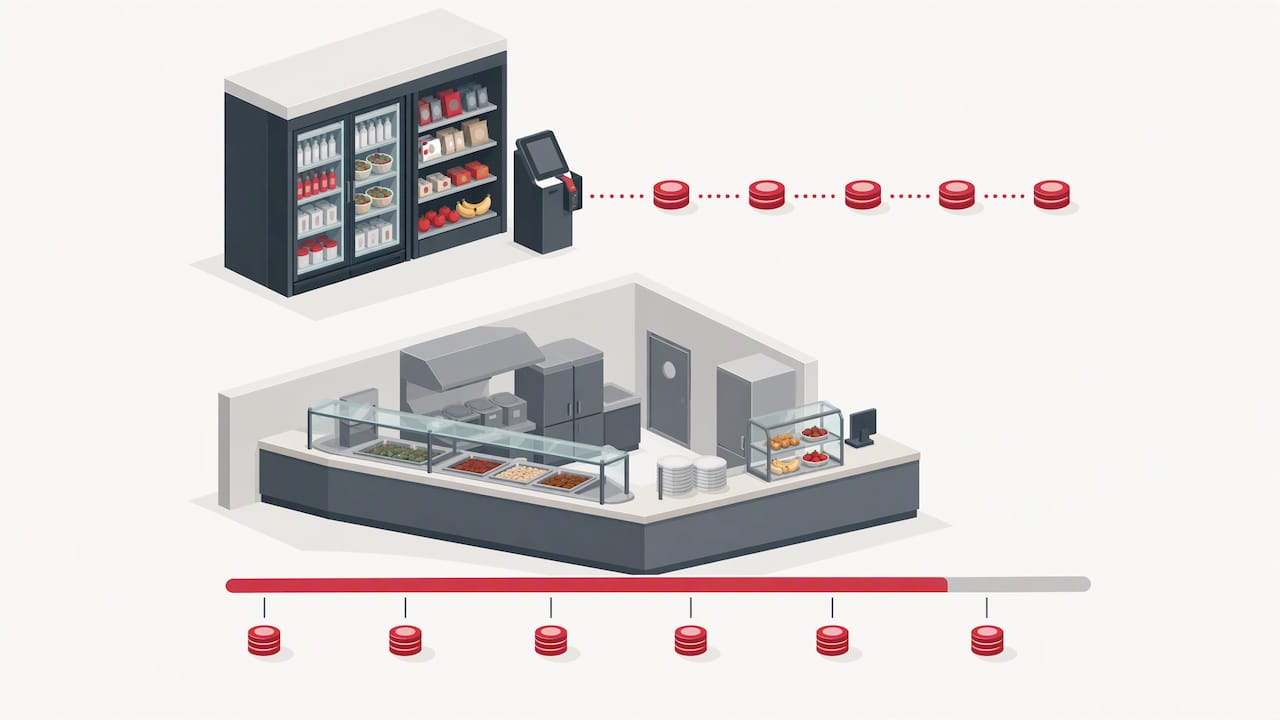
At Methodist Hospital Atascosa, weekly sales averaged about $700 after opening, a realistic starting point for a smaller facility.
Track these metrics from day one of a pilot:
- Transactions per day: the clearest early signal of adoption.
- Sales per square foot: tells you whether the footprint is earning its space.
- After-hours share: shows whether you are filling the gap the cafeteria leaves.
- Labor hours: compare restocking time against the cost of staffing a counter overnight.
Set expectations conservatively. Early weeks reflect awareness, not steady state, so judge the pilot by its trend over time rather than its initial results. Because our model may reduce the host’s equipment burden, the capital trade-off can favor trying it. You can read how that works on our free full service vending program page.
How do you plan and launch a hospital micro market?
Work through these steps in order and you will avoid the usual delays.
- Pick the site. Look first at underused space such as a private dining room, lounge, or lobby corner. Hospitals have already repurposed underutilized dining spaces into 24/7 markets without major construction.
- Get approvals. Bring in foodservice, facilities, infection control, and security early, since each has a stake in the layout.
- Confirm infrastructure. Verify power, network access, and refrigeration, and plan clear signage so people can find it.
- Size the pilot. Decide SKU count, operating hours, and the measurement plan before you open.
- Define success. Agree on the evaluation criteria and review date up front, so the decision to expand rests on data.
- Review and adjust. After the first months, adjust the product mix and restocking cadence to what the numbers show.
For placement ideas near waiting areas, our planner’s guide to vending in patient family areas is a useful companion.
What should a hospital micro market stock?
Balance clinical guidance with what people actually buy. Operators have long advised merchandising quick-grab healthy items alongside comfort foods, with microwavable options and the night shift in mind.
- Core fresh items: sandwiches, salads, protein boxes, fruit, and yogurt.
- Hot-ready options: microwavable meals, supported by microwaves and utensils on site.
- Comfort items: a modest selection, so the market feels welcoming and not clinical.
- Dietary-friendly SKUs: gluten-free, vegetarian, and low-sugar choices.
- Clear labeling: allergen information on kiosk menus and shelf tags.
A practitioner overview of providing micro markets highlights the same blend of convenience, fresh and healthy options, and unattended retail models. For concrete product ideas, see our dietary-friendly hospital vending options guide.
What technology and security should you require?
Put these into the contract and service-level agreement instead of assuming them.
- Self-checkout with cashless payment: faster lines and fewer touchpoints.
- Remote monitoring: inventory sensors, temperature alerts, and a reporting dashboard.
- Security controls: cameras, clear honor-system policies, and placement that keeps the market out of restricted areas.
- IT integration: agreed network requirements and a named contact.
- Response commitments: uptime expectations and emergency response times in writing.
What do real hospital examples show?
The evidence is still a handful of cases, but they point the same direction.
- Methodist Hospital Atascosa: a kiosk micro market filled cafeteria off-hours, with weekly sales around $700 and about 16 hours of weekly restocking labor, as reported by Foodservice Director. Coffee and water were complimentary.
- Princess Royal Hospital: a 24/7 retail transformation with a 35% rise in transactions, 37% of them outside office hours.
- Health rationale: CDC and NIOSH guidance ties night-shift work to higher metabolic and stress-related risk, which supports the wellness case.
- Sector reporting: trade analysts describe higher purchase frequency and profitability than vending.
One small hospital pilot averaged about $700 in weekly sales while running on roughly 16 hours of weekly restocking, which shows the format can start modestly and stay manageable.
Why we think micro markets suit hospitals
Most of the hospital food debate assumes the choice is cafeteria or vending machine. We think that framing misses the point: the real gap is the hours and the people the cafeteria never reaches. A micro market is one way to close that gap without adding a night counter. Our approach includes installation, managed restocking, and remote monitoring so your team is not running another operation. If you are weighing a pilot, ask us for a site assessment and we will tell you honestly what your space can support.
— Gary
Request a hospital micro market assessment from Jeeves Vending
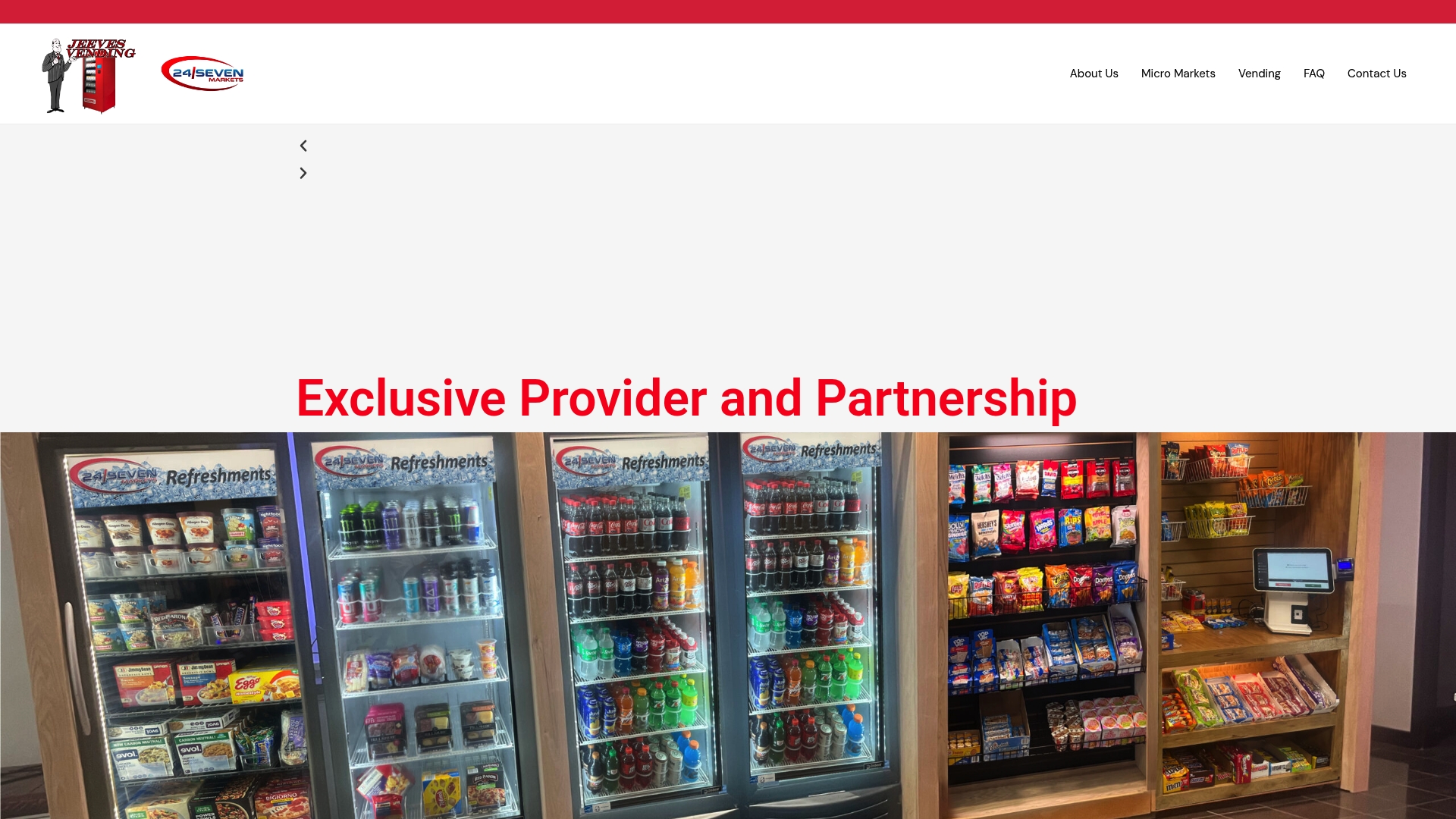
Hospitals that want 24/7 food access can work with us on a managed micro market: we install it, stock it, and monitor it remotely. Here is how to start:
- Request a site assessment of your lobby, lounge, or dining space.
- Ask for a pilot proposal sized to your traffic and hours.
- See our micro markets with self-checkout and our free full service vending program.
Contact us through Jeevesvending and we will map a pilot to your facility.
FAQ
Can you give me an example of a micro market?
A micro market is a small, unattended store with open shelves, refrigerated cases, and a self-checkout kiosk. Methodist Hospital Atascosa added a kiosk micro market to cover cafeteria off-hours for staff and guests.
What are the main hospital micro market benefits?
The main benefits are around-the-clock access, fresher and more varied food, better support for night-shift nutrition, and added retail revenue. CDC and NIOSH shift-worker guidance supports offering high-quality foods to night teams.
What is considered a micro hospital?
Definitions vary by state and operator, so there is no single universal standard. In general, a micro hospital is a small-format facility with a limited number of inpatient beds, and it still needs food access for staff and visitors.
Do micro markets need extra staff?
Not for the checkout, since shoppers pay at a self-service kiosk. Restocking is the main labor task, and one hospital micro market needed about 16 hours of labor per week.
Sources
- Module 9. Coping with the Night and Evening Shifts, Diet Suggestions for Night-Shift Nurses | NIOSH | CDC
- Texas Hospital adds 24/7 automated option for staff, guests
- Princess Royal Hospital 24/7 retail transformation case study
- Cdc