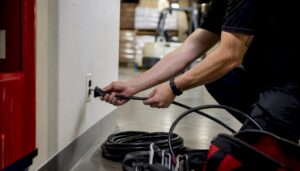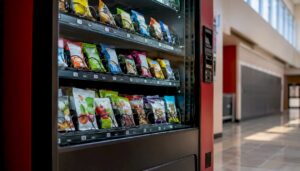

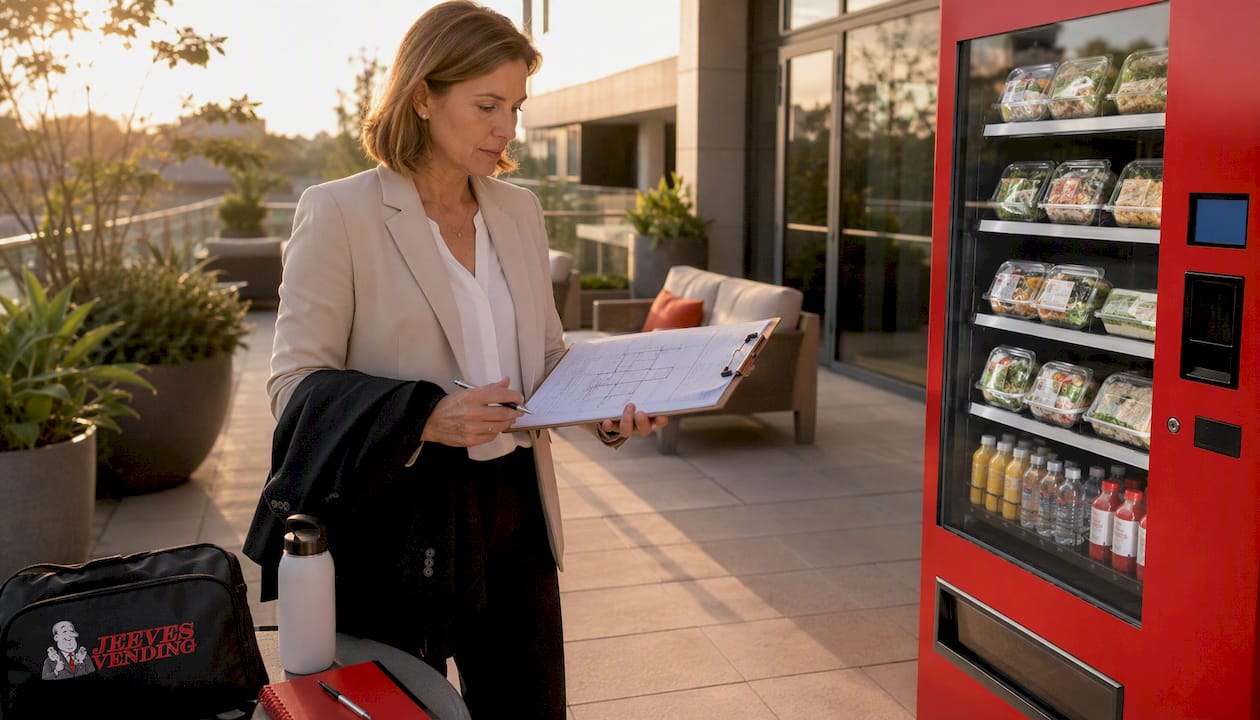
Vending in patient-family areas provides 24/7 access to comfort foods, hydration, and small essentials so families can stay bedside without sacrificing basic needs. For hospital administrators, it functions as operational infrastructure, not a convenience add-on. Three roles define it:
- 24/7 access to food and essentials when cafeterias are closed and gift shops are dark
- Psychological comfort for long-stay family members who may be on-site for extended periods
- Operational relief for staff, reducing the frequency with which nurses leave the floor to help visitors find food
Providers like Jeeves Vending and Morrison Healthcare both treat hospital vending as a retention and satisfaction driver, not just a revenue line. Industry data indicates that a large majority of vending machines in healthcare settings accept cashless payments, a baseline that infection-control teams now expect as standard.
Table of Contents
- Why does vending in patient-family areas matter operationally?
- Who actually uses vending in patient-family areas?
- What should you stock in a patient-family vending program?
- Which machine types work best in family lounges?
- Where should you place vending machines in a hospital?
- How do you procure and operate a hospital vending program?
- What health, safety, and labeling rules apply to hospital vending?
- How do you measure ROI and build a business case?
- What do industry experts and operators say about hospital vending?
- Key Takeaways
- The case for treating hospital vending as infrastructure, not an amenity
- Jeeves Vending serves hospital planners in the Dallas-Denton region
- Useful sources and further reading
Why does vending in patient-family areas matter operationally?
A hospital cafeteria typically runs from 6:30 AM to 8:00 PM. Everything outside that window falls to vending. For a family whose child is in the NICU, or a partner waiting through a six-hour surgery, those off-hours are not edge cases. They are the majority of the experience.
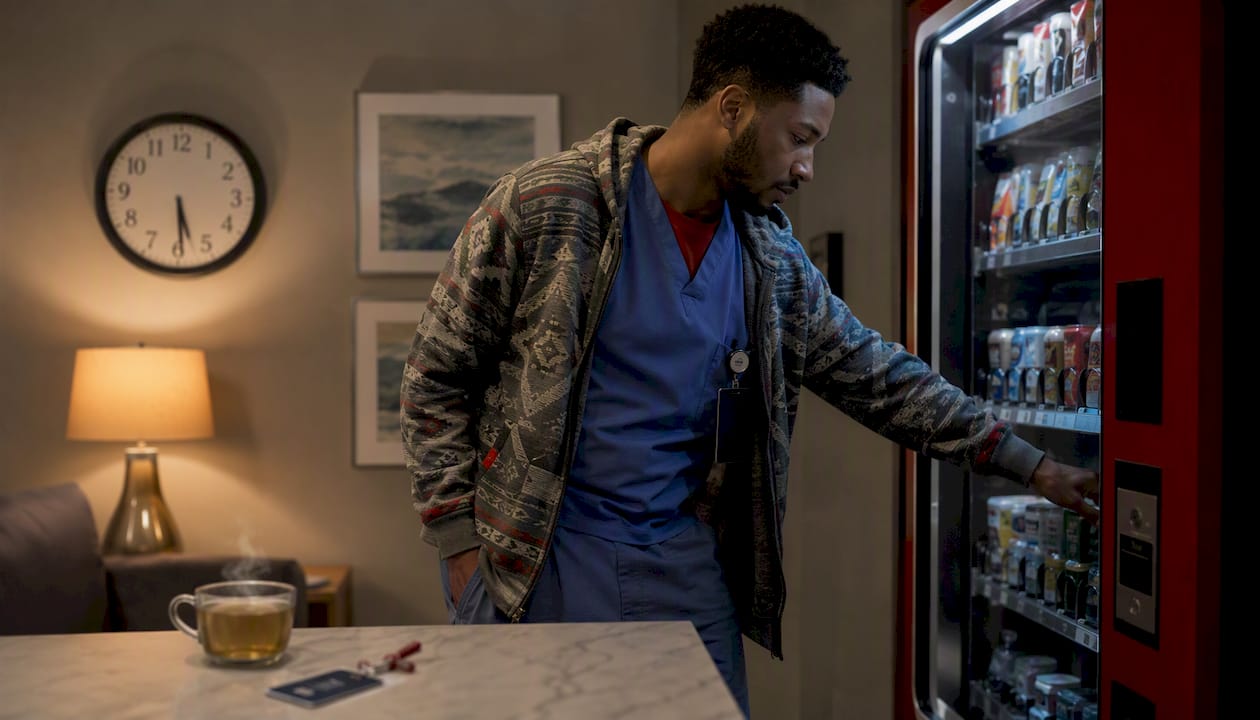
The operational case has three layers. First, vending absorbs demand that would otherwise hit cafeteria lines at peak times, specifically the 7:00–9:00 AM breakfast rush and the noon hour. Second, it reduces how often nurses and patient-care technicians leave the floor to escort visitors to food sources. Third, it supports staff on overnight and weekend shifts who have no other on-site option.
Morrison Healthcare’s foodservice leadership has noted that food access functions as a daily satisfier that affects morale and retention across hospital departments. Tim Pierce of Morrison Healthcare frames it plainly:
Consider a practical scenario: a mother has been in a pediatric ICU family lounge since 3:00 AM. The cafeteria opens at 7:00. She needs water, something with protein, and ideally a toothbrush. A well-stocked refrigerated vending cabinet solves all three without requiring her to leave the floor or ask a nurse for directions. That is the convenience for patient families that administrators often underestimate until they start tracking satisfaction scores.
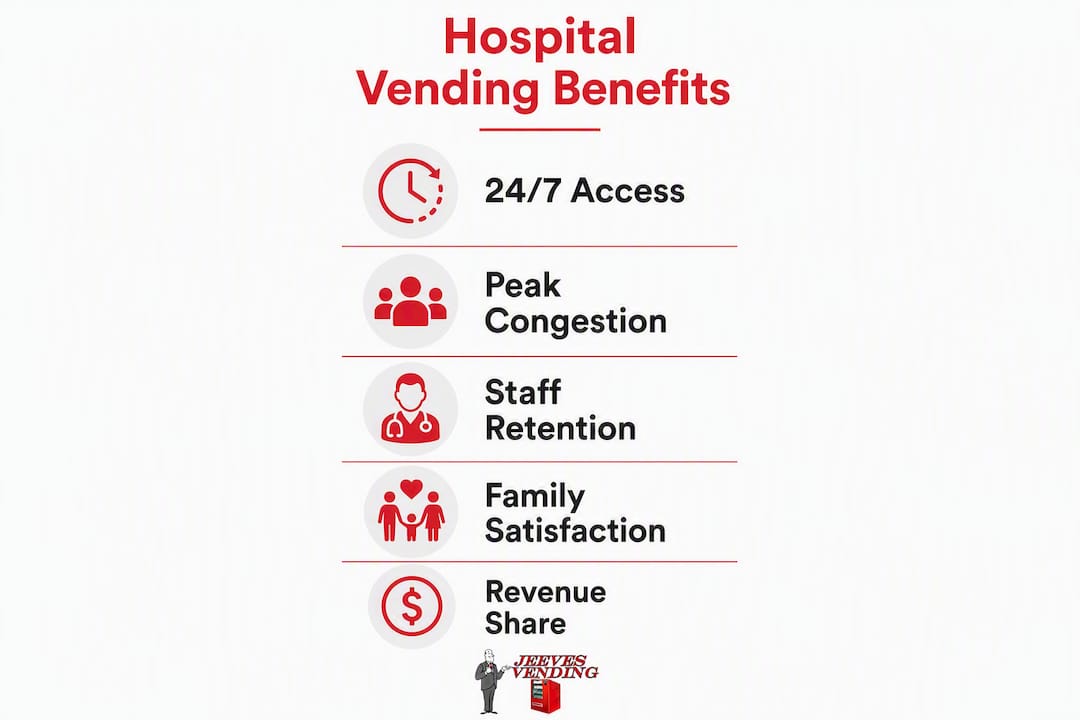
Vending and self-service food programs reduce cafeteria peak congestion and support staff retention when managed correctly. Hospitals that treat vending as an afterthought, placing one candy machine near the elevator bank, consistently underperform on visitor satisfaction metrics compared to those that deploy a planned, product-appropriate mix.
Who actually uses vending in patient-family areas?
Getting the product mix and placement right starts with knowing who is standing in front of the machine at 2:00 AM. Four distinct user groups show up in family-area vending data, and each has different needs.
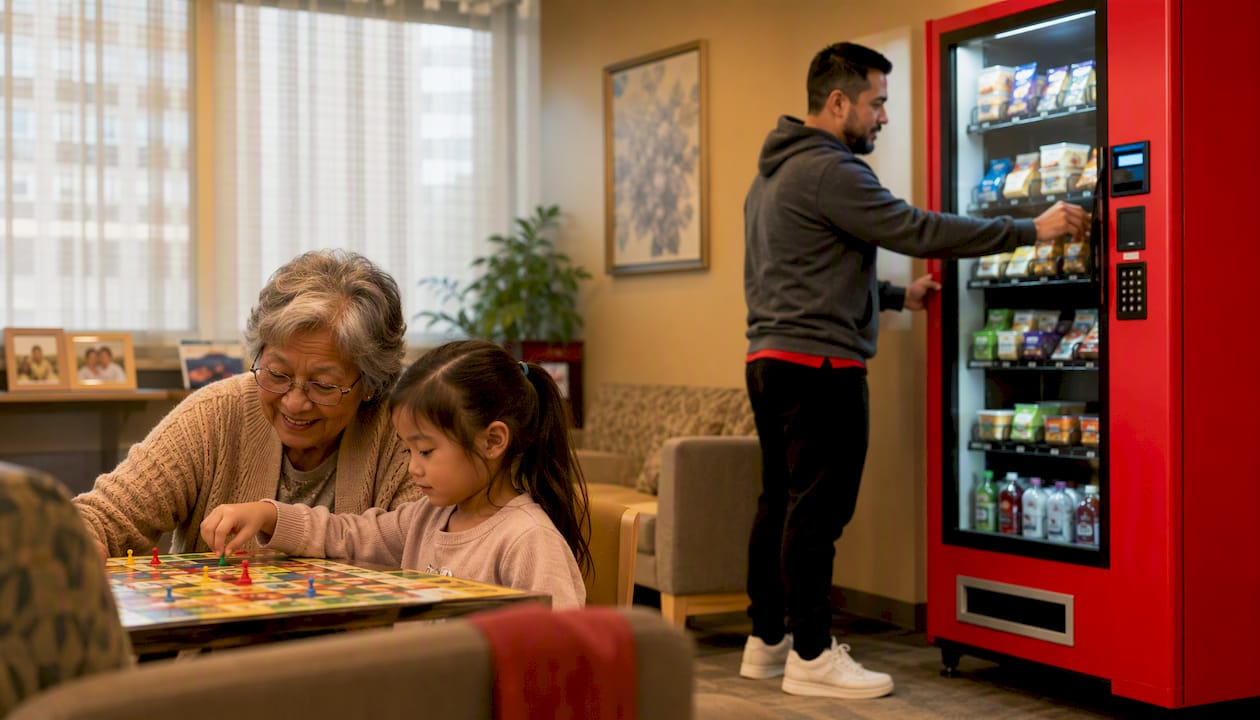
Long-stay parent or partner. This is the primary buyer in family zones. Someone who has been on-site for extended hours is not looking for impulse snacks. They want real food, hydration, and personal-care basics. Top needs: refrigerated meals, electrolyte drinks, toothbrush and toothpaste, contactless payment.
Visiting family member. Shorter stays, higher stress. They want something quick, familiar, and easy to carry back to a room. Top needs: packaged snacks, bottled water, hot beverages, simple payment (tap-to-pay or mobile wallet).
Night-shift clinician. Nurses, respiratory therapists, and techs on 12-hour overnight shifts often rely on vending as their only food source between midnight and 6:00 AM. Top needs: protein-forward options, caffeine, hot food if available, speed.
Ambulatory patient. Mobile patients cleared to leave their room independently need low-sodium, low-sugar options that align with their care plan. Top needs: dietary-labeled items, allergen flags, portion-controlled packaging.
When briefing procurement or a vendor team, use this checklist to confirm your deployment covers the basics:
- Are machines accessible 24 hours, including overnight?
- Do payment options include tap-to-pay, mobile wallet, and credit card (no cash-only)?
- Are allergen flags visible on every product label?
- Is the product mix reviewed at least quarterly against actual sales data?
- Are quiet-compressor units specified for family lounge and overnight suite placements?
- Is ADA reach range (15–48 inches from floor) confirmed in the install spec?
What should you stock in a patient-family vending program?
The product mix is where most hospital vending programs either earn trust or lose it. A machine full of chips and candy bars in a pediatric ICU lounge sends the wrong signal to families and conflicts with the hospital’s wellness brand.
Refrigerated meals and real food first
Modern healthcare vending programs prioritize refrigerated meal cabinets stocked with fresh salads, sandwiches, wraps, and protein-forward items. For families staying overnight, these are not a luxury. A parent who has been awake for 20 hours needs a meal, not a granola bar.
Stock priorities for refrigerated units:
- Protein-forward items: hard-boiled eggs, Greek yogurt, cheese and crackers, deli wraps
- Full meal options: grain bowls, salads with dressing, sandwiches on whole grain
- Pediatric-friendly items: applesauce pouches, string cheese, fruit cups
Research from a large community health organization found that shifting the vending mix from 20% healthy options to 80% healthy options lowered calories, sodium, fat, and sugar dispensed without reducing units sold. That is a meaningful finding for administrators who worry that healthier assortments will hurt revenue.
Beverages
Water should be the highest-volume SKU in any family-area machine. After that: electrolyte drinks (Gatorade, Liquid I.V. packets if the machine supports it), unsweetened tea, 100% juice, and coffee or hot beverage access through a separate unit. Avoid energy drinks in pediatric family zones.
Personal care and OTC basics
This category is consistently underserved and consistently appreciated. Stock toothbrushes, toothpaste, travel-size deodorant, pain relievers (acetaminophen, ibuprofen), antacids, diapers, and wipes. For dietary-friendly and allergy-conscious options, consult your hospital wellness policy before finalizing the assortment.
Dos and don’ts for family lounges:
- Do: stock comfort items that feel like home (oatmeal cups, soup, crackers)
- Do: include pediatric-appropriate snacks in children’s hospital family areas
- Don’t: place strong-odor hot foods (microwave popcorn, certain soups) in enclosed lounges
- Don’t: stock alcohol in family zones without explicit policy approval and age-verification hardware
- Don’t: use noisy hot-drink equipment in overnight suites
Pro Tip: Map your product mix to time-of-day demand. Overnight (10 PM–6 AM), refrigerated meals and personal care dominate. Morning (6–10 AM), beverages and breakfast items lead. Afternoon, snacks and comfort items peak. A vendor with remote telemetry can pull this data within the first 30 days of a pilot.
Which machine types work best in family lounges?
Not every vending machine belongs in a patient-family area. The hardware choices you specify in your RFP will determine whether the program succeeds or creates complaints.
Key hardware categories
Refrigerated glass-front merchandisers are the workhorse for family areas. They display fresh meals and beverages clearly, operate quietly when properly specified, and hold temperature reliably. Look for units with vibration-dampened compressors.
Smart coolers and AI-enabled cabinets use camera and weight-sensor technology to track inventory in real time. They support remote telemetry, which means your vendor gets a stockout alert before a family member finds an empty shelf at midnight.
Touch-screen kiosks and micro-markets work well in larger family suites or Ronald McDonald House-style facilities where families congregate. They offer a broader assortment and a more retail-like experience, though they require more floor space and a higher traffic threshold to justify the footprint.
Controlled-dispensing cabinets are appropriate when the machine issues PPE, clinical consumables, or OTC items that require access control. These need audit trails and inventory reconciliation built into the vendor contract.
| Feature category | Standard refrigerated unit | Smart cooler / AI cabinet | Controlled-dispensing cabinet |
|---|---|---|---|
| Quiet refrigeration | Varies by spec | Usually yes | N/A |
| Cashless / tap-to-pay | Standard | Standard | Access-card or PIN |
| Remote telemetry | Optional add-on | Built-in | Built-in |
| ADA compliance | Confirm per model | Confirm per model | Confirm per model |
| Best fit | Family lounges, corridors | High-traffic family suites | Clinical supply zones |
Essential features to require in any family-area spec:
- Vibration-dampened, low-decibel compressors
- LED interior lighting (lower heat, better product visibility)
- Hospital-grade exterior surfaces that tolerate EPA-registered disinfectants
- Cashless payment: tap-to-pay, mobile wallet, credit/debit card
- Remote stock monitoring with automated low-inventory alerts
Pro Tip: Ask vendors for the decibel rating of their refrigeration compressor before signing. A unit running at 55 dB in a quiet overnight family suite is the equivalent of a running dishwasher. Specify a maximum of 45 dB for any machine placed within 20 feet of a sleeping area.
Jeeves Vending’s smart cooler lineup includes remote telemetry and cashless payment as standard features, which matters when you are managing machines across multiple floors with a lean facilities team.
Where should you place vending machines in a hospital?
Placement is the variable administrators most often get wrong. A machine tucked behind a stairwell door gets ignored. One placed at the natural pause point in a family lounge gets used constantly.
Placement checklist by zone
- ICU and cardiac care waiting rooms: Place at the room’s natural entry point, visible from seating. Families in these zones are often in acute distress; they should not have to search.
- NICU parent rooms and overnight family suites: One refrigerated unit per suite cluster, positioned near the door rather than deep inside. Quiet compressor is non-negotiable here.
- Pediatric family lounges: Place at eye level for adults, with glass-front visibility. Consider a second lower-height unit or shelf for ambulatory pediatric patients.
- Inpatient floor corridors: Hospitals like Dayton Children’s already deploy vending in inpatient units and family lounges, with nursing staff directing visitors to locations. Corridor placement near elevator banks works well for this model.
- Surgical waiting areas: High-anxiety, variable-duration stays. Prioritize beverages and snacks over full meals here; families may leave and return unpredictably.
ADA and accessibility requirements
The ADA requires operable parts to be within a 15–48 inch reach range from the floor for forward approach, and 9–54 inches for side approach. Clear floor space of at least 30 by 48 inches must be maintained in front of the machine. Confirm these dimensions in your install spec and verify them during the site walk.
Infection control
Specify stainless steel or powder-coated surfaces rated for hospital-grade disinfectants. Keep machines at least six feet from clinical waste streams, soiled linen carts, and medication dispensing areas. Establish a daily cleaning cadence in the vendor SLA, with documentation.
Glass-front machines reduce mis-selections and refund requests because families can see exactly what they are buying before they pay. In a high-stress environment, a failed transaction is a disproportionate frustration.
How do you procure and operate a hospital vending program?
Cross-team procurement checklist
Programs that skip one of these stakeholders tend to fail within the first year:
- Foodservice and nutrition: Approves product mix, allergen labeling, and wellness-policy alignment
- Facilities: Confirms electrical access, ADA clearances, loading-dock routing, and cleaning protocols
- Patient experience: Validates placement from a family-journey perspective and owns satisfaction metrics
- Infection control: Reviews surface materials, cleaning cadence, and proximity to clinical areas
- Security: Approves after-hours access, machine placement in secured zones, and camera coverage
Contract and SLA checklist
Request these terms in writing before signing:
- Restocking frequency (minimum twice weekly for refrigerated units; daily for high-traffic locations)
- Uptime guarantee (95% or higher is a reasonable baseline)
- Remote monitoring response time (stockout alert to restock within 24 hours)
- Refund policy and process for failed transactions
- Cleaning and sanitation schedule with documentation
- Escalation path for maintenance issues
Fast restocking cadence is not optional in hospital settings. A family who finds an empty machine at 2:00 AM has no alternative. That single experience shapes their perception of the hospital’s care for families.
Commercial models
No-cost-to-host with revenue share is the most common model for hospitals. The vendor provides, installs, and maintains equipment at no charge. Revenue comes from product sales, with a percentage shared back to the hospital or directed to a patient-assistance fund. This is the model Jeeves Vending operates on.
Managed service involves a fee for service, typically covering restocking, maintenance, and reporting. The hospital retains more control over product mix and pricing.
Buy-to-own suits organizations that want full control and have internal capacity to manage operations. Higher upfront cost, full margin retention.
Pro Tip: Avoid restocking during the 11 PM–midnight family-arrival window and the 5:30–7:30 AM shift-change intervals. These are the highest-disruption periods. Build that schedule into the SLA from day one.
Deployment timeline
| Stage | Typical duration | Key activities |
|---|---|---|
| Decision and vendor selection | 2–4 weeks | RFP, stakeholder alignment, contract review |
| Site walk and spec finalization | 1–2 weeks | ADA verification, electrical, sightlines, placement map |
| Equipment delivery and install | 1–2 weeks | Machine placement, cashless payment setup, telemetry activation |
| Initial stocking and soft launch | 3–5 days | Product load, pricing confirmation, staff orientation |
| Pilot period | 30–60 days | Daily telemetry review, satisfaction surveys, restock tuning |
| Full rollout | Ongoing | Quarterly product-mix review, SLA audit, KPI reporting |
What health, safety, and labeling rules apply to hospital vending?
Safety checklist
- Refrigerated units must maintain 41°F or below at all times; require temperature logging in the vendor SLA
- Daily cleaning of exterior surfaces with an EPA-registered hospital-grade disinfectant
- Interior cleaning of refrigerated units at every restock visit
- Surface materials must be non-porous and rated for repeated disinfection
Labeling and allergen requirements
Vending programs in healthcare must reinforce trust through clear labeling and allergy-conscious choices. At minimum, every product should display:
- Full ingredient list
- Nutrition facts panel
- The nine major allergens flagged (milk, eggs, fish, shellfish, tree nuts, peanuts, wheat, soybeans, sesame)
- Calorie count visible before purchase (required under FDA menu-labeling rules for operators with 20 or more machines)
Align your vending assortment with the hospital’s existing wellness policy. If the hospital has adopted a healthy food and beverage policy, your vendor should be able to provide a product list showing compliance before the contract is signed.
Shifting toward healthier vending options demonstrably reduces calories, sodium, fat, and sugar dispensed without hurting sales volume, which makes the wellness argument easy to defend to a board or patient-experience committee.
Controlled-dispensing notes
When a machine issues PPE, clinical consumables, or OTC items, require the vendor to provide: access-control documentation (who can retrieve items and how), a daily inventory reconciliation report, and an audit trail for regulated items. This is separate from standard food-vending compliance and should be reviewed by your compliance officer before deployment.
Audit questions for vendor evaluation
- What is your temperature monitoring protocol, and how is it documented?
- How do you handle a product recall?
- What is your cleaning cadence, and who documents it?
- Are your machines FDA menu-labeling compliant for operators with 20+ machines?
- Can you provide allergen data for every SKU in your proposed assortment?
How do you measure ROI and build a business case?
KPIs to track from day one
- Units sold per machine per day
- Average transaction value
- Peak-hour performance (identify highest-demand windows)
- Machine uptime percentage
- Restock frequency versus SLA target
- Visitor and family satisfaction scores (tied to vending access questions in HCAHPS or supplemental surveys)
- Staff time-off-floor reduction (estimate based on nurse-reported escort frequency before and after deployment)
- Revenue share returned to hospital or patient fund
Sample ROI calculation for a single-machine pilot
| Line item | Conservative assumption | Monthly figure |
|---|---|---|
| Vendor revenue share to hospital (10%) | 10% of gross | — |
| Net contribution to hospital | Revenue share minus any facility cost | — |
Under a no-cost-to-host model, the hospital’s direct financial exposure is near zero. The business case rests on qualitative benefits plus the revenue-share line, which can be directed to a patient-assistance fund or family amenity budget.
Qualitative benefits for the business case
Reduced cafeteria congestion during peak hours is measurable through cafeteria transaction counts before and after deployment. Staff time saved by not escorting visitors to food sources is harder to quantify but real. Patient and family satisfaction scores tied to “access to food and amenities” questions on supplemental surveys provide the clearest before-and-after signal. Retention indicators, specifically whether staff cite amenities as a reason to stay, show up in exit interview data over a 12-month horizon.
What do industry experts and operators say about hospital vending?
The operational evidence for family-area vending is consistent across hospital types and sizes. The programs that work share three characteristics: cross-team planning, the right equipment spec, and a vendor with genuine healthcare experience.
A three-way coordination walk-through with foodservice, facilities, and patient-experience teams is a consistent success requirement. Programs planned without all three stakeholders are frequently removed within the first year. That is not a soft recommendation. It is a pattern that shows up repeatedly in hospital vending program reviews.
Pilot action items for administrators ready to move forward:
- Schedule a joint walk-through with foodservice, facilities, and patient experience before any vendor conversation
- Test quiet refrigeration units in the specific rooms where they will be placed, not just in a demo room
- Validate ADA reach heights and clear-floor dimensions on-site, not from a floor plan
- Run a 30–60 day pilot with daily telemetry monitoring before committing to a full rollout
- Pull sales data by time-of-day at the 30-day mark and adjust the product mix before the pilot ends
Vendor service expectations to require in writing:
- Remote telemetry with automated stockout alerts
- Contactless payment on every unit (tap-to-pay, mobile wallet, credit/debit)
- Restocking response within 24 hours of a low-inventory alert
- Maintenance SLA with a defined response window (4–8 hours for refrigeration failures)
- Quarterly product-mix review based on actual sales data
Vending machines in hospitals improve staff and visitor access during off-hours and can scale across large campuses with minimal staffing when the vendor manages telemetry and restocking. That scalability is what makes the no-cost-to-host model attractive for multi-building health systems.
Key Takeaways
Vending in patient-family areas functions as 24/7 operational infrastructure that supports families, staff, and ambulatory patients while reducing pressure on cafeteria and nursing resources.
| Point | Details |
|---|---|
| 24/7 access is the core role | Vending covers off-hours when cafeterias are closed, serving families who cannot leave the bedside. |
| Product mix drives trust | Prioritize refrigerated meals, allergen-labeled snacks, and personal-care basics over impulse candy. |
| Cross-team planning prevents failure | Include foodservice, facilities, patient experience, and infection control in every site walk. |
| No-cost-to-host model reduces risk | Hospitals can deploy equipment at zero upfront cost under a revenue-share arrangement. |
| Jeeves Vending for Dallas-area hospitals | Jeeves Vending provides no-cost refrigerated units, remote telemetry, and cashless payment for hospital deployments in the Dallas-Denton region. |
The case for treating hospital vending as infrastructure, not an amenity
Most hospital administrators I speak with categorize vending as a convenience feature, something nice to have near the elevator. That framing consistently leads to underfunded programs, wrong equipment specs, and machines that get pulled after a year because nobody tracked whether they were working.
The evidence points in a different direction. When a family has been on-site for 20 hours, access to a refrigerated meal and a toothbrush is not a convenience. It is part of the care environment. Hospitals that treat vending as infrastructure, specifying quiet compressors, requiring remote telemetry, building restocking schedules around family-arrival windows, consistently outperform those that treat it as a vendor-managed afterthought.
The procurement process matters just as much as the equipment. A three-stakeholder walk-through (foodservice, facilities, patient experience) sounds like bureaucratic overhead until you realize that programs skipping it get removed within a year. That is not a coincidence. It reflects what happens when a machine ends up in the wrong location, with the wrong product mix, maintained on the wrong schedule.
The business case is straightforward under a no-cost-to-host model: zero equipment cost, measurable revenue share, and a satisfaction signal that shows up in supplemental survey data within 60 days of a well-run pilot. The harder argument is internal, convincing stakeholders that vending deserves the same planning rigor as any other patient-experience investment. The data supports making that argument.
Jeeves Vending serves hospital planners in the Dallas-Denton region
Zero equipment cost, managed restocking, and remote telemetry built in from day one. That is what separates a Jeeves Vending hospital deployment from a standard vending contract. You get refrigerated units with vibration-dampened compressors, cashless payment on every machine, and a product mix reviewed against real sales data, not a default catalog.
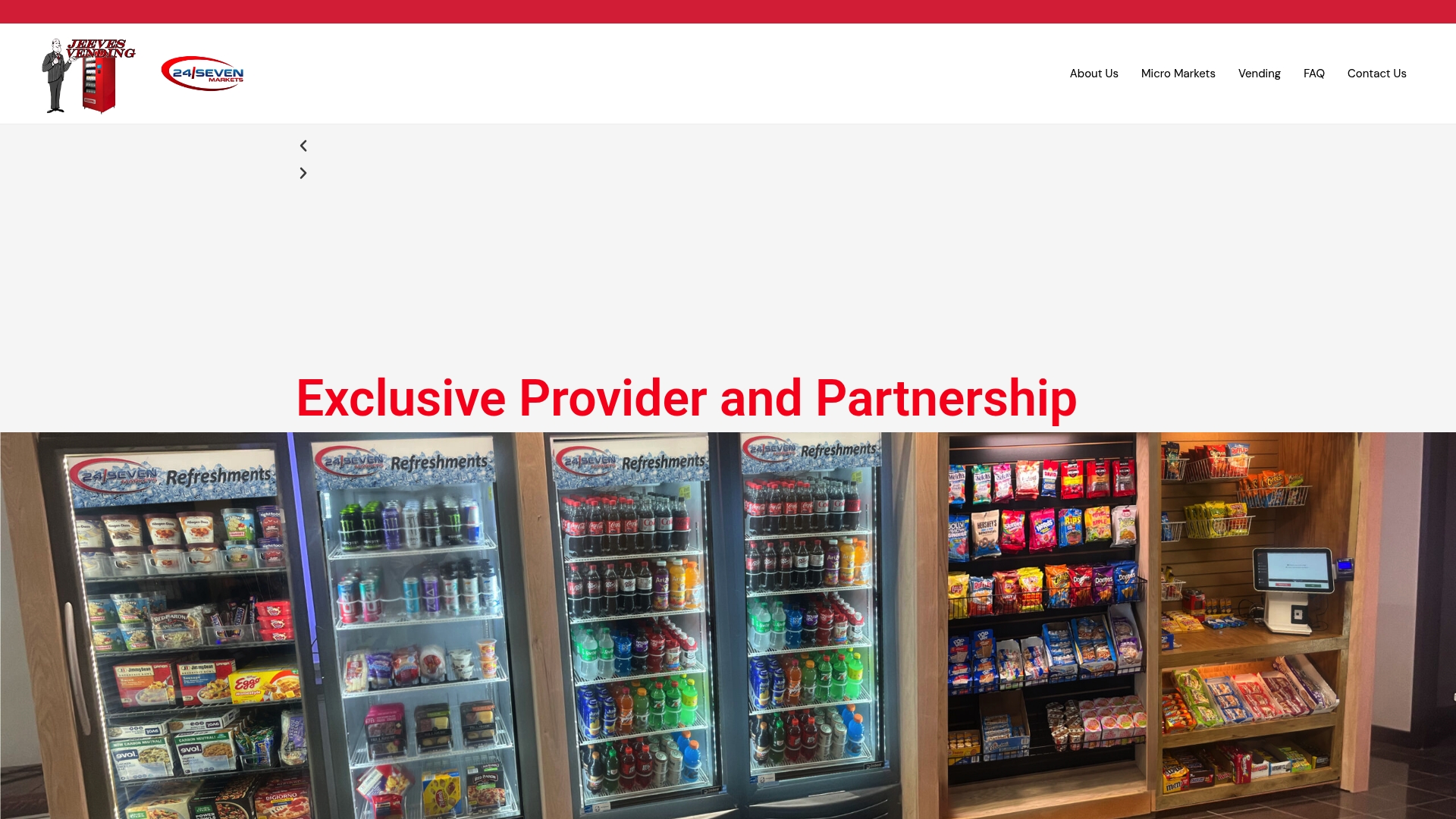
For hospital planners in the Dallas-Denton area, Jeeves Vending handles the full deployment: site walk, ADA-compliant install, initial stocking, and ongoing managed service at no cost to the facility. The revenue-share model means the program pays for itself from day one.
Jeeves Vending also offers micro-market solutions for larger family suites and multi-building campuses where a single machine is not enough. If you are ready to scope a pilot or want a walkthrough of your family-area zones, contact Jeeves Vending directly to schedule a no-obligation site visit.
Useful sources and further reading
The following sources informed the operational guidance, product-mix recommendations, and compliance notes in this article:
- Hospital amenities for families and visitors at Dayton Children’s — confirms real-world deployment of vending in inpatient units and family lounges, with nursing staff directing visitors
- Healthcare Vending Solutions: Hospital Vending Machines — supports refrigerated meal cabinet recommendations for overnight family use
- American Food and Vending: Breakroom and Vending Services for Hospitals — source for cashless adoption data, Morrison Healthcare retention commentary, and remote telemetry as an operational standard
- Impact of Healthy Vending Machine Options in a Large Community Health Organization — peer-reviewed study showing nutritional impact of shifting vending mix toward healthier options without reducing units sold
- Cema Refreshments: Supporting healthcare staff and visitors — supports scalability, labeling, and managed-service arguments
- Hospital Vending Services Chicago: 24/7 Across Staff, Visitor, Family Zones — source for quiet refrigeration guidance, cross-team walk-through requirements, and restocking schedule best practices
- Jeeves Vending: Dietary-Friendly Hospital Vending Options — internal guide on allergen-conscious assortments and wellness-policy alignment
- Jeeves Vending: Why Hospital Vending Requires Fast Restocking — operational detail on restocking cadence and SLA expectations for hospital machines