

A vending service agreement is a legal contract that defines machine ownership, maintenance responsibilities, commission terms, and operational details for vending services at a business location. Business owners and facility managers who understand how vending service agreements work gain a clear advantage when negotiating terms, protecting assets, and ensuring reliable service. The contract governs everything from who pays for electricity to how quickly a broken machine gets fixed. Getting these details right from the start prevents disputes and keeps your workforce supplied without interruption.
How do vending service agreements work?
A vending service agreement is the industry’s standard term for what many people call an office vending contract or a vending placement agreement. It is a binding document signed by the vending operator and the location owner before any machine is installed. The agreement defines the relationship, sets expectations, and protects both parties if something goes wrong.
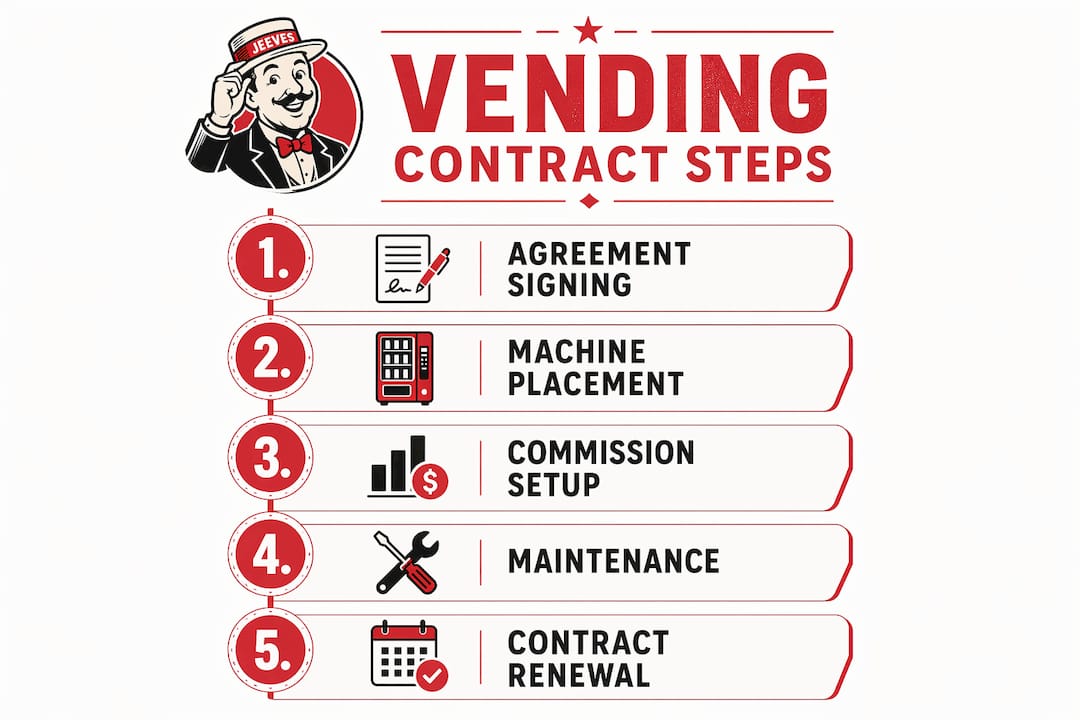
The core elements found in every professional agreement include:
- Machine ownership: The operator owns the machine. The location owner provides space and access.
- Maintenance obligations: Who repairs the machine, how fast, and at whose cost.
- Commission structure: Whether the location owner receives a percentage of sales.
- Location access: When and how the operator can enter the facility to restock or repair.
- Contract length and renewal: How long the agreement lasts and how it renews or ends.
These five elements form the foundation of every vending contract, whether you manage a single break room or a multi-building campus.
What are the typical key terms and clauses in vending service agreements?

Contract length and renewal
Standard vending agreements run for an initial term of 1–3 years with evergreen renewal clauses that require 30–90 days’ written notice to terminate. That means if neither party acts, the contract keeps rolling forward automatically. Facility managers often miss renewal windows and find themselves locked in for another full term. Set a calendar reminder 120 days before your contract end date so you have time to renegotiate or exit cleanly.
Commission structures
Commission rates in vending agreements typically range from 5%–10% of gross sales. No-cost service models, where the operator provides machines at no charge to the business, often operate at 0% commission. The trade-off is straightforward: lower traffic locations accept 0% to attract service, while high-traffic locations like hospitals or large warehouses can negotiate higher percentages. Always confirm whether the commission is calculated on gross sales or net sales after taxes, since that distinction changes the actual payout.
Pro Tip: Ask for a monthly sales report as a contract requirement. Operators who track sales data can adjust product selection faster, which benefits both parties.
Maintenance and service response times
A 24-hour repair guarantee is the industry benchmark for professional vending contracts. Any agreement that does not specify a response time leaves you with no recourse when a machine sits broken for a week. Stocking schedules should also appear in writing, specifying minimum visit frequency based on your location’s traffic volume.
Termination and machine removal
Contracts should define a machine removal window after termination, typically 14–30 days. Without this clause, a departing operator has no legal deadline to collect equipment. That creates a real problem: the machine occupies your floor space, and without a written timeline, you have limited options to force removal.
How do vending service agreements allocate responsibilities and liabilities?
Clear responsibility allocation prevents the most common disputes in vending partnerships. Here is how professional agreements divide the workload:
- Operator responsibilities: The vending operator handles all stocking, repairs, cleaning of machine exteriors, and software updates. The operator also carries liability insurance, typically with a $1 million general liability policy as the standard minimum.
- Location owner responsibilities: The location owner provides a dedicated electrical outlet, ensures physical access during agreed service windows, and maintains the area around the machine.
- Electricity costs: Machine power usage runs approximately $30–$50 per month. Most contracts assign this cost to the location owner, particularly when the operator is already paying commissions or providing machines at no charge.
- Vandalism and damage: Agreements should specify who bears the cost of machine damage caused by vandalism. Operators typically cover mechanical failures; location owners typically cover damage resulting from negligence or security failures on their premises.
- Insurance verification: The operator should provide a certificate of insurance naming the location owner as an additional insured. Request this document before installation, not after.
Pro Tip: Keep a copy of the operator’s insurance certificate on file and set an annual reminder to request an updated certificate at renewal. Policies lapse, and an expired certificate leaves your facility exposed.
Documented agreements remove ambiguity from every one of these points. A verbal understanding about who pays for electricity or who handles a broken door panel is worthless when the relationship sours. Written terms protect both sides equally.
What practical considerations help optimize vending agreements?
Secure exclusivity provisions
Exclusivity clauses prevent a second operator from placing competing machines in your facility. For a large office or warehouse, this matters because split foot traffic reduces sales volume for both operators, which can trigger service cutbacks. Specify exclusivity by product category, such as beverages, snacks, or fresh food, so you retain flexibility to add specialty machines later.
Insist on written contracts
Handshake deals create immediate vulnerability. When a business changes ownership, the new owner has no legal obligation to honor a verbal agreement. The vending operator loses location access overnight, and the facility loses its service with no notice period. A written contract binds successors and assigns, which protects both parties through ownership transitions.
Use a Master Service Agreement for multiple machines
A Master Service Agreement signed at the company level, with individual machines listed in attached exhibits by serial number and location, prevents the need to draft a new contract every time a machine is added or relocated. This structure is standard practice for facilities managing five or more machines across multiple floors or buildings.
Align the contract with your organizational goals
Vending agreements that reflect your organization’s priorities deliver more value than generic placements. A company focused on employee wellness can require the operator to maintain a minimum percentage of healthier product options. A gym or fitness facility can specify pre-workout and recovery products as a contract requirement. These terms belong in the agreement, not in a side conversation.
The table below shows common pitfalls in vending contracts and how clear contract language prevents each one.
| Common pitfall | How clear contract language fixes it |
|---|---|
| Machine sits broken for days | Specify a 24-hour repair response time with penalty or termination rights |
| Operator leaves machine behind after exit | Include a 14–30 day removal window with equipment abandonment language |
| New building owner ignores agreement | Require successors-and-assigns clause binding future owners |
| Electricity costs disputed | State explicitly that location owner covers power at $30–$50/month |
| Product mix does not match workforce | Define minimum product category requirements in the agreement |
How do vending agreements differ in healthcare and large workforces?
Healthcare facilities and large workforce locations operate under higher scrutiny than a standard office break room. The contract terms reflect that reality.
- Insurance verification is non-negotiable. Failure to meet insurance requirements is the most common reason a vending installation gets blocked in a hospital or regulated facility, regardless of how strong the proposal is. Operators must provide proof of coverage before any equipment enters the building.
- Uptime standards are stricter. A broken machine in a hospital corridor affects patients, staff, and visitors around the clock. Contracts for healthcare locations often require a faster response window than the standard 24-hour benchmark, sometimes as short as 4 hours for critical locations.
- Wellness-aligned product selection. Healthcare administrators increasingly require operators to stock products that align with institutional health goals. This requirement belongs in the contract as a defined product category standard, not as an informal request.
- Service frequency matches foot traffic. Hospital vending demands faster restocking cycles than a typical office. A contract that specifies restocking visits based on sales thresholds rather than fixed calendar days keeps machines full without over-servicing low-traffic units.
- Reduced administrative burden. Healthcare vendors who pitch operational alignment rather than profit alone win more contracts. Agreements that include reporting, compliance documentation, and clear escalation paths reduce the administrative load on facility managers, which is a genuine selling point.
Large warehouse and manufacturing environments face similar demands. How vending machines serve large workforces depends on shift schedules, and contracts should specify 24/7 access for restocking when operations run around the clock.
Key Takeaways
A vending service agreement protects both parties by defining machine ownership, maintenance standards, commission terms, liability coverage, and exit procedures in writing before any machine is installed.
| Point | Details |
|---|---|
| Contract length and renewal | Agreements typically run 1–3 years with 30–90 day written notice required to terminate. |
| Commission structures | Rates range from 0%–10% of gross sales depending on traffic volume and service model. |
| Maintenance benchmarks | A 24-hour repair response time is the professional industry standard; require it in writing. |
| Liability and insurance | Operators should carry at least $1 million in general liability coverage with the location owner named as additional insured. |
| Written contracts only | Handshake deals are unenforceable during ownership changes; always require a signed agreement. |
Why the contract is the real product you are buying
I have seen facility managers spend weeks evaluating snack selections and machine aesthetics, then sign a one-page handshake agreement because the operator seemed trustworthy. That is the wrong order of priorities. The contract is the actual product. The machine is just hardware.
The most disruptive vending situations I have encountered did not involve bad equipment. They involved missing clauses. A warehouse manager once lost three machines worth of inventory because the agreement had no vandalism liability language. A healthcare administrator spent months in a dispute over electricity costs because the contract said nothing about power. Both situations were entirely preventable.
My honest advice: treat the vending agreement the way you treat a lease. Read every clause. Push back on vague language. Require specific numbers for response times, removal windows, and insurance minimums. A good operator welcomes that scrutiny because clear terms protect them too. An operator who resists written specifics is telling you something important about how they operate.
Update your agreements every time your facility changes significantly, whether that means a new building, a workforce expansion, or a shift in organizational wellness goals. A contract written for 50 employees does not serve a 300-person facility well. The terms should grow with your operation.
— Gary
Jeevesvending’s approach to vending service agreements
Jeevesvending works with businesses across the Dallas-Denton region to set up full-service vending programs that include written agreements covering installation, stocking, maintenance, and liability from day one. There are no handshake deals and no ambiguous terms.
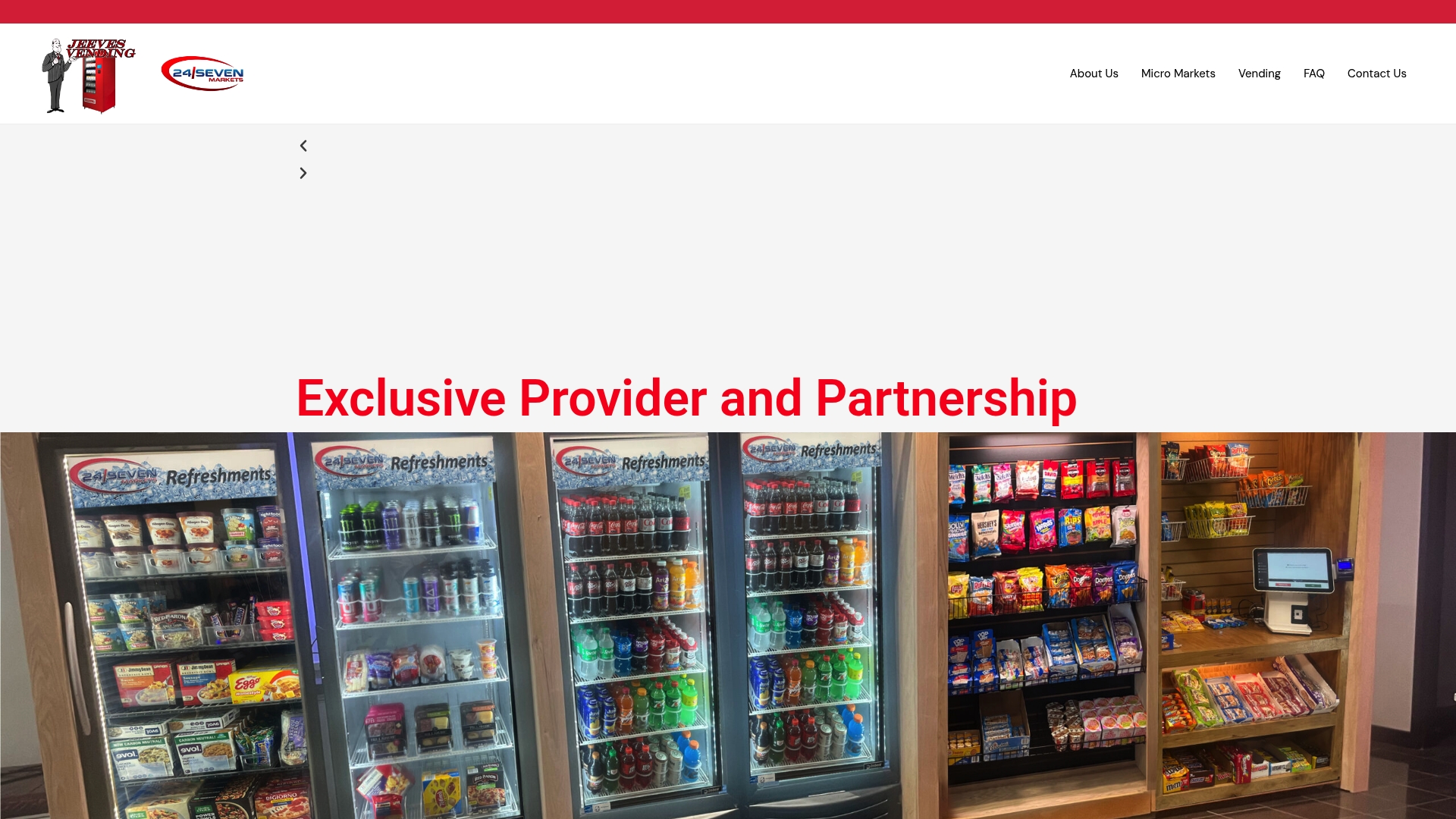
Every Jeevesvending partnership includes professional liability coverage, defined service response times, and product selections tailored to your workforce. Whether you manage an office, a healthcare facility, or a large warehouse, Jeevesvending structures agreements that protect your location and keep your team supplied. Learn more about how vending works or contact Jeevesvending directly to discuss your facility’s needs.
FAQ
What is a vending service agreement?
A vending service agreement is a legal contract between a vending operator and a location owner that defines machine placement, maintenance responsibilities, commission terms, and operational obligations. It protects both parties and sets clear expectations before any equipment is installed.
How long do vending contracts typically last?
Most vending contracts run for an initial term of 1–3 years with automatic renewal clauses requiring 30–90 days’ written notice to terminate. Missing the notice window typically locks both parties into another full contract term.
Who pays for electricity in a vending agreement?
The location owner typically covers electricity costs, which run approximately $30–$50 per month per machine. This arrangement is standard when the operator provides machines at no cost or pays commissions to the location.
What insurance does a vending operator need?
Vending operators should carry a minimum of $1 million in general liability insurance, with the location owner named as an additional insured. In healthcare and regulated environments, insurance verification is often required before installation approval.
What happens if a vending operator does not remove machines after termination?
Without a written removal clause, equipment can be legally declared abandoned, which complicates asset recovery for the operator and creates logistical problems for the location owner. Contracts should specify a 14–30 day removal window after termination to prevent this outcome.