
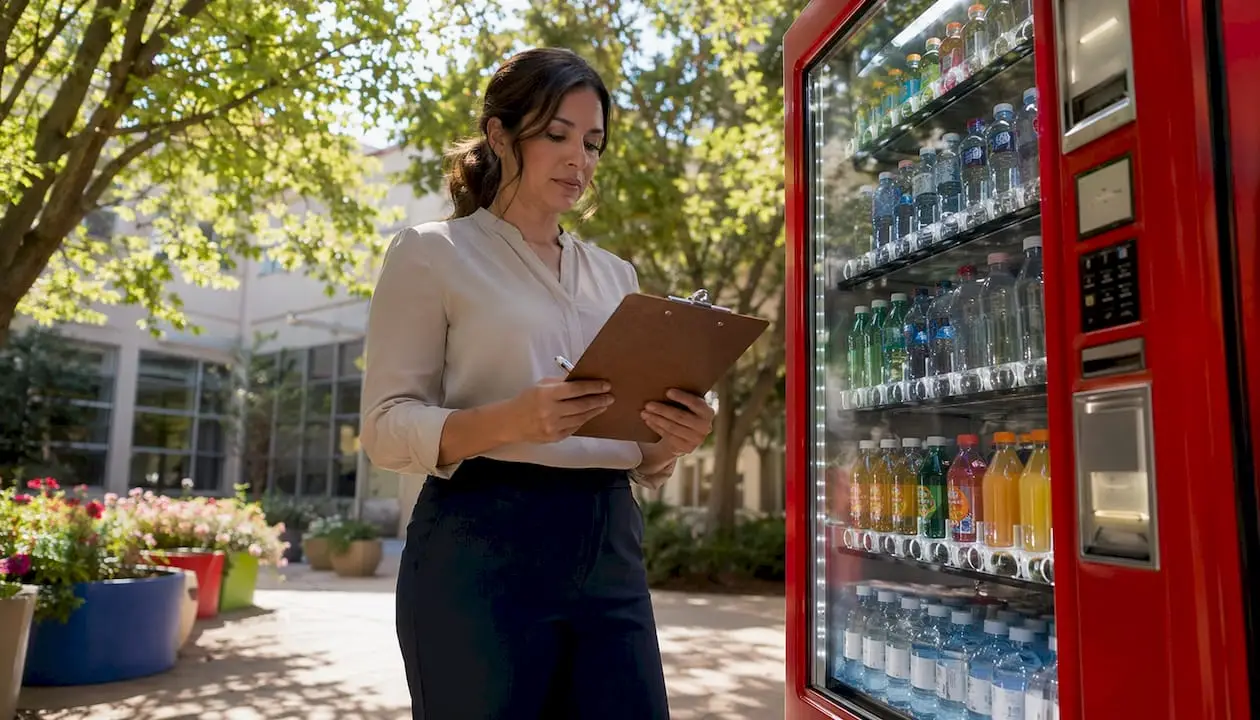
Healthy beverage options in school vending machines are defined as drinks that meet USDA Smart Snacks in School nutrition standards while appealing to student tastes and supporting daily hydration. The right product mix does more than satisfy a federal checklist. It shapes drinking habits students carry for life. Parents and school administrators who understand both the compliance requirements and the placement strategies behind healthy beverage options for school vending will see better results than those who focus on rules alone. This article covers the standards, the best drink categories, and the setup strategies that actually move product.
1. What are the USDA Smart Snacks standards for school vending beverages?
The USDA Smart Snacks in School program sets the federal floor for every beverage sold in student-accessible vending machines during the school day. Compliance is mandatory for all K-12 schools participating in federal meal programs. Staff-only vending areas are exempt from these rules.
The standards define which beverage categories are allowed:
- Plain water: No calorie limit. No added sugars, sweeteners, or sodium.
- 100% fruit or vegetable juice: Must be 100% juice with no added sweeteners. Portion sizes are capped to meet calorie limits.
- Low-fat and fat-free milk: Unflavored or flavored, meeting fat and calorie thresholds.
- Nondairy milk substitutes: Such as soy or oat milk, meeting the same calorie and fat criteria as dairy.
- Juice-water blends: Must meet the calorie and sugar criteria; no added sweeteners permitted.
Beverages that are explicitly prohibited include regular soda, sweetened sports drinks, coffee drinks, energy drinks, and any juice product that is not 100% juice. State-level rules can be stricter. Connecticut, for example, publishes its own vending machine requirements for schools that reinforce and extend federal standards.
Pro Tip: Check your state’s department of education website for a local vending compliance checklist. State rules sometimes restrict serving sizes or add labeling requirements that federal standards do not cover.
2. Top healthy beverage categories to stock in school vending machines
A well-stocked machine offers variety within the compliance boundaries. The best low-sugar drinks for school vending fall into five clear categories.
Plain and sparkling water
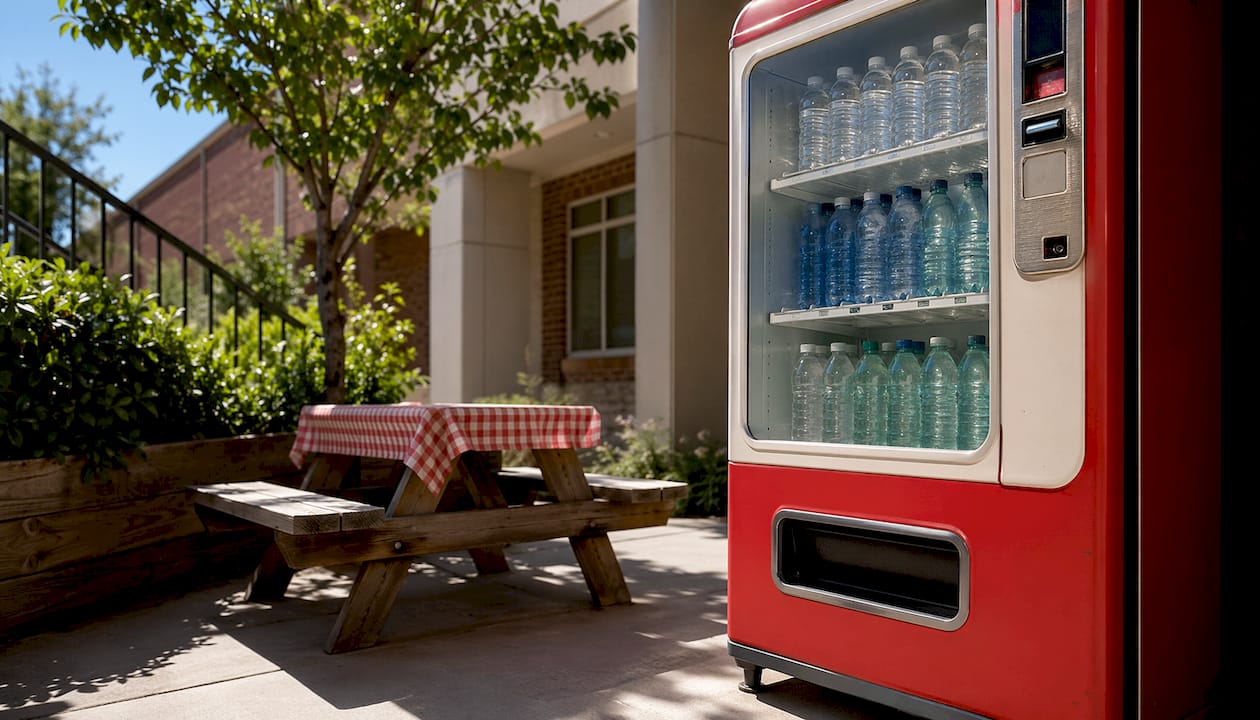
Plain bottled water is the single most compliant and universally accepted option. Sparkling water with no added sugars, such as Spindrift, LaCroix, or Bubly, gives students a fizzy alternative without violating calorie or sugar limits. These options also appeal to students who find still water boring, which matters for actual purchase rates.
Low-sugar functional beverages
Unsweetened teas, electrolyte waters, and flavored waters with zero added sugars qualify as low-sugar vending selections. Brands like Hint Water and Bai offer fruit-flavored options with minimal or no added sugar. These drinks address the student preference for flavor without crossing into the sweetened beverage category that Smart Snacks rules prohibit.
100% fruit juices
One hundred percent juice is allowed, but portion control is critical. Calorie caps under Smart Snacks mean that standard 12-ounce juice bottles often exceed the limit. Stock 6-ounce or 8-ounce portions to stay compliant. Apple, orange, and grape juices in smaller sizes are practical choices that students recognize and reach for.
Low-fat milk and nondairy alternatives
Low-fat white milk and fat-free flavored milk meet Smart Snacks criteria and deliver protein and calcium alongside hydration. Nondairy options like unsweetened oat milk or soy milk serve students with lactose intolerance or dietary preferences. These are especially strong choices for middle and high school machines where students may skip breakfast.
Emerging functional drinks
Cactus water and lightly sweetened kombucha are gaining traction among health-conscious students. Kombucha must be checked carefully for sugar content before stocking, as some varieties exceed Smart Snacks thresholds. When a compliant version is available, it adds novelty that keeps students engaged with the machine.
Beverages to avoid entirely include regular soda, sweetened sports drinks like standard Gatorade formulations, coffee drinks, and any juice blend that is not 100% juice. These items conflict directly with federal nutrition standards and expose the school to compliance risk.
3. How to optimize vending machine setup to promote healthy beverage choices
Product selection alone does not drive healthy purchases. Placement, pricing, and signage determine what students actually buy. A strong beverage mix allocates 25%–35% of vending inventory to water and low-sugar functional drinks. That proportion keeps the machine compliant while leaving room for juice and milk options.
The following setup strategies increase healthy selection rates:
- Eye-level placement: Position water, sparkling water, and low-sugar functional drinks at eye level and near the payment panel. Placing healthy items at eye level increases purchase rates measurably compared to bottom-shelf placement.
- Visible calorie counts: Display calorie information clearly on or near each slot. Showing calorie counts prominently encourages students to make more informed choices without requiring any additional instruction.
- Pricing incentives: Price water and low-sugar options lower than other beverages. Even a $0.25 difference shifts student behavior toward the healthier choice.
- Regular restocking: An empty slot for water or sparkling water sends students to the next available option, which may be less nutritious. Consistent restocking keeps healthy options available throughout the school day.
- Balanced variety: Keep some student-preferred options in the mix. Removing all indulgent items often reduces overall machine engagement, which hurts both nutrition goals and the program’s financial sustainability.
The table below shows a recommended product allocation for school beverage vending:
| Beverage category | Recommended share of inventory |
|---|---|
| Water and sparkling water | 25%–35% |
| Low-sugar functional drinks | 15%–20% |
| 100% juice (portioned) | 15%–20% |
| Milk and nondairy alternatives | 15%–20% |
| Compliant variety options | 10%–15% |
Pro Tip: Place the machine itself near a high-traffic area like a gym entrance or cafeteria hallway. Machine placement in visible, convenient spots increases purchase frequency for every category, including healthy beverages.
4. Common challenges and overlooked opportunities in school healthy beverage vending
Student preference for sugary drinks is the most cited barrier to healthy vending success. The fix is not to lecture students. It is to make the healthy choice the easy choice through placement, pricing, and product appeal. A student who sees a cold, fruit-flavored sparkling water at eye level for $1.00 next to a $1.50 option will often choose the water without any nudging.
Inconsistent restocking creates a second, less obvious problem. When healthy options sell out and are not replaced quickly, students default to whatever remains. That pattern reinforces the idea that healthy drinks are less available, which shapes long-term student vending habits in the wrong direction.
School vending machines that align product selection with nutrition education send a consistent message to students. When the machine stocks what the classroom teaches, healthy choices become the norm rather than the exception. Policy alignment between vending programs and nutrition curricula is one of the most underused tools available to school administrators.
Technology offers real solutions to these challenges. Smart coolers with cashless payment systems allow schools to stock perishable items like fresh juice and dairy safely. Digital menus on the machine face display nutrition information in real time, reinforcing the calorie awareness that drives better choices. These features also generate sales data that administrators can use to refine the product mix each semester.
Vending machine marketing on or near the machine should align with the school’s nutrition education goals. Advertising that conflicts with healthy eating messages undermines classroom instruction and confuses students about what good nutrition looks like.
Key Takeaways
The most effective approach to healthy beverage options in school vending combines USDA Smart Snacks compliance, strategic product placement, and a balanced mix that keeps students engaged.
| Point | Details |
|---|---|
| USDA compliance is non-negotiable | All student-accessible vending beverages must meet Smart Snacks calorie, sugar, and fat limits. |
| Water and low-sugar drinks anchor the mix | Allocate 25%–35% of inventory to water and low-sugar functional beverages for best compliance and sales. |
| Placement drives purchases | Eye-level positioning and proximity to payment panels increase healthy beverage selection rates. |
| Pricing incentives work | Pricing water lower than other options shifts student behavior without requiring policy changes. |
| Technology improves outcomes | Smart coolers and digital menus support perishable stocking and real-time nutrition transparency. |
What I have learned about healthy vending in schools
After working with schools across the Dallas-Denton region, the pattern I see most often is administrators who treat healthy vending as a compliance exercise rather than a product strategy. They swap out sodas for water, check the USDA box, and then wonder why students ignore the machine. The compliance part is straightforward. The product strategy is where most programs fall short.
The schools that get it right treat the vending machine like a small retail operation. They think about what students actually want to drink, then find compliant versions of those drinks. A student who loves flavored sparkling water does not feel like they are settling for a healthy option. They just feel like they got what they wanted. That shift in framing changes everything.
Administrative support matters more than most people expect. When a principal actively promotes the vending program and ties it to the school’s wellness policy, student uptake increases noticeably. Student input matters too. Surveying students about which flavors and drink types they prefer before finalizing the product mix costs nothing and produces a machine that actually gets used.
The long-term payoff goes beyond nutrition. Students who drink water and low-sugar beverages during the school day report better focus and fewer energy crashes in the afternoon. That is a benefit administrators can take directly to parents and school boards when making the case for a compliant, well-designed vending program.
— Gary
How Jeevesvending helps schools stock the right beverages
Schools in the Dallas-Denton area have a direct path to USDA-compliant, student-friendly vending through Jeevesvending. Jeevesvending installs modern vending machines at no cost to schools and handles product selection, restocking, and maintenance so administrators can focus on education rather than inventory.
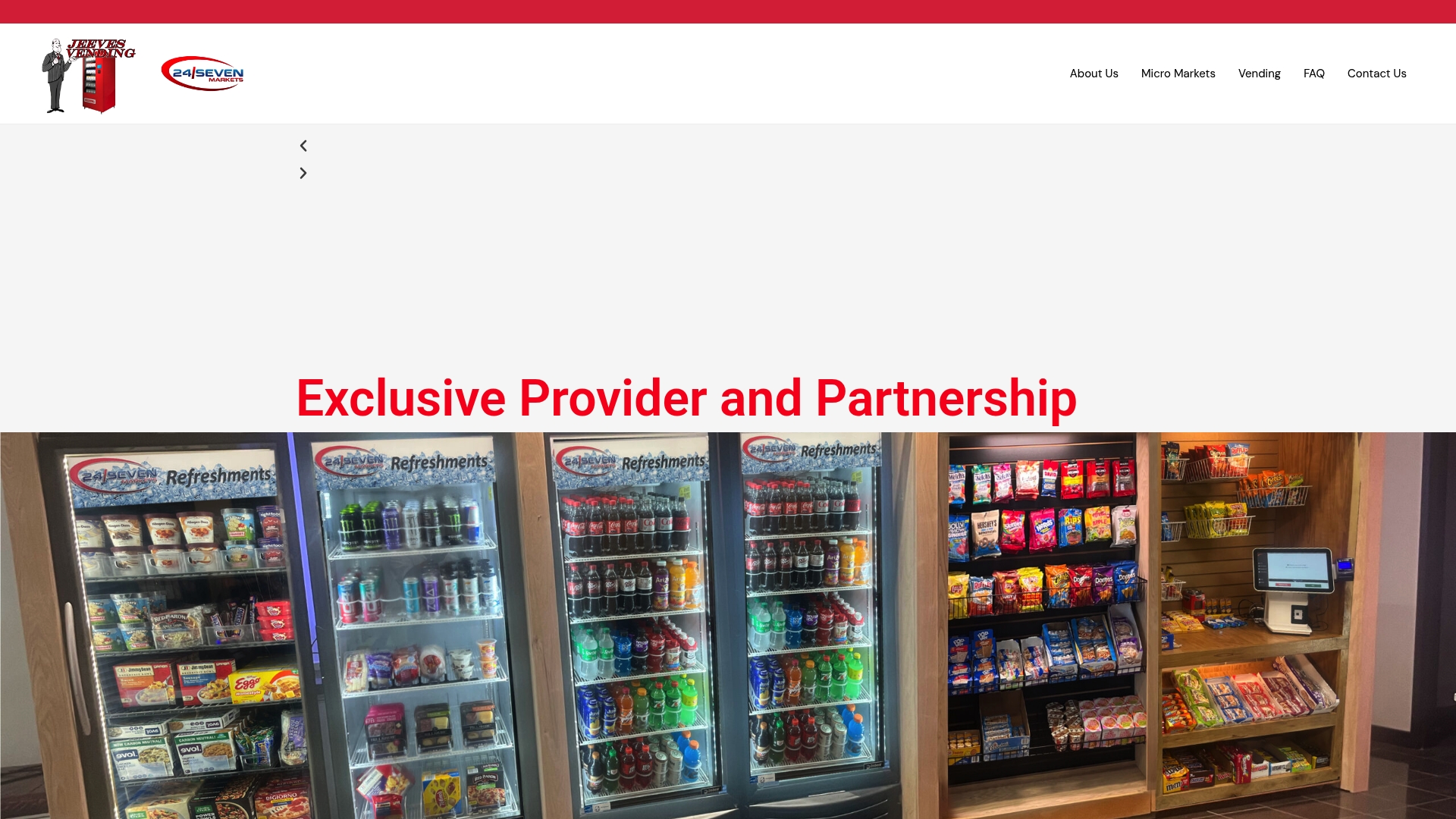
Jeevesvending’s school vending solutions include beverage mixes built around Smart Snacks standards, with water, low-sugar functional drinks, 100% juice, and milk options stocked at the right proportions. Smart cooler technology keeps perishable items fresh and cashless payment makes the experience convenient for students. If your school is ready to upgrade its vending program, contact Jeevesvending to discuss a product mix and placement plan built for your campus.
FAQ
What beverages are allowed in school vending machines?
Allowed beverages under USDA Smart Snacks standards include plain water, 100% fruit or vegetable juice, low-fat milk, nondairy milk substitutes, and juice-water blends that meet calorie and sugar limits. Soda, sweetened sports drinks, energy drinks, and coffee drinks are prohibited.
What does a low-sugar vending selection mean for schools?
A low-sugar vending selection means beverages with no added sugars or sweeteners, such as plain water, sparkling water, and unsweetened teas, that comply with Smart Snacks calorie and sugar thresholds. These options support student hydration without contributing to excess sugar intake during the school day.
How much of a school vending machine should be healthy beverages?
A well-performing school vending machine allocates 25%–35% of its beverage inventory to water and low-sugar functional drinks, with additional slots for 100% juice and milk. This balanced product mix supports compliance and maintains student engagement.
Do USDA vending rules apply to staff vending machines?
No. USDA Smart Snacks standards apply only to vending machines accessible to students during the school day. Staff-only vending areas are exempt from these nutrition requirements.
How can schools encourage students to choose healthy drinks?
Placing healthy beverages at eye level, pricing them lower than other options, and displaying calorie counts prominently are the three most effective strategies. Point-of-purchase signage and alignment with nutrition education programs reinforce healthy habits beyond the machine itself.