
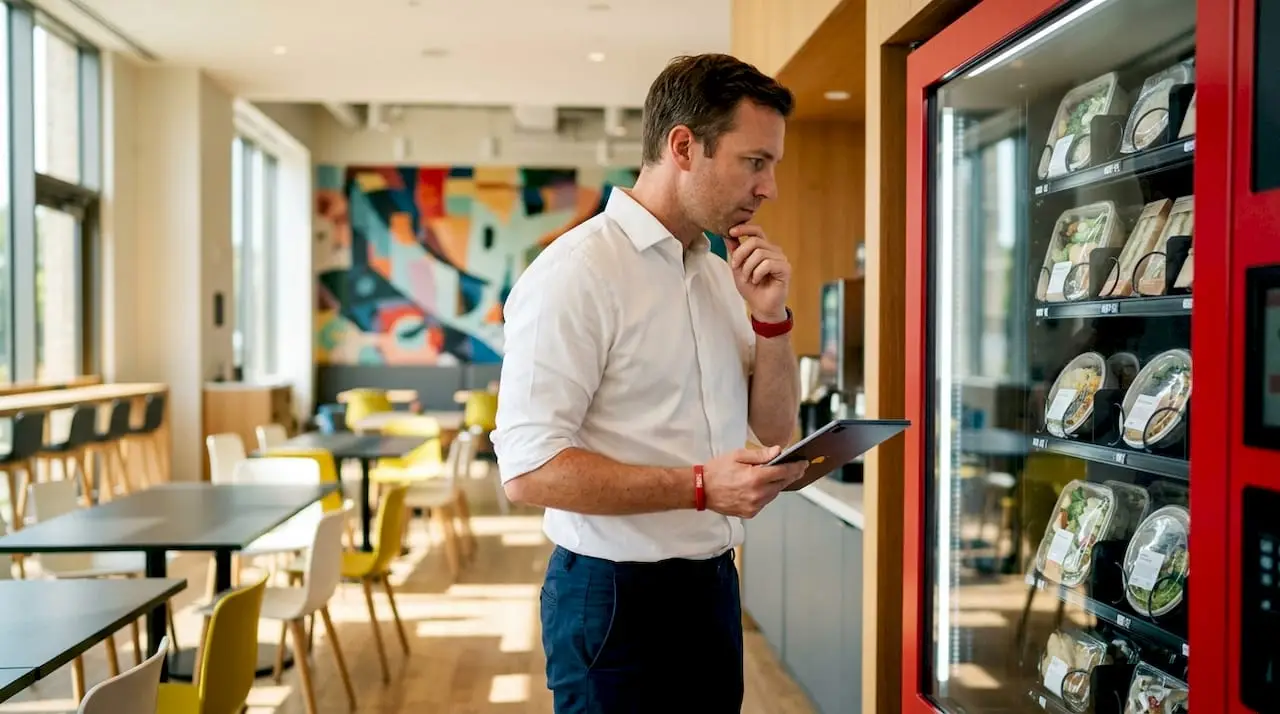
Meal gap vending is defined as the automated delivery of fresh, hot meals through smart vending machines during hours when traditional dining services are closed. The concept fills a real operational void: night shifts, weekends, and early mornings when cafeterias are dark but employees still need to eat. These machines store meals at 0–4°C and reheat them in 30–60 seconds using microwave or convection technology. The industry term for this category is “hot meal vending” or “automated food service,” and understanding what does meal gap vending mean gives business owners and facility managers a clear path to improving employee satisfaction without adding kitchen staff.
What does meal gap vending mean for your facility?
Meal gap vending is the practice of placing automated food service machines in locations where staffed dining is unavailable or cost-prohibitive. The “gap” refers specifically to the hours, shifts, or days when a cafeteria is closed but occupants still need a real meal, not just a bag of chips. Hospitals running overnight, logistics hubs operating on Sunday mornings, and university buildings open during semester breaks all share this same problem.
The standard industry framing positions these machines as automated dining solutions rather than oversized snack dispensers. That distinction matters because it changes how you evaluate them. You are not comparing a vending machine to a candy bar rack. You are comparing it to a staffed food station that costs money every hour it operates.
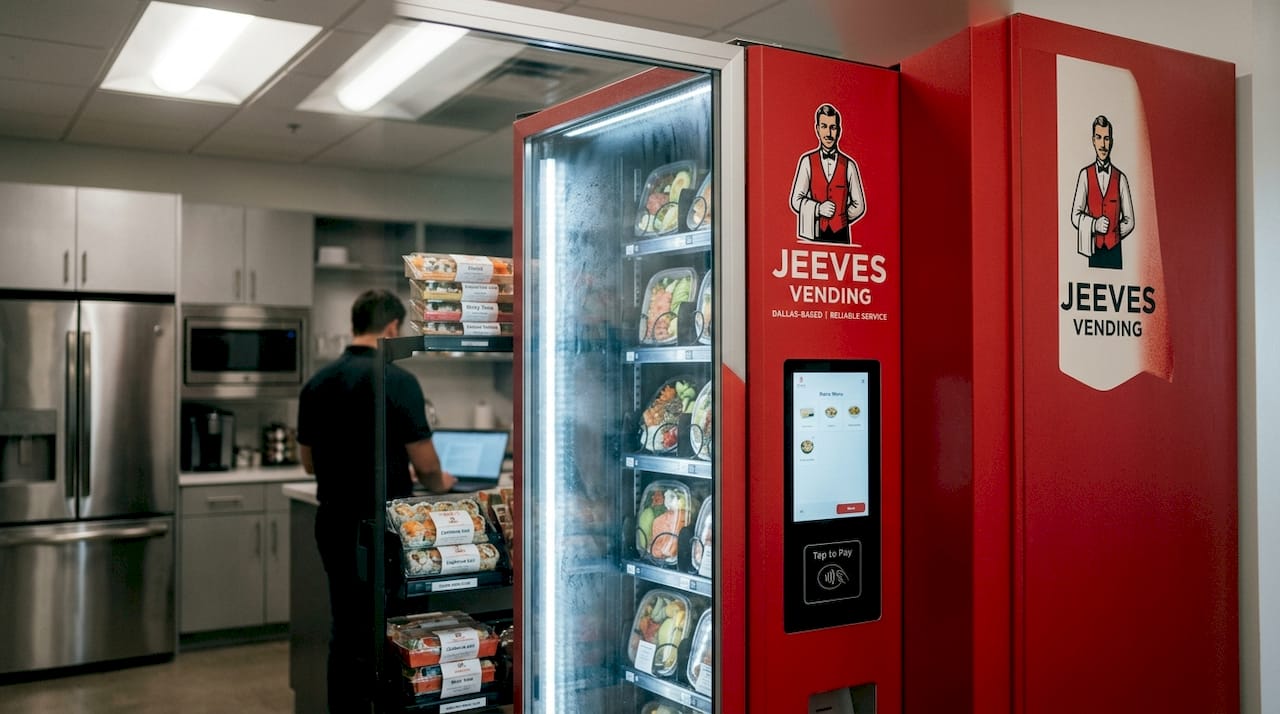
Jeevesvending works with businesses in the Dallas-Denton region to place exactly this type of equipment, from offices and hospitals to gyms and schools, at no cost to the facility. The model makes meal gap vending accessible even for organizations that cannot justify a capital equipment purchase.
How does meal gap vending technology work?
The core technology combines two systems: refrigerated storage and rapid on-demand heating. Meals sit at 0–4°C until a customer selects one. The machine then applies microwave, convection, or induction heat and delivers a hot meal within 60 seconds. That speed matters because it matches the pace of a quick-service restaurant without requiring any staff.
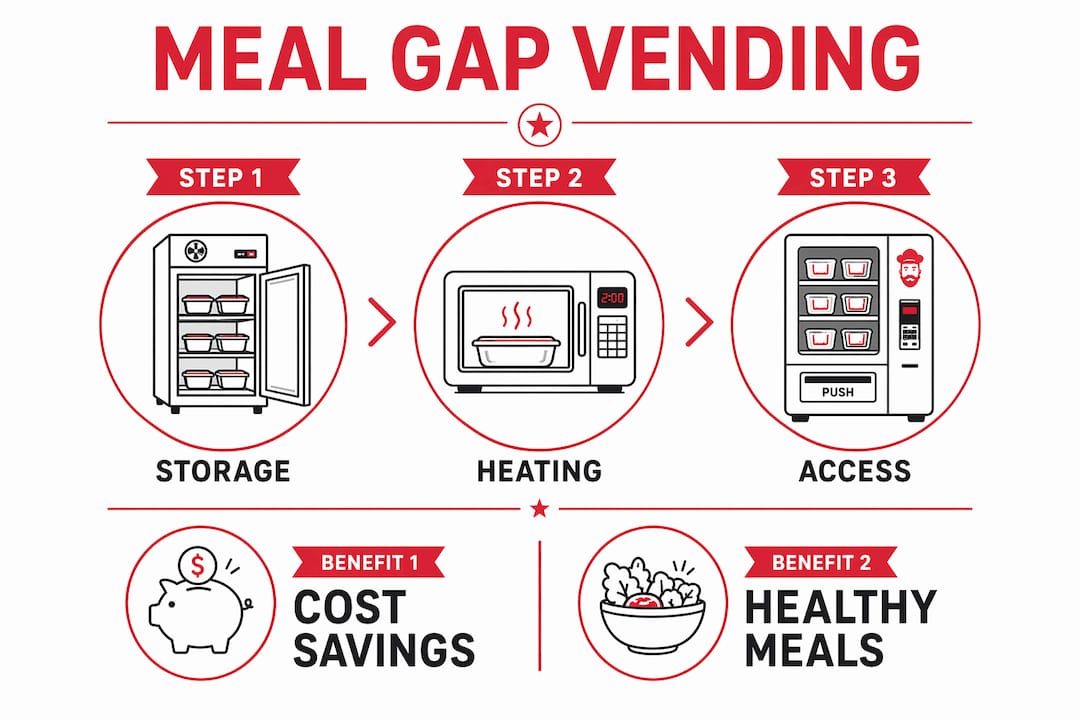
Beyond the heating element, modern machines run on telemetry software that tracks inventory in real time. Operators can monitor stock levels, adjust pricing remotely, and receive alerts when a product approaches its expiration date. FIFO dispensing (first-in, first-out) ensures older stock moves before newer stock, reducing waste. Automated health locks shut the machine down if internal temperatures breach safe thresholds, a non-negotiable feature for food safety compliance.
Here is what separates a true meal gap machine from a standard snack unit:
- Refrigerated compartments holding meals at food-safe temperatures around the clock
- Rapid heating modules delivering hot meals in under 60 seconds
- Telemetry dashboards for remote inventory and expiration management
- Automated health locks that prevent dispensing if temperature safety is compromised
- FIFO mechanisms that rotate stock and reduce spoilage
Pro Tip: Always confirm that any machine you install has an independent temperature alarm that notifies your operator by text or email. A machine that fails silently overnight can create a food safety incident by morning.
The menu possibilities are wider than most facility managers expect. Suitable meal types include pasta dishes, rice bowls, protein-based entrees, soups, and sandwiches, all engineered to reheat evenly and hold their texture.
What are the benefits of meal gap vending for business owners?
The financial case for meal gap vending is straightforward. A staffed cafeteria requires labor, permits, kitchen equipment, and management overhead. A meal gap vending setup operates 24/7/365 without kitchen staff or food service permits. That cost difference is significant for any facility running multiple shifts.
Space is another advantage. These machines fit in corridors, lobbies, and existing break rooms. You do not need to build out a kitchen or dedicate a large footprint. A single machine can serve an entire overnight shift in a warehouse or a hospital wing.
The benefits extend beyond cost savings:
- 24/7 food access eliminates the gap between shift end times and cafeteria hours
- Lower overhead compared to any staffed food service model
- Employee retention support by addressing a basic daily need reliably
- Health-focused menus that meet workforce nutritional expectations better than traditional snack vending
- Flexible placement in underutilized spaces like lobbies, hallways, and break rooms
- Subsidy compatibility allowing HR teams to apply meal credits through existing corporate ID systems
Fresh, healthy meal options command higher price points than traditional vending, which improves the unit economics for operators. That means the machines can deliver real meals at prices comparable to a quick-service restaurant, making them a credible daily option rather than an emergency fallback.
How to implement meal gap vending in your workplace
The first decision is menu selection. Not every food product works in an automated vending environment. Retail-ready meals are specifically engineered for automated heating and refrigerated storage. They maintain texture, flavor, and food safety through the vend cycle. Standard grocery items or frozen meals from a supermarket shelf will not perform consistently and will generate complaints.
Payment integration is the second critical step. Connecting machines to campus cards, corporate ID systems, or existing cashless payment platforms drives adoption. Subsidy programs and meal credits can be loaded directly onto employee or student cards, removing the friction of cash or personal card payments. This approach also allows HR teams to apply food benefits without adding administrative staff.
| Meal type | Suitable for vending? |
|---|---|
| Retail-ready pasta and rice bowls | Yes. Engineered for even reheating and consistent texture. |
| Fresh sandwiches in sealed packaging | Yes. Refrigerate well and require no heating. |
| Standard frozen grocery entrees | No. Inconsistent reheating and poor texture after vending. |
| Soups in sealed containers | Yes. Heat evenly and hold well at serving temperature. |
| Loose or unpackaged items | No. Cannot be dispensed safely or hygienically. |
Restocking frequency depends on your shift volume and menu variety. High-traffic locations like hospital lobbies or large warehouse break rooms may need daily restocking. Lower-volume sites can operate on a two or three day cycle. Build your schedule around freshness windows, not convenience.
Pro Tip: Start with a focused menu of five to eight items rather than filling every slot. A tight, well-curated selection reduces waste, simplifies restocking, and lets you identify which meals your employees actually want before expanding.
How does meal gap vending complement existing dining services?
Meal gap vending is not a replacement for a cafeteria. It is a complement that covers the hours a cafeteria cannot. Facility managers who treat it this way see better outcomes than those who try to use it as a full dining substitute. The machine handles the 10 PM to 6 AM window. The cafeteria handles the lunch rush. Both serve different needs.
The employee experience benefit is real and measurable. Workers on overnight shifts or weekend rotations often cite food access as a quality-of-life issue. Providing a reliable hot meal option signals that the organization values their time and wellbeing. That signal contributes to retention in ways that are harder to quantify but consistently reported by HR teams.
Specific groups that benefit most from meal gap solutions include:
- Night shift workers in hospitals, manufacturing, and logistics
- Campus students and staff during evenings and semester breaks
- Remote office employees in buildings without nearby food options
- Gym and fitness facility members seeking post-workout nutrition
- Warehouse and industrial teams on rotating or extended shifts
Addressing food insecurity through targeted vending programs, especially when connected to subsidy systems, also carries a social impact that aligns with broader employee wellness goals. That is a benefit that goes well beyond convenience.
Key Takeaways
Meal gap vending delivers fresh, hot meals through automated machines during off-hours, giving facility managers a cost-effective way to meet employee food needs without adding staff or building kitchen infrastructure.
| Point | Details |
|---|---|
| Core definition | Meal gap vending fills food access voids during hours when traditional dining is closed. |
| Technology requirements | Machines must combine refrigerated storage, rapid heating, FIFO dispensing, and automated health locks. |
| Menu selection matters | Use retail-ready meals engineered for vending. Standard grocery items fail in automated environments. |
| Payment integration drives adoption | Connecting to campus cards or corporate IDs increases usage and enables subsidy programs. |
| Complement, not replace | Position meal gap vending alongside existing dining services to cover off-peak hours effectively. |
Why most facilities get meal gap vending wrong
Most facility managers I have worked with approach meal gap vending the same way they approach a snack machine purchase. They focus on the equipment spec sheet and ignore the menu. That is the wrong order of operations.
The machine is a delivery mechanism. The meal is the product. I have seen well-specified machines fail within three months because the operator loaded them with standard frozen grocery items that came out rubbery and flavorless. Employees tried them once and never came back. The machine sat half-full and the facility manager concluded that “vending doesn’t work for hot meals.” The machine worked fine. The menu was the problem.
The second mistake is treating the machine as a set-and-forget installation. Meal gap vending requires an active feedback loop. Talk to your night shift employees after the first month. Find out which items they are buying and which they are skipping. Rotate the menu based on that data. A vending machine that gets curated like a restaurant menu outperforms one that gets restocked on autopilot every time.
The facilities that get the most value from meal gap vending treat it as a managed food service program, not a piece of equipment. That mindset shift is the difference between a machine that becomes a daily habit and one that collects dust.
— Gary
Jeevesvending’s approach to meal gap solutions
Business owners and facility managers in the Dallas-Denton area have a direct path to implementing meal gap vending without upfront equipment costs. Jeevesvending installs and maintains modern vending machines at no charge to the facility, handling stocking, maintenance, and technology support so your team stays focused on operations.
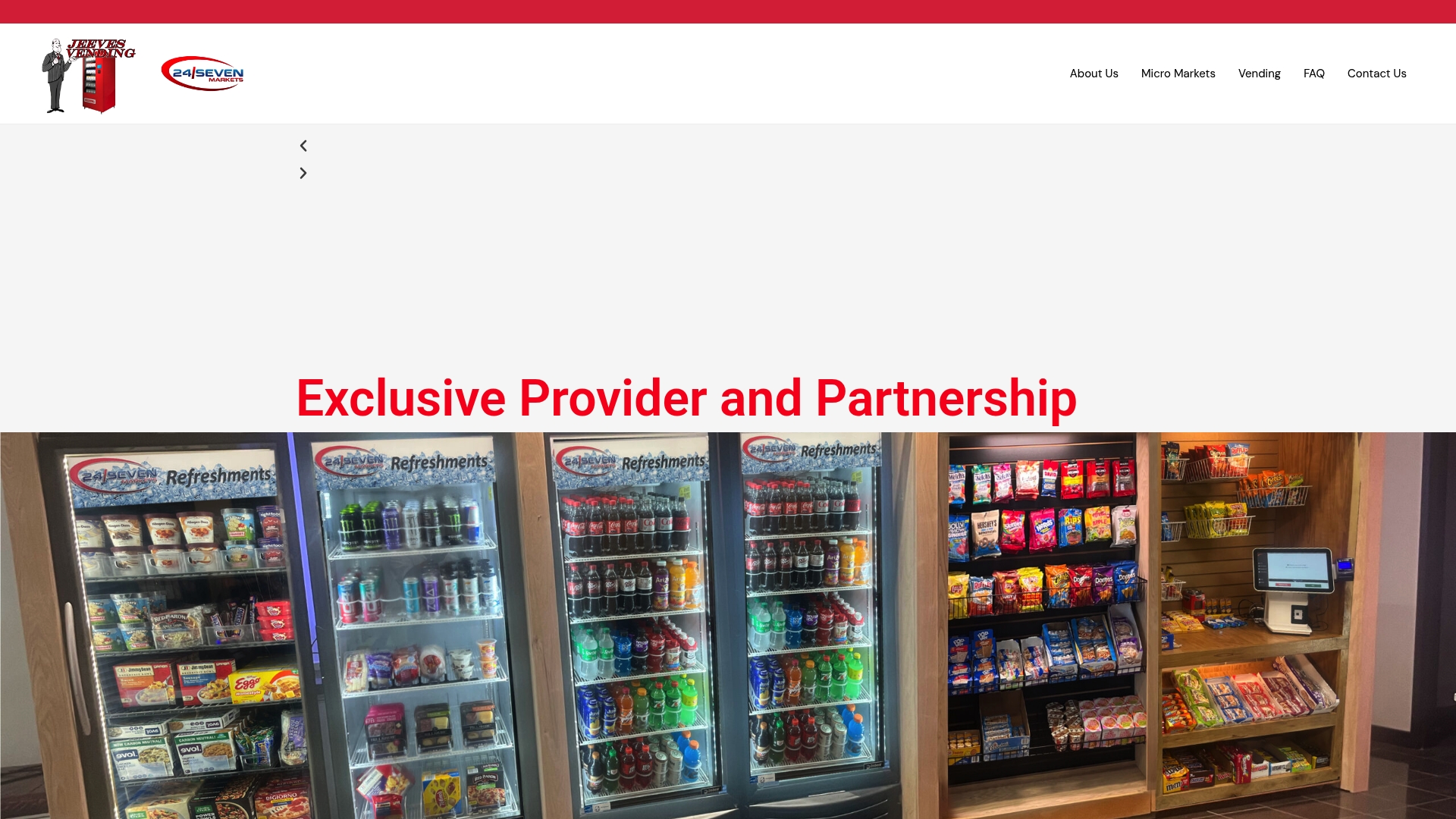
Whether your facility needs coverage for a hospital overnight wing, a warehouse break room, or a corporate office building, Jeevesvending tailors the machine selection and menu to your specific shift patterns and employee base. The office vending setup process is designed to be fast and low-friction. Contact Jeevesvending to discuss what a meal gap vending program would look like for your location.
FAQ
What does meal gap vending mean in simple terms?
Meal gap vending means using automated smart vending machines to provide fresh, hot meals during hours when traditional cafeterias or dining services are closed. The machines store meals at refrigerated temperatures and heat them on demand in under 60 seconds.
How is meal gap vending different from regular snack vending?
Meal gap vending machines include refrigerated storage and rapid heating technology to deliver full meals, not just packaged snacks. They also use telemetry software for remote inventory management and food safety monitoring.
What types of meals work best in a meal gap vending machine?
Retail-ready meals engineered for automated heating perform best, including pasta dishes, rice bowls, soups, and sealed sandwiches. Standard frozen grocery items do not reheat consistently and should be avoided.
Can meal gap vending integrate with employee benefit programs?
Yes. Machines connected to corporate ID systems or campus cards can support meal credits and subsidy programs, increasing employee adoption without adding administrative staff.
Is meal gap vending cost-effective for small facilities?
A single machine can serve an entire overnight shift with no kitchen staff or permits required. Providers like Jeevesvending offer no-cost installation models, making the approach accessible even for smaller facilities with limited capital budgets.