
For a qualified location, the answer is almost always no. Full-service providers like Jeeves Vending install and stock the machine, cover repairs, and set up cashless payment, then recover their cost from what employees or visitors buy, not from your budget. Charges tend to show up only around optional upgrades, custom builds, or lease-style arrangements, which can differ from standard placement.
TL;DR:
- Most full-service vending placements cost nothing upfront because providers own, install, stock, and maintain the machines, earning revenue through sales.
- Charges may arise if you request staff discounts, premium upgrades, custom branding, or lease-specific hardware, which typically involve additional fees.
- Sites must meet traffic, space, power, and approval requirements, with low traffic or restricted access being common reasons for rejection.
- Installation involves site confirmation, delivery, initial stocking, payment setup, and remote monitoring, with repair issues generally handled within the same week.
- Contracts should clarify ownership, restocking frequency, removal rights, and reporting; providers like Jeeves Vending offer free site evaluations and full-service placement.
Table of Contents
- What Does Vending Machine Installation Cost Under a Full-Service Model?
- When Might You Actually Get Billed?
- Does Your Site Qualify for No-Cost Placement?
- How Installation and Ongoing Service Actually Work
- What Should You Ask Before Signing a Placement Agreement?
- Why We Default to Full-Service, No-Cost Placement
- Ready to Find Out If Your Location Qualifies?
- Sources
What Does Vending Machine Installation Cost Under a Full-Service Model?
Under a standard full-service arrangement, the provider owns the machine, pays for delivery and setup, and earns its money back through product sales. That’s the entire business model in one sentence, and it’s why the vending machine installation cost for most qualified hosts sits at $0. You’re not buying equipment or paying a technician; you’re providing the square footage and the foot traffic that makes the machine worth stocking.
A full-service placement typically includes:
- Delivery and physical installation of the machine or micro-market kiosk
- Initial and ongoing product stocking
- Cashless and mobile payment setup
- Routine maintenance and mechanical repairs
- Remote inventory monitoring so restocks happen before shelves go empty
Compare that to leased or rented hardware, where monthly hardware fees commonly run $50 to $250 depending on machine type and contract terms. Lease models shift ownership costs to the host in exchange for more control over branding or machine selection. Full-service placement flips that trade: less control over the exact unit, zero equipment cost.
This is also why vendor language gets slippery. “Rental,” “lease,” and “full-service” get used almost interchangeably in marketing copy, when they describe fundamentally different financial arrangements. Ask any provider to define its terms in writing before you sign anything.
When Might You Actually Get Billed?
Free placement is the default, not a guarantee. A handful of situations can introduce real charges, and knowing them upfront saves you from an awkward invoice later.
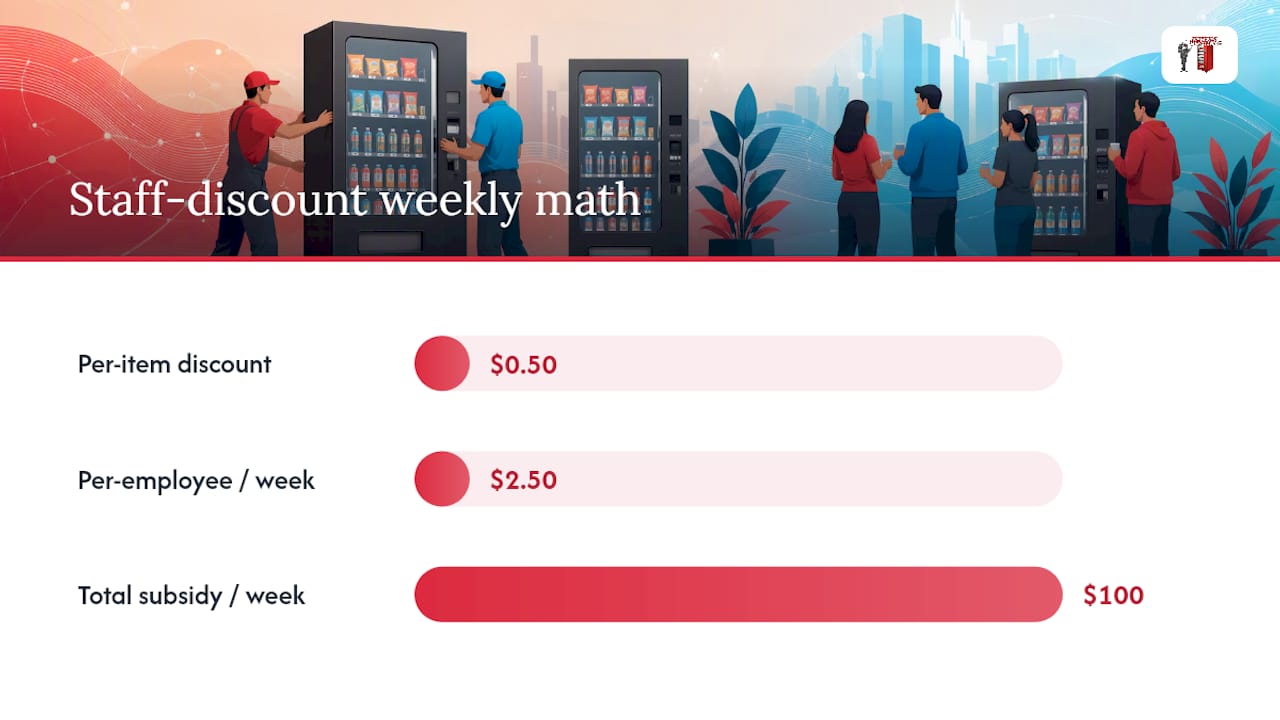
- Staff discount programs. If you want employees to pay less than retail for snacks or drinks, that difference is generally subsidized by the business, rather than the provider.
- Premium micro-market builds. Fresh-food coolers, expanded shelving, or higher-end kiosk hardware sometimes involve cost-sharing, especially in low-traffic locations where the provider’s return is thinner.
- Leased hardware arrangements. If you specifically want a particular machine model or full control over branding, you may end up in a lease structure with a flat monthly fee instead of a revenue-share deal.
- Custom requests. Branded wraps, dedicated electrical hookups, or expedited installation timelines can trigger one-time setup charges, since these fall outside a provider’s standard scope of work.
Repair costs are worth flagging separately. Even outside full-service contracts, industry estimates put preventive maintenance visits around $50 to $150 and minor repairs around $75 to $200, which is roughly what you’d pay a provider directly if you owned the equipment yourself. Full-service agreements fold those costs into the provider’s overhead instead of billing you line by line.
Pro Tip: Get the subsidy math in writing before launching a staff discount. A $0.50 per-item discount across 40 employees buying five times a week adds up faster than most facility managers expect.
Does Your Site Qualify for No-Cost Placement?
Providers won’t place a machine just because you ask. They’re weighing whether your location generates enough sales to justify the equipment and ongoing service, and that evaluation happens during the initial site visit, not after installation.
The core checklist looks like this:
- Foot traffic and headcount. Most vendors want a threshold of daily potential buyers, whether that’s employees, students, gym members, or patients and visitors.
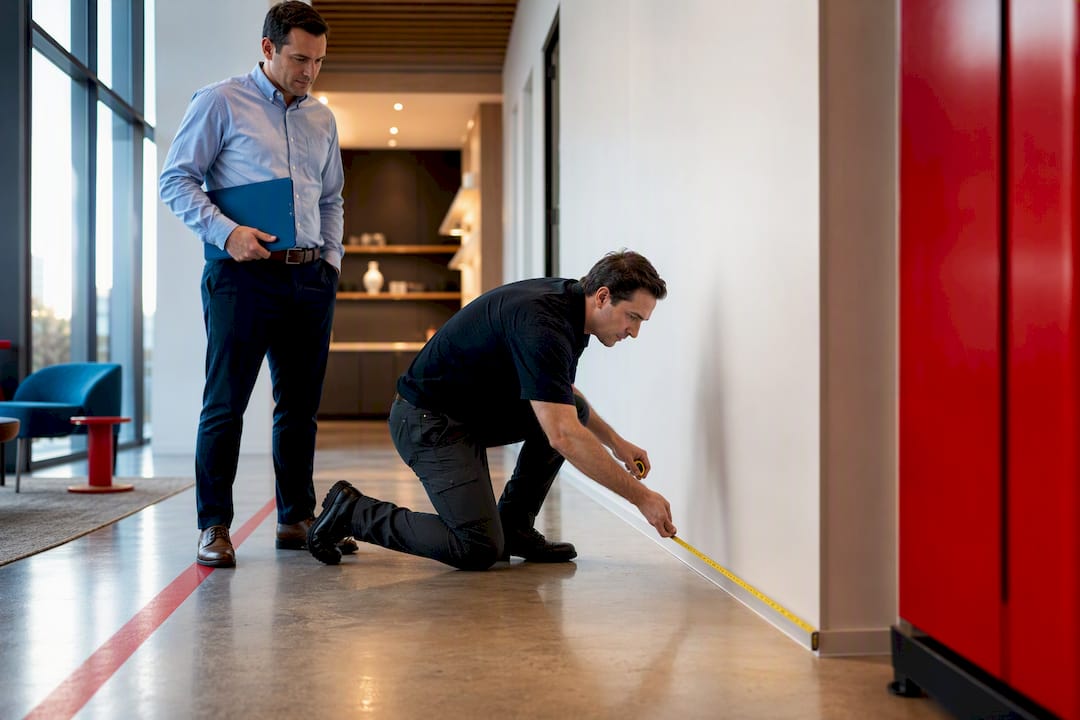
- Space and access. Enough floor area for the unit, a doorway wide enough for delivery, and clearance for restocking carts.
- Power and connectivity. A dedicated outlet (coolers pull more current than a standard household plug handles well) plus cell or Wi-Fi signal strong enough to support cashless payment terminals.
- Approvals. Landlord sign-off if you lease your space, and confirmation that your insurance policy covers third-party equipment on-site.
Low turnover or restricted access are the two most common reasons a provider declines free placement. If your break room sees light traffic, ask specifically what threshold you’re missing. Our own placement requirements checklist walks through the same factors a site visit covers.
How Installation and Ongoing Service Actually Work
Installation day itself is fast, but the real value shows up in the weeks after; considering commercial ice makers can be crucial for beverage and cold-chain equipment needs during installation. Here’s the typical sequence:
- Site visit. A technician confirms space, power, and traffic assumptions before scheduling delivery.
- Delivery and placement. The machine or micro-market kiosk gets positioned, leveled, and connected to power.
- Initial stocking. Shelves get filled based on expected buyer preferences, often adjusted after the first few weeks of sales data.
- Payment setup. Cashless and mobile payment systems get configured on-site, since most modern workplace vending defaults to card and mobile tap rather than cash-only.
- Ongoing monitoring. Remote inventory sensors flag low stock before shelves go empty, which usually drives restocking cadence rather than a fixed weekly schedule.
Repair response typically splits into two tiers: minor issues (a jammed coil, a card reader glitch) get same-week attention, while major mechanical failures may trigger a swap unit rather than an on-site fix. Ask your provider for sales and inventory reporting access; most full-service contracts include some level of dashboard or periodic report so you can see what’s actually moving.
What Should You Ask Before Signing a Placement Agreement?
A good agreement protects you from surprise charges just as much as it guarantees free installation. Before you sign anything, get clear answers on:
- Who owns the equipment, and what happens to it if you terminate the contract early
- Restocking frequency and what counts as an acceptable repair response window
- Cleanliness and pest control responsibilities, especially for food-adjacent micro-markets
- Exactly which scenarios (staff discounts, premium upgrades, custom builds) would trigger a bill
- What reporting you’ll receive and who your day-to-day point of contact is
Removal rights and insurance coverage deserve extra scrutiny. Confirm in writing that you can request equipment removal without penalty and that the provider’s liability coverage protects you if the machine damages your floor or a customer has an issue with a product.
Pro Tip: Request a sample of the actual reporting dashboard before signing, not just a description of it. What “monthly sales reports” means varies wildly between providers, and you want to know if you’re getting real numbers or a vague summary.
Why We Default to Full-Service, No-Cost Placement
Jeeves Vending places and services machines and micro-markets at no upfront cost to qualified hosts across the Dallas-Denton region, covering everything from delivery through ongoing maintenance. We work across offices, schools, hospitals, and gyms, and the model holds regardless of setting: strong site fit means the equipment pays for itself through sales, not through your budget. That’s the arrangement we think most facility managers should expect as the baseline, not the exception.
— Gary
Ready to Find Out If Your Location Qualifies?
If your break room, gym floor, or waiting area gets steady traffic, there’s a good chance the honest answer to “what will this cost me” is nothing. Jeeves Vending evaluates sites for free, and if you qualify, installation, stocking, and service come at no charge under our full-service placement program.
Getting started takes three steps: share your headcount and a few photos of the proposed space, schedule a quick site visit, and review a placement proposal that spells out contract terms before you commit to anything. If you’re weighing a machine against a self-checkout setup, our micro-markets page breaks down how that model works for larger teams. Ready to see what your site qualifies for? Reach out to Jeeves Vending and get a straight answer, not a sales pitch.
Sources
- How much does it cost to rent a vending machine
- Vending Machine Service Cost: 2026 Pricing Guide | Kwote Advisor