

Optimal vending machine placement is the single biggest factor separating a profitable warehouse vending program from one that collects dust in a corner. This warehouse vending machine location guide covers the criteria, layout strategies, and contractual details facility operators need to get placement right the first time. Warehouse vending generates stable, predictable revenue year-round because staffing and shift patterns stay consistent, unlike seasonal industries. The decisions you make before installation determine whether workers actually use the machines or walk past them every shift.
What makes a good warehouse vending machine location?
The foundation of any vending machine site selection process is foot traffic. High-performing warehouse vending locations need at least 50–100 daily employees for a standard machine to be commercially viable. Below that threshold, a single machine may not turn over product fast enough to justify restocking frequency.
Facility size and headcount together determine how many machines you need and where to put them. The table below shows the recommended machine count by warehouse size, based on industry placement standards.

| Facility size | Recommended machines | Best setup type |
|---|---|---|
| Under 25,000 sq ft | 1–2 machines | Single break area cluster |
| 25,000–50,000 sq ft | 2–3 machines | Break area plus one satellite |
| 50,000–100,000 sq ft | 3–5 machines | Multiple zones |
| 100,000+ sq ft | 5+ machines | Micro-market plus satellites |
Sites with 75 or fewer employees do best with standard vending machines. Facilities with 75–250 employees suit hybrid setups that mix standard machines with a small open-shelf market. Warehouses with 250+ employees warrant full micro-markets generating $8,000–$15,000 per month. That revenue potential makes the case for investing in proper placement planning.
Shift structure matters as much as headcount. A facility running two or three shifts has workers on site around the clock, which multiplies transaction volume and makes every machine work harder. Single-shift operations concentrate demand into a narrow window, so placement near the main exit route captures the most traffic.
- Prioritize locations where workers naturally congregate during breaks
- Confirm there are limited or no off-site food options within walking distance
- Account for shift overlap periods when traffic spikes sharply
- Check whether the facility has a captive workforce with no canteen access
Pro Tip: Walk the floor during a shift change and count how many workers pass each proposed spot in a 10-minute window. That count predicts machine performance better than any floor plan estimate.
How to place vending machines inside a warehouse layout
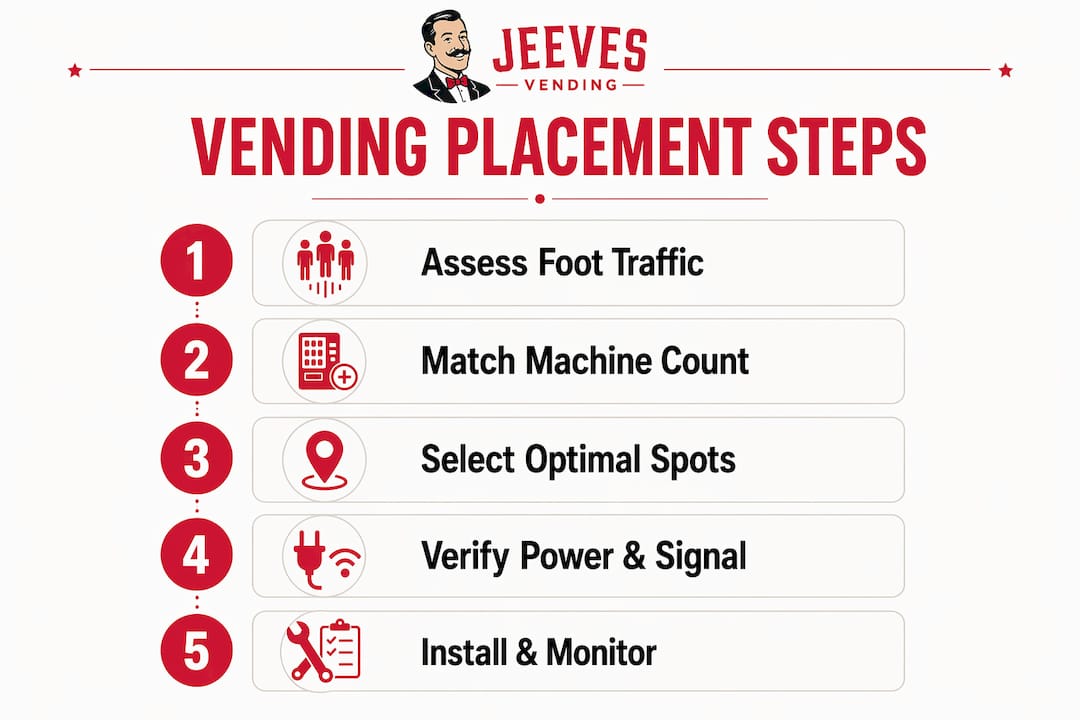
Strategic placement within a warehouse follows a hub-and-spoke model. The primary break room serves as the main vending hub, and satellite machines extend coverage to production floors. Facilities over 100,000 sq ft need 5+ machines across multiple zones so no worker walks more than a few minutes to reach one.
Follow these steps when selecting exact spots inside the facility:
- Map the break areas first. Place the highest-capacity machine in the main break room. Workers spend the most time there, and visibility is highest.
- Identify production floor chokepoints. Find the spots where workers naturally pause between tasks, near time clocks, locker rooms, or staging areas. These are your satellite locations.
- Check lighting and visibility. A machine tucked behind shelving or in a dim corner will underperform. Placement visibility and accessibility drive machine performance more than product selection alone.
- Avoid forklift lanes and heavy equipment paths. Machines must be protected from forklift damage and placed away from equipment traffic. Recessed wall placements or protective bollards prevent costly repairs and safety violations.
- Confirm power and connectivity at the exact spot. Do not assume a nearby outlet will work. Metal warehouse walls interfere with wireless signals, and shared circuits may not support machine power draw.
- Verify clearance from emergency exits. OSHA clearance requirements prohibit blocking exit routes. A machine placed too close to an emergency door creates a compliance issue and a liability.
Pro Tip: Bring a phone or tablet to the proposed spot and run a speed test before committing to the location. Metal walls and racking systems kill wireless signal in ways that are impossible to predict from a floor plan alone.
For beverage vending in warehouse settings, the same hub-and-spoke logic applies, but hydration machines near physically demanding work zones see significantly higher transaction rates than snack machines in the same spots.
What should warehouse vending contracts include?
Vending contracts in warehouse settings follow a fairly standard structure, but the details matter. Warehouse vending contracts typically include 60–90 day termination notices and 24-hour repair response SLAs. Those terms exist because a 24/7 operation cannot afford a machine sitting broken for three days.
Key contract terms to review and negotiate:
- Termination notice period. A 60-day notice protects you if the service underperforms. Push back on anything longer than 90 days.
- Repair response SLA. A 24-hour repair guarantee is the industry standard for warehouse accounts. Confirm it is written into the agreement, not just verbal.
- Commission structure. Commission models range from 0% to 5–8% of gross sales in warehouse settings. A 0% model means the operator keeps all revenue; a commission model returns a percentage to your facility.
- Restocking frequency. Multi-shift operations need more frequent restocking than single-shift sites. Confirm the schedule matches your workforce’s consumption patterns.
- Machine placement rights. Negotiate the right to approve final machine placement before installation. This prevents the operator from choosing a low-traffic spot that is easier for their route driver.
For a detailed breakdown of how these agreements work, the vending service agreement guide from Jeevesvending covers SLA terms, commission structures, and termination clauses in plain language.
How do you avoid common warehouse vending placement mistakes?
The most common placement error is choosing a spot based on convenience for the installer rather than convenience for the worker. Low-visibility locations and difficult-access corners consistently underperform, regardless of product quality.
Facility operators confirm that strategic placement in visible, accessible locations determines machine success more than product selection alone. A well-stocked machine in the wrong spot will always lose to a basic machine in the right one.
Specific pitfalls to avoid:
- Placing machines near forklift traffic. Impact damage from forklifts is common in warehouse environments. Bollards or recessed placements are not optional in active material-handling zones.
- Ignoring power circuit capacity. A standard vending machine draws 5–10 amps continuously. Sharing a circuit with other equipment causes tripped breakers and machine downtime.
- Skipping the wireless connectivity test. Testing power and wireless signal at the exact proposed spot before installation prevents post-install failures. Metal racking and concrete walls create dead zones that appear fine on a building schematic.
- Underestimating vibration effects. Heavy equipment operating nearby causes constant vibration that loosens internal machine components over time. Keep machines at least 20 feet from compressors, presses, or conveyor systems.
- Blocking emergency exit routes. Any machine within the required clearance zone of a fire exit creates an OSHA violation. Confirm clearance requirements with your safety officer before finalizing any location.
A distributed vending setup across multiple zones solves the single-point-of-failure problem. If one machine goes down for maintenance, workers still have access elsewhere in the facility.
Best practices for multi-floor and large warehouse vending setups
Large and multi-level warehouses require a planned distribution strategy, not just more machines. Multi-shift operations multiply vending transaction potential, so machine placement must account for time-of-day access and night crew needs.
The cluster-plus-satellite model works best for facilities over 50,000 sq ft. Place a primary cluster of two to three machines in the main break room, then add satellite units near the highest-activity production zones. For facilities over 100,000 sq ft, a central micro-market plus satellite machines minimizes lost break time and increases employee satisfaction.
| Facility type | Primary placement | Satellite placement |
|---|---|---|
| Single-floor, under 50k sq ft | Main break room | Near time clock or exit |
| Single-floor, 50k–100k sq ft | Break room cluster | Production floor zones |
| Multi-floor facility | Each floor break area | Stairwell or elevator landings |
| 100k+ sq ft, multi-shift | Central micro-market | Active zone satellites |
Night shift workers often have no access to on-site food service when the cafeteria closes. Machines placed in zones accessible to night crews address a real retention and safety gap, not just a convenience preference. Mapping machines by shift zone rather than by floor plan alone ensures every crew has coverage.
Pro Tip: Ask your shift supervisors which zones see the most worker clustering during breaks. Their answer will differ from what the floor plan suggests, and their answer is the one that matters.
For multi-floor warehouse vending placement, Jeevesvending recommends treating each floor as its own zone with independent machine coverage rather than relying on workers to travel between levels during a 15-minute break.
Why placement conversations belong with operations, not HR
The standard pitch for a new vending program goes to HR. That is the wrong room. Operations and facilities managers control site safety, shift productivity, and worker movement patterns. They are the ones who know which zones are active at 2:00 AM and which corridors see the most foot traffic during shift changes.
Framing vending machines as a retention and safety tool lands differently with an operations manager than a benefits pitch lands with HR. Night shift workers without food access are a real operational risk. Fatigue from low blood sugar affects safety performance, and workers who leave the facility to find food during breaks create both a security and a productivity problem. That framing gets machines approved faster and placed better.
The negotiation for a high-visibility spot also goes better with operations. An operations manager who understands the safety and productivity argument will advocate for a prominent placement. An HR contact will defer to whoever handles facilities, adding a step and losing momentum.
Post-installation, maintain the relationship with the operations team. They will tell you when a machine is consistently empty before the restock schedule, when a zone is being reorganized, or when a new shift is being added. That information lets you adjust placement and product mix before performance drops.
— Gary
Jeevesvending can help you get placement right
Warehouse vending placement works best when a service partner handles the site assessment, machine matching, and ongoing maintenance. Jeevesvending provides vending machines and micro-markets at no cost to businesses in the Dallas-Denton region, including full installation and restocking support.
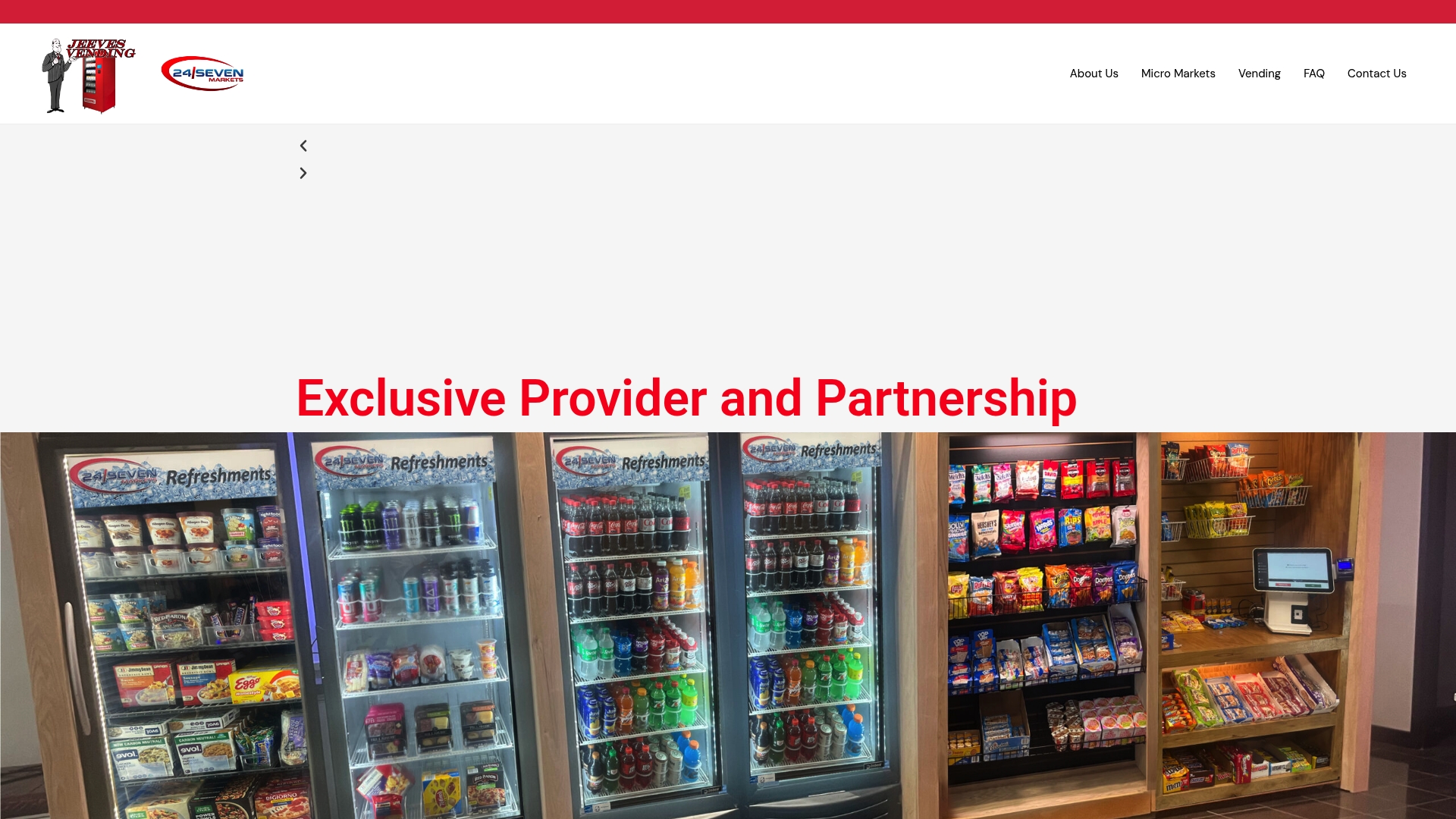
Jeevesvending conducts free walkthrough assessments to identify the best locations in your facility based on headcount, shift patterns, and floor layout. Their team handles power and connectivity checks, machine sizing, and contract terms so you are not navigating those details alone. For large facilities, micro-market solutions provide a full self-checkout food and beverage station that outperforms standard machines in high-traffic environments. Contact Jeevesvending to schedule a free site walkthrough and get a placement plan built around your specific facility.
FAQ
How many vending machines does a warehouse need?
Machine count scales with facility size: 1–2 machines for facilities under 25,000 sq ft, and 5+ machines for facilities over 100,000 sq ft. Headcount also matters, with 50–100 daily employees as the minimum threshold for a single machine to perform well.
Where is the best spot for a vending machine in a warehouse?
The main break room is the highest-performing location in most warehouses. Secondary spots near time clocks, locker rooms, and production floor chokepoints capture additional traffic from workers who cannot reach the main break area during short breaks.
What should I check before installing a vending machine in a warehouse?
Test the power outlet capacity and wireless signal strength at the exact proposed location before installation. Metal walls and racking systems create connectivity dead zones, and shared circuits can cause machine downtime if they are already near capacity.
Do warehouse vending machines need special protection?
Machines placed near forklift traffic require protective bollards or recessed wall placements to prevent impact damage. Vibration from nearby heavy equipment also causes internal component wear over time, so maintain at least 20 feet of separation from compressors and conveyor systems.
What commission should a warehouse facility expect from a vending contract?
Commission models in warehouse vending range from 0% to 5–8% of gross sales. A 0% model means the operator retains all revenue; a commission model returns a percentage to the facility. Always confirm the commission structure and repair SLA in writing before signing.
Key takeaways
Optimal warehouse vending placement requires matching machine count to facility size, protecting machines from operational hazards, and positioning units where workers naturally gather during breaks.
| Point | Details |
|---|---|
| Match machines to facility size | Use 1–2 machines for small sites and 5+ for facilities over 100,000 sq ft. |
| Use the hub-and-spoke model | Place primary machines in break rooms and satellite units near active production zones. |
| Protect machines from forklifts | Install bollards or use recessed placements in any zone with forklift or heavy equipment traffic. |
| Test power and connectivity first | Confirm outlet capacity and wireless signal at the exact spot before committing to installation. |
| Engage operations, not just HR | Operations managers control placement decisions and understand the safety case for vending access. |