
Why gyms outsource vending services: the core reasons
Gyms outsource vending services because the math is simple: a managed vending partner brings in passive revenue, handles every operational headache, and keeps machines stocked with products members actually want, all without costing the gym a dollar upfront. That combination of zero capital risk and consistent income is hard to replicate any other way.
The core reasons gym owners and managers make this call:
- No upfront costs. The vending partner owns, installs, and maintains the machines. The gym provides the floor space.
- Steady revenue share. Gyms earn a percentage of every sale without touching inventory or cash.
- Zero maintenance burden. Repairs, restocking, and payment system issues belong to the vendor, not your staff.
- Modern technology access. Outsourced partners bring AI-enabled smart machines and cashless payment systems that would be expensive and complex to manage independently.
- Brand protection. A professional partner keeps machines clean, full, and functional, so members never encounter an empty row or an out-of-order screen.
The alternative, buying and running machines yourself, offers higher profit per sale but demands real time, capital, and technical know-how. Most gym operators find the trade-off obvious.
Table of Contents
- How outsourcing vending machines improves gym finances
- Operational ease: how outsourcing simplifies vending management
- How outsourced vending services improve the member experience
- What types of vending machines and products work best in gyms
- Cost factors and revenue potential for gym vending machines
- Why outsourcing protects your gym’s brand and drives member satisfaction
- Real-world examples of gyms that outsourced vending successfully
- Jeeves Vending brings zero-cost vending to Dallas-Denton gyms
- Key Takeaways
How outsourcing vending machines improves gym finances
The financial case for outsourcing vending in gyms goes well beyond avoiding a machine purchase. It is about building a revenue stream that runs whether your front desk is staffed or not.
Gyms with specialized sports nutrition vending can generate up to $1.00 per member per week in vending revenue. For a mid-sized gym — for example, a 300-member facility — this can yield up to $15,000 annually in passive vending income. Health-focused snacks and supplements command higher profit margins per item compared to traditional vending products.
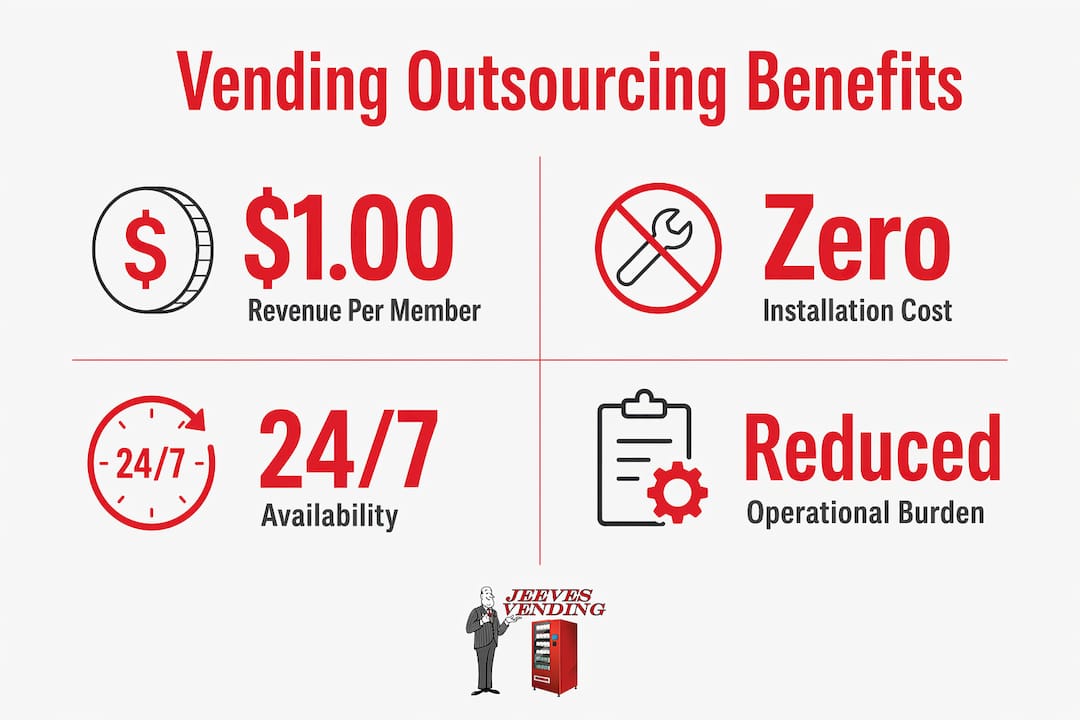
The risk reduction angle matters just as much. Empty vending machine rows can cause notable lost sales annually per machine, which compounds across multiple units or locations. When a professional partner handles restocking, that revenue leak closes. Outsourcing also eliminates the capital outlay required for purchasing quality vending machines.
Revenue sharing typically returns a portion of sales to the gym under a managed model. That is lower than the 100% you keep with direct ownership, but it comes with zero inventory management, zero repair bills, and zero staff hours spent on vending. For most gym operators, that trade is worth it.
Operational ease: how outsourcing simplifies vending management
Running vending in-house sounds manageable until you are fielding a member complaint about a jammed card reader at 7 AM on a Saturday. That is the reality outsourcing eliminates.
A managed vending service covers product selection, installation, cashless payment setup, restocking, and all maintenance, requiring minimal involvement from gym staff. Your team never touches inventory, never calls a repair technician, and never issues a refund for a failed transaction.
- Restocking on a schedule. Professional partners monitor stock levels remotely and restock before shelves run low, not after members notice.
- Cashless payment management. Cashless systems eliminate coin jams and cash-handling errors, saving staff time and preventing lost sales from payment malfunctions.
- Data-driven inventory. Outsourced partners use sales analytics to adjust the product mix dynamically, pulling slow movers and expanding what sells, a level of analysis that is technically demanding for gym operators to do alone.
- Hidden labor savings. Staff time spent on vending-related tasks, from chasing restocks to troubleshooting payment hardware, is a real cost that professional management absorbs.
Pro Tip: When evaluating a vending partner, ask specifically how they handle machine downtime. The best operators have a guaranteed response window for repairs, because every hour a machine is out of service is revenue and member goodwill lost.
How outsourced vending services improve the member experience
Members notice vending more than gym owners expect. A broken machine or an empty shelf is a small frustration, but small frustrations accumulate into cancellations.
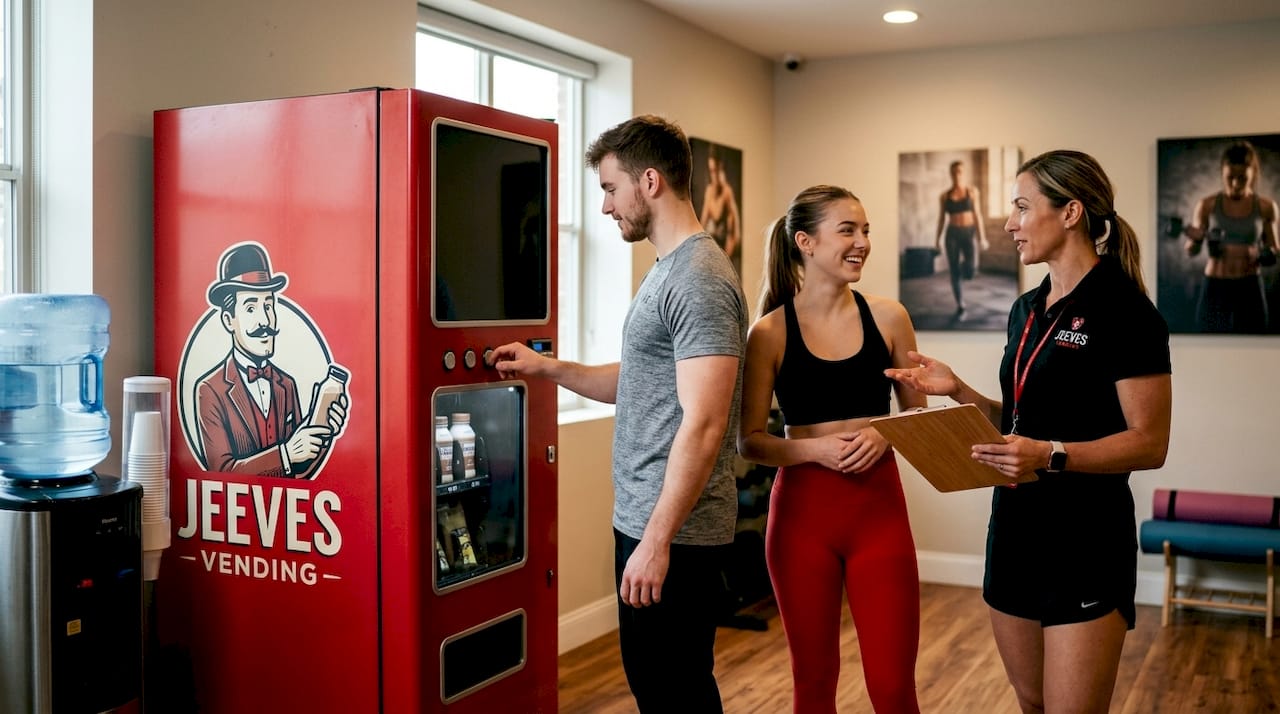
Outsourced vending solves the availability problem at its root. Machines run 24/7, stocked with fresh, health-conscious products that match what gym members actually want: protein shakes, electrolyte drinks, recovery bars, and pre-workout supplements. That means a member finishing a 10 PM session can grab what they need without leaving the building. Keeping members on-site after workouts is a retention advantage that is easy to underestimate.
Cashless and contactless payment options are now a baseline expectation. Tap-to-pay and mobile wallet support remove the friction of hunting for cash or a working card slot, and that frictionless experience directly increases purchase frequency. A gym member who can tap their phone and walk out in ten seconds is far more likely to buy than one who has to dig for exact change.
Product selection tailored to your membership profile takes this further. A well-managed vending strategy accounts for your members’ training styles, dietary preferences, and peak usage hours, so the machine feels like it belongs in your gym rather than a generic office hallway. Vending done right positions your facility as a complete wellness destination, not just a room full of equipment.
What types of vending machines and products work best in gyms
Not every vending machine fits a gym environment equally well. The right choice depends on your traffic volume, available space, and member demographics.
- Combo snack and drink machines. The most versatile option for mid-size gyms. One unit covers both hydration and nutrition, works well in spaces under 1,000 square feet, and suits a broad member base. A well-placed combo unit in a gym with a large active membership can generate substantial monthly revenue.
- Dedicated drink dispensers. Best for high-exertion environments like CrossFit boxes, boxing gyms, or cardio-heavy studios where hydration demand is constant. Stock water, electrolyte drinks, and ready-to-drink protein shakes.
- Snack-focused machines. Stocked with protein-forward options like bars, bites, and protein balls, these work well near locker rooms or group training areas where members want a quick post-workout fix.
- AI-enabled smart fridges. Compact, tech-forward units that support cashless checkout and real-time inventory tracking. A strong fit for boutique gyms or upscale facilities where the member experience is part of the brand. One chain operator using AI tracking removed slow-selling items and increased average revenue per machine by 23% within 90 days.
- Specialty supplement dispensers. Configured for performance products, recovery drinks, and pre-workout supplements. Useful when your membership skews toward serious athletes or competitive lifters.
Aligning the product mix with your gym’s demographics is not optional. A yoga studio and a powerlifting gym have completely different nutritional needs, and a vending partner worth working with will build the planogram around your specific member profile.
Cost factors and revenue potential for gym vending machines
The financial picture for gym vending depends heavily on which model you choose. Direct ownership and outsourcing have different cost structures, each with distinct trade-offs in upfront costs, revenue share, and operational responsibilities.
Direct ownership keeps all the profit but demands capital, staff time, and technical capacity. A gym that buys its own machines takes on product procurement, maintenance scheduling, and payment system management. Those hidden labor costs add up faster than most operators expect.
Outsourcing trades a portion of the margin for complete operational relief. The zero-cost installation model is particularly attractive for gyms that want passive income without the management overhead. Revenue share agreements typically return a portion of sales to the gym, often quoted between 15% and 25% of total vending revenue, depending on the provider and specific contract terms.
For a practical benchmark: a mid-size gym running a properly managed vending operation can generate steady monthly revenue from vending. Smaller boutique gyms generally see modest monthly vending revenue. Those figures assume good placement and a product mix matched to the membership.
Pro Tip: Before signing any vending contract, ask for a breakdown of what “revenue share” actually means in dollar terms at your current membership level. A percentage sounds abstract; a monthly dollar estimate makes the decision concrete.
Why outsourcing protects your gym’s brand and drives member satisfaction
The brand protection argument for outsourcing vending is one that gym owners rarely consider until something goes wrong. A machine that is consistently empty, dirty, or broken sends a message to members: the gym does not sweat the details. That perception spreads.
Professional vending partners keep machines operational, clean, and stocked because their business depends on it. They have financial skin in the game on every sale, which aligns their incentives with yours. When a machine goes down, they fix it fast. When a product stops selling, they swap it out. That responsiveness is difficult to replicate with in-house management, where vending is always a secondary priority.
Data-driven inventory selection is where outsourced partners genuinely pull ahead. Specialized vending firms use sales analytics platforms to track what sells, when it sells, and in what quantities, then adjust the product mix accordingly. That kind of dynamic management increases sales and reduces waste simultaneously. It is also highly technical work that most gym operators have neither the time nor the software to do alone.
The member retention angle ties everything together. Vending acts as a convenience layer that keeps members on-site, completing their nutrition needs without a detour to a convenience store. A gym that reliably has what members need after a hard session reinforces its identity as a complete fitness environment. This perception contributes to retention in tangible ways, even if they rarely show up on a spreadsheet.
Pro Tip: Choose a vending partner whose product catalog aligns with your gym’s culture. A facility built around clean eating and performance nutrition should not have a machine stocked with candy bars and chips. The product selection reflects on your brand every time a member walks past it.
Real-world examples of gyms that outsourced vending successfully
The results from gyms that have made the switch to outsourced vending are consistent enough to form a clear pattern.
One operator placed a combo snack and drink unit near the exit of a boxing gym, stocked with sports drinks, protein bars, and towels. The machine generated $920 in its first month, with nearly 60% of purchases happening after 6 PM. The placement decision alone, near the exit at peak post-workout hours, drove that result. The gym owner contributed nothing beyond the floor space.
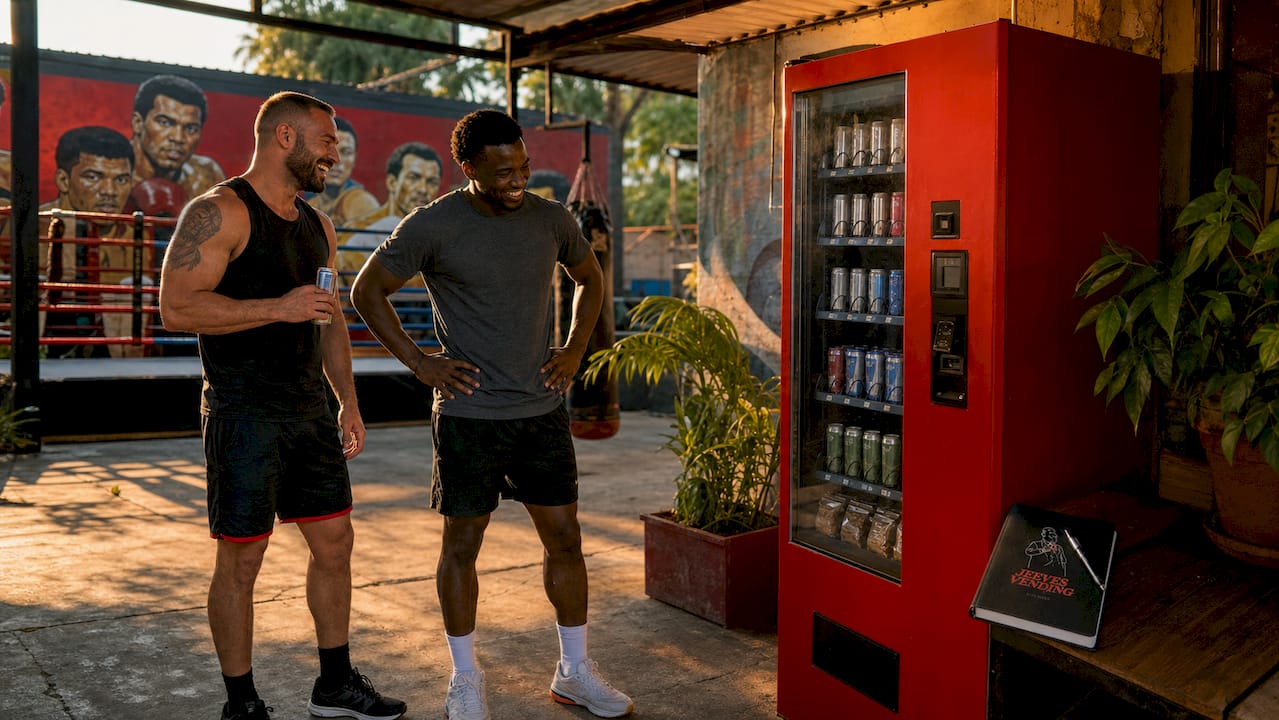
A warehouse gym with no nearby convenience store installed a dedicated drink machine. It pulled over $1,400 in its first month, driven entirely by the captive demand of members who had no other option for hydration. The outsourced partner handled restocking on a schedule tied to sales data, so the machine was never empty during peak hours.
A chain operator using AI-enabled machines took a more analytical approach. By reviewing real-time sales data and removing underperforming products, they increased average revenue per machine by 23% within 90 days, with no change in foot traffic or machine count. The technology and the data expertise came from the vending partner, not from internal gym staff.
The common thread across these examples is that the gym’s role was minimal. Provide the space, choose a partner with the right product focus, and let the machine work. The operators who saw the strongest results were also the ones who paid attention to placement, positioning machines near exits, locker rooms, and group training areas where purchase intent is highest.
Jeeves Vending brings zero-cost vending to Dallas-Denton gyms
Gym owners in the Dallas-Denton area get the full managed vending experience through Jeeves Vending at no cost to the facility. No machine purchase, no stocking logistics, no repair calls. Jeeves Vending installs modern machines, handles all restocking and maintenance, and keeps the product mix aligned with your membership’s actual preferences.
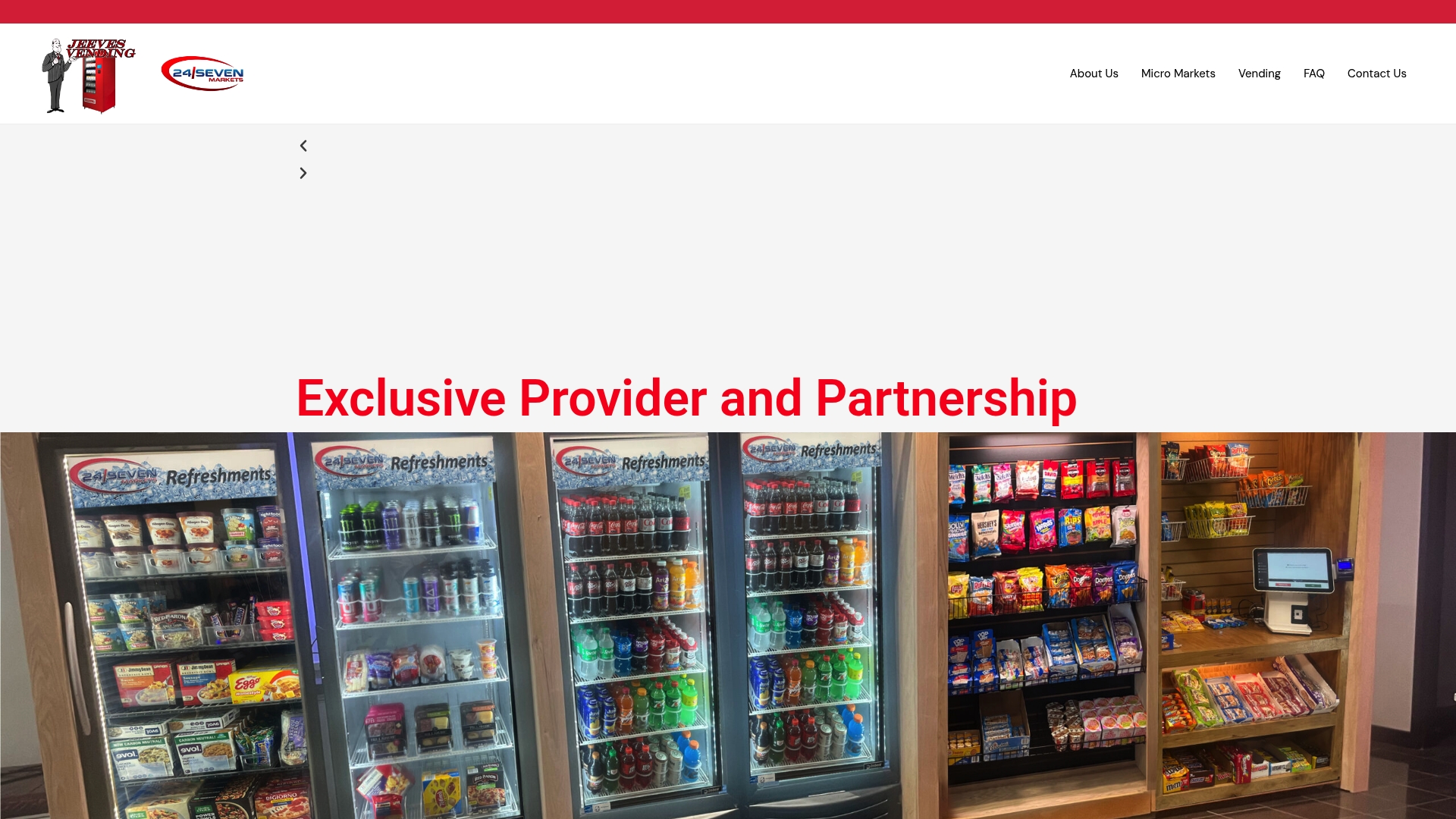
The difference from a generic vending arrangement is the attention to fit. Jeeves Vending works with gyms specifically, which means the product selection reflects what fitness-focused members want: protein options, hydration, and recovery essentials, not a generic office snack assortment. The technology side is covered too, with AI smart coolers and cashless payment systems that meet the expectations of modern gym members.
For gym managers who want passive income without adding a single task to their team’s plate, the free vending program is the most direct path. Contact Jeeves Vending to discuss your facility’s layout, membership profile, and revenue goals, and get a vending setup that works from day one.
Key Takeaways
Gyms that outsource vending services gain passive income, eliminate operational burden, and protect their brand, all without upfront capital investment.
| Point | Details |
|---|---|
| Zero-cost entry | Outsourced vending requires no machine purchase or stocking investment from the gym. |
| Revenue potential | A mid-sized gym can generate substantial annual passive earnings from outsourced sports nutrition vending. |
| Profit margins on fitness products | Health-focused snacks and supplements return $1.50–$3.00 profit per item, above standard vending. |
| Brand and retention protection | A professional partner keeps machines stocked and functional, which members notice and associate with gym quality. Empty vending machine rows can cost over $1000 in lost sales per year per machine, eroding both profits and member trust. |
| Jeeves Vending | Jeeves Vending provides free, fully managed vending for gyms in the Dallas-Denton area, covering installation, restocking, and maintenance. |