
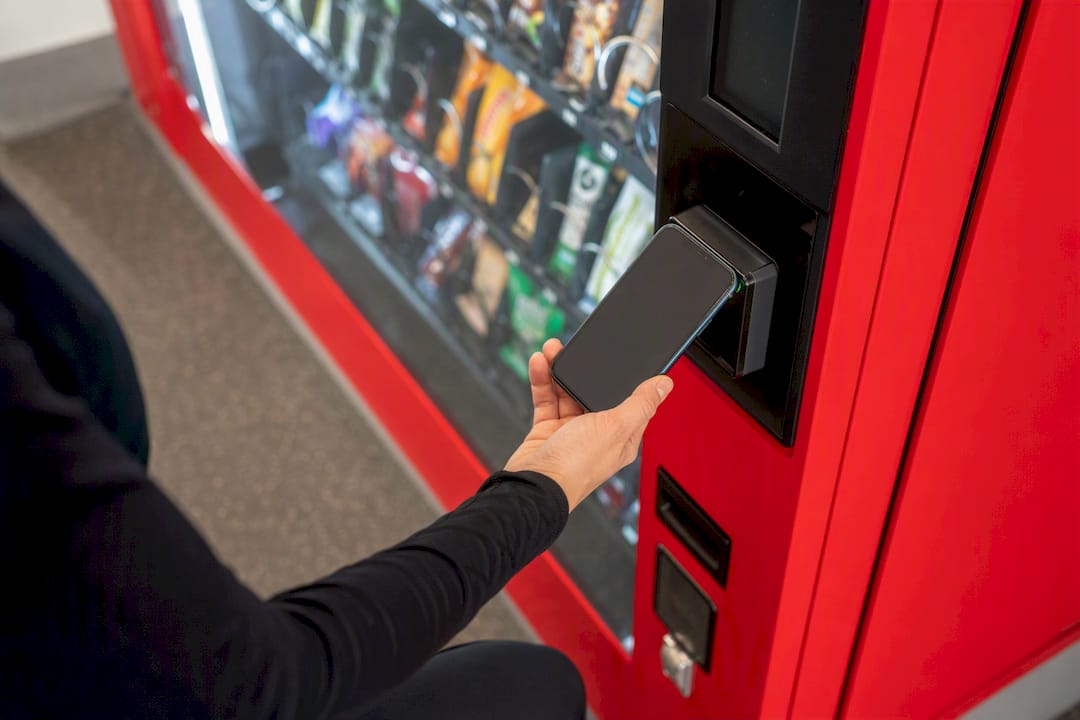
Cashless vending pays off for most modern deployments. It typically lifts sales, cuts the labor and theft exposure tied to cash handling, and gives operators live sales data they can act on the same day. The main caveats: reliable connectivity and PCI/EMV compliance aren’t optional, and readers only make financial sense past a certain revenue floor.
The quick math: industry sources commonly use a benchmark of roughly $300 in gross monthly sales per machine as the point where a cashless reader pays for itself in fees and hardware.
Three benefits stand above the rest:
- Higher average ticket and fewer walked-away sales from customers with no cash
- Fewer cash pickups, less exposure to skimming, and fewer bill-jam service calls
- Real-time telemetry that tells you what to restock before you drive there
Key Takeaways
Cashless vending increases sales, cuts cash-handling labor and theft exposure, and generates telemetry data that drives smarter restocking and route decisions.
| Point | Details |
|---|---|
| Sales lift is real | Industry reporting cites a 20 to 35 percent sales increase common after cashless conversion. |
| Use the $300 threshold | Deploy readers first on machines clearing roughly $300 in monthly gross sales for fastest payback. |
| Telemetry drives operations | Real-time data enables pre-kitting, route prioritization, and predictive maintenance that cut downtime. |
| Keep cash as a fallback | Hybrid machines protect sales during outages and serve cash-preferring customer segments. |
| Jeeves Vending handles the rollout | Jeeves installs telemetry-enabled cashless machines at no upfront cost and prioritizes high-traffic placements first. |
Table of Contents
- What Are the Main Cashless Vending Benefits for Operators?
- How Does Cashless Reduce Cash Handling and Theft Risk?
- What Data Do Cashless Readers Give Operators?
- Can Cashless Payments Improve Customer Loyalty?
- Are Cashless Readers Worth the Cost?
- What Should You Check Before Installing Cashless Readers?
- What Are the Downsides of Going Cashless?
- How Jeeves Vending Applies These Lessons in the Field
- What This Means for How You Deploy Cashless Vending
- Why Cashless Vending Reaches Customers Cash Never Could
- Does Cashless Vending Have Environmental Benefits?
- How Secure Are Cashless Vending Payments?
- What Customer Data Can Cashless Vending Unlock?
- Does Cashless Vending Reduce Downtime and Maintenance Calls?
- Ready to Convert Your Route to Cashless Vending?
- Sources
What Are the Main Cashless Vending Benefits for Operators?
The single biggest driver is friction removal. A customer standing at a machine with no bills and no coins used to just walk away. Now they tap a card or a phone and buy anyway. Peer industry commentary notes that adding mobile and tap-to-pay options expands the addressable customer base and cuts missed sales that used to happen purely because someone lacked exact change.
That shift shows up in the numbers. Industry reporting commonly cites a 20 to 35 percent sales lift after operators switch machines to cashless acceptance, and average ticket size tends to climb because shoppers aren’t mentally rounding down to whatever change is in their pocket.
The lift isn’t uniform across your route. It concentrates in specific categories:
- Fresh food and meal replacements, where prices routinely run $6 to $12 and cash-only sales stall out
- Premium coffee and specialty drinks, where price points exceed what people carry in coins
- Convenience impulse buys in high-traffic office and campus locations, where speed matters more than price
Machines stocked with $1 snacks in a low-traffic breakroom will see a smaller bump than a fresh-food cooler in a busy hospital corridor. Placement and product mix decide how much of that lift you actually capture.
How Does Cashless Reduce Cash Handling and Theft Risk?
Every cash pickup costs you a truck roll, a driver’s time, and a reconciliation step back at the office. Cut the cash volume on a machine and you cut all three.
- Fewer collection stops. Machines running mostly cashless need cash pulls far less often, since bill and coin volume drops sharply once card and mobile payments take over.
- Lower theft exposure. Cashless systems reduce labor and theft risk by eliminating frequent cash collection and removing bill and coin handling as a failure point altogether, which closes off the skimming and till-tampering that plague cash-heavy routes.
- Fewer validator repairs. Bill acceptors jam. Coin mechs get gummed up. Vending Times reports that cashless readers reduce mechanical failures tied to bill and coin acceptors, which means fewer emergency service calls on that machine.
The downstream effects matter too: fewer reconciliations for your bookkeeping, less cash sitting in a machine overnight for insurance purposes, and less driver time spent doing anything other than restocking.
Pro Tip: Track your average cash-pickup time per stop for one month before going cashless, then compare it after. Most operators are surprised how many hours a month they get back once collection frequency drops.
What Data Do Cashless Readers Give Operators?
A cashless reader is a sensor as much as a payment device. It tells you what sold, when, and how fast the slot emptied, all before you get in the van.
Real-time telemetry from cashless readers enables route optimization, pre-kitting, and predictive maintenance that cut unnecessary service visits and machine downtime. Instead of driving a fixed route on a fixed schedule, you visit machines when the data says they need it.
- Item-level sales counts and time-of-day purchase patterns
- Slot-level inventory levels that flag near-empty columns before a stockout
- Payment method mix, which shows you how fast your route is shifting away from cash
- Fault codes and error logs that hint at a failing motor or a jammed coil before it strands a customer
| Telemetry Signal | Operational Use |
|---|---|
| Sales velocity by slot | Pre-kit the exact restock before arriving on site |
| Time-of-day demand curves | Adjust visit windows to match peak purchase hours |
| Payment mix trend | Decide which remaining cash-only machines to convert next |
| Machine fault alerts | Schedule maintenance before a breakdown costs a full day of sales |
That data becomes more than an operations tool. Telemetry doesn’t just improve day-to-day routing. It becomes a commercial argument during account renewals, since facility managers increasingly expect uptime numbers and replenishment accuracy backed by data, not a driver’s word.
Can Cashless Payments Improve Customer Loyalty?
A card reader isn’t just a payment terminal. It’s a channel. Once a machine can authenticate a payment method, it can also recognize a repeat customer and reward them.
- App-based loyalty punches or point systems tied to a mobile wallet account
- Time-limited promotions, like a discount on cold drinks during a heat wave, pushed through a connected kiosk screen
- Bundle pricing that nudges someone toward a healthier or higher-margin item at checkout
Electronic receipts solve a problem cash never could: accountability. A customer who gets shorted product or charged twice now has a timestamped transaction record instead of a shrugged “I don’t remember.” This kind of digital-first purchase experience mirrors what’s happening across online food ordering, where convenience and transparency now drive repeat business more than price alone.
Premium and fresh items benefit most from this engagement layer, since customers buying a $9 salad expect the same digital reassurance they’d get from any other retail purchase.
Are Cashless Readers Worth the Cost?
Here’s where operators actually get skittish, and reasonably so. Processing fees and connection costs are real, ongoing expenses, not one-time equipment purchases.
Typical cost bands run like this: processing fees generally fall between 2 and 6 percent of transaction value, and connection fees commonly run $10 to $15 per machine per month. Hardware itself has gotten cheaper and easier to install, which is part of why smaller operators who once skipped cashless entirely are now adopting it.
- Run the math on your highest-volume machines first. If a location clears the roughly $300 monthly gross sales threshold, a reader almost always pays for itself once you factor in the sales lift.
- Model the offset. A 20 to 35 percent sales increase on a $300 to $500 machine covers processing fees several times over within the first month.
- Roll out in phases. Install readers on your top performers, measure the actual sales delta for 60 to 90 days, then expand to the rest of the route once the numbers confirm the pattern on your specific customer base.
Low-volume machines are the exception. If a location barely clears $150 a month in sales, the fixed connection fee eats a larger share of margin, and it may be smarter to wait or bundle it with a route-wide contract instead of paying per-machine.
What Should You Check Before Installing Cashless Readers?
Connectivity is the first decision, and it determines almost everything downstream.
- Cellular works in most locations without depending on a host’s network, but signal strength varies by building material and basement placement.
- Wi-Fi can be cheaper monthly if the host already provides reliable access, but it puts you at the mercy of their IT policies and password changes.
- Test signal strength on-site with a phone before committing to a connection type. A weak bar reading in the lobby doesn’t guarantee the same in a mechanical room.
Ask any vendor directly whether their readers support EMV chip transactions and PCI compliance, and ask what uptime service level they guarantee in writing, not just verbally.
Keep cash as a fallback wherever a coin-and-bill mechanism can coexist with a card reader, since a single outage shouldn’t mean zero sales for the day. Post simple signage explaining the new payment options so hosts and customers aren’t guessing.
Pro Tip: Before removing bill acceptors entirely, run hybrid machines for at least one full billing cycle. You’ll see exactly how much cash volume you’re still leaving on the table.
What Are the Downsides of Going Cashless?
No system is free of trade-offs, and pretending otherwise sets operators up for a bad first quarter.
- Processing fees eat into margin on small-ticket items, so consider modest price rounding rather than absorbing the full percentage on a $1.50 snack.
- Outages happen. Cellular dead zones and network hiccups can take a reader offline, so a hybrid cash-acceptance setup and clear signage prevent a stranded customer.
- Some demographics and lower-volume locations genuinely still lean on cash, and operators should weigh customer mix before stripping cash acceptance from every machine on a route.
The fix isn’t picking one system over the other. It’s running hybrid where the customer base demands it and full cashless where the data says cash volume has already dried up.
How Jeeves Vending Applies These Lessons in the Field
Jeeves Vending installs modern vending machines and telemetry-enabled readers at no upfront cost to the host business, which means the ROI math above happens on our side of the ledger, not the client’s.
- Machines go in with cashless acceptance built in from day one, paired with connected inventory tracking
- High-traffic placements like offices, gyms, and hospitals get prioritized for readers first, following the same revenue-threshold logic operators should use on any route
- Facility partners get uptime and restock accuracy backed by data instead of guesswork
A vending program that reports its own uptime and restock timing to a facility manager wins the renewal conversation before it even starts.
Jeeves phases new technology onto routes the same way any disciplined operator should: test on the busiest locations, confirm the sales delta, then expand.
What This Means for How You Deploy Cashless Vending
If you manage even a handful of machines, the case for cashless stops being theoretical the moment you look at your own top performers. Pick your three or four highest-grossing machines, put a reader on them, and watch what happens to the ticket size over the next billing cycle.
— Gary
Why Cashless Vending Reaches Customers Cash Never Could
Cashless machines don’t only serve customers who prefer convenience. They open the door to people who literally can’t pay with cash in the way vending has always assumed. A meaningful share of adults carry little to no physical currency day to day, relying instead on debit cards, prepaid cards, or mobile wallets tied to a bank account with no cash withdrawal habit at all.
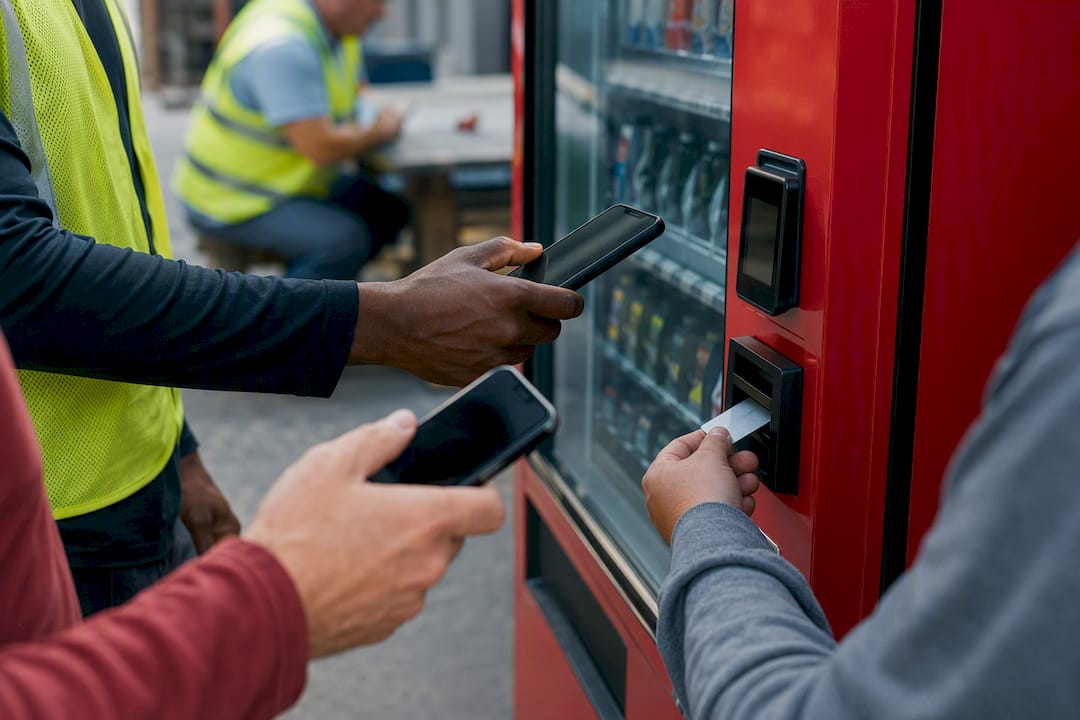
Contactless and mobile payment options also reach unbanked and underbanked customers through channels that don’t require a traditional checking account. Prepaid debit cards, reloadable cards issued through payroll programs, and mobile wallet apps funded by cash-load kiosks all work at a standard cashless vending reader the same way a traditional bank card does. That matters enormously on routes serving warehouse and manufacturing shifts, where a meaningful percentage of workers may not hold conventional bank accounts but do carry a prepaid payroll card.
Campus and hospital locations see a similar pattern. Students paying through a campus meal plan card or a linked mobile wallet, and hospital visitors relying on a prepaid gift card from a family member, both transact just fine on a cashless reader that would otherwise require exact bills and coins they don’t have on hand.
The practical takeaway for operators: cashless doesn’t just capture more from customers who already had money to spend. It captures spending from people who were functionally locked out of a cash-only machine in the first place, simply because they never carry paper currency at all.
Does Cashless Vending Have Environmental Benefits?
Paper currency has a physical footprint that most people never think about. Printing, transporting, and eventually destroying worn bills consumes cotton fiber blends, ink, and energy at every stage of the cash lifecycle, and coins require ongoing metal mining and minting to replace circulation loss.
Cashless vending sidesteps a chunk of that cycle simply by reducing how much physical currency moves through a route at all. Fewer bills changing hands means fewer trips to the bank to deposit collected cash, which trims fuel use tied to those extra stops. Fewer coins jamming mechanisms also means fewer service parts replaced over a machine’s lifespan, since coin acceptors are some of the highest-wear components in a traditional unit.
There’s a secondary environmental angle too: electronic receipts and app-based purchase confirmations reduce the printed paper receipts that used to come standard at many payment kiosks. Multiply that across an entire route of machines processing hundreds of transactions a week, and the paper savings add up over a year, even if no single receipt looks significant on its own.
None of this makes cashless vending a headline sustainability initiative on its own. But for operators fielding questions from environmentally conscious host businesses, particularly schools and hospitals that track their own sustainability commitments, the reduced reliance on printed currency and paper receipts is a real, if modest, point in cashless vending’s favor. It’s a detail worth mentioning in proposals to facility managers who already care about their building’s environmental footprint.
How Secure Are Cashless Vending Payments?
Security concerns hold some operators back from converting a full route, but modern cashless systems are built with layered protection that cash never offered in the first place. A cash box can be pried open. An encrypted transaction can’t be intercepted and replayed the same way.
EMV chip technology, the same standard used in retail point-of-sale terminals nationwide, encrypts card data at the point of the tap or dip so that the actual card number never travels in a readable format. That encryption happens instantly and is invisible to the customer, but it closes off the kind of card-skimming fraud that plagued magnetic stripe readers for years.
Tokenization adds another layer specific to mobile wallets. When a customer pays with a phone, the reader never actually receives the customer’s real card number at all. It receives a one-time token generated for that single transaction, which means even if a bad actor somehow intercepted the data, they’d get a number that’s already useless the moment the purchase completes.
PCI compliance standards govern how payment processors and hardware vendors handle this data end to end, and any credible cashless reader on the market today is built to meet those requirements. Ask a vendor directly whether their hardware and payment processor maintain current PCI DSS certification. That should be as basic a question as asking whether the machine has a warranty.
For operators, the security upside isn’t abstract. Fraud liability on a properly configured EMV transaction generally shifts toward the processor and card issuer, not the operator, which is a meaningfully different risk profile than a cash box that anyone with a crowbar can target overnight.
What Customer Data Can Cashless Vending Unlock?
Every cashless transaction leaves a data trail that cash never generated. That trail turns a vending machine from a static box into something closer to a small retail data terminal, and operators who use it well can build marketing programs that a coin slot never made possible.
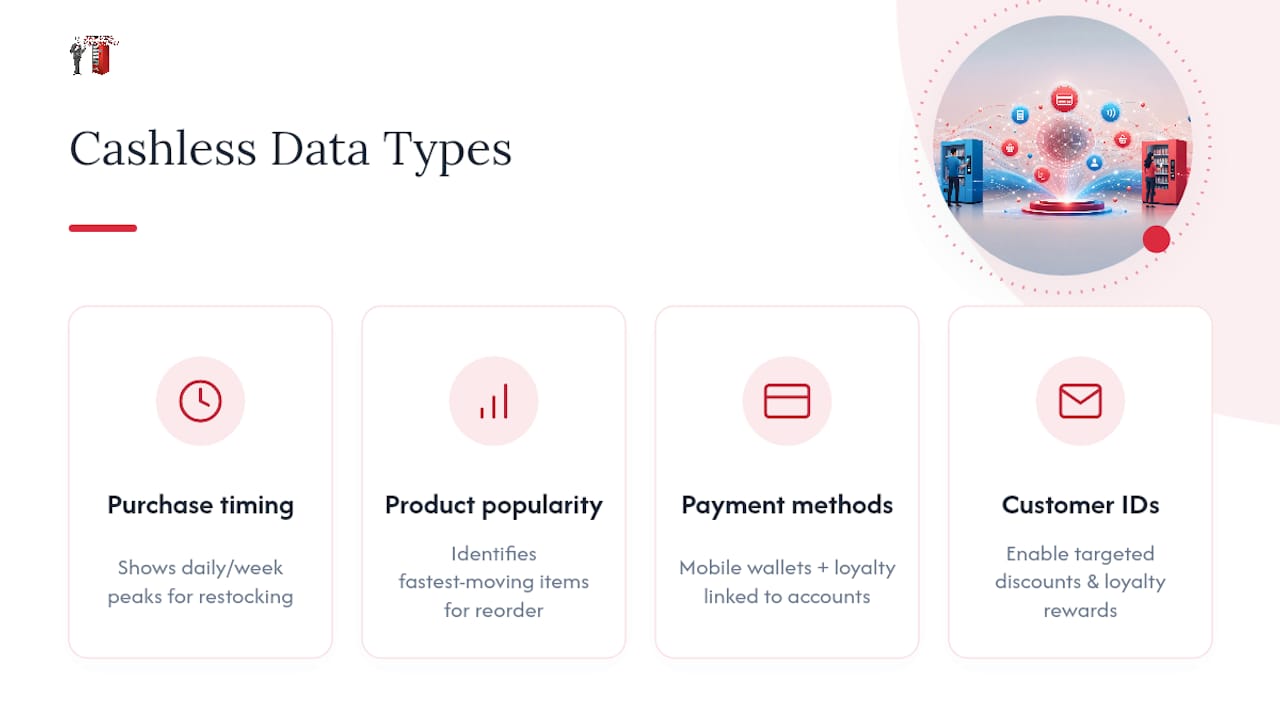
Purchase timing data shows exactly when a location’s traffic peaks, which products move fastest during those windows, and how demand shifts across a week. An office break room might show a coffee spike every Monday morning and a snack surge every Friday afternoon, patterns invisible without transaction-level records.
Payment app integrations open the door to direct customer communication. A mobile wallet tied to a loyalty account lets an operator push a targeted discount to customers who haven’t purchased in two weeks, or reward a customer’s tenth transaction with a free item, the same playbook coffee shop apps have used for years now applied to a vending machine.
This kind of personalization tends to matter most on premium placements. A hospital cafeteria vending program or an office micro-market with fresh food options benefits more from targeted promotions than a $1 snack machine in a warehouse hallway, simply because the margin on a $9 fresh meal supports the marketing investment better than a bag of chips does.
Operators should treat this data responsibly and transparently, since customers increasingly expect to know what’s collected and why, but used well, purchase data turns a single vending location into a source of ongoing customer insight rather than a black box that only reports total revenue at the end of the month.
Does Cashless Vending Reduce Downtime and Maintenance Calls?
Downtime is the quiet profit killer on any route. A machine that’s out of service for two days because of a jammed bill acceptor isn’t just costing repair time. It’s losing every sale that would have happened during that window, permanently, since a hungry customer at an empty machine doesn’t wait around.
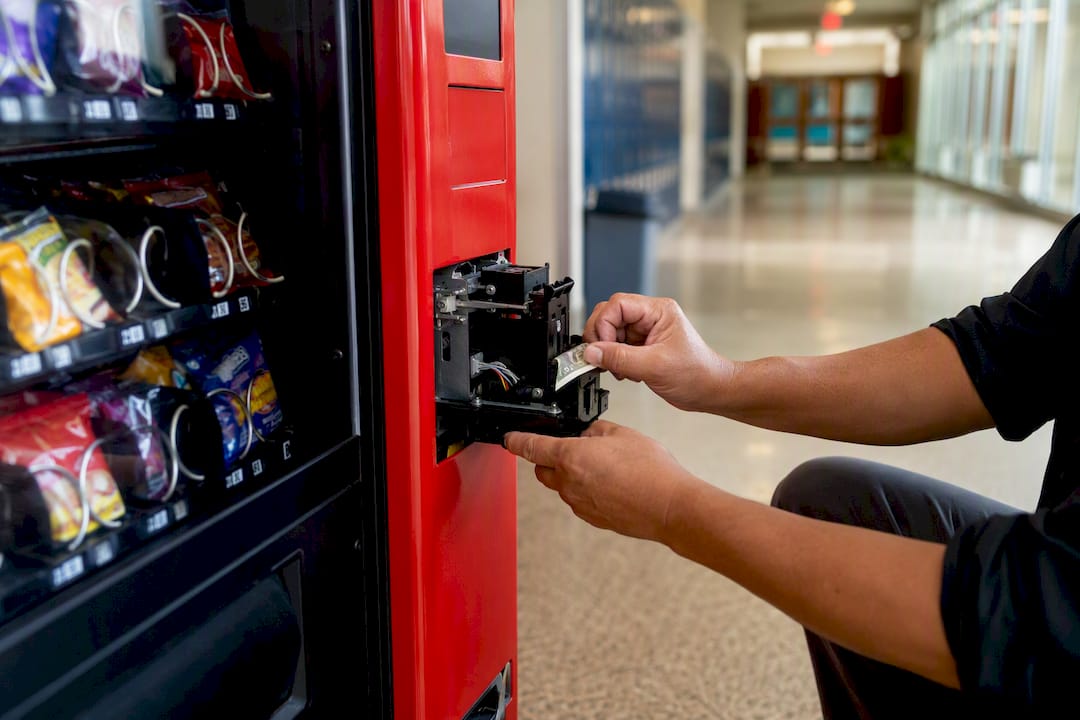
Bill and coin mechanisms are consistently among the highest-failure components in a traditional vending machine, since they involve constant physical movement, dust accumulation, and mechanical wear that solid-state card readers simply don’t experience the same way. Removing that mechanical dependency, even partially through a hybrid setup, cuts one of the most common reasons a technician gets an emergency call.
Predictive maintenance data compounds that advantage. Machines reporting fault codes or unusual transaction patterns before a full breakdown let a technician schedule a fix during a routine visit rather than responding to an emergency call that pulls them off their planned route for the day. That shift alone can cut a meaningful share of unplanned service trips across a route running dozens of machines.
The uptime benefit shows up most clearly in facilities where downtime carries real consequences, hospitals where staff have narrow break windows, or manufacturing sites running around-the-clock shifts where a broken machine at 2 a.m. means an entire shift goes without food options until morning. Facility managers overseeing those hospital vending programs increasingly expect uptime guarantees as a baseline expectation, not a bonus feature, and cashless readers with remote diagnostics are how operators deliver on that expectation consistently.
Ready to Convert Your Route to Cashless Vending?
Jeeves Vending installs modern, cashless-ready vending machines and custom micro-markets at no upfront cost to the host business, which means the phased rollout strategy covered above doesn’t require your capital to test.
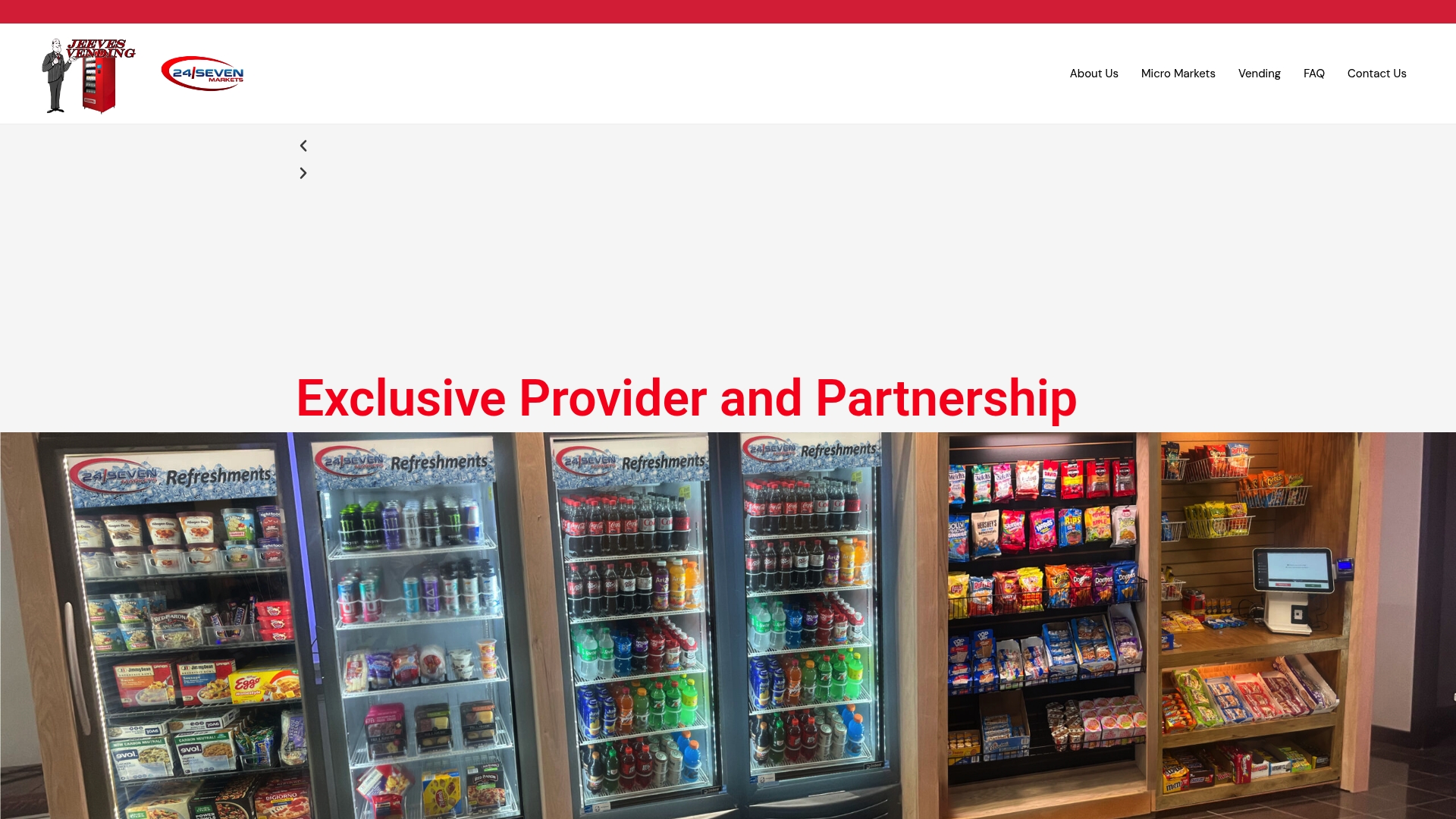
We prioritize telemetry-enabled readers on high-traffic placements first, the same revenue-threshold logic any disciplined operator should apply, and we handle installation, stocking, and maintenance so facility teams at offices, schools, gyms, and hospitals never have to manage the hardware themselves. If your current vending program still runs mostly on cash and coin, or you’re evaluating a first machine for a new location, request a placement assessment and we’ll walk your site to identify which spots clear the volume needed to make cashless pay off from day one.
Sources
- Does cash still matter? — Vending Times
- Cashless vending & smart payment systems (2026 guide) — The Vending Club
- Getting into cashless vending: a guide no matter your size — Vending Market Watch