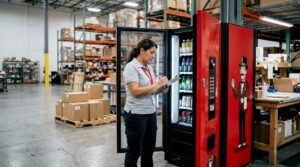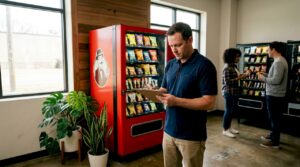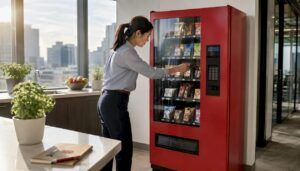

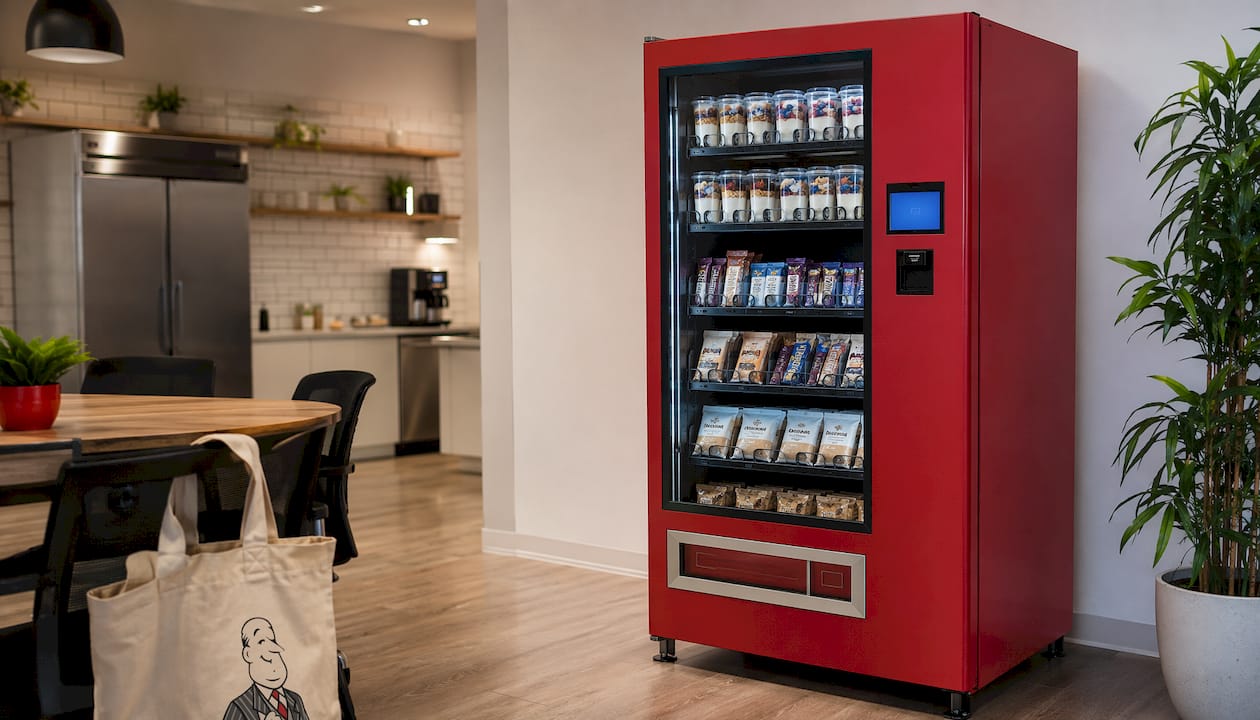
Protein snacks for vending machines are portable, high-protein food items designed to satisfy hunger, support muscle recovery, and meet growing consumer demand for nutritious convenience. The best examples of protein snacks for vending include nut-based bars, Greek yogurt parfaits, specialty protein cookies, and on-demand recovery shakes. These products consistently outperform traditional chips and candy in health-focused settings like gyms, offices, and schools. Jeeves Vending stocks all of these categories across the Dallas-Denton region, giving operators a proven selection backed by real sales data and location-specific expertise.
1. What are the best nut-based protein bars for vending?
Nut-based protein bars and trail mixes are the most reliable performers in any vending machine carrying high-protein options. They require no refrigeration, carry a shelf life measured in months, and deliver 10–20 grams of protein per serving depending on the formulation. That combination of durability and nutrition makes them the default anchor product for operators building out a protein-focused vending selection.
Popular formats include:
- Almond and cashew protein bars with whey or pea protein coatings
- Mixed nut and seed packs with added pumpkin seeds for plant-based protein
- Peanut butter protein bars in single-serve foil packaging
- Granola and nut clusters with brown rice protein binders
- Plant-based bars using sunflower seed butter and hemp protein
The portability advantage is real. A bar sealed in foil survives temperature swings, vending coil drops, and weeks on a shelf without quality loss. That shelf stability directly reduces operator waste and restocking frequency.
Top-selling protein snacks in offices and gyms consistently include nut-based bars and high-protein nut mixes. The reason is simple: they satisfy hunger between meals without spiking blood sugar the way candy does.

Pro Tip: Rotate between at least three nut mix varieties every 60 days. Customers who see the same bar in the same slot stop buying it, even if they liked it the first time.
2. Dairy protein options: Greek yogurt parfaits and cheese snacks
Refrigerated dairy snacks represent the highest-protein-per-calorie category available in vending. Greek yogurt parfaits typically deliver 15–20 grams of protein per cup, and string cheese or cheese rounds provide 6–8 grams in a compact, low-calorie format. Both formats require a refrigerated vending machine, which is a real operational consideration but one that pays off in gyms and corporate offices.
Key points for stocking dairy protein items:
- Refrigerated vending units must maintain temperatures between 35°F and 41°F consistently
- Freshness windows for Greek yogurt parfaits run 7–14 days, requiring tighter restocking schedules
- Cheese snacks like individually wrapped string cheese or babybel-style rounds last 4–6 weeks refrigerated
- Labeling must display expiration dates clearly, which modern vending machines can track digitally
Dairy proteins are particularly effective for post-workout recovery. Whey protein, the primary protein in Greek yogurt, absorbs quickly and supports muscle repair within the 30-minute post-exercise window that fitness professionals recommend. That makes dairy snacks a natural fit for gym vending placements.
Pro Tip: Pair Greek yogurt cups with a granola topper packet in an adjacent slot. Customers who buy the yogurt often add the granola, increasing the average transaction value without any extra selling effort.
3. Protein cookies and plant-based treats for vending
Protein cookies occupy a unique position in the vending category. They look and taste like an indulgence but deliver 10–15 grams of protein per cookie. That combination of perceived treat and actual nutrition drives strong impulse purchases, especially in offices where people want something satisfying but feel guilty about a candy bar.
The best protein cookies for vending share three characteristics:
- Low sugar content, typically under 8 grams per serving, which appeals to diabetic-conscious and keto-adjacent consumers
- Plant-based protein sources like pea protein, brown rice protein, or chickpea flour for vegan buyers
- Individual foil or film wrapping that survives vending coil dispensing without crumbling
Plant-based protein treats have expanded well beyond cookies. Roasted chickpea snacks, edamame packs, and lentil-based crisps now appear in progressive vending programs and deliver 6–12 grams of protein per serving with strong shelf stability.
| Protein snack category | Protein per serving | Shelf life | Best vending setting |
|---|---|---|---|
| Nut-based protein bars | 10–20g | 3–6 months | Gym, office, school |
| Protein cookies | 10–15g | 2–4 months | Office, school |
| Plant-based crisps | 6–12g | 3–5 months | Office, school |
| Greek yogurt parfaits | 15–20g | 7–14 days | Gym, corporate office |
| Cheese snacks | 6–8g | 4–6 weeks (refrigerated) | Gym, office |
Successful protein vending depends on offering variety tailored to local needs, from plant-based snacks to high-intensity bars in gyms. A school vending program and a CrossFit gym need very different product mixes, even if both want “healthy options.”
4. Role of protein shakes and mix-on-demand products in gym vending
Protein shake vending machines represent the most profitable single category in fitness vending. Commercial shake machines generate $2,000 to $6,500 in net profit monthly, with retail prices of $3.00 to $6.50 per shake and ingredient costs of just $1.00 to $1.50. The payback period on the machine itself runs 3 to 6 months. Those numbers make shake machines a strong investment for any high-traffic gym.
The technology behind modern machines matters. Protein shake machines mix powdered protein varieties on demand with chilled water, which eliminates the spoilage risk of pre-mixed liquid shakes. Multiple hoppers hold different flavors and formulations, including whey isolate, plant-based blends, and casein options. Independent shaker motors mimic manual shake action, producing a consistent texture that standard powder mixers cannot replicate.
Maintenance is the variable that separates profitable machines from expensive failures. Machines with automated self-cleaning cycles are significantly more reliable. Basic machines without auto-cleaning often fail within three months of deployment. Operators who skip this feature spend more on service calls than they save on the purchase price.
The role of protein drinks in fitness vending also extends to 24/7 access. Automated shake machines reduce front desk congestion and capture revenue during off-hours when staff are not present. A member finishing a 6:00 AM workout can get a post-workout shake without waiting for the supplement counter to open.
- Whey isolate shakes for fast post-workout absorption
- Plant-based blends using pea and rice protein for vegan members
- Casein protein options for slow-release overnight recovery
- Pre-workout powder mixes with caffeine and beta-alanine for energy
- Electrolyte recovery drinks for endurance athletes
5. How energy drinks and recovery items fit the gym vending mix
High-protein recovery items and energy drinks together can represent a significant share of total vending revenue in high-intensity gym environments. In high-intensity gyms, energy drinks and high-protein recovery items can account for up to 42% of total vending revenue. That figure shows why operators who stock only snack bars leave real money on the table.
Recovery items worth stocking alongside protein snacks include:
- BCAAs (branched-chain amino acids) in single-serve powder packets
- Electrolyte tablets for hydration support
- Collagen protein sticks that dissolve in water
- Ready-to-drink protein shots in 2–3 oz formats
The key is matching the product mix to the specific gym type. Yoga studios prefer light wellness snacks while performance gyms stock recovery shakes and protein bars. A boutique yoga studio stocking heavy creatine products will see poor sell-through. A powerlifting gym stocking only light granola bars will frustrate its members. Operators who treat every fitness venue as identical leave both revenue and customer satisfaction behind.
Pro Tip: Use your vending machine’s sales data to identify which recovery products sell out first. Those are your anchor products. Build the rest of the mix around them, not the other way around.
6. How to stock and rotate protein snacks to maximize sales
Data-driven inventory management is the single biggest differentiator between operators who grow their vending revenue and those who plateau. Rotating about 40% of inventory seasonally and by location type increases repeat purchases and customer satisfaction. Static inventory causes customer fatigue and reduces sales potential over time.
Effective stocking strategies by setting:
- Gyms: Prioritize protein bars, shake mixes, and recovery drinks. Refresh the mix quarterly to align with fitness trends like new protein formulations or seasonal flavors.
- Offices: Stock protein cookies, cheese snacks, and nut mixes. Adjust for seasonal demand, adding lighter options in summer and heartier bars in winter.
- Schools: Focus on lower-sugar protein bars and plant-based snacks that meet USDA Smart Snacks in School standards. Campus vending habits favor familiar formats with clean ingredient labels.
Sales data and inventory tracking replace guesswork with decisions grounded in actual consumer behavior. Operators who review weekly sell-through data can spot a declining product before it becomes dead stock. They can also identify surprise performers and expand those SKUs before a competitor does.
Customer feedback rounds out the data picture. A simple QR code on the machine linking to a two-question survey costs nothing and surfaces preferences that sales data alone cannot reveal. Operators who combine both inputs make better restocking decisions than those relying on either source alone.
Pro Tip: For office vending menus, ask HR to send a brief snack preference poll to staff once a year. The response rate is usually high because people genuinely care about what is in their break room.
Key Takeaways
The most effective protein vending strategy combines shelf-stable nut-based bars, refrigerated dairy options, plant-based treats, and on-demand shake machines, each matched to the specific setting and customer base.
| Point | Details |
|---|---|
| Nut-based bars anchor the mix | They require no refrigeration and deliver 10–20g of protein with months of shelf life. |
| Dairy snacks need refrigeration | Greek yogurt parfaits and cheese snacks offer the highest protein per calorie but require tighter restocking. |
| Shake machines drive gym revenue | Net profit of $2,000–$6,500 monthly makes them the strongest ROI item in fitness vending. |
| Rotate 40% of inventory seasonally | Static product mixes cause customer fatigue and reduce repeat purchases over time. |
| Match products to the venue type | Yoga studios, performance gyms, offices, and schools each need a different protein snack profile. |
What I’ve learned from watching protein vending evolve
The operators who struggle with protein vending are almost always the ones who stocked what they personally liked rather than what the data showed. I’ve watched vending programs load up on premium plant-based bars because the operator was vegan, only to find that the gym members wanted whey isolate shakes and classic peanut butter bars. The product mix has to reflect the customer, not the operator.
The shift I find most interesting right now is the rise of functional protein snacks. Items like collagen sticks, BCAA chews, and protein-fortified granola clusters are blurring the line between supplement and snack. Consumers in 2026 do not want to choose between convenient and effective. They want both in the same wrapper. Operators who stock these crossover products early are capturing a customer segment that traditional candy-and-chip machines completely ignore.
The other thing I’d push back on is the idea that protein vending is only for gyms. The vending variety strategies that work in fitness centers translate directly to corporate offices, hospitals, and even warehouses. Anywhere people work physical or mentally demanding jobs, protein snacks outperform empty-calorie alternatives in both sales volume and customer satisfaction scores. The gym is just where operators learned the lesson first.
— Gary
Jeeves Vending brings the right protein mix to your location
Choosing the right protein snacks for a vending machine is only half the work. The other half is having a partner who stocks, maintains, and refreshes that machine without putting the burden on you.
Jeeves Vending provides modern AI-powered vending machines and custom micro-markets at no cost to businesses across the Dallas-Denton region. Their selection covers every protein snack category covered here, from nut-based bars and plant-based treats to refrigerated dairy options and shake-ready machines. Jeeves Vending handles installation, restocking, and maintenance so your team stays focused on what matters. If you want a full vending machine overview or are ready to talk about your location, Jeeves Vending is the place to start.
FAQ
What are the most popular protein snacks for vending machines?
Top-performing protein snacks include nut-based protein bars, high-protein nut mixes, Greek yogurt parfaits, and specialty protein cookies. These items sell consistently in both office and gym settings due to their portability and protein content.
How profitable are protein shake vending machines in gyms?
Protein shake vending machines generate $2,000 to $6,500 in net profit monthly, with a typical payback period of 3 to 6 months. That makes them one of the highest-ROI vending investments available in fitness environments.
How often should I rotate protein snacks in a vending machine?
Rotating roughly 40% of your inventory on a seasonal basis increases repeat purchases and prevents customer fatigue. Use weekly sales data to identify slow movers and replace them before they become dead stock.
Do protein vending machines work in offices, not just gyms?
Protein snacks sell well in offices, schools, hospitals, and warehouses wherever people need sustained energy during demanding workdays. The product mix differs by setting, but the demand for high-protein convenience is consistent across all of them.
What protein snacks work best in school vending machines?
Lower-sugar protein bars, plant-based snack packs, and nut mixes that meet USDA Smart Snacks in School nutritional standards perform best in school vending. Clean ingredient labels and familiar formats drive the strongest sell-through with student buyers.