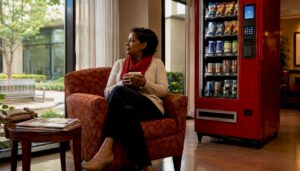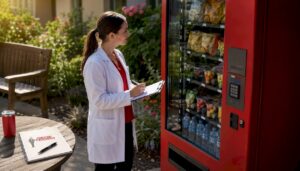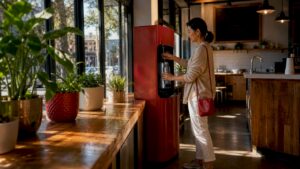

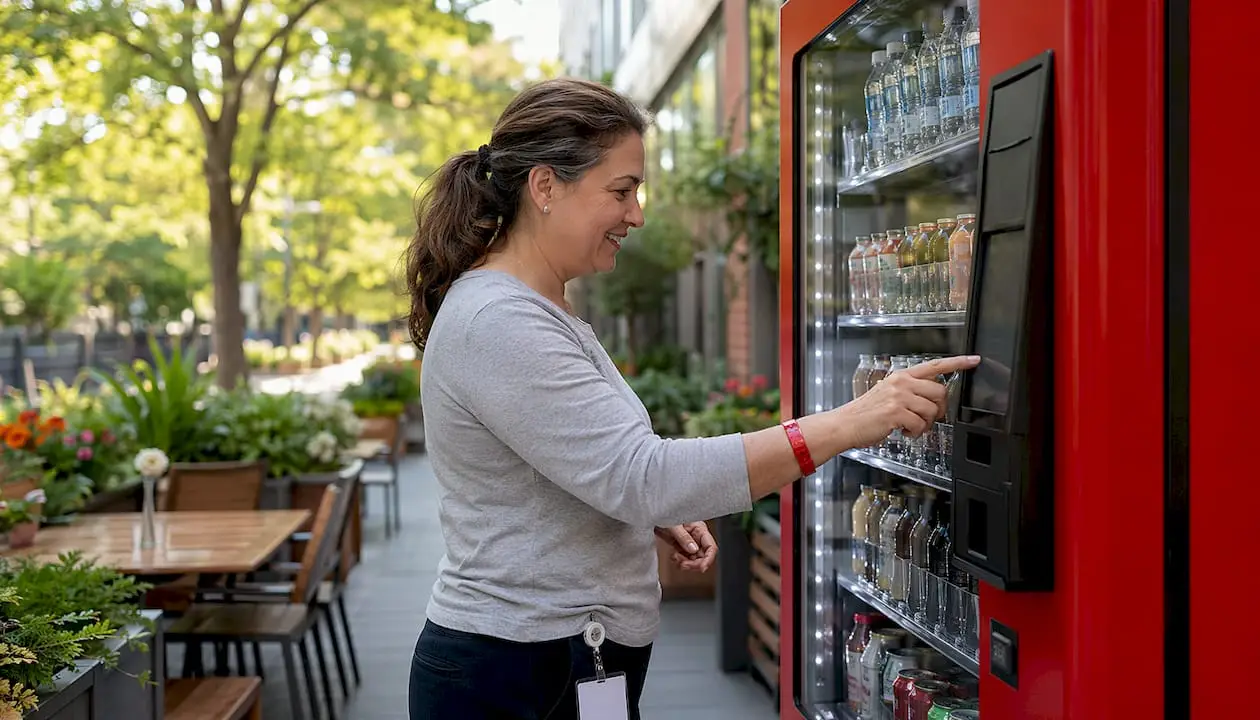
A visitor refreshment vending station is a dedicated, self-service unit that gives guests and visitors on-demand access to snacks, beverages, and wellness items in professional and public spaces. Known in the industry as a visitor amenities vending machine or guest refreshment kiosk, these stations operate 24/7 without staff involvement. Facilities managers in healthcare, hospitality, and corporate settings deploy them to fill service gaps that traditional cafeterias and staffed refreshment counters cannot cover around the clock. The result is a measurable lift in guest satisfaction and a reduction in the operational burden on facility staff.
What is a visitor refreshment vending station, and how does it work?
A visitor refreshment vending station is a compact, self-contained unit stocked with food, drinks, and convenience products for guests who need quick access between appointments, meetings, or extended waits. The industry also refers to these units as guest refreshment kiosks or visitor snack vending machines, depending on the product mix and deployment context. Compact units fit spaces as small as 6 × 3 × 2.5 ft, making them practical for hospital waiting rooms, hotel lobbies, office reception areas, and gym entrances. That footprint means you can place a fully stocked station in a corridor or alcove without a major renovation.
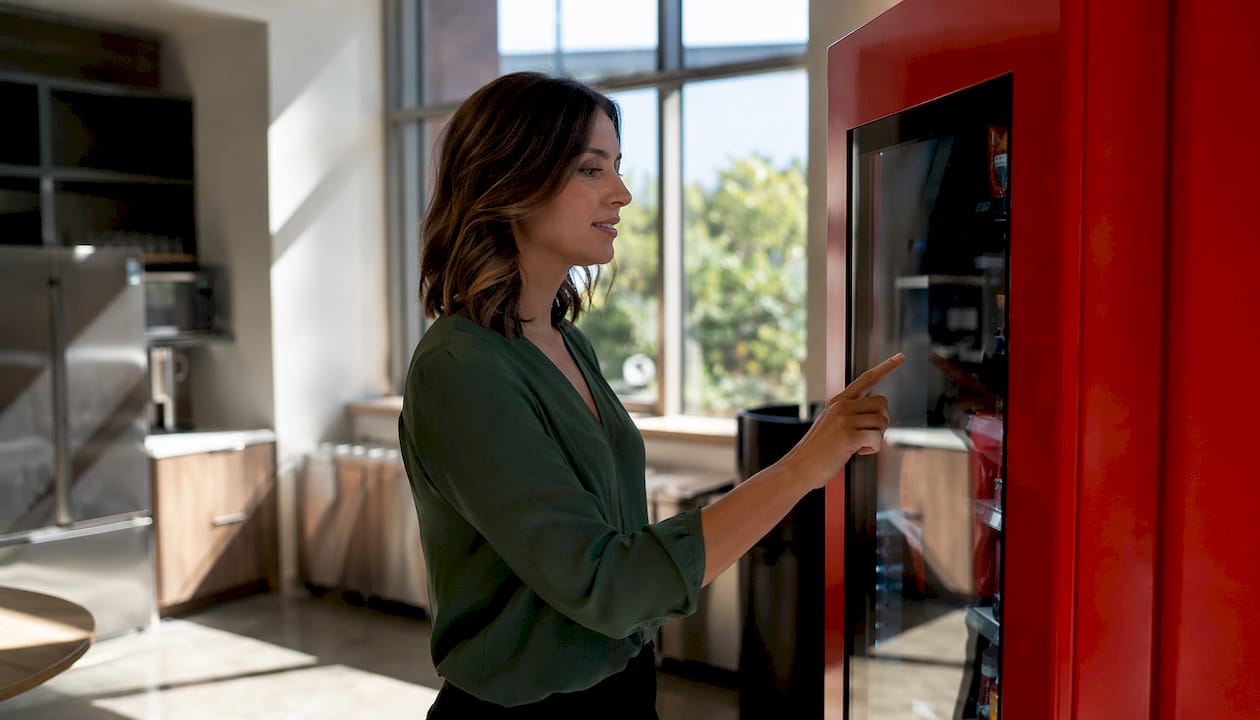
The core function is simple: a visitor selects a product, pays through a touchscreen interface, and receives the item within seconds. Modern units go well beyond that basic transaction. Smart coolers and AI-powered checkout provide contactless payment, real-time inventory tracking, and automatic alerts when stock runs low. That technology removes the guesswork from restocking and eliminates the mechanical jams that made older machines frustrating.
Pro Tip: Place your station near the main visitor entry point or waiting area, not in a back hallway. Foot traffic visibility is the single biggest driver of usage volume.
What features define modern visitor refreshment vending stations?
Modern visitor refreshment stations carry a feature set that goes far beyond coin slots and candy bars. The most capable units on the market today include:
- Cashless payment options: Credit cards, debit cards, Apple Pay, Google Pay, and contactless NFC payments. Cash-only machines lose a significant share of transactions from visitors who carry no coins.
- Real-time inventory monitoring: Sensors and cloud software track stock levels continuously. Operators receive alerts before a product sells out, preventing empty shelves during peak visitor hours.
- AI-powered checkout: Some units use computer vision to identify products as visitors remove them, eliminating the need to scan barcodes or press buttons.
- Adjustable shelving and coil configurations: Custom hardware configurations match the physical dimensions of your product mix, preventing items from jamming or falling incorrectly.
- Wide product range: A single unit can carry bottled water, energy drinks, protein bars, fresh sandwiches, over-the-counter medications, phone chargers, and personal care items.
- ADA-compliant interfaces: Touchscreens at accessible heights and audio prompts serve visitors with mobility or vision limitations.
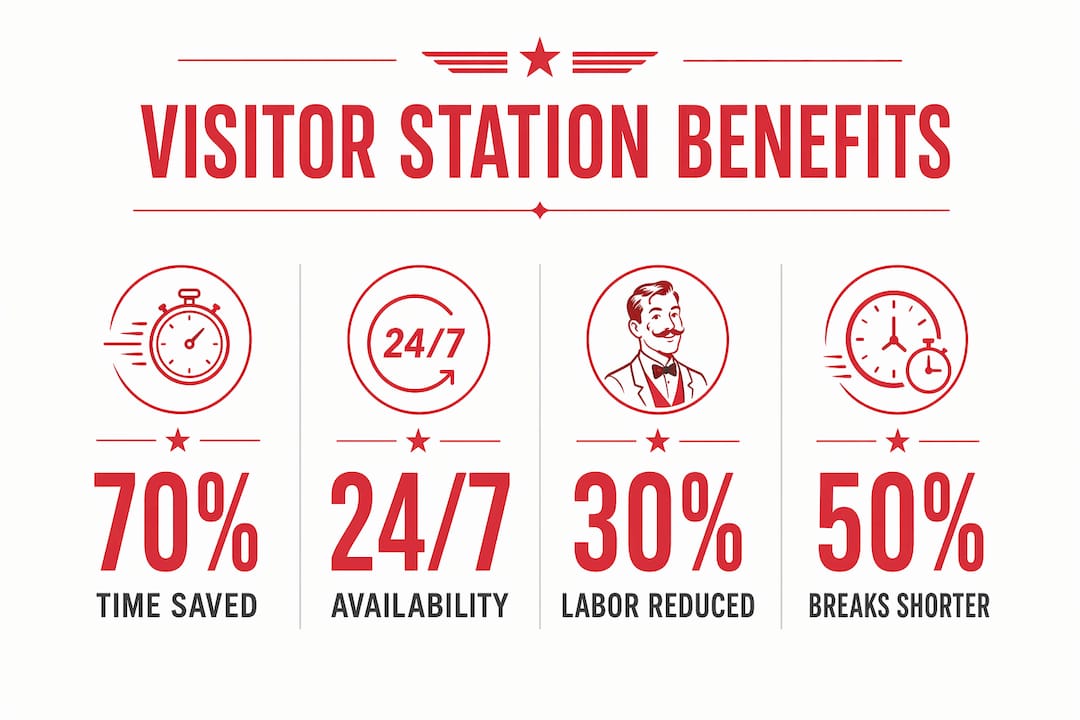
The 24/7 availability is the feature that facilities managers most often underestimate. A visitor arriving at 11:00 PM for a hospital visit or an early morning meeting has the same access as someone arriving at noon. That consistency sets a professional standard that staffed refreshment counters simply cannot match outside business hours.
How do visitor refreshment vending stations benefit facilities and their visitors?
The most direct benefit is time. On-site refreshment stations reduce average break duration from 20 minutes to under 7 minutes. That reduction matters in facilities where visitor flow is high and waiting areas are already stretched. A visitor who can grab a coffee in two minutes returns to their seat faster and leaves with a better impression of your facility.
Guest perception is the second major benefit. Visitor refreshment stations function as extensions of care and service standards, not just transactional machines. A hospital that provides a well-stocked station in its waiting area signals to families that their comfort matters. An office building that offers fresh snacks and beverages near the reception desk communicates professionalism before a single meeting begins.
The operational benefits for your team are equally concrete:
- No added staff workload: A managed vending program handles stocking, cleaning, and maintenance independently.
- No upfront cost: Most full-service programs install and operate machines at no direct cost to the facility.
- Faster service delivery: Visitors get what they need in under two minutes without queuing at a staffed counter.
- Revenue potential: Facilities that host machines under a revenue-sharing model generate passive income from visitor purchases.
Data from smart vending machines enables inventory efficiency and reduces operational labor, often allowing payback within months. That data also tells you which products visitors actually buy, so you can refine the mix over time rather than guessing.
Pro Tip: Request monthly sales reports from your vending provider. The top three and bottom three selling products in any given month tell you exactly where to adjust your inventory.
What operational models support visitor refreshment vending?
The most common model for facilities managers is the full-service managed program. Under this structure, a vending provider handles every operational task: site assessment, machine installation, product sourcing, regular restocking, cleaning, and proactive maintenance. Your facility provides the floor space and electrical connection. The provider handles everything else.
Providers typically activate machines within 48 hours and manage all tasks end-to-end at no cost to the facility. That speed matters when you are responding to a board directive or a guest experience audit with a tight deadline.
A typical managed program follows this sequence:
- Site assessment: The provider visits your facility, maps foot traffic, checks power supply locations, and recommends machine placement.
- Product selection: You and the provider agree on an initial product mix based on your visitor demographics and any dietary or regulatory requirements.
- Installation: The machine is delivered, positioned, and connected. Most installations take under four hours.
- Activation and testing: The provider stocks the machine, tests all payment systems, and confirms remote monitoring is live.
- Ongoing service: Regular restocking visits, remote inventory alerts, and on-call maintenance keep the station running without your involvement.
The free vending full-service program model removes the financial barrier that stops many facilities managers from acting. There is no capital expenditure, no service contract fee, and no maintenance bill. The provider earns revenue from product sales. Your facility earns a better guest experience at zero cost.
How do you tailor a vending station to your specific facility?
A visitor snack vending machine that works well in a corporate office will not automatically work in a hospital waiting room or a hotel lobby. The product mix, machine configuration, and physical placement all need to reflect the specific visitors you serve.
Understanding your visitor demographics
Hospital visitors tend to need comfort items: hot beverages, bottled water, light snacks, and over-the-counter pain relief. Corporate office visitors often want premium coffee, protein bars, and fresh food options. Hotel guests expect a broader range that includes personal care items and late-night snacks. Tailoring the product mix to specific audiences improves usability and drives higher purchase rates.
Placement strategy
Pre-installation site assessments that analyze floor space, power supply, and foot traffic are critical to avoid poor placement that reduces revenue and usability. The three highest-performing placement zones are main waiting areas, elevator lobbies, and corridor intersections near restrooms. Avoid placing machines in dead-end hallways or behind security checkpoints that visitors cannot easily access.
Customizing the product mix and hardware
| Facility Type | Recommended Product Focus | Key Hardware Consideration |
|---|---|---|
| Hospital | Water, hot drinks, light snacks, OTC items | Refrigerated compartment for fresh items |
| Corporate office | Premium coffee, fresh food, protein snacks | Larger capacity for high daily traffic |
| Hotel | Personal care, beverages, late-night snacks | 24/7 access with wide product variety |
| Gym or fitness center | Protein bars, sports drinks, electrolytes | Compact unit with narrow product range |
Data analytics from smart vending units reduce restocking labor and inventory shrink, accelerating ROI within months. Use that data to rotate slow sellers out and add products that your specific visitors actually want. A customized vending menu built on real purchase data outperforms any generic product list.
Key Takeaways
A visitor refreshment vending station delivers measurable guest experience improvements and operational efficiency gains when deployed with the right product mix, placement, and service model.
| Point | Details |
|---|---|
| Core definition | A self-service unit providing 24/7 snack, beverage, and wellness access for facility visitors. |
| Time savings | On-site stations cut average break time from 20 minutes to under 7 minutes. |
| No-cost deployment | Full-service managed programs install and operate machines at no direct cost to the facility. |
| Placement matters | Site assessment covering foot traffic, power supply, and floor space prevents poor placement. |
| Data drives results | Smart vending analytics refine product mix and reduce restocking labor, accelerating ROI. |
Vending stations are hospitality tools, not just machines
Most facilities managers I have spoken with over the years treat vending machines as a utility, like a water fountain or a trash can. You put one in, it runs, and you forget about it. That mindset leaves a significant amount of value on the table.
The facilities that get the most out of visitor refreshment stations are the ones that treat them as a hospitality touchpoint. A well-placed, well-stocked machine in a hospital waiting room tells a family member sitting there at 2:00 AM that someone thought about their comfort. That is not a small thing. It shapes how they feel about the entire facility.
The shift to smart vending technology is where I see the biggest gap between facilities that are ahead of the curve and those that are not. Managers who still run older machines with cash-only payment and manual restocking are leaving money and goodwill behind. The data alone from a modern unit can change how you think about visitor flow and product demand across your entire building.
My honest recommendation: start with one machine in your highest-traffic visitor area, run it for 90 days with full data reporting, and let the purchase patterns tell you what to do next. The results will make the case for expansion better than any proposal I could write.
— Gary
Jeevesvending’s approach to visitor refreshment vending
Facilities managers in the Dallas-Denton region have a direct path to a fully managed visitor refreshment station through Jeevesvending. The program covers everything from site assessment and machine installation to regular restocking and ongoing maintenance, all at no cost to your facility.
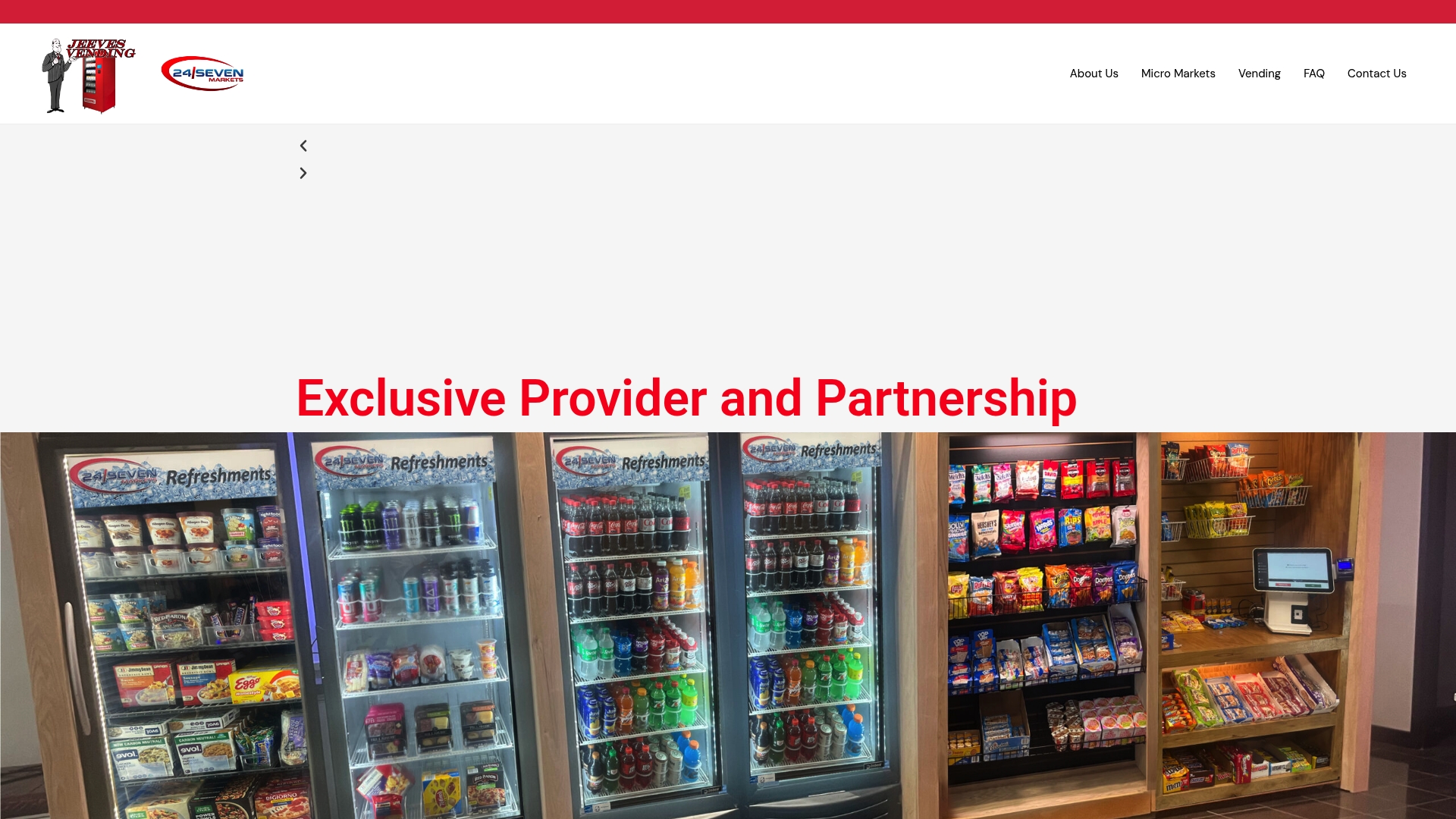
Jeevesvending deploys AI-powered vending machines with cashless payment, real-time inventory monitoring, and product selections tailored to your visitor demographics. Whether your facility serves hospital patients and families, corporate guests, or hotel visitors, the product mix is built around your specific audience. Activation typically happens within 48 hours of site approval. To get a station placed in your facility, contact Jeevesvending directly through their Dallas service page.
FAQ
What is a visitor refreshment vending station?
A visitor refreshment vending station is a self-service unit that provides 24/7 access to snacks, beverages, and convenience items for guests in facilities like hospitals, offices, and hotels. It operates without staff and accepts cashless payments through modern smart technology.
How quickly can a vending station be installed in my facility?
Most managed vending programs activate machines within 48 hours of completing the site assessment and installation agreement. The installation itself typically takes under four hours.
What visitor refreshment options should I offer in a hospital setting?
Hospital waiting areas benefit most from bottled water, hot beverages, light snacks, and over-the-counter comfort items like pain relievers. Refrigerated compartments add fresh food options for longer visits.
Does a visitor snack vending machine cost the facility anything?
Under a full-service managed program, the facility pays nothing for installation, stocking, or maintenance. The vending provider earns revenue from product sales and covers all operational costs.
How do I know which products are selling in my vending station?
Smart vending machines provide real-time sales data through cloud-based dashboards. Your provider should deliver regular reports showing top and bottom sellers so you can adjust the product mix based on actual visitor demand.