
What is a self-checkout micro-market?
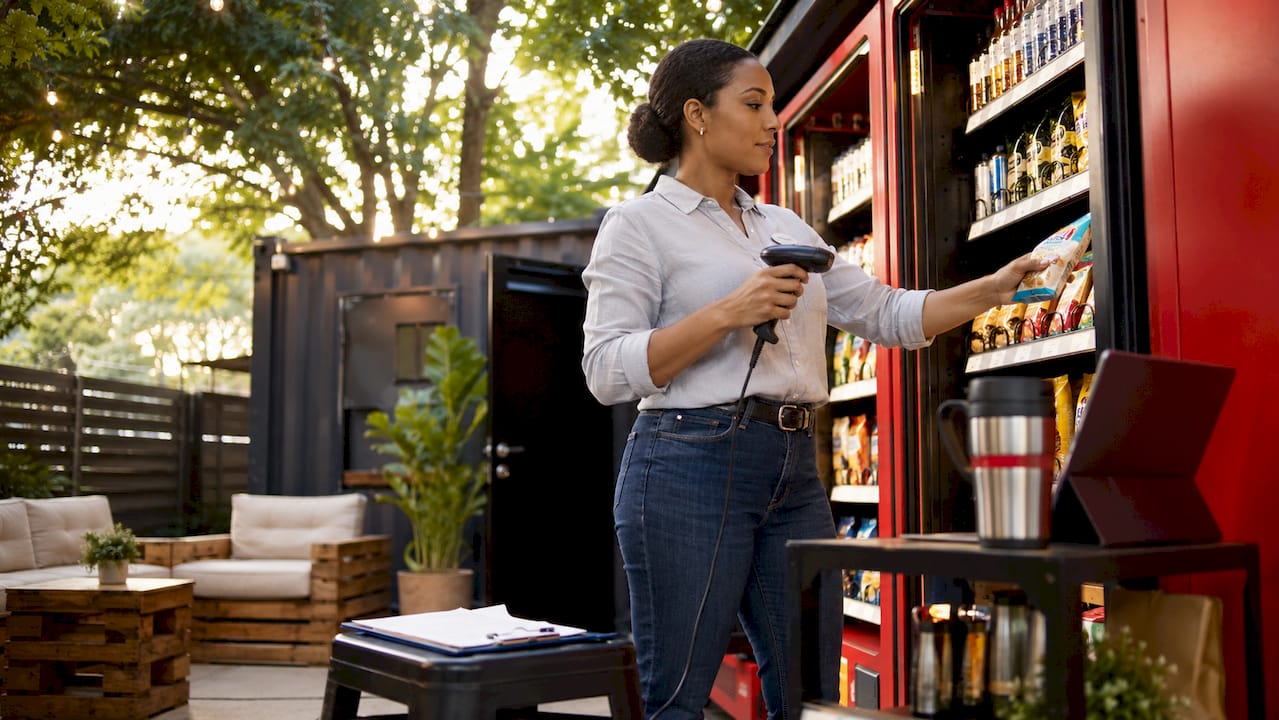
A self-checkout micro-market is an unattended retail food space installed inside a workplace or secured facility, where employees browse open shelves and coolers, then pay at an automated kiosk with no cashier involved. Think of it as a mini convenience store that runs itself around the clock. The industry term, formalized by NAMA (the National Automatic Merchandising Association), is “micro-market,” though Texas regulators officially call it a Self-Service Food Market.
The core difference from a traditional vending machine comes down to product access and variety. Customers pick up items, inspect them, and scan each UPC barcode or RFID tag at a payment kiosk before paying in a single transaction. According to the NAMA Technical Bulletin, typical micro-markets stock 150–400+ SKUs compared to a standard vending machine’s 40–50 items, providing a much wider product variety. That gap is not trivial when you’re trying to feed a 200-person workforce three times a day.
Key characteristics of a self-checkout micro-market:
- Open product access: Customers handle and inspect items before purchasing, unlike vending machines where products stay behind glass.
- Self-checkout kiosk: A touchscreen terminal accepts cash, credit cards, and stored-value cards.
- Cashless and contactless payments: Most modern kiosks support mobile pay and tap-to-pay.
- Unattended operation: No staff required on-site, just like vending, but with far more product flexibility.
- Closed location requirement: Micro-markets must be placed in secured, employee-only areas away from public foot traffic.
What hardware and technology power a micro-market?
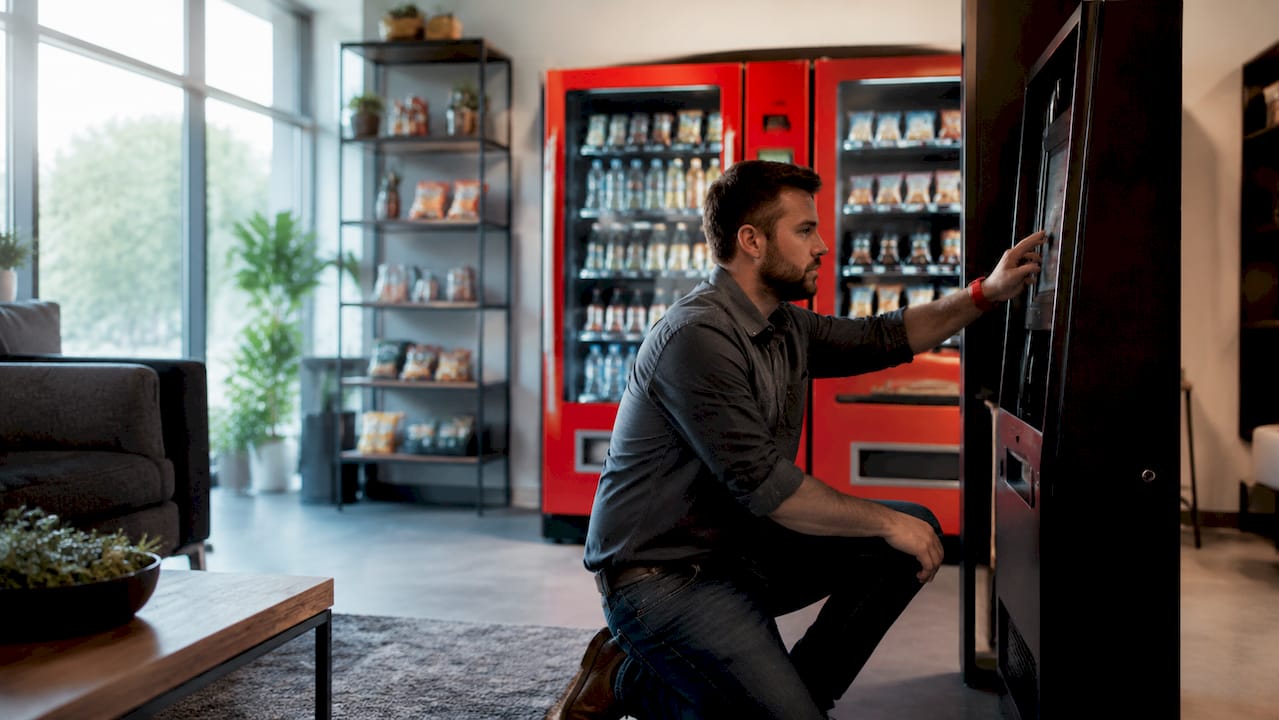
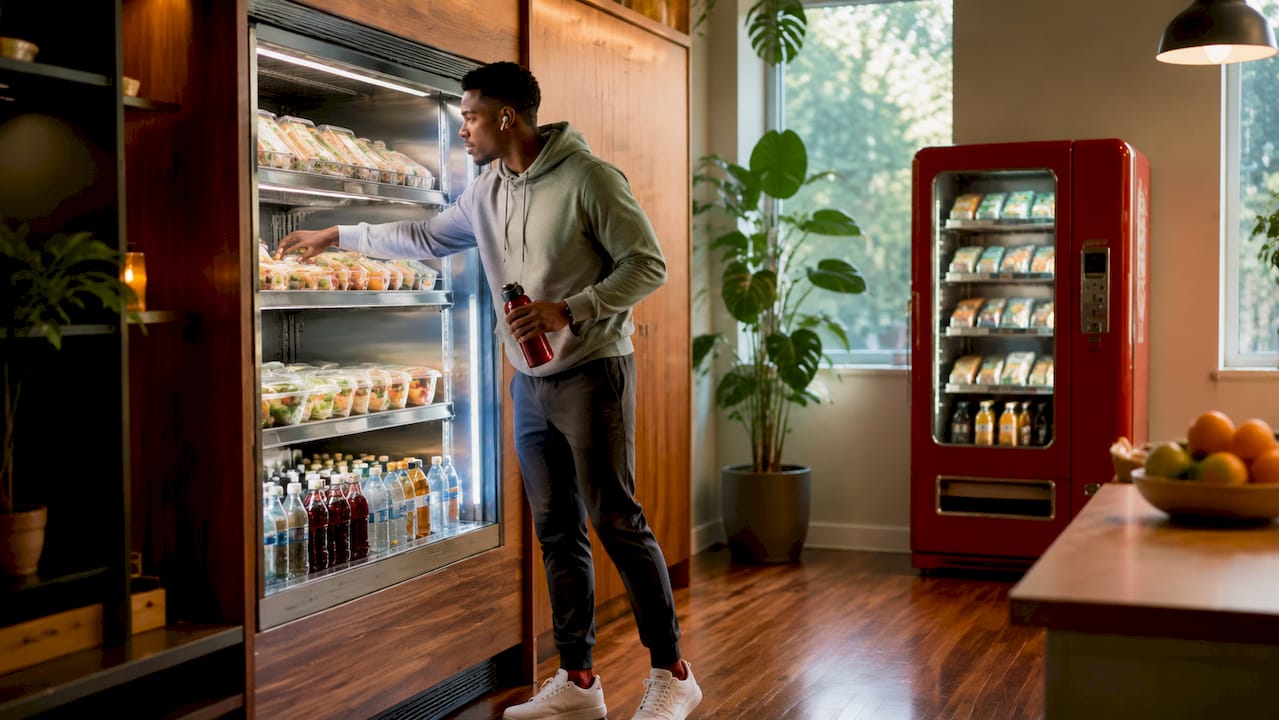
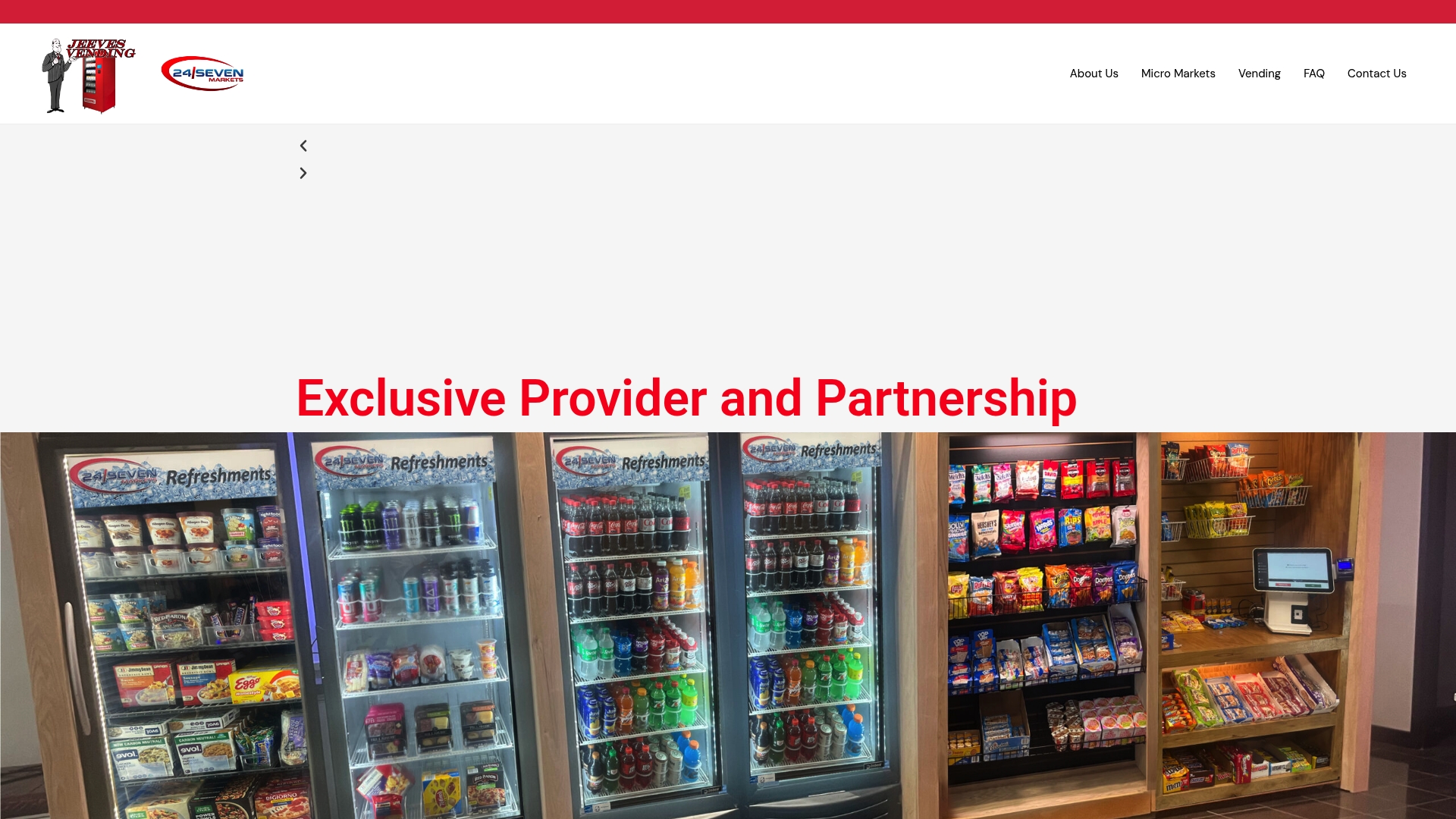
The physical setup of a micro-market reads like a stripped-down convenience store. Hardware typically includes open shelving units, glass-front refrigerated coolers, freezers, and a self-checkout kiosk with a touchscreen payment system. The layout is fully customizable, which means operators can configure the space to fit a breakroom corner or a dedicated retail alcove.
On the technology side, the checkout kiosk does the heavy lifting:
- Barcode and RFID scanning: Customers scan each item individually; RFID tags allow faster, tap-style scanning for high-volume locations.
- Touchscreen payment terminals: Support credit and debit cards, mobile wallets, and employer-issued stored-value accounts.
- Cloud-based inventory management: Real-time sales data flows to the operator’s back-end system, flagging low stock before a shelf goes empty.
- Remote monitoring dashboards: Operators at companies like 365 Retail Markets, Bernick’s, Canteen, In Reach, Cromer Food Services, and Maumee Valley Group use cloud platforms to track sales, temperature alerts, and equipment status from anywhere.
The cloud monitoring piece is what separates a modern micro-market from older unattended retail concepts. Predictive maintenance and cloud-based inventory tools let operators restock based on actual sales patterns rather than guesswork, cutting waste and preventing the frustrating “sold out” experience employees hate.
Why micro-markets work so well in workplace settings
The shift from forced-selection vending to open consumer choice drives higher sales and promotes healthier eating. When employees can pick up a sandwich, read the nutrition label, and decide whether they want it, they buy more and complain less. The NAMA Technical Bulletin frames this as a move from “forced selection” to a genuine consumer-choice model, and the sales data backs it up.
Facility managers see several concrete advantages:
- Fresher food options: Refrigerated coolers hold deli sandwiches, salads, yogurt, and fresh fruit that vending machines simply cannot accommodate.
- Faster transactions: One payment covers an entire basket of items, so there’s no waiting while a coworker runs three separate vending machine cycles.
- Higher revenue per visit: More SKUs means more impulse purchases and larger average basket sizes.
- Employee satisfaction: A well-stocked micro-market functions as a workplace amenity, not just a snack stop.
Micro-markets also function as mini-convenience store amenities that can boost employee morale and support talent retention. That’s a real operational argument for HR teams and facility managers making the case to leadership.
Security, compliance, and industry standards you need to know
Security is built into the micro-market model by design. The NAMA Technical Bulletin requires that every micro-market operate in a closed location, meaning a secured facility accessible only to a known group of employees or tenants. Public-facing lobbies and open office buildings with visitor traffic do not qualify.
Compliance requirements include:
- 24/7 video surveillance: Every micro-market must have continuous camera coverage of customer interactions for both security and regulatory compliance.
- TCS food handling: Time/temperature control for safety (TCS) foods, such as sandwiches and dairy, must be stored in specialized refrigeration with health switches that automatically prevent sales if the unit malfunctions or loses power.
- Retail food establishment classification: Most U.S. states, including Texas, classify micro-markets as retail food establishments, not vending machines, which triggers food safety inspections and licensing requirements.
- Closed-access environments: The combination of restricted access and continuous monitoring makes unattended micro-markets more secure than most public-facing self-service setups.
Pro Tip: When evaluating micro-market providers, ask specifically whether their refrigeration units include health-switch technology. Without it, your facility could face a food safety violation if a cooler fails overnight and TCS products remain on sale.
Best practices for managing a micro-market day to day
Running a micro-market well is mostly about consistency. The technology handles a lot, but the operator still needs a clear routine.
- Stock based on data, not habit: Use your cloud dashboard to identify which items sell out by Wednesday and which sit until Friday. Rotate slow movers out and replace them with products your workforce actually wants.
- Schedule regular cleaning: Open shelving collects dust and spills faster than enclosed vending units. A weekly wipe-down of shelves, cooler doors, and the kiosk touchscreen keeps the space looking professional.
- Review surveillance footage periodically: Not just for theft, but to understand traffic patterns. If the kiosk line backs up at noon, you may need a second terminal or a layout change.
- Customize the product mix: Providers like 365 Retail Markets and Canteen offer planogram tools that let you tailor SKUs by location. A manufacturing plant’s breakroom has different needs than a corporate office.
- Communicate with employees: Post a simple sign near the kiosk with a contact number for reporting issues. Employees who feel heard about product requests become your best advocates for the space.
Pro Tip: Treat your micro-market the way a good convenience store manager treats their store: walk it daily, taste-test new products before adding them, and pull anything approaching its sell-by date before an employee finds it first.
Jeeves Vending’s micro-market installations in the Dallas-Denton area include ongoing restocking and maintenance support, so facility managers don’t carry that operational burden alone.
What products can you actually find in a micro-market?
The product range is one of the strongest arguments for micro-markets over traditional vending. A well-stocked location typically carries:
- Fresh salads, deli sandwiches, wraps, and soups
- Breakfast items including pastries, breakfast sandwiches, and cereals
- Premium beverages: sparkling water, juices, energy drinks, and cold brew coffee
- Snacks, candy, gum, and mints alongside healthier snack alternatives
- Frozen treats and ice cream
- Over-the-counter medicine and personal care sundries
That last category surprises most facility managers. Stocking ibuprofen, antacids, and basic toiletries turns a breakroom snack stop into a genuine employee resource. Operators like In Reach and Cromer Food Services have built entire service models around this broader product philosophy, treating the micro-market as a full-service amenity rather than just a food stop.
How employees actually use a micro-market
The customer experience in a micro-market is deliberately close to a convenience store visit. An employee walks in, browses open shelves and cooler doors, picks up whatever they want, and carries it to the kiosk. They scan each item, review the total on the touchscreen, and pay once with a card, mobile wallet, or stored-value account tied to their employer.
The whole transaction typically takes under two minutes for a single-item purchase. Multi-item baskets take a bit longer, but still beat waiting in a cafeteria line. NAMA notes that the ability to review nutrition labels and inspect products before buying builds trust in the food offering, which translates directly into repeat visits.
One detail worth flagging for facility managers: the kiosk experience varies by provider. Some platforms, including those used by 365 Retail Markets and Maumee Valley Group, support biometric payment options like thumbprint scanning. That level of convenience matters in environments where employees don’t carry wallets to the breakroom.
Common operational challenges and how to handle them
No unattended retail setup runs perfectly. The most common issues operators encounter:
Shrinkage and theft: Even in closed environments, some product loss occurs. The combination of closed-location access and 24/7 surveillance keeps shrinkage rates low, but operators should review camera footage regularly and cross-reference it against inventory reports.
Equipment downtime: A cooler failure can take TCS products offline and trigger a food safety issue. Health-switch refrigeration prevents unsafe sales automatically, but operators still need a rapid-response maintenance protocol. Cloud monitoring platforms send temperature alerts in real time, giving operators a window to act before product is lost.
Stale or expired product: Open shelving means employees can see exactly what’s on the shelf, including sell-by dates. A single expired item damages trust in the entire market. Tight restocking schedules and real-time inventory monitoring are the practical fix here.
Kiosk technical issues: Payment terminal failures frustrate employees and kill sales. Choose a provider that offers remote diagnostics and same-day service response. Bernick’s and similar full-service operators typically include kiosk support as part of their management contract.
Key Takeaways
A self-checkout micro-market replaces traditional vending machines with open shelving, refrigerated coolers, and automated kiosks, stocking 150–400+ SKUs in secured workplace environments with 24/7 surveillance.
| Point | Details |
|---|---|
| Product variety advantage | Micro-markets stock 150–400+ SKUs versus a vending machine’s 40–50 items. |
| Closed-location requirement | Micro-markets must be placed in secured, employee-only areas to meet NAMA and regulatory standards. |
| 24/7 surveillance is mandatory | Continuous camera coverage of customer interactions is required for both security and compliance. |
| TCS food safety compliance | Refrigeration units must include health-switch technology to prevent sales during equipment failure. |
| Cloud monitoring reduces waste | Real-time inventory data lets operators restock based on actual sales, cutting waste and preventing stockouts. |
Ready to bring a micro-market to your workplace?
Jeeves Vending installs and manages custom micro-markets in Dallas and the Denton area at no cost to your business. From product selection to kiosk setup and ongoing restocking, the team handles the operational details so you can focus on running your facility. If you’re weighing a micro-market against a distributed vending setup, Jeeves Vending can walk you through both options and recommend what fits your headcount, space, and budget. Reach out today to schedule a free consultation.