
The best gluten-free office snacks are sealed, individually wrapped and labeled “gluten-free” on the package. Think fruit-and-nut bars, single-serve nut butter packs, certified gluten-free crackers, popcorn and corn chips. The label matters most. The FDA lets a food carry the claim only when it contains less than 20 parts per million of gluten. A vending machine or micro-market is a natural fit, because every item stays in its own wrapper and the label stays in view.
This guide is for office managers, HR teams and facility managers who want a break room that works for people who avoid gluten, whether they have celiac disease, a sensitivity or a personal preference. It covers what to look for, which kinds of products fit, how to keep cross-contact low, and how sugar-free fits in.
TL;DR
- Trust the package, not the product type. The FDA allows “gluten-free” only on foods with less than 20 ppm of gluten, so the label is your first check.
- Individually wrapped items work best in shared spaces: bars, nut butter packs, granola bites, popcorn, corn chips and certified crackers.
- Keep gluten-free items on their own clearly labeled shelf or machine row, above anything crumbly.
- “Sugar free” and “gluten-free” are separate regulated claims. A snack can carry one, both or neither.
- We stock and service vending machines and micro-markets at no cost to host businesses in the Dallas-Denton area, so you can offer gluten-free choices without buying or restocking anything yourself.
Table of Contents
- What “gluten-free” actually means on a label
- Snacks that work well in an office
- Keeping cross-contact low in a shared space
- How gluten-free vending works
- Sugar-free is a different claim
- Choosing snacks for more than one diet
- A worked example: a 60-person office
- Get gluten-free options without the stocking work
- FAQ
- Sources
What “gluten-free” actually means on a label
Before you buy a single box, know what the claim guarantees. Under the FDA’s rule, “gluten-free” applies only to foods with less than 20 ppm of gluten, the lowest level that can be reliably detected with valid scientific methods. The same rule bars the claim on foods that contain wheat, rye, barley or their crossbred hybrids, or an ingredient made from those grains that has not been processed to remove gluten.
That definition is the reason a label is more useful than a guess. Before the rule, the FDA’s own analysis noted that the lack of a legal definition kept market and legal mechanisms from working well. Now the claim has a number behind it, which makes label reading a reliable habit for your team.
A few practical consequences:
- “Wheat-free” is not “gluten-free.” Barley and rye contain gluten too. Look for the exact words “gluten-free.”
- Naturally gluten-free is not always labeled. Plain roasted nuts or dried fruit may be fine in theory, but if they are packed on shared lines, only the package tells you more. Choose labeled items for a shared office.
- Ingredients lists still matter. If you see wheat in the allergen statement, the item is not for your gluten-free shelf.
Snacks that work well in an office
The common thread among good office picks is shelf stability and individual wrapping. A snack sits in a desk drawer or a machine for weeks, and a sealed single serving keeps hands and crumbs out of the picture. Schär’s office pantry guidance lists individually wrapped fruit bars and meat sticks, certified gluten-free crackers and popcorn made in a dedicated gluten-free facility as convenient shelf-stable choices.
Bars and bites
Fruit-and-nut bars are the easiest win. LÄRABAR Original bars are described by the maker as gluten-free, made with unsweetened fruits, nuts and spices, with no more than nine ingredients. The brand’s protein bars list 10 to 12 g of plant-based protein and 3 g of fiber per bar, which suits the mid-afternoon crowd.
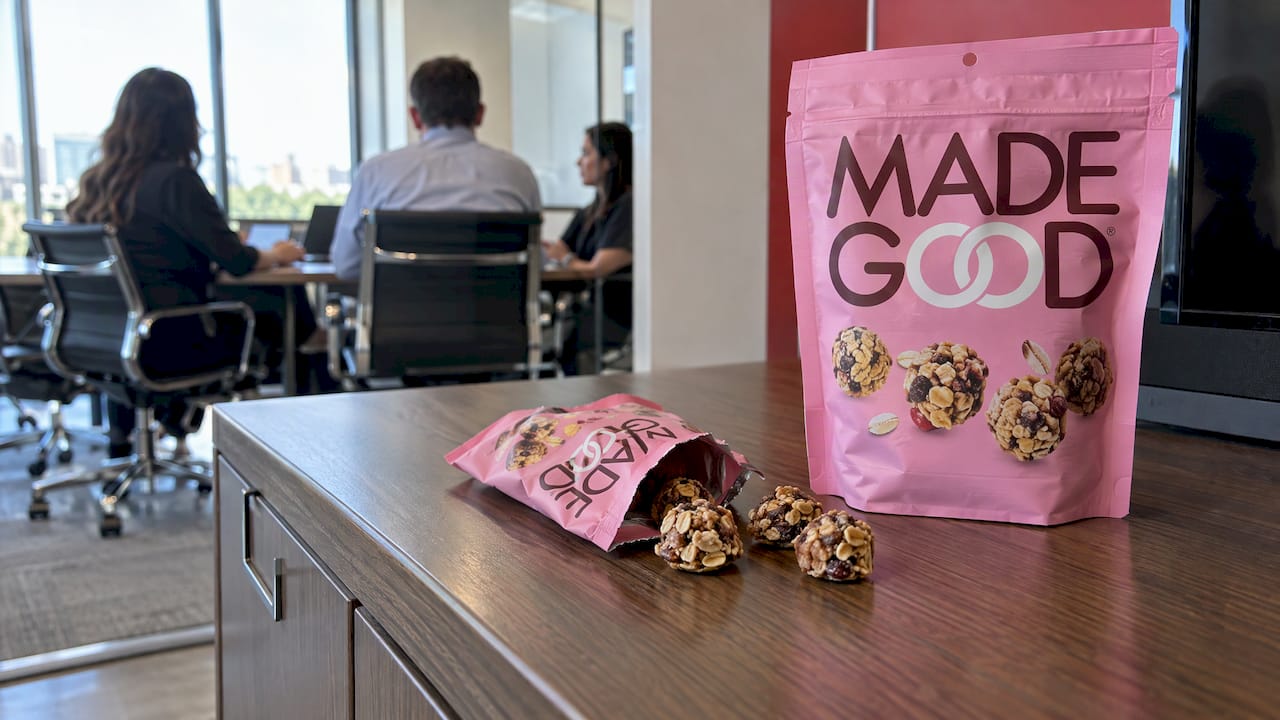
Granola-style bites are another option. MadeGood Trail Mix Granola Bites are organic, gluten-free and nut-free, sold in packs of five individual bags. Each 24 g pouch has 100 calories, 16 g of carbohydrate, 6 g of sugar and 2 g of protein. Nut-free matters here: it makes them easier to place in offices and schools where allergies overlap with gluten avoidance. The brand reminds shoppers that product details can change, so check the current package before you order.
Nut butter packs and nuts
Single-serve nut butter is a handy pairing with gluten-free crackers or apple slices. Barney Butter Bare Smooth Snack Packs are 0.6 oz each, sold in caddies of 6, 12 or 24, made from blanched roasted almonds and palm fruit oil with no added sugar or salt. Because they are nut-based, keep them labeled so people with tree nut allergies can steer clear.
Roasted nuts, dried fruit and corn chips labeled gluten-free are also common gluten-free vending options. Nuts and chips tend to be reliable sellers because they feel like a normal snack rather than a “special diet” item.
Crunchy and salty
Popcorn, corn tortilla chips and rice-based crackers fill the savory slot. Check each package for the gluten-free statement, since flavored versions sometimes add ingredients that change the picture. A good rule is to pick a brand’s labeled gluten-free line and stick with it, rather than assuming every flavor qualifies.
Quick reference
| Snack type | Why it suits an office | What to check on the package |
|---|---|---|
| Fruit-and-nut bars | Shelf-stable, single wrapped, filling | “Gluten-free” statement, nut allergen warning |
| Granola bites | Portion-controlled pouches | Gluten-free and nut-free wording, sugar per pouch |
| Single-serve nut butter | Pairs with fruit or crackers | Gluten-free label, tree nut or peanut notice |
| Roasted nuts | High satiety, familiar | Gluten-free label, shared-facility notes |
| Corn chips and popcorn | Satisfies the salty craving | Flavor-specific gluten-free label, sodium |
| Certified gluten-free crackers | Good base for spreads | Certification and gluten-free statement |
| Dried fruit | Simple, sweet, long shelf life | Added sugar, gluten-free statement |
Keeping cross-contact low in a shared space
A gluten-free label tells you about the product. A shared break room adds a second question: what happens around it? Dr. Alessio Fasano of the FDA’s expert conversation series points out that cross-contamination can be an issue outside the home, because visitors may not know the precautions needed to keep gluten off food and food-contact surfaces.
The fix is a few simple habits:
- Give gluten-free items a dedicated, labeled shelf. Schär recommends a clearly labeled gluten-free shelf at the top, so crumbs and spills from foods stored below cannot fall onto it.
- Stock sealed, single-serve packs. Nobody reaches into a shared bag, and nothing sits open on a counter.
- Label the shelf, not just the item. A small sign helps people who are in a hurry.
- Encourage pre-packaged sharing. For team events, the same guidance favors individually wrapped foods, clear shelf labels and responsible sharing, such as pre-packaging items instead of setting out open trays.
- Keep the cake and donuts away from the gluten-free shelf. The CDC suggests discouraging shared “dumping” areas for less healthy leftovers such as birthday cake or candy, which also keeps crumbs from drifting into your gluten-free zone.
A vending machine or a micro-market handles most of this by design. Each product sits in its own package, in its own slot, behind glass or in a cooler, and a label or shelf tag identifies what it is. Nothing is handled by the next person before you.
How gluten-free vending works
The idea is simple: your operator adds a gluten-free row, or a gluten-free section in a micro-market, and restocks it on a schedule matched to what your team actually buys. With a traditional machine, that means dedicating a few spirals or slots. With a micro-market or smart cooler, it means a shelf or a filter on the kiosk screen.
What makes it work is information. Remote stock monitoring shows which items sell and which sit, so a slow gluten-free product can be swapped for a better one rather than aging out. A short employee survey speeds this up; our copy-and-paste employee snack survey has questions you can use to ask about dietary needs without singling anyone out.
A few things to ask any vendor, ours included:
- Which products carry the “gluten-free” label on the package?
- Can gluten-free products sit together in a labeled section?
- Can the operator share supplier documents on cross-contact, such as risk assessments and cleaning practices? The FDA’s rulemaking notes that vendors can request supplier paperwork on risk assessments and cleaning protocols.
- How quickly can a product be swapped if it is not selling?
For the equipment side, see how our modern vending machines and smart coolers differ from a traditional vending machine, and how fresh food and coffee options can round out a break room.
Sugar-free is a different claim
People who search for gluten-free vending often search for sugar-free too, and the two get mixed up. They are separate, regulated claims.
The FDA defines “sugar free” as less than 0.5 grams of sugars per reference amount customarily consumed and per labeled serving. A product that meets that is sugar free, and it may need a calorie disclaimer when it is not also low or reduced in calories. A gluten-free product, by contrast, needs under 20 ppm of gluten and no unprocessed gluten-containing grain ingredients. One does not imply the other: a gluten-free cookie can be full of sugar, and a sugar-free candy can contain wheat.
Two label details help when you stock for both groups:
- Total sugars versus added sugars. The Nutrition Facts panel separates total sugars, which include those naturally present, from added sugars, which are added during processing. A fruit bar may show sugar that comes from the fruit itself.
- Why added sugars get attention. The FDA notes that added sugars increase calories without contributing important nutrients.
When you stock sugar-free options, check each product against the under-0.5 g threshold rather than trusting the front-of-pack wording alone. For a deeper look at how calorie limits shape a machine, read what calorie-capped vending means for your workplace.
Choosing snacks for more than one diet
Gluten-free is rarely the only request. A good break room serves a handful of overlapping needs, and many products cover several at once. Fruit-and-nut bars, for example, often work for gluten-free, vegan and dairy-free colleagues. See our guides to vegan office snacks, keto office snacks and protein snacks for vending for the overlap.
The CDC’s food service guidelines sample language suggests that workplaces offer choices for diverse dietary needs and apply packaged-snack standards covering sodium, calories, saturated fat and sugar. For federal facilities, it advises that packaged snacks in vending or grab-and-go areas contain no more than 230 mg of sodium per package. Private employers are not bound by that, but it is a useful yardstick when you pick between two gluten-free chips.
A simple way to build the mix:
- Ask first. Run a short survey about dietary needs and favorite snacks.
- Start small. Add four to six gluten-free products across sweet, salty and filling categories.
- Label by need. Use shelf tags such as “gluten-free”, “nut-free” and “vegan”.
- Review monthly. Keep the winners, rotate the rest.
- Write it down. If you are drafting an employee policy, our HR guide to vending policy and FDA labels covers contracts and why a policy does not need to mean a snack ban.
The office snack station checklist is a good companion if you are setting up a shelf or a micro-market from scratch, and our piece on employee satisfaction snack amenities explains how inclusive options show up in how people feel about the workplace.
A worked example: a 60-person office
Imagine an office of about 60 people where a few employees avoid gluten. A workable first setup might look like this:
- Sweet: a fruit-and-nut bar and a granola bite pouch.
- Salty: a gluten-free corn chip and a popcorn.
- Filling: a single-serve almond butter pack with a certified gluten-free cracker.
- Simple: a bag of roasted nuts or dried fruit with a gluten-free label.
That is six products. In a machine, they take one row or one cluster of slots. In a micro-market, they take one labeled shelf at the top. After a month, sales data shows what to keep. The point is not a huge range. It is that someone who avoids gluten can walk up and find two or three things they can eat without reading every ingredient list twice.
This is an illustration, not a prescription: your team’s mix and the products available will differ.
Our perspective
Most offices think of dietary inclusion as a catering problem. We think of it as a stocking problem, and stocking is something we do every week. When someone on your team avoids gluten, they should be able to walk to the break room and find a few clearly labeled choices that are theirs, without asking anyone or opening a shared bag.
That is why we build around sealed single-serve products, labeled sections and remote stock monitoring. Monitoring shows us what your people buy, so the gluten-free row is built from real demand and not guesses. If something is not moving, we swap it.
As a family-owned, locally managed operator in the Dallas-Denton area, we would rather talk to your office manager about what your team needs than hand over a generic planogram. And because there is no cost to the host business, trying a gluten-free section is a low-risk step.
Gary
Get gluten-free options without the stocking work
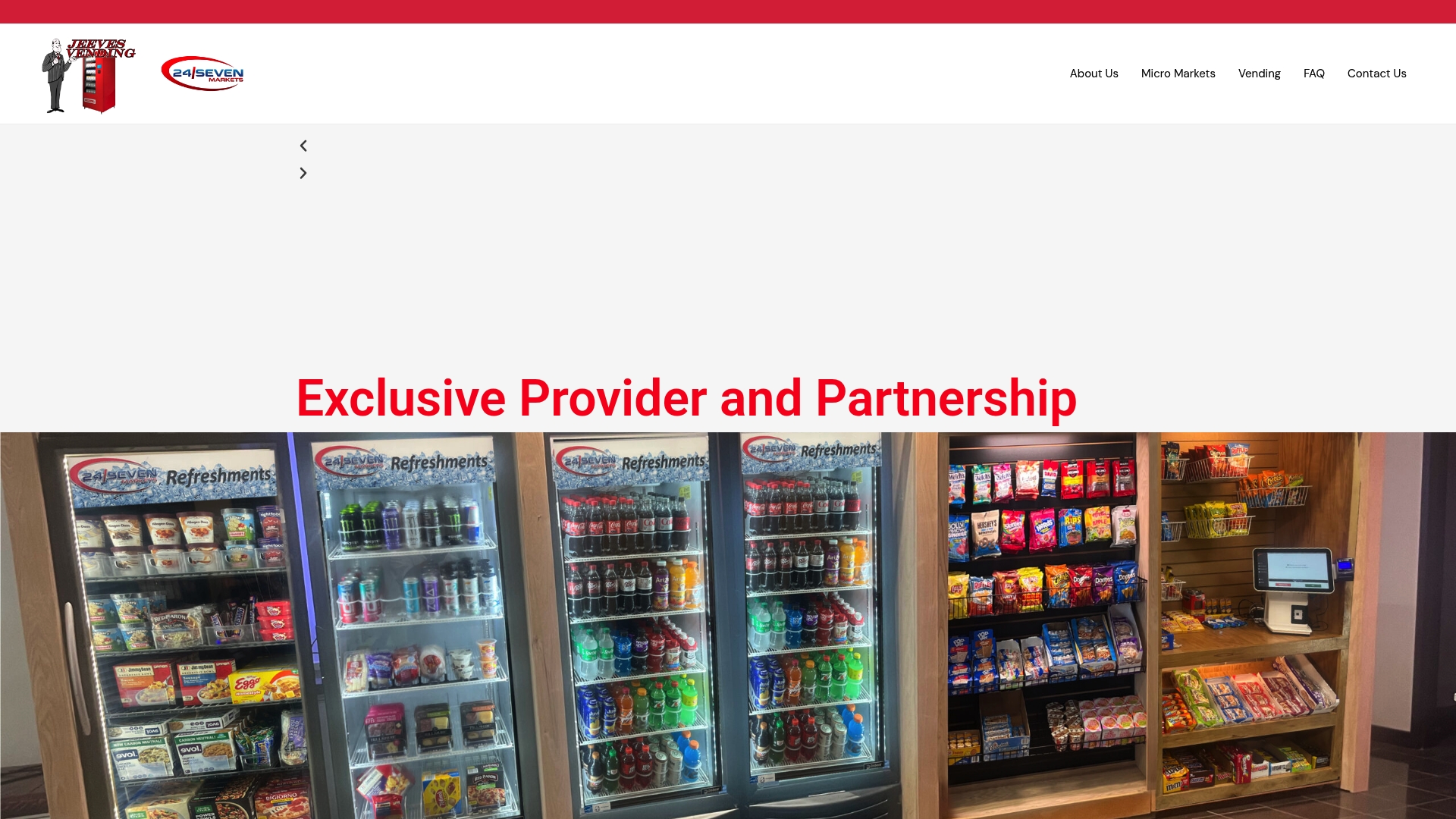
If you would rather not buy, shelve and reorder snacks yourself, we can do it for you. Jeeves Vending places state-of-the-art vending machines and custom micro-markets in workplaces, schools, gyms, hospitals and warehouses in the Dallas-Denton region at no cost to the host business, with restocking, maintenance and remote monitoring included. Our range covers chips, drinks, healthy items, sweets, fresh foods, frozen items and coffee.
See how our free full-service vending program works, or read why installation cost is often $0. If you are weighing an employer contribution toward snacks, our guide to subsidized vending explains how to pilot one break room and check FDA rules. Tell us your dietary needs on the Jeeves Vending homepage and we will plan a labeled gluten-free section around them.
FAQ
Is “gluten-free” on a snack package reliable?
In the US, yes, in a defined sense. The FDA permits the claim only on foods with less than 20 ppm of gluten and without unprocessed wheat, rye, barley or their hybrids. Anyone with celiac disease should still follow their doctor’s advice on what is right for them.
Can a vending machine really be gluten-free?
A machine can offer gluten-free products, and each one stays sealed in its own package. The machine itself is not a certified gluten-free kitchen, so the useful question is whether each product is labeled gluten-free. A dedicated, labeled row makes those products easy to find.
What is the difference between sugar-free and gluten-free?
They are separate claims. “Sugar free” means under 0.5 g of sugars per serving, while “gluten-free” means under 20 ppm of gluten. A snack can meet one, both or neither, so read each label.
How many gluten-free snacks should an office stock?
Start with four to six products across sweet, salty and filling choices, then adjust using what sells and what your team asks for. A short survey is the fastest way to learn what people want.
Sources
- FDA: ‘Gluten-Free’ Means What It Says
- FDA: Food Labeling; Gluten-Free Labeling of Foods, Final Rule
- FDA: Three Years Later, What is the Impact of the Gluten-Free Labeling Standard
- FDA: Dear Manufacturer Letter Regarding Sugar Free Claims
- FDA: What’s on the Nutrition Facts Label
- FDA: Interactive Nutrition Facts Label, Total and Added Sugars
- CDC: Sample Language, Nutrition (FSG Toolkit)
- CDC: Tips for Offering Healthier Options and Physical Activity at the Workplace
- Schär: How to Stock Your Office Pantry with Gluten-Free Options
- LÄRABAR: Our Products
- MadeGood: Trail Mix Granola Bites
- Barney Butter: Bare Smooth Almond Butter Snack Pack