A hot-meal vending machine keeps ready-made meals chilled, heats the one you choose after you pay, and hands it over in about a minute. For a workplace with no cafeteria, a night shift or a long walk to the nearest restaurant, that can fill a real gap. It also brings food-safety, power and space questions that a bag-of-chips machine never raises. This guide covers how the machines work, what they serve, what to check before you say yes, and which workplaces they fit.
TL;DR
- Most hot-meal machines are refrigerators with a built-in oven: meals stay cold until you pay, then are heated on demand and dispensed.
- Because the food needs temperature control, the food-safety bar is higher than for packaged snacks. Ask for written cleaning and temperature procedures.
- Plan for floor space, a suitable electrical circuit and a restocking schedule before you pick a model.
- Not every site needs hot food. A well-stocked fresh-food cooler or micro-market often covers the same need with less infrastructure.
- Jeeves Vending places machines and micro-markets in the Dallas-Denton region at no cost to the host business. Ask us what fits your site.
Table of Contents
- What hot food vending at work actually is
- How a purchase works, step by step
- What you can actually eat from one
- Food safety: the part that matters most
- Space, power and upkeep
- Is it right for your workplace?
- What the alternatives look like
- Our perspective
- How Jeeves Vending can help
- FAQ
- Sources
What hot food vending at work actually is
The FDA Food Code defines a vending machine as a self-service device that dispenses unit servings of food in packages or in bulk after payment, without being replenished between each sale (FDA Food Code 2022). A hot-meal machine fits that definition, with one big difference: the food inside is perishable.
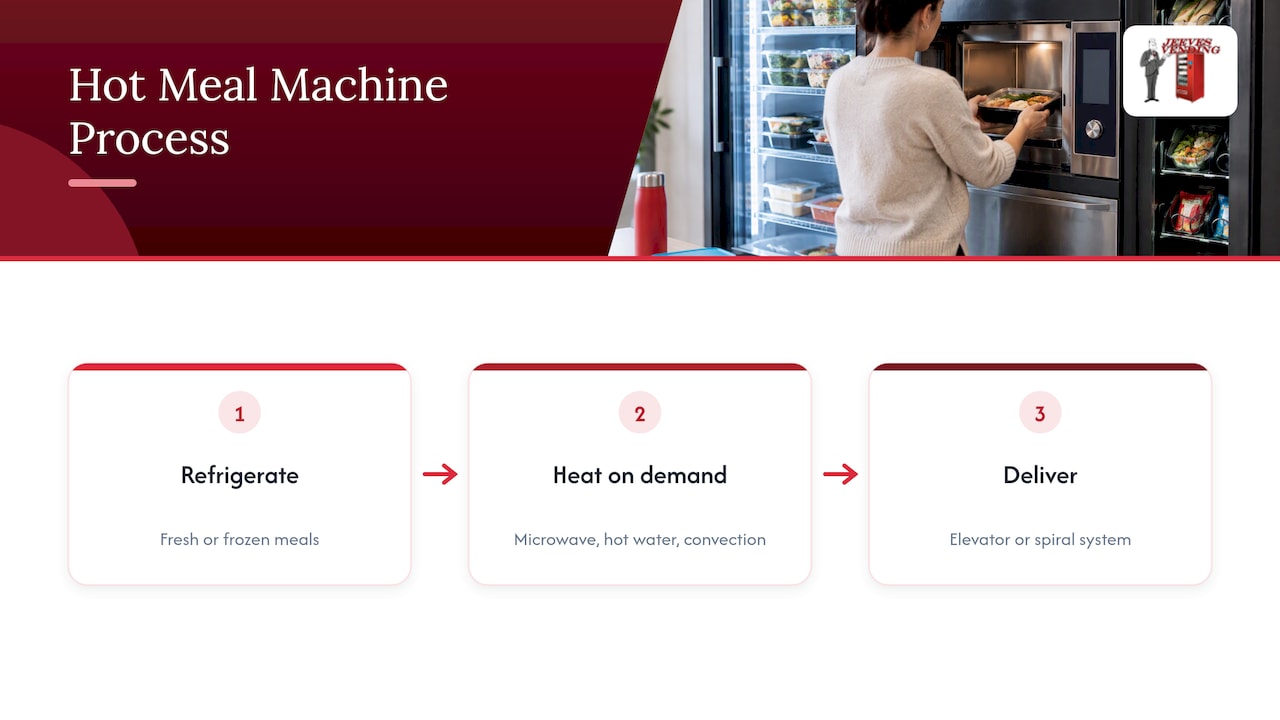
The typical design is simple. The unit refrigerates fresh or frozen meals, heats a selected item on demand by microwave, hot water or convection, and delivers it through an elevator or spiral system, as one equipment maker’s 2026 guide describes it. The meal is never sitting under a heat lamp. It is cold and safe on the shelf, and hot only for the minute before you eat it.
That is why these machines suit places where a hot meal is hard to get: factories and warehouses with off-hours shifts, hospitals, campuses, and offices in areas with few restaurants.
How a purchase works, step by step
- Browse. A touchscreen shows the menu, and often ingredients and prices.
- Pay. Cards, contactless and mobile wallets are standard. Cash is sometimes an add-on.
- Heat. The machine pulls the meal from refrigerated storage and heats it, usually for under a minute or so.
- Collect. The finished meal drops into a pickup door, ready to eat.
The payment piece is worth noting. A university dining page for one campus heated-food machine lists app pre-ordering and says the machine can accept meal-plan flex dollars alongside credit and debit cards (Northern State University dining). That is a reminder that payment flexibility is a feature to check, not an assumption.
What you can actually eat from one
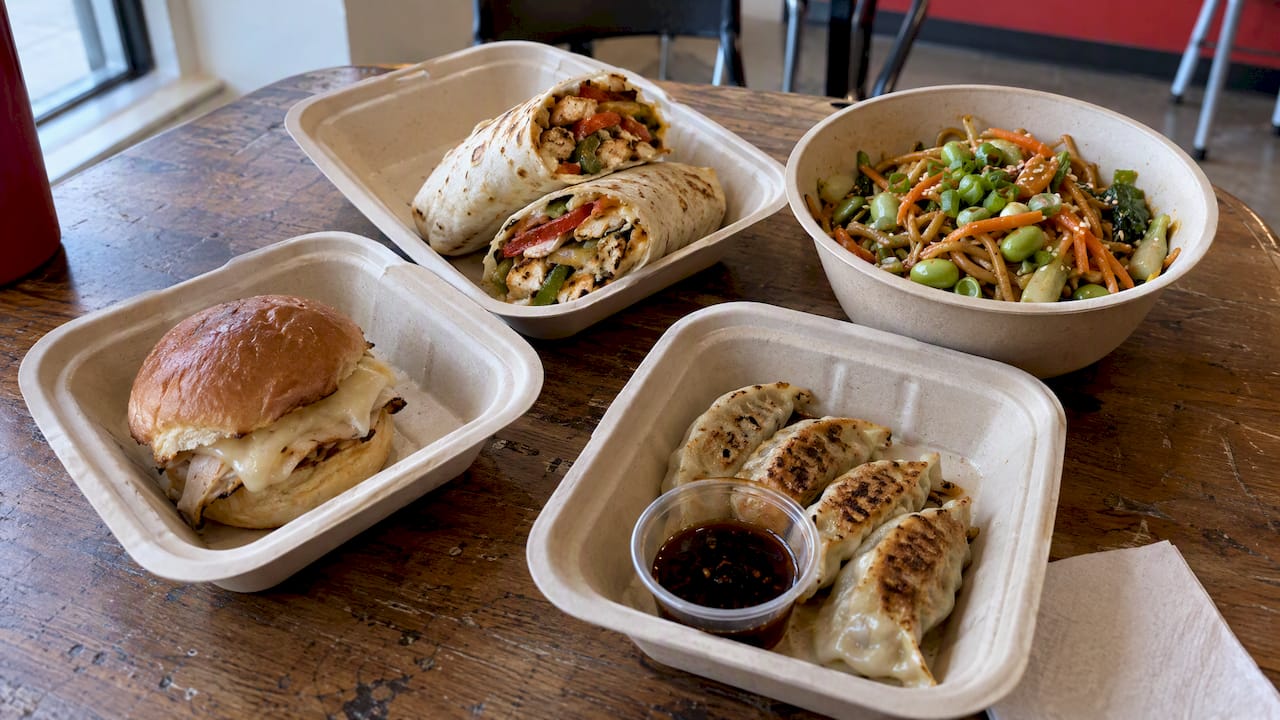
Menus depend on the operator and the machine, but the same categories keep appearing: breakfast items, sandwiches and sliders, burritos, pizza slices, burgers, noodle and rice bowls, dumplings and hot snacks. The campus machine above, for example, offers a cinnamon roll, a turkey-melt slider, a chicken-fajita burrito, a sausage breakfast burrito, vegetable-edamame potstickers, a cheddar-filled pretzel and a cheeseburger (Northern State University dining).
Notice what is missing: much choice for people who want lighter, plant-based or lower-sodium food. If your team includes those people, you will need to ask for it by name. Federal guidance for food service recommends variety in fruit and vegetable options, whole-grain-rich products, non-fried and plant-based proteins, lower-sodium meals and sides, and free access to chilled drinking water (CDC Food Service Guidelines for Federal Facilities). Those are federal-facility standards, not a legal requirement for your office, but they make a sensible checklist for any menu.
New York City’s health department makes a related point: employers can improve the workplace food environment by offering healthier foods and drinks and educating staff (NYC Health).
Food safety: the part that matters most
A hot-meal machine sells food that needs temperature control to be safe. That moves it out of the “shelf-stable packaged snack” category. The CDC’s federal-facility vending guidance says its model standards apply to vending operations offering foods that require temperature control for safety, not just packaged shelf-stable items (CDC).
What to ask an operator to show you
The CDC recommends a written food-safety plan that covers improper holding temperatures, inadequate cooking, contaminated equipment, unsafe food sources and poor personal hygiene, backed by employee training and routine monitoring. It also recommends written sanitation and temperature-control programs with documented cleaning frequencies (CDC). Turn that into questions:
- Is there a written food-safety plan for this machine, and who owns it?
- How often is the unit cleaned, and is that logged?
- How are cold-holding temperatures monitored between visits?
- Where do the meals come from, and how are expiry dates tracked?
- Who do we call if something goes wrong?
The FDA Food Code expects active managerial oversight of cooking, hot and cold holding, cooling, thawing and temperature monitoring for foods that need time and temperature control (FDA Food Code 2022). In plain terms, someone has to be accountable, and it should not be your office manager.
The temperatures to know
The Texas Department of State Health Services guidance for food vendors states that cold foods needing temperature control must be kept at or below 41°F and hot ones at or above 135°F (Texas DSHS). That guide is written for mobile food vendors, so treat it as the baseline Texas reference rather than the exact rule for vending, and ask your operator which local requirements apply to their permit. A cook-on-demand machine mostly lives on the cold side of that line until the moment of heating.
Equipment certification
Look for evidence that the machine was tested to a recognized safety standard. OSHA’s list of nationally recognized testing laboratories names UL 751 as the standard for vending machines within the testing scope of listed labs (OSHA, QPS), and UL 471 for commercial refrigerators and freezers (OSHA, Nemko). Ask whether the model you are considering carries a mark from a recognized lab.
Space, power and upkeep
This is where hot-meal machines differ most from a regular snack machine. They are tall, heavy and power-hungry, because they combine a refrigerator and an oven.
Specifications vary a lot by model. One mini hot-food machine lists a cabinet of about 79 by 26 by 25 inches, around 400 pounds, 2,500 watts and no plumbing, and says a dedicated 20-amp circuit may be required on standard 110 to 120 volt power. A larger robotic kiosk lists 220 volts, 30 amps and a weight over 1,600 pounds. Those are single-model figures, not universal rules, so the lesson is to get the exact spec sheet before you commit.
Before you pick a spot, walk through this checklist:
| Check | Why it matters |
|---|---|
| Floor space and door clearance | Heavy units need a clear path for delivery and a level floor |
| Electrical circuit | Many units need a dedicated circuit, sometimes a higher-voltage one |
| Ventilation | Heat and refrigeration both produce warm exhaust |
| Network or cellular signal | Cashless payment and remote inventory monitoring rely on it |
| Distance from the break room | Staff will use it more if it is near seating |
| Restocking access | A back or service entrance makes weekly fills easier |
Your operator should handle stocking, cleaning, diagnostics and removing expired items. If a provider expects your staff to do any of it, treat that as a cost.
Is it right for your workplace?
The USDA’s SNAP-Ed worksite success stories describe a site-specific assessment, with vending standards alongside water access, refrigeration, microwaves, seating and nutrition education (USDA SNAP-Ed). Vending works best as one part of a bigger picture, not as a stand-alone fix.
Here is how that plays out by site type.
- Offices. Hot vending helps most when there is no kitchen or lunch spot nearby. If you already have a microwave and a fridge, a fresh-food cooler is usually the simpler answer.
- Warehouses and plants. Overnight and weekend shifts are the strongest case. Staff cannot leave, and food delivery rarely arrives.
- Hospitals. Round-the-clock staff and visitors need food at odd hours, but dietary needs are strict. See our guide to dietary-friendly hospital vending.
- Schools and campuses. Standards for student food are tighter, and menus need to be reviewed against local rules.
- Gyms. Members mostly want protein, drinks and grab-and-go items. Hot meals are rarely the priority.
If you are weighing an amenity for staff morale, our HR guide to snack amenities and our piece on vending variety and productivity cover the wider picture. If you are writing rules for what goes in the machines, start with our employee vending policy guide.
Hot drinks and meals are separate decisions
Many teams find that good coffee does as much for satisfaction as a hot lunch. If you are deciding where to spend, office coffee versus catering is a useful way to think about which hot offering your team will use daily and which is an occasional treat.
What the alternatives look like
Hot-meal vending is one option among several. Here is how they compare in general terms.
| Option | Best for | Trade-off |
|---|---|---|
| Hot-meal vending machine | Remote or 24/7 sites with no kitchen | Higher power and space needs, tighter food-safety oversight |
| Fresh-food cooler or smart fridge | Offices and gyms with a microwave | Staff reheat meals themselves |
| Micro-market | Larger sites with steady foot traffic | Needs more floor space and enough users |
| Traditional snack and drink machines | Any site | No hot meals |
| Catering or delivery | Occasional events | Cost per meal, no after-hours access |
The middle options deserve attention. A cooler stocked with sandwiches, wraps and bowls, next to a break-room microwave, delivers a hot meal with no special wiring. Our page on fresh food vending machines for offices, campuses and gyms shows what that looks like, and our piece on why operators pair micro-markets and coolers explains when a larger setup makes sense.
Our perspective
We place machines and micro-markets in the Dallas-Denton region, and we start every conversation the same way: what do your people actually want, and what can your space support? Hot-meal machines look impressive, but for most sites the better first step is a fresh-food offering that people will buy every day, with a microwave nearby. Hot food earns its place when there is no other way to get a meal, such as on a night shift.
Whatever you choose, three things should never be negotiable: someone accountable for food safety, a restocking schedule that keeps the food fresh, and a menu that reflects the people who work there, including those who need lighter or plant-based options. We run our programs at no cost to the host business, so there is no reason to accept a setup that does not fit. If hot meals are the right answer for your site, we will say so. If a cooler or micro-market does the job better, we will say that too.
— Gary
How Jeeves Vending can help
If you manage a workplace in the Dallas-Denton area and want a meal option for your team, our free full-service vending program covers installation, stocking, maintenance and remote stock monitoring at no upfront cost to your business. We offer snacks, drinks, coffee, healthy choices and fresh foods, and we can build a custom micro-market. Tell us about your site and your team, and we will recommend what fits.
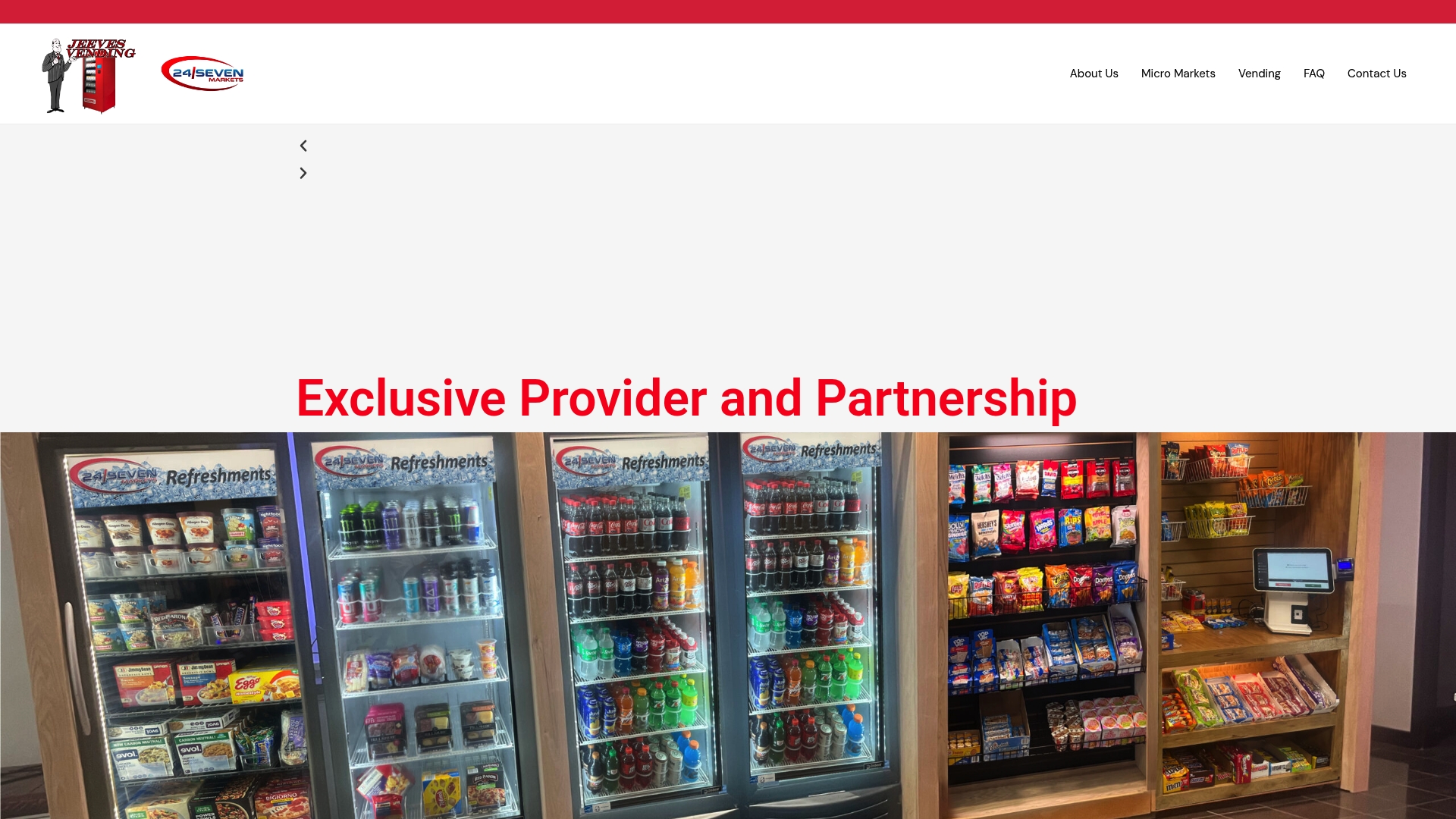
You can also look at our modern AI smart coolers to see how cashless, monitored machines work in practice.
FAQ
How long does a hot-meal vending machine take to heat food?
Most listed machines heat a meal in roughly 45 to 60 seconds after payment. Heating time depends on the meal and the machine, so check the spec sheet for the model you are considering.
Is food from a hot vending machine safe to eat?
It can be, when the operator keeps meals refrigerated, tracks expiry dates and cleans the machine on a documented schedule. The CDC recommends written food-safety and temperature-control plans for temperature-controlled vending foods (CDC). Ask to see them before you sign anything.
Does my workplace need special wiring?
Sometimes. Some models plug into a standard outlet, others need a dedicated 20-amp circuit or a higher-voltage one. Get the electrical specifications from the operator and have an electrician confirm your site can support them.
What can I put in a hot food vending machine?
Pizza slices, burgers, sandwiches, burritos, breakfast items, dumplings, noodle bowls and boxed meals are all common. The operator chooses what to stock, so tell them about dietary needs, such as vegetarian or lower-sodium options, up front.
Does it cost my business anything?
With our program, no. The host business does not pay for the equipment or service, and we handle stocking and maintenance. Other providers may charge, so always ask who pays for what.
Sources
- FDA Food Code 2022
- CDC Food Service Guidelines for Federal Facilities
- Texas DSHS Mobile Food Vendor Guide
- NYC Health: Nutrition at Work and in City Facilities
- Northern State University dining: Just Baked machine
- OSHA: QPS Evaluation Services
- OSHA: Nemko North America