
Micro markets still pay off in the right locations, but expansion has cooled, so choose your format by traffic, shrink risk, product mix and technology. According to the 2026 State of the Vending and Micro Market Industry survey, 38% of operators added locations in 2025, and smart coolers made up 33.5% of deployed equipment. As a local install-and-manage provider, we show you how to evaluate a site and launch.
TL;DR:
- The survey found 84% of operators reported growth in 2023, compared with 38% adding locations in 2025 and 52% reporting no change.
- Choose a full market for daily traffic, longer visits, fresh food demand, and sufficient floor space and power; otherwise, test a smart cooler first.
- Smart coolers use controlled access and item tracking to monitor shrink, while their refrigerated only assortment fits drink focused sales and smaller sites.
- Before scaling a pilot, track SKU velocity, average ticket, shrink, uptime, and restocking frequency, then remove slow sellers to limit spoilage and losses.
Table of Contents
- What a micro market is and what you need to plan for
- Where adoption stands and what the latest numbers say
- How to tell whether a site needs a full micro market
- How to handle shrink, operations and cost
- Where smart coolers fit in your portfolio
- A practical deployment checklist from survey to launch
- Which metrics to track after launch
- Why I treat formats as complementary and test first
- How we help you launch a micro market
- FAQ
- Sources
What a micro market is and what you need to plan for
A micro market is an unattended mini-store: open shelving, coolers and freezers, and a self-checkout point where people pick what they want and pay on their own. Assortments are typically far broader than a snack machine can hold, which is why fresher options and wider categories drive their consumer appeal. Plan and budget for these pieces:
- Self-checkout: a kiosk or mobile checkout where shoppers scan and pay
- Shelving and merchandising: open display for dry goods and snacks
- Refrigeration: coolers and freezers for drinks and fresh food
- Payment system: cashless, card and mobile wallet acceptance
- Remote monitoring: stock, temperature and sales data in one view
For facility teams, the customer flow is simple: a shopper walks in, takes items, scans each one at the kiosk and pays. Our facility manager’s guide to micro markets in offices walks through what that looks like day to day.
Where adoption stands and what the latest numbers say
The micro market boom of 2021 through 2023 has matured. The 2026 State of the Vending and Micro Market Industry survey reported that 84% of operators saw growth in 2023, compared with 38% who added locations in 2025 and 52% who reported no change.
In the 2026 State of the Vending and Micro Market Industry survey, smart coolers accounted for 33.5% of equipment deployed by respondents, which shows how quickly a once-secondary format has become standard. Operators are no longer asking “market or machine” but “which mix for which site.”
The picture is not one of decline. Revenue growth stayed strong in 2025, and operators are blending vending, micro markets and smart coolers rather than choosing one. Here is what that means for you:
- Expansion is selective, so site quality matters more than site count
- Smart coolers have moved into the mainstream and compete for the same accounts
- Cashless acceptance and mobile checkout have made smaller locations viable than they once were
How to tell whether a site needs a full micro market
Micro markets suit places where people stay on site, return daily and want a real meal or a broad choice. The same research notes use across office, factory, college, healthcare and lodging segments. Look for these signals:
- Offices, manufacturing plants, hospitals and universities with steady daily headcount
- Long dwell times, such as shift breaks or extended work blocks, where people want more than a quick snack
- Demand for fresh food, healthy options or coffee, not only chips and soda
- Enough floor space and electrical capacity for shelving and refrigeration
Smaller sites, or those where drinks dominate, are often better served by a smart cooler or compact kiosk. Test with employee count and how long people actually linger. If a site is borderline, start with a smart cooler, watch the sales data, then upgrade to a full market once demand proves itself. That pilot-first path keeps your risk low.
How to handle shrink, operations and cost
Every adoption obstacle has a practical fix. Work through these in order:
- Control shrink. Use locking coolers, access control and targeted camera coverage. Smart coolers likely help here, since controlled access and tracking lower shrink. For more tactics, our micro market security guide covers loss prevention, and this partner article on minimizing shrinkage adds general retail methods.
- Simplify operations. Rely on remote monitoring, preset restock schedules and a trimmed SKU list so routes stay efficient.
- Spread out cost. Stage your investment, pilot with a smaller unit before a full build, and consider zero-upfront install models that shift equipment cost off the host.
Pro Tip: Cut your slowest-selling SKUs before you add new ones. A tighter assortment lowers spoilage, shortens restock visits and makes shrink easier to spot.
Where smart coolers fit in your portfolio
Smart coolers bridge the gap between a traditional machine and a full market. They work well for beverage-heavy accounts, small-footprint sites and marginal locations you want to test before committing. With smart coolers accounting for 33.5% of equipment deployed by respondents to the 2026 State of the Vending and Micro Market Industry survey, you are not experimenting with a niche tool. What changes in practice:
- Assortment: refrigerated items only, so the SKU list is shorter and simpler
- Shrink: controlled access and item tracking make losses easier to detect
- Role: a pilot unit for new accounts, or a permanent fit for sites too small for a market
- Revenue pattern: drink-led sales, with fresh food as the upside when space allows
We install and manage vending machines alongside our markets, so you can match the format to the site.
A practical deployment checklist from survey to launch
Follow these steps in order, and treat the first launch as a pilot.
- Survey the site. Count foot traffic, confirm electrical and refrigeration capacity, and check access and security.
- Design the assortment. Set a target SKU count for the space, then plan signage and merchandising so shoppers can find items fast.
- Set up tech and operations. Choose the payment system, turn on remote monitoring, and set the inventory and restock cadence.
- Pilot and measure. Track SKU velocity, average ticket and shrink, then refine before you scale.
Keep this short list handy while you work:
- Confirm power and cooling before ordering equipment
- Review refrigeration and uptime requirements early
- Brief the host site on how checkout works
- Set a review date for the first performance check
Our self-checkout micro market overview explains what hosts should expect at launch.
Which metrics to track after launch
Numbers tell you whether adoption is working. Watch these:
- Sales per location and per hour: your core revenue measures
- SKU velocity: shows which items earn their shelf space, including fresh items
- Shrink percentage and trend: reveals whether your security steps work
- Uptime and restock frequency: your operational health check
Smart coolers likely contribute to lower shrink through controlled access and tracking, which makes shrink the one metric to compare across formats.
Why I treat formats as complementary and test first
The data points one way: no single format wins everywhere. Micro markets, smart coolers and traditional vending each have a job, and the operators who do well match the tool to the site. My advice is to pilot small, read the sales data, and scale only what the numbers support. Slower expansion rewards patience, not guesswork.
— Gary
How we help you launch a micro market
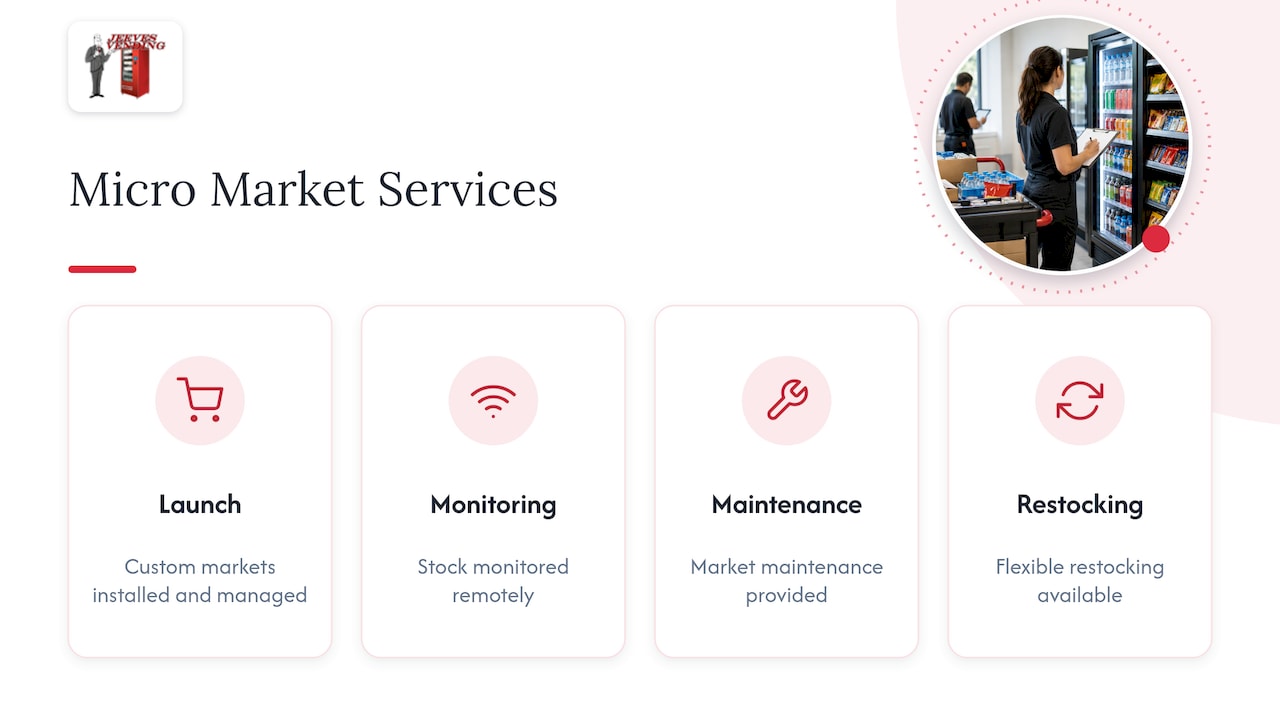
We install and manage custom micro markets in the Dallas-Denton region, with remote stock monitoring, maintenance and flexible restocking. Through our free full-service vending program, hosts pay nothing upfront for equipment or service. 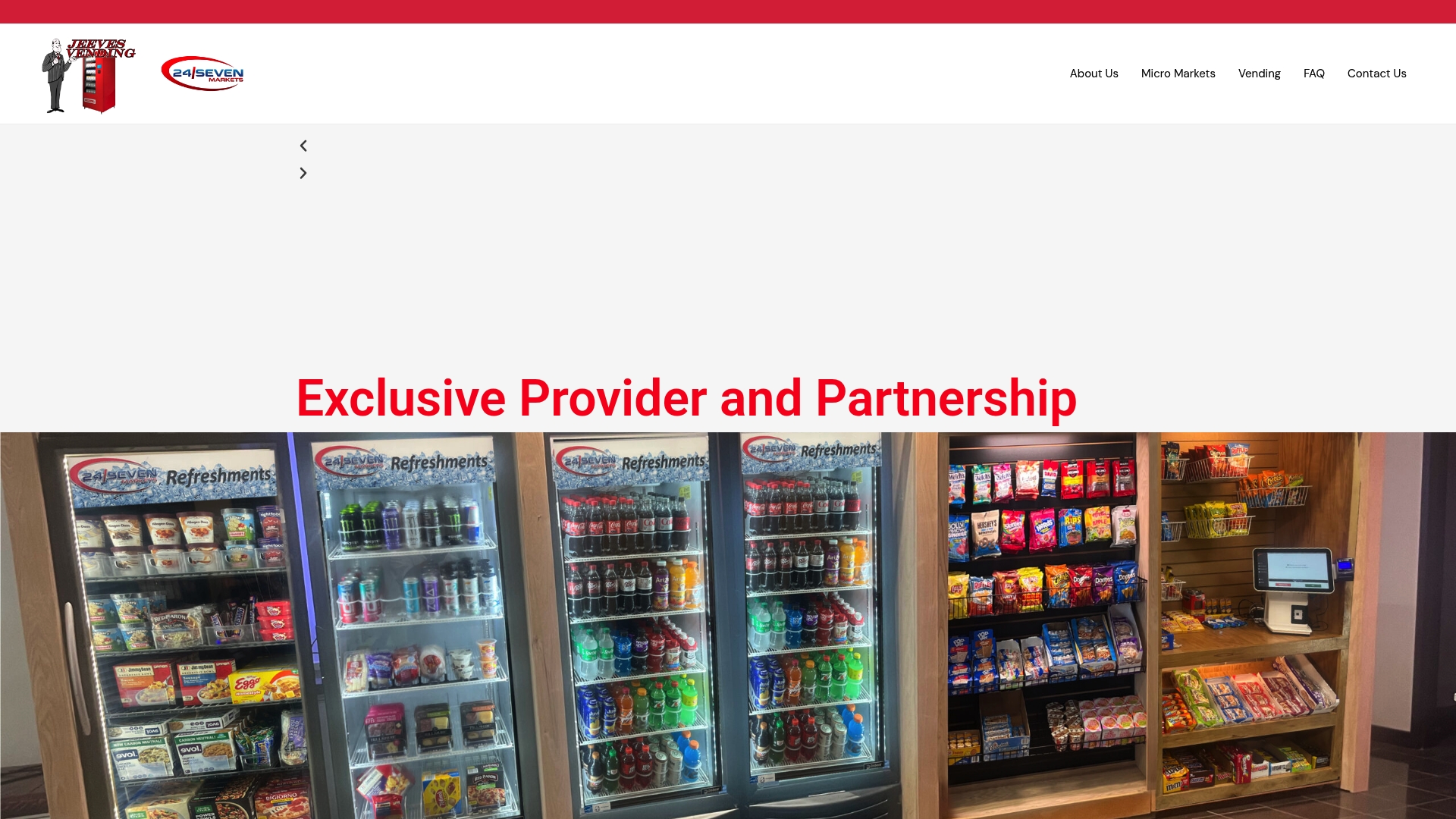
Ready to test a location? Request a site evaluation or pilot with us today.
FAQ
How does a micro market work?
A micro market is an unattended store with open shelves and coolers. Shoppers pick items, scan them at a self-checkout kiosk or on their phone, and pay cashless. Remote monitoring tells us when to restock.
How much does a micro market cost?
Costs depend on size, refrigeration and technology, so there is no single price. Our zero-upfront program means host businesses do not pay for equipment or service. Contact us for a quote for your site.
Are micro markets still growing?
Growth has slowed. According to the 2026 State of the Vending and Micro Market Industry survey, 38% of operators added locations in 2025, while smart coolers gained ground. Revenue overall stayed strong.
What is the difference between a micro market and a smart cooler?
A micro market offers shelves, coolers and checkout in a dedicated space. A smart cooler is a single refrigerated unit with controlled access, suited to smaller sites or pilots.