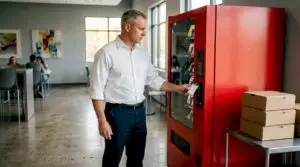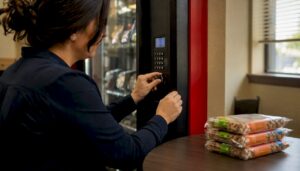

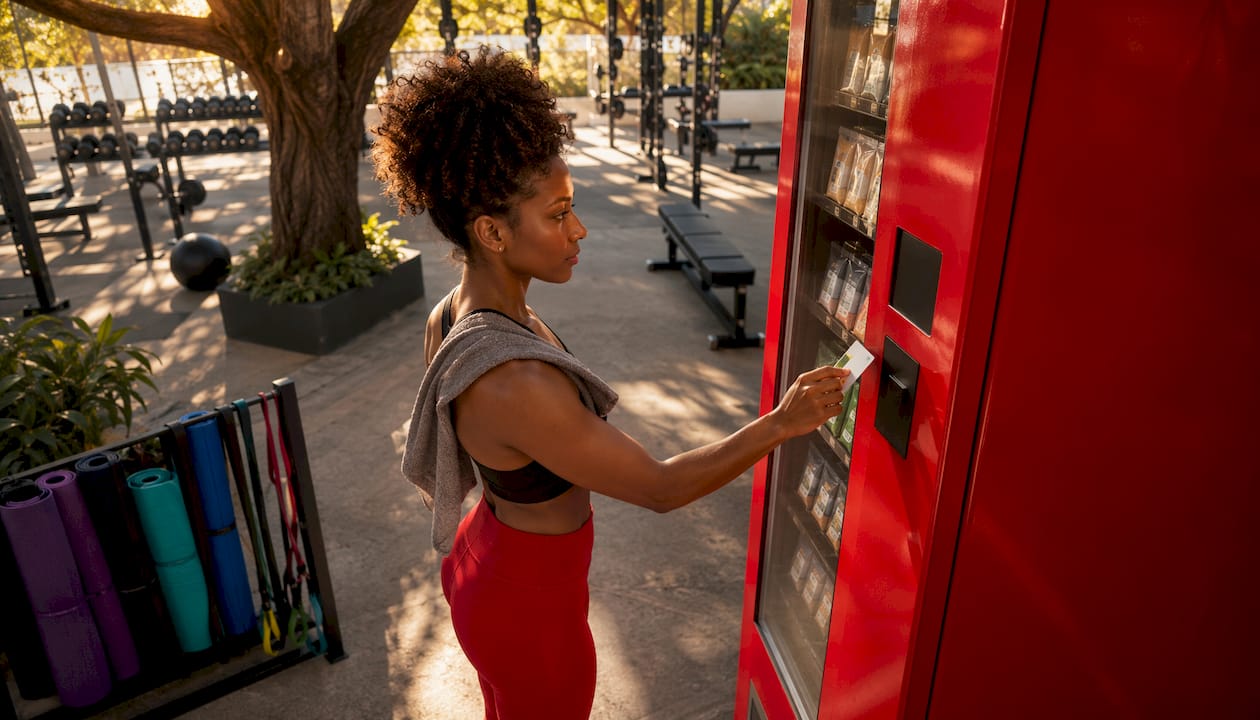
The highest-impact vending machine gym membership perks are member-discounted pricing, prepaid digital wallets, capped monthly subscription credits, and loyalty-linked rewards tied to exclusive SKUs. These work because gym members are a captive audience with real recovery and nutrition needs — and they buy repeatedly. A refrigerated protein unit in a high-traffic gym can generate $75–$300 in weekly revenue, and members already spend an estimated $40–$80 per month on protein and supplements outside the gym. Capturing even a fraction of that spend on-site is straightforward when the machine is linked to their membership account.
Implementation checklist — five decisions to make before you go live:
- Identity method: Choose RFID member-card tap, QR code, mobile app login, or PIN. Confirm hardware compatibility with your gym management software before ordering anything.
- Commerce flow rules: Set credits to apply first, then wallet balance, then card — members spend credits they already have before reaching for their wallet.
- Pricing rules: Member price shows on screen after authentication; non-member price is the default. No manual override needed.
- Credit caps and expiry: Unlimited access erodes margins fast. A cap like 8 shakes per month with a 30-day rolling expiry keeps the perk valuable without giving away the store.
- Trainer-issued credits: Let front-desk staff or trainers grant one-time credits as a retention or referral reward. This doubles as a member recognition tool without printing coupons.
Stocking strategy: Build the credit-eligible SKU list around refrigerated protein drinks, protein bars, and electrolyte beverages. Functional beverages — think coconut water, bottled cold brew, and electrolyte drinks — are trending up in gym settings and worth a dedicated row. Stock gluten-free and vegan options alongside standard items; inclusivity in SKU selection increases usage across the full member base. Allergen labels should be visible on the machine screen, not just the packaging.
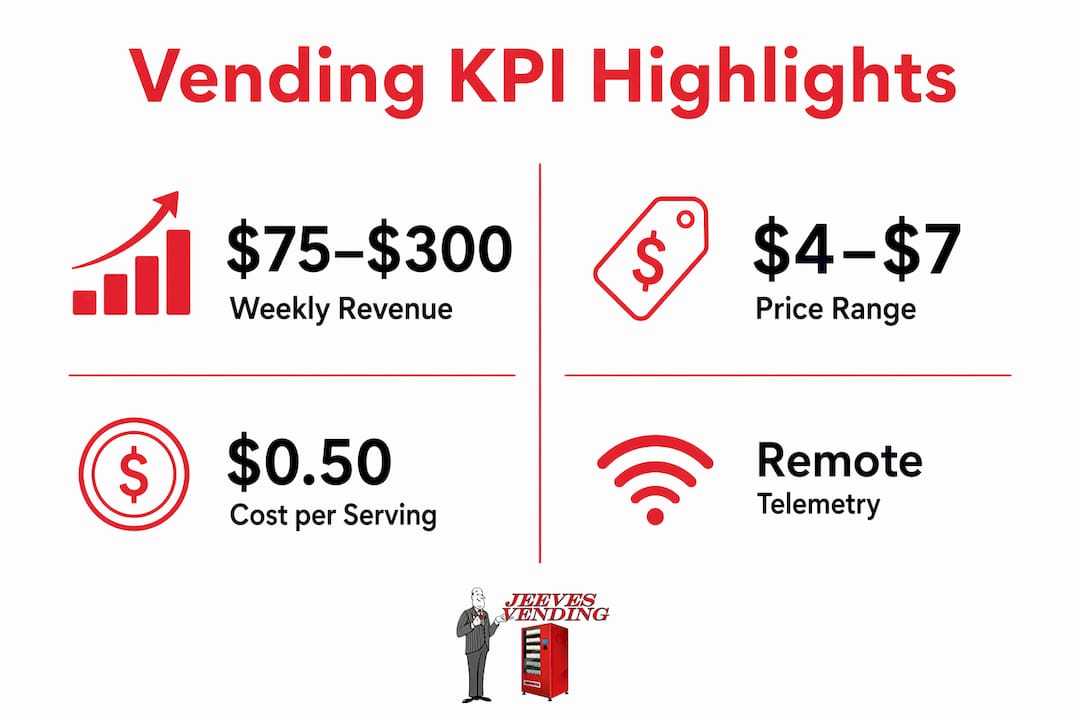
Per-serving economics: Powder cost runs roughly $0.50 per serving; typical sale price is $4–$7 per serving. Gross revenue per location ranges from $2,000–$8,000 per month depending on traffic and SKU mix.
| KPI | Target / Benchmark |
|---|---|
| Weekly revenue per machine | $75–$300 per week |
| Gross revenue per location/month | $2,000–$8,000 |
| Member supplement spend (off-site) | $40–$80 per member per month |
| Credit cap example | 8 shakes per month with a 30-day rolling expiry |
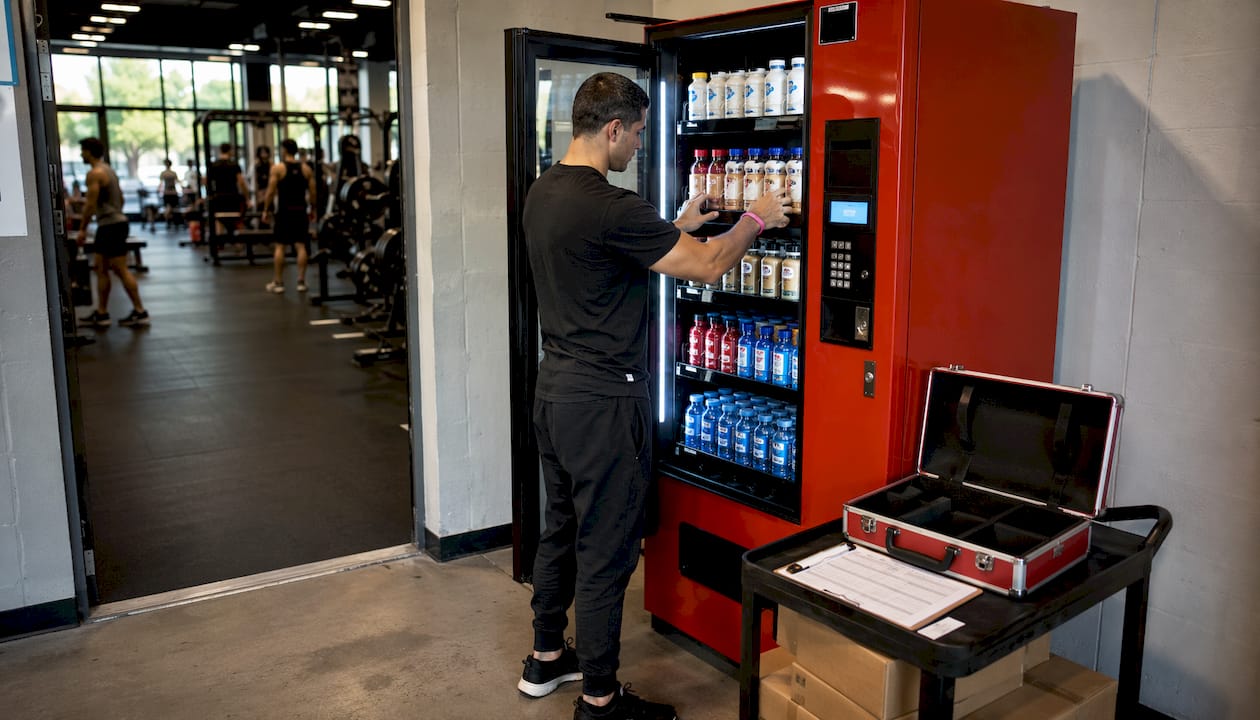
Operations: Remote inventory telemetry cuts out-of-stock time and feeds SKU-level redemption data directly to your reporting dashboard. Pair that with a defined restocking SLA — weekly at minimum for a busy gym — and you avoid the dead-machine problem that kills member trust fast. For facilities with 300+ active members, a micro-market setup often outperforms a single machine on both revenue and member satisfaction.
Launch plan: On opening day, run a tasting event at the machine. Send one email or push notification explaining the wallet and credit balance display. Integrating vending into a loyalty program raises redemption and repeat purchases — members who earn points on vending purchases come back more often. Post clear signage showing the current wallet balance after each transaction.
Cost models: Three standard options exist: free-install revenue-share (zero up-front, supplier takes a cut), leasing (fixed monthly cost), and outright purchase (higher capex, full revenue retention). Most Dallas facilities start with revenue-share to test traffic before committing capital. Typical time from site survey to live machine: 1–4 weeks. Check pre-workout snack strategy guidance to finalize your SKU list before the survey.
Table of Contents
- Key Takeaways
- Jeeves Vending Brings Member-Linked Vending to Dallas Facilities
- Getting Started Is Straightforward
Key Takeaways
Capped member credits, prepaid wallets, and loyalty-linked pricing are the fastest path to measurable vending revenue and stronger gym member retention.
| Point | Details |
|---|---|
| Top perks that work | Member pricing, prepaid wallets, capped credits, and loyalty rewards drive repeat purchases. |
| Cap credits to protect margins | An 8-shakes-per-month cap with 30-day expiry keeps the perk sustainable. |
| Per-serving economics | With typical sale prices several times higher than cost, gross revenue per location can be substantial depending on traffic and SKU mix. |
| Inclusive SKUs matter | Gluten-free, vegan, and allergen-labeled options increase usage across all member segments. |
| Jeeves Vending for Dallas | Free-install revenue-share, SLA-backed restocking, and member-wallet integration in the Dallas–Denton region. |
Jeeves Vending Brings Member-Linked Vending to Dallas Facilities
Zero up-front cost, member-wallet integration, and a local service team that actually shows up — that is the Jeeves Vending model for Dallas gyms.
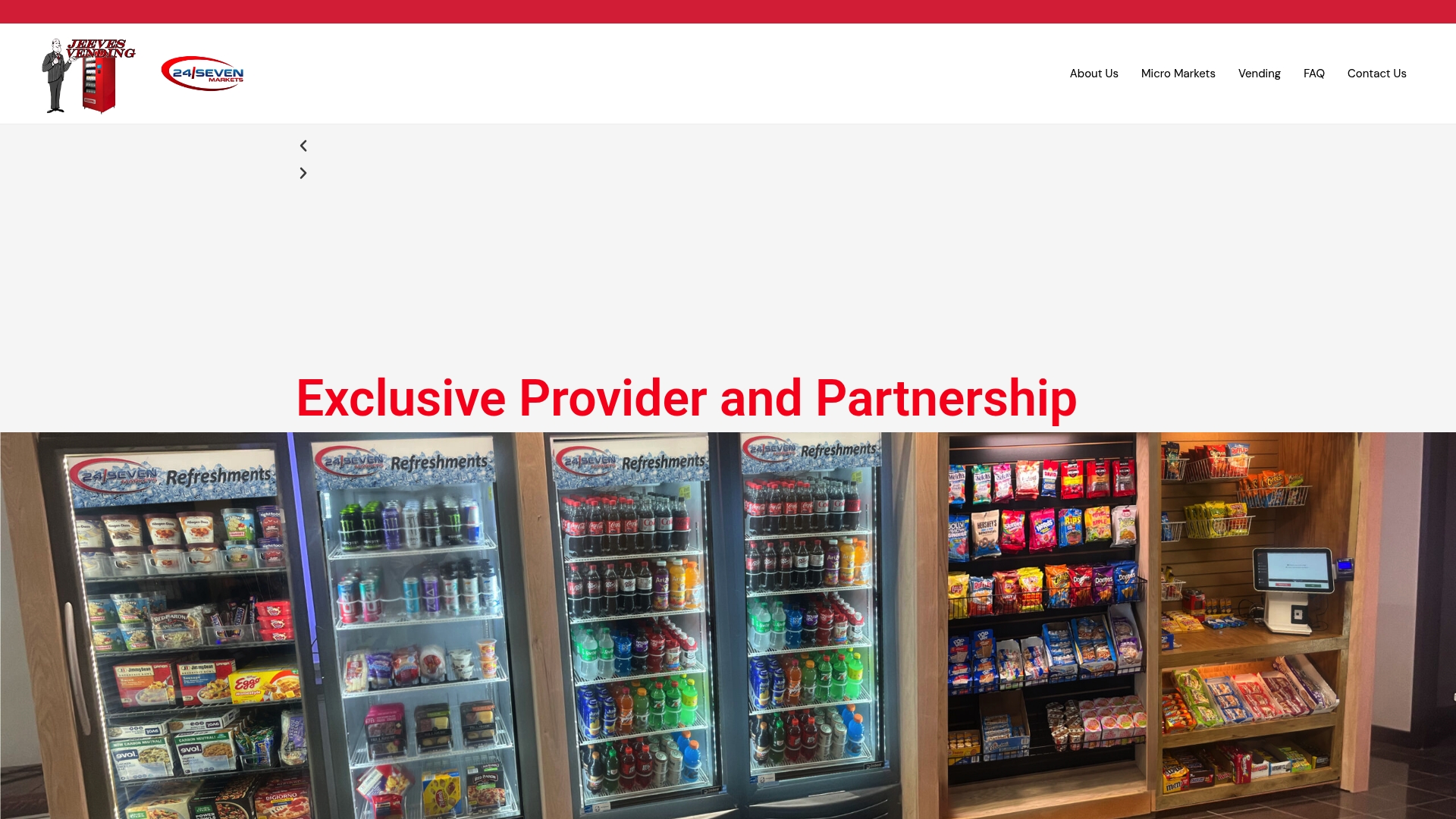
Jeeves Vending handles the full deployment across the Dallas–Denton region: site survey, machine installation, dietary-focused SKU selection, and SLA-backed restocking. The free-install revenue-share option means your facility pays nothing to get started. If you prefer to own the hardware, machines are available for purchase outright. Member-wallet and RFID integration, analytics reporting, and SKU customization are available across all commercial models. A typical pilot goes from first call to live machine in 1–4 weeks. Request a free site survey to see which setup fits your floor plan and membership size.
Getting Started Is Straightforward
Jeeves Vending’s Dallas vending solutions cover everything from a single refrigerated protein machine to a full micro-market with self-checkout. The simplest path: one pilot machine on revenue-share, member-pricing rules active from day one, and a restocking schedule tied to your peak hours. Once traffic data comes in, scaling up or switching models is a short conversation. Contact Jeeves Vending to book your site survey and get a pilot timeline specific to your facility.