
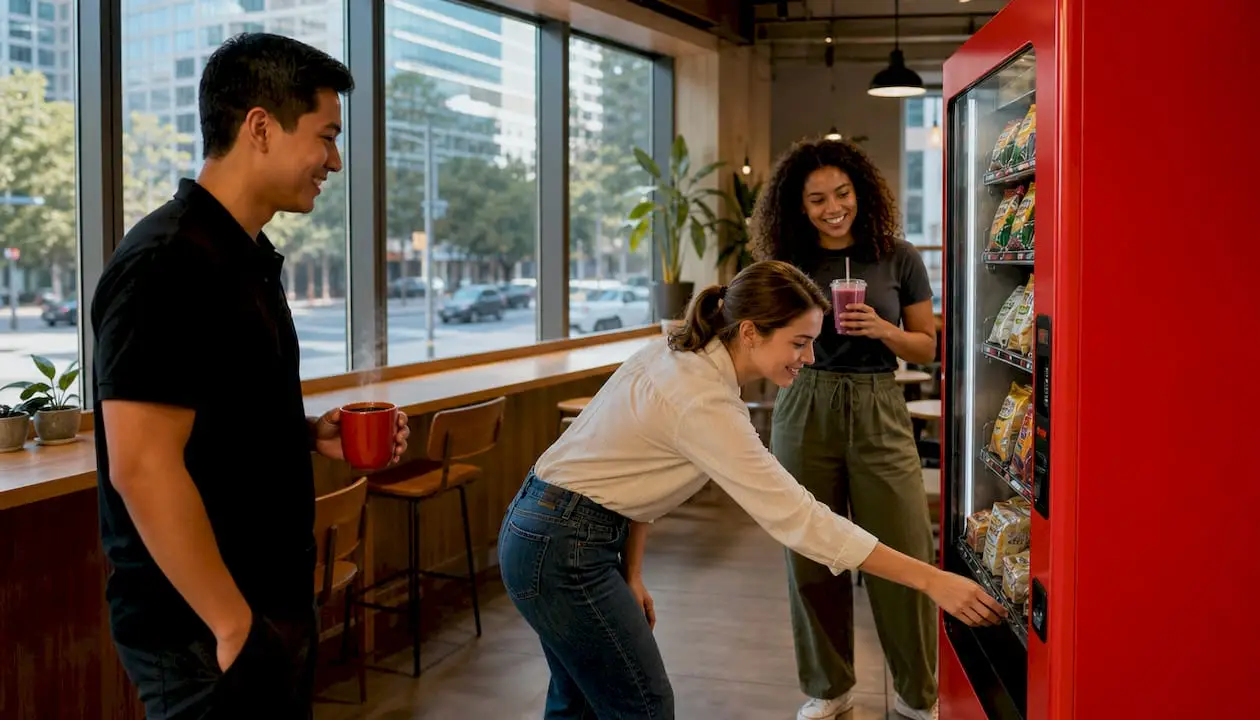
Workplace vending is defined as on-demand access to snacks and beverages that keeps employees energized, focused, and valued throughout the workday. The role of vending in workplace satisfaction goes well beyond convenience. On-site vending reduces the need to leave the office for refreshments, cutting interruptions and signaling that leadership cares about employee comfort. Smart vending technology, which uses cloud-based dashboards and real-time inventory tracking, takes that impact further by keeping machines stocked with what employees actually want. For HR managers and office administrators, a well-placed, well-stocked vending program is one of the most cost-effective tools for improving morale and reducing turnover.
How does workplace vending improve employee morale?
The most direct benefit of workplace vending is time saved. When employees can grab a snack or drink without leaving the building, they return to their desks faster and with less mental friction. Vending amenities signal that the workplace values employee comfort, which builds a positive culture over time. That signal matters more than most HR managers expect.
Short breaks also prevent burnout. A two-minute walk to a vending machine resets focus in a way that powering through a task rarely does. Vending machines act as low-pressure comfort resources that promote mental reset and improved focus during stressful or low-energy moments. The psychological benefit is real and measurable in how employees feel at the end of a long shift.
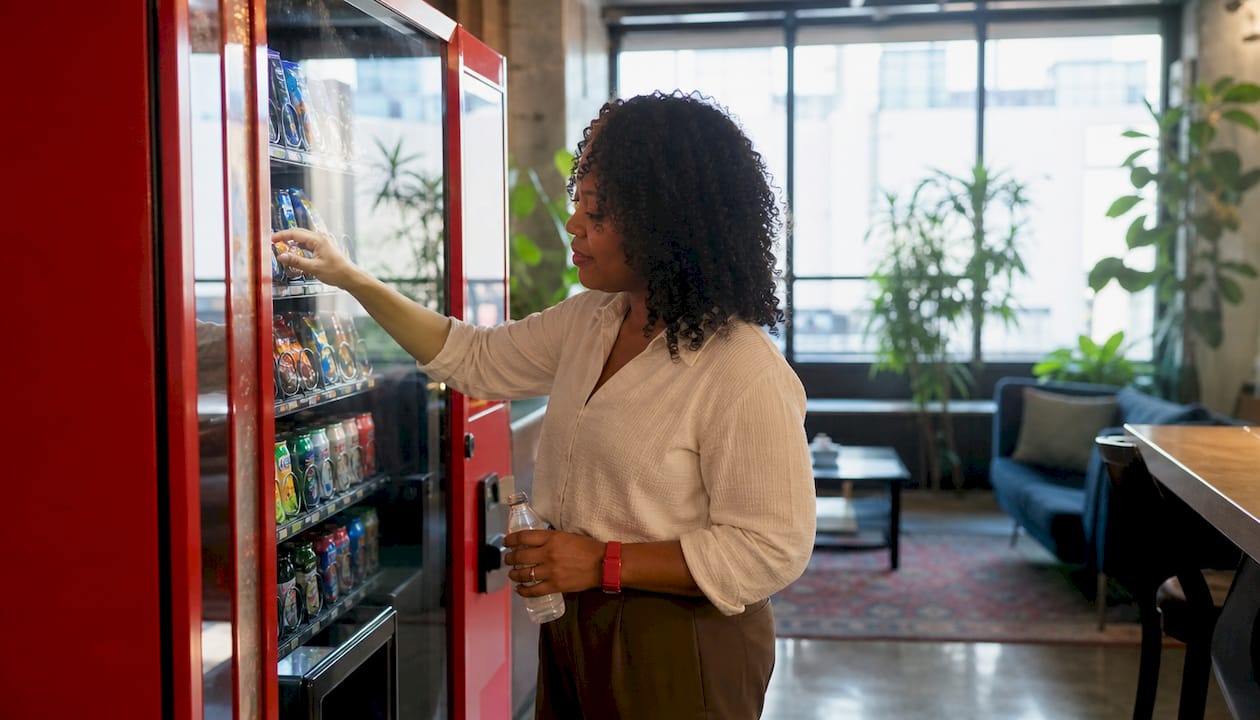
Vending areas also create informal social space. Employees who bump into each other near a vending machine exchange information, build rapport, and feel more connected to their team. High-traffic vending placements encourage spontaneous interactions and turn a simple snack stop into a cultural touchpoint. That kind of organic connection is hard to manufacture through scheduled team-building events.
Key benefits for employee morale include:
- Fewer offsite trips: Employees stay on-site, reducing the 15-to-20-minute gaps that erode productivity.
- Mental resets: Brief vending breaks reduce cognitive fatigue during long work blocks.
- Social connection: Shared vending areas create informal gathering points that strengthen team culture.
- Perceived value: Access to refreshments communicates that the employer invests in employee well-being.
Pro Tip: Place a vending machine near your busiest work area, not just in the break room. Proximity reduces the time cost of a break and increases how often employees actually use it.
What role does product variety play in workplace satisfaction?
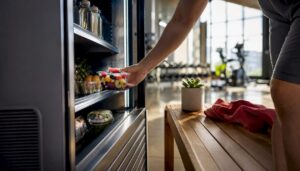
Product variety is not a luxury. It is the difference between a vending machine employees use daily and one they ignore. Healthier snack options like nuts, seeds, and low-sugar beverages prevent the blood sugar crashes that cause afternoon irritability and lost focus. Protein bars and whole-grain options sustain energy across a full shift in a way that chips and candy simply do not.
Offering variety also serves a workforce that is rarely uniform. A warehouse team has different caloric needs than a marketing department. A gym’s members want post-workout protein options, which is why the role of vending in gym member satisfaction depends heavily on stocking recovery-focused products. The same principle applies to any workplace: match the product mix to the people using it.
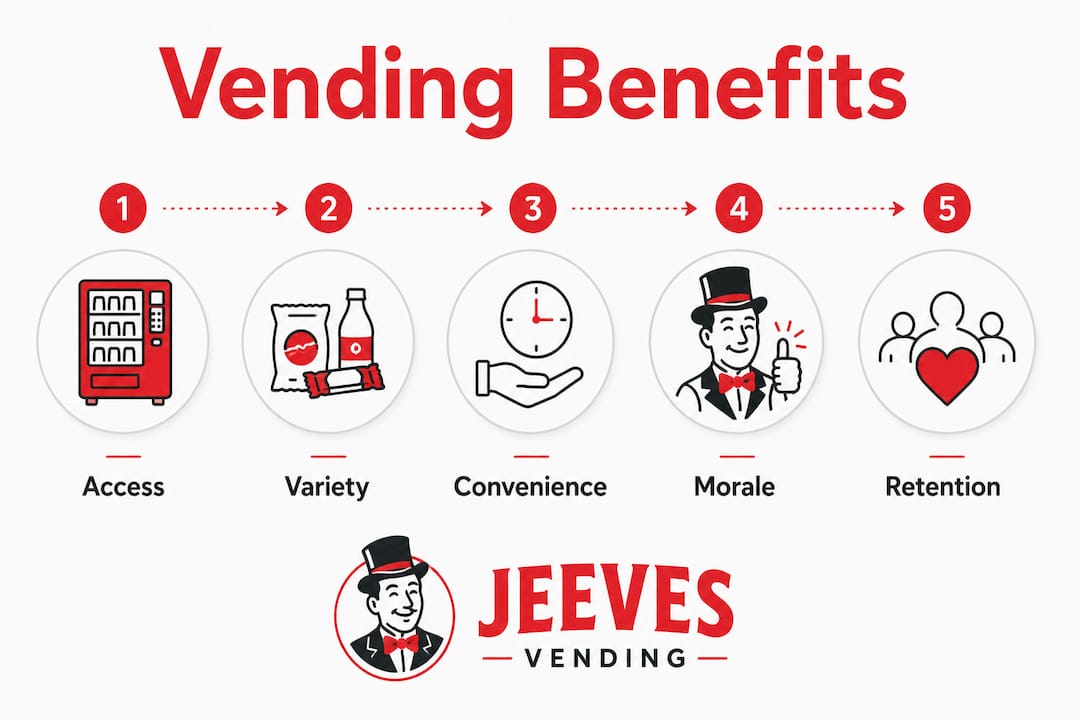
Healthy vending also sends a message about company culture. When an employer stocks protein bars and sparkling water alongside traditional snacks, employees read that as a wellness commitment. Customized vending assortments directly correlate with higher satisfaction and employee retention. Retention is expensive to fix after the fact. Stocking the right snacks is cheap prevention.
Consider building your product mix around these categories:
- Sustained energy: Nuts, seeds, whole-grain crackers, and protein bars
- Hydration: Water, electrolyte drinks, and low-sugar sparkling beverages
- Comfort options: A curated selection of familiar snacks that employees enjoy
- Dietary needs: Gluten-free, vegan, and allergen-labeled items for an inclusive offering
Pro Tip: Survey your team quarterly using a simple Google Form. Ask for their top three snack requests. Two rounds of feedback will tell you more than any industry average about what your specific workforce wants.
How does smart vending technology enhance the workplace experience?
Smart vending technology is defined as a cloud-connected system that uses IoT sensors, real-time telemetry, and AI-driven demand forecasting to manage inventory and payments automatically. The practical result for HR managers is a machine that rarely runs out of popular items and never requires manual stock checks. Smart vending machines use cloud-based telemetry to track inventory and sales in real-time, enabling proactive restocking before a product runs out.
The payment side matters just as much. Cashless and contactless payment features increase conversion rates and reduce transaction friction. Employees who do not carry cash still make purchases. That convenience directly affects how often the machine gets used and how satisfied employees feel with the amenity.
AI forecasting adds another layer of reliability. Connected smart vending combines IoT telemetry and AI for demand forecasting, reducing stock-outs and improving service efficiency. The key detail here is that AI forecasting works best once clean, consistent sales data is established. A machine that has been running for 60 days gives the system enough history to predict Monday morning demand spikes or Friday afternoon snack patterns.
| Feature | What it does | Workplace benefit |
|---|---|---|
| Cloud-based dashboard | Tracks inventory and sales in real time | Fewer stock-outs, faster restocking |
| Cashless payments | Accepts cards, mobile wallets, and tap-to-pay | Higher usage, no cash barrier |
| AI demand forecasting | Predicts restocking needs by day and time | Popular items stay available |
| Remote diagnostics | Flags machine errors without a site visit | Less downtime, better reliability |
Smart vending machines typically range from $10,000 to $30,000 or more depending on features. For businesses in the Dallas-Denton area, Jeevesvending installs these systems at no cost to the employer, removing the capital barrier entirely.
Where should vending machines be placed for maximum impact?
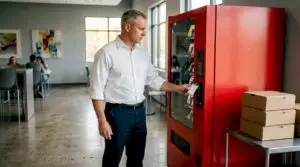
Placement determines whether a vending machine becomes a daily habit or a forgotten corner fixture. The best locations combine high foot traffic with natural pause points in the workday. Near the main entrance, beside the elevator bank, or adjacent to a conference room cluster all work well. Effective vending placement in high-traffic zones fosters social interaction and positions the machine as a cultural touchpoint rather than just a snack dispenser.
Avoid placing machines in isolated storage areas or at the far end of a building. Low visibility means low usage, and low usage means the machine goes stale, literally and figuratively. Employees who walk past a poorly stocked machine twice stop checking it entirely.
Follow these placement steps to get it right:
- Map employee flow: Walk the floor at 10:00 AM, 12:30 PM, and 3:00 PM to observe where people naturally congregate or pass through.
- Identify pause points: Look for spots near printers, coffee stations, or stairwells where employees already slow down.
- Check power and space: Confirm electrical access and enough clearance for the machine and a small queue.
- Test and adjust: After 30 days, review usage data from the machine’s cloud dashboard and move the unit if traffic is lower than expected.
Modern breakroom design treats vending as part of a broader refresh zone. Vending machines are transforming breakrooms into café-like spaces that signal leadership’s investment in employee experience. That perception shift is worth the effort of getting placement right.
How can HR managers customize vending solutions for their workforce?
Customization is the step most HR managers skip, and it is the step that separates a vending program employees love from one they tolerate. Start with a vending menu customization process that begins with direct employee input, not vendor defaults. Ask your team what they want before the machine is installed, not after.
Once the machine is running, use the data it generates. Smart vending dashboards show exactly which items sell out first and which sit untouched for weeks. That data tells you more than any survey because it reflects actual behavior, not stated preferences. Swap slow movers every 60 days and keep top sellers consistently stocked.
Practical customization steps for HR managers:
- Survey before installation: Use a short poll to identify the top 10 requested snacks and beverages.
- Balance the mix: Aim for roughly 40% healthier options, 40% familiar favorites, and 20% rotating seasonal or specialty items.
- Match the machine to the site: A warehouse breakroom needs high-calorie, portable options. An office floor benefits from lighter snacks and premium beverages.
- Review data monthly: Log into the cloud dashboard and identify the bottom five sellers. Replace them with new options from your survey backlog.
- Communicate changes: A short Slack message or email telling employees “we added your top requests this week” builds goodwill and increases usage.
Tailoring vending assortments to workforce preferences signals institutional respect and increases retention. That is not a soft benefit. Replacing a single mid-level employee costs an employer the equivalent of several months of that person’s salary. A well-customized vending program costs a fraction of that.
Key Takeaways
Vending machines improve workplace satisfaction when they are well-placed, well-stocked, and actively managed using real-time data and employee feedback.
| Point | Details |
|---|---|
| Vending reduces interruptions | On-site access to snacks cuts offsite trips and keeps employees focused longer. |
| Healthy variety drives retention | Stocking nuts, protein bars, and low-sugar drinks signals wellness commitment and reduces turnover. |
| Smart technology prevents stock-outs | Cloud dashboards and AI forecasting keep popular items available and reduce machine downtime. |
| Placement determines usage | High-traffic locations near natural pause points maximize daily use and social interaction. |
| Customization requires ongoing data | Monthly dashboard reviews and quarterly employee surveys keep the product mix relevant. |
What I’ve learned after watching vending programs succeed and fail
Most vending programs fail for the same reason: installation is treated as the finish line. A machine goes in, the operator sets a default product mix, and nobody looks at the data for six months. By then, three items have been sold out for weeks and employees have stopped bothering.
The programs that actually move the needle on morale share one trait. Someone owns the vending experience the same way someone owns the coffee machine or the office temperature. That person checks the dashboard, reads the survey results, and makes changes. It does not take more than 30 minutes a month.
The other mistake I see constantly is placing machines based on available space rather than employee behavior. A machine tucked behind the supply closet will never become a cultural touchpoint. It will become invisible. Walk the floor before you decide on placement. Watch where people already stop and talk.
Smart vending technology is genuinely useful, but only after the basics are right. AI demand forecasting is only as good as the sales data feeding it. Get the location right, get the product mix right, and then let the technology do its job. Skipping straight to AI features while ignoring a poorly placed machine is a waste of the investment.
The HR managers who get the most out of vending treat it as an ongoing employee experience program, not a one-time facilities decision. That mindset shift is what separates a machine employees appreciate from one they walk past without noticing.
— Gary
Jeevesvending: workplace vending built for Dallas-area HR teams
Jeevesvending installs smart vending machines and custom micro-markets at no cost to businesses across the Dallas-Denton region. Every machine comes with cloud-based inventory management, cashless payment options, and a product selection tailored to your workforce’s preferences.
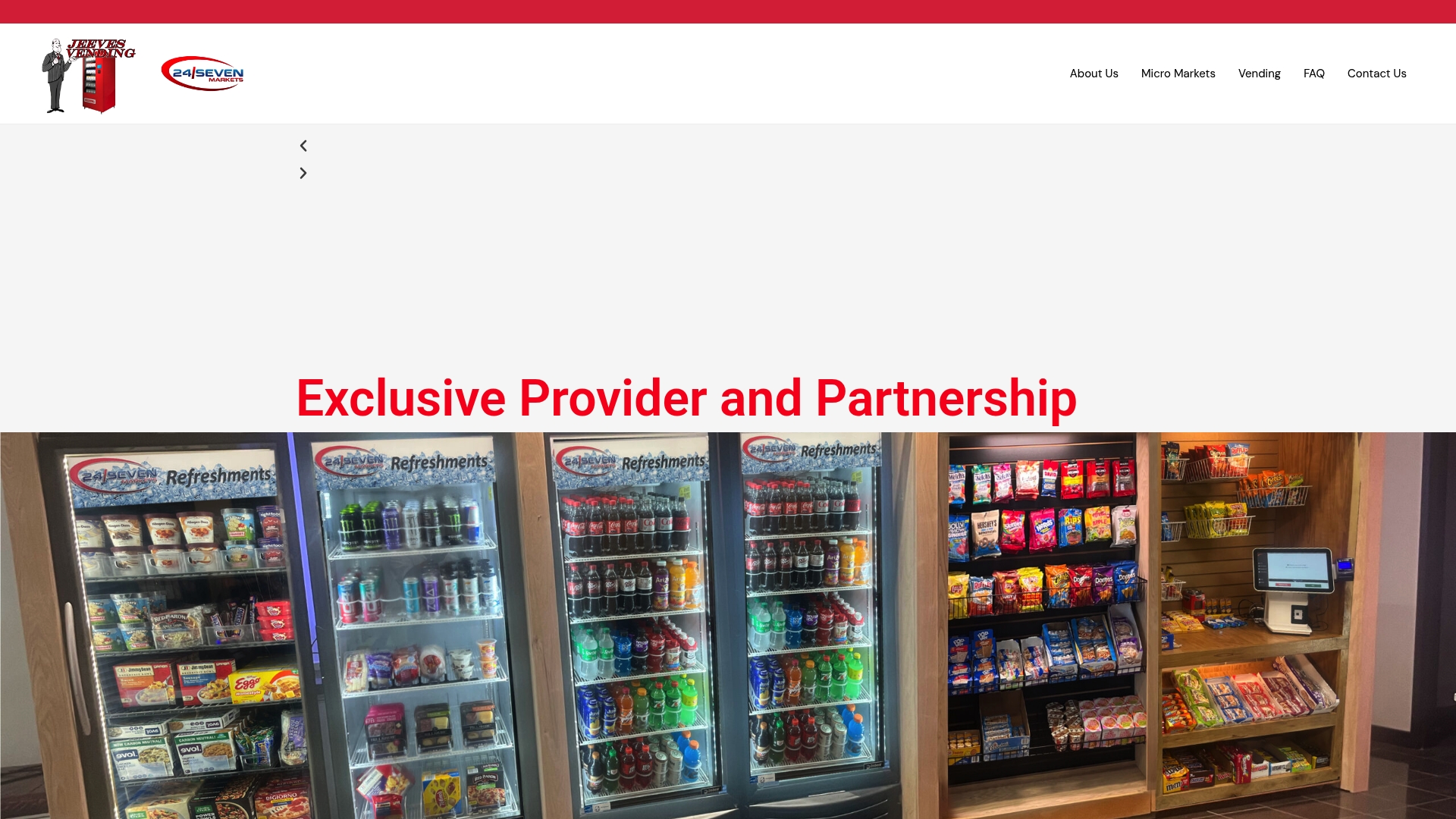
The hands-off maintenance model means your facilities team never handles restocking or repairs. Jeevesvending manages the machine so you can focus on your people. If you want a break room solution that employees actually use, Jeevesvending builds it around your specific team, location, and culture. Reach out to discuss what a customized vending program looks like for your workplace.
FAQ
How does vending improve employee morale at work?
Vending machines reduce the need to leave the office for refreshments, cutting interruptions and giving employees quick mental resets during the workday. They also create informal social spaces that strengthen team connection.
What is smart vending technology?
Smart vending technology is a cloud-connected system that uses IoT sensors and AI forecasting to track inventory in real time, process cashless payments, and predict restocking needs automatically.
How does product variety in vending affect employee satisfaction?
Offering a mix of healthy options like nuts, protein bars, and low-sugar beverages alongside familiar snacks prevents energy crashes and signals that the employer cares about employee well-being.
Where is the best place to put a vending machine in an office?
Place vending machines in high-traffic areas near natural pause points such as elevator banks, conference room clusters, or main corridors. Avoid isolated locations where visibility and foot traffic are low.
How can HR managers customize their workplace vending program?
Survey employees before installation to identify preferred products, then use the machine’s cloud dashboard to review monthly sales data and swap out slow-selling items every 60 days.