
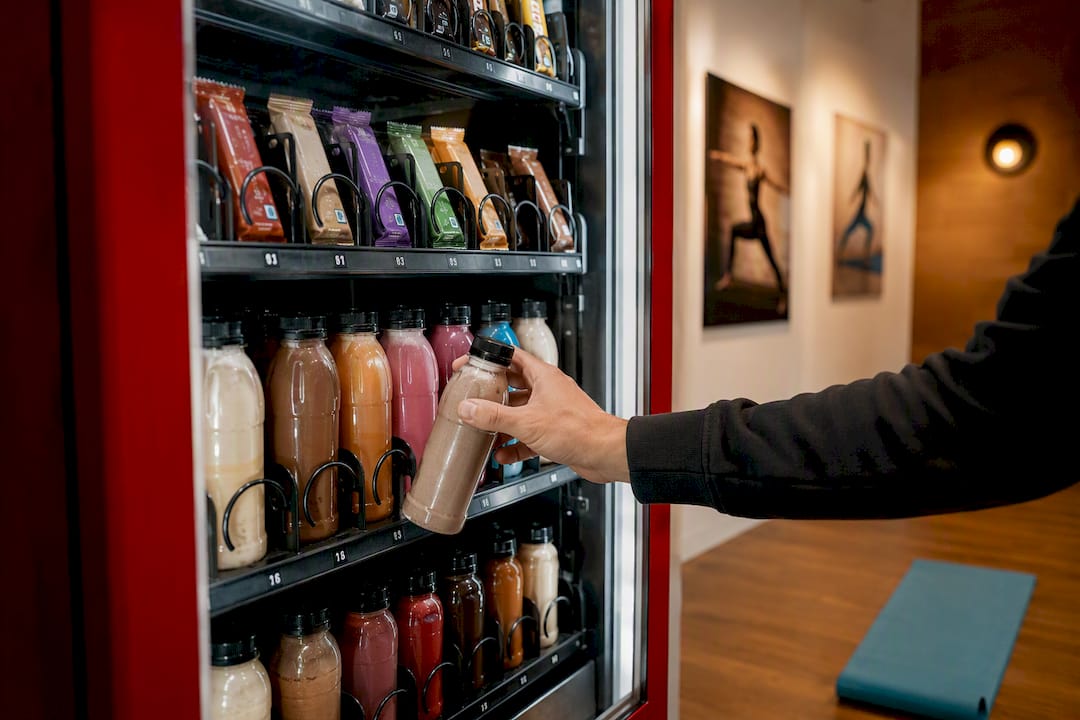
Recovery nutrition vending means stocking a vending machine or micro-market with items specifically chosen to support muscle repair and rehydration after physical activity, rather than a generic snack mix. Think protein bars, RTD protein shakes, and electrolyte drinks in the front slots, positioned where gym members, hospital staff, or warehouse crews grab something on their way out the door.
For a host business, the appeal is practical, not trendy.
- Higher average sale price than candy or chips
- Direct alignment with wellness programs already in place
- Convenience that keeps people on site instead of driving to a store
Key Takeaways
Recovery nutrition vending succeeds when the right product categories, location fit, service cadence, and pricing discipline all align around what a specific host site actually needs.
| Point | Details |
|---|---|
| Definition | Recovery nutrition vending stocks protein bars, RTD shakes, electrolytes, and similar items for post-activity refueling. |
| Product mix | Combine shelf-stable bars and jerky with refrigerated shakes and yogurt based on cooler availability. |
| Location fit | Gyms, hospital staff lounges, and wellness-forward offices support all-recovery or hybrid assortments best. |
| Service cadence | Refrigerated recovery items need more frequent restocking and temperature monitoring than standard snacks. |
| Getting started | Jeeves Vending installs tailored, no-cost recovery assortments with telemetry to pilot demand before scaling. |
Table of Contents
- What Does Recovery Nutrition Vending Mean in Practice?
- Where Does Recovery Nutrition Vending Work Best?
- How Should Operators Price and Rotate Recovery Items?
- What Service Cadence Do Recovery Assortments Require?
- How Do You Merchandise Recovery Items for Better Sales?
- How Do You Measure Whether Recovery Vending Is Working?
- What Compliance Rules Apply to Recovery Nutrition Vending?
- What Should You Negotiate With a Vending Provider?
- What Challenges Come With Recovery Nutrition Vending?
- Why Start Small When Piloting Recovery Vending?
- How Jeeves Vending Builds Recovery-Focused Programs
- Sources
What Does Recovery Nutrition Vending Mean in Practice?
In practice, it means every fourth or fifth slot in a machine carries something built for post-exertion refueling instead of empty calories. That distinction matters because the products behave differently than standard vending SKUs, both in how they sell and how they need to be handled.
The core categories are protein bars, RTD protein shakes, electrolyte drinks, jerky, Greek yogurt, plant-based protein items, and protein chips. Each one carries its own operational quirks.
- Protein bars hold room temperature for months and slot into any standard machine.
- RTD protein shakes need refrigeration, so they belong in a cooler-equipped machine or a micro-market fridge case.
- Electrolyte drinks are shelf-stable and pair naturally with the shake case as a lower-price entry point.
- Jerky is shelf-stable, high in protein, and sells well in machines that already skew toward salty snacks.
- Yogurt and yogurt-based recovery drinks require the coldest zone in a cooler and the shortest rotation window.
- Plant-based protein items cover a growing customer segment that avoids whey or dairy.
- Protein chips function as a bridge SKU for buyers who want protein but not a bar or shake.
Labeling drives the purchase decision more than most operators expect. Snacks that call out grams of protein, low sugar, or plant-based sourcing consistently outsell items with vague “healthy” branding, because shoppers scanning a vending window make a decision in under five seconds and specific numbers close the sale faster than adjectives.
Where Does Recovery Nutrition Vending Work Best?
Location fit determines whether a recovery assortment turns a profit or turns into unsold inventory sitting past its date code. Four settings consistently outperform: gyms and fitness centers, hospital staff lounges, wellness-forward corporate offices, and college or university campuses with active student populations.
The decision between a hybrid machine and an all-recovery machine comes down to foot traffic diversity.
- Hybrid machines with a substantial portion of recovery slots work well in general offices where not every employee trains regularly.
- All-recovery machines make sense in gyms, physical therapy clinics, and hospital staff-only areas where the customer base is self-selected.
- Mixed-use campuses often need both formats in different buildings, not one universal setup.
Employee demographics and existing wellness programs are the fastest way to gauge fit before committing to a full recovery lineup. A company already running a gym stipend or step challenge has told you, indirectly, that its people will buy a protein shake at 3:00 PM. A gym-specific vending strategy built around pre- and post-workout timing tends to outsell a generic snack mix in that same location by a wide margin.
Pro Tip: Watch what employees are already bringing from home. Protein shaker bottles and cooler bags in the break room are a better signal than any survey you could run.
How Should Operators Price and Rotate Recovery Items?
Shelf life and pricing are where recovery vending departs most sharply from standard snack economics. Refrigerated RTD shakes and yogurt drinks typically run a shorter dated window than a bag of chips, which forces tighter rotation and closer monitoring of pull dates.
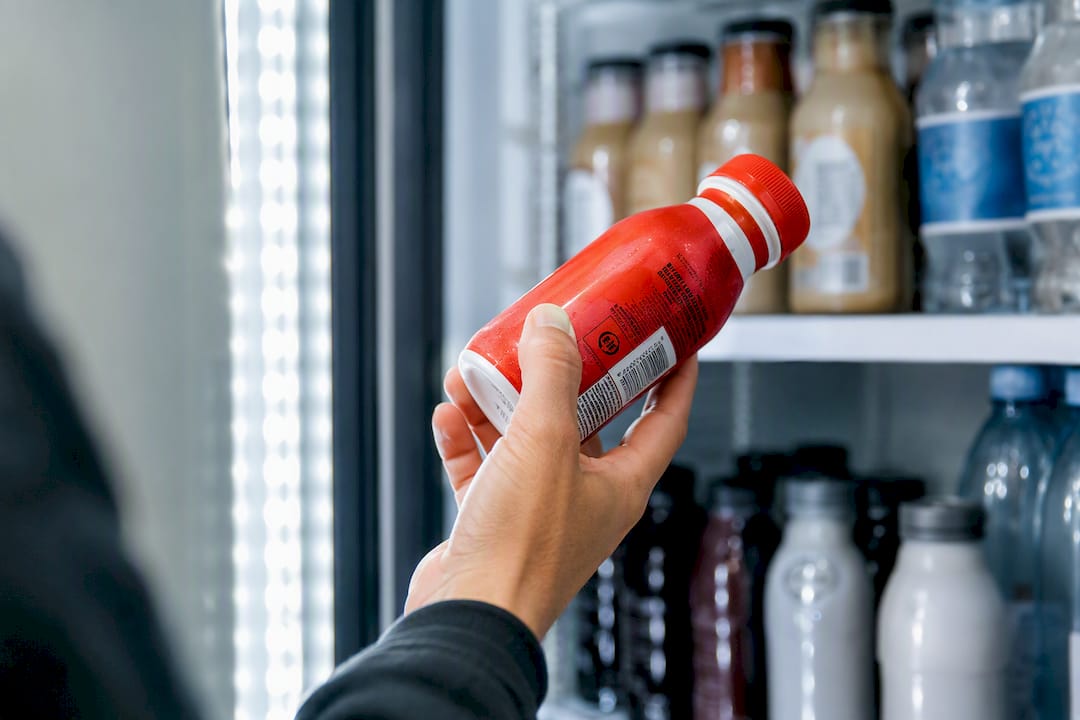
Premium pricing is justified, not just tolerated, in the right locations. A protein bar or RTD shake can carry a price 30 to 50 percent above a standard candy bar in a gym or hospital setting without hurting sell-through, because the buyer isn’t comparing it to candy. They’re comparing it to a $7 shake at a smoothie counter down the street.
Rotation policy protects margin as much as pricing does.
- Pull items with limited remaining shelf life and route them to a higher-traffic site before they become waste.
- Track which SKUs sell out fastest and increase their facing space at the next restock.
- Keep a written pull schedule per machine so route drivers aren’t guessing.
Operators who treat healthy vending as a location-dependent model rather than a one-size-fits-all upgrade tend to hold margin better than those who blanket every machine with the same premium mix regardless of foot traffic.
What Service Cadence Do Recovery Assortments Require?
Recovery SKUs demand a faster restocking rhythm than a traditional snack and soda mix, mainly because refrigerated shakes and yogurt drinks can’t sit past their window the way a bag of pretzels can. A machine that gets serviced weekly for candy might need twice-weekly visits once RTD protein products enter the mix.
Three operational pieces make that cadence sustainable:
- Low-stock alerts flag a slot before it goes empty, not after a customer complains.
- Temperature monitoring on coolers catches a failing compressor before an entire case of shakes spoils.
- Route-based restocking groups machines by real-time demand data instead of a fixed calendar, so a driver hits the gym location on Monday and Thursday but the office breakroom only on Tuesday.
Smart vending telemetry built around cashless payment, stock sensors, and temperature tracking is what makes this cadence financially workable. Without it, an operator either over-services low-volume machines or under-services high-volume ones, and both mistakes cost money.
Pro Tip: Set a lower low-stock threshold on refrigerated slots than on shelf-stable ones. A shake that sits two days past its ideal window is a return; a bar that sits two extra days is still a sale.
How Do You Merchandise Recovery Items for Better Sales?
Placement decides whether a recovery item gets noticed or gets ignored. Front-facing the highest-margin protein bars and shakes at eye level, right where a customer’s gaze naturally lands, outsells burying them on a bottom row next to soda.
- Bundle a protein bar with an electrolyte drink at a slight discount to lift the average transaction size.
- Use signage that frames items functionally, like “post-workout recovery” or “20g protein,” rather than vague health claims that could read as medical advice.
- Rotate one or two new SKUs into a test slot for two to four weeks before committing shelf space permanently.
Testing at small scale before a full rollout keeps risk low. A documented list of top-selling protein snacks gives a reasonable starting lineup instead of guessing which flavor or brand will move first.
How Do You Measure Whether Recovery Vending Is Working?
Four numbers tell the whole story: sell-through rate, units sold per day, recovery SKU mix share of total revenue, and revenue per visit. Track them weekly for the first month of any new assortment.
- Introduce one or two new recovery SKUs at a time, never a full machine overhaul at once.
- Run the test for two to four weeks against a clear baseline from the prior period.
- Compare unit velocity, not just total revenue, since a slower-moving premium item can still outperform on margin.
- Set a firm threshold in advance for expanding, replacing, or pulling the SKU.
| Signal | Decision rule |
|---|---|
| High sell-through rate weekly | Expand the SKU to more machines |
| Variable sell-through rate | Hold and retest with different placement |
| Low sell-through rate after four weeks | Pull and replace |
A 24 to 48 unit pilot, roughly a single case or multipack, is enough to read real demand without overcommitting inventory dollars to an unproven item.
What Compliance Rules Apply to Recovery Nutrition Vending?
Recovery-focused vending sits inside the same food safety framework that governs any packaged food and beverage sold through automatic retail, but the compliance stakes rise with refrigerated items and health-adjacent marketing language. Local health departments generally require that any perishable item, including RTD protein shakes and yogurt, be held at the correct temperature and pulled by its labeled date, with cooler temperature logs kept on file for inspection.
Nutritional claims carry their own risk if handled loosely. A machine that markets a shake as helping “muscle recovery” is on safe ground describing protein content and function; a machine that implies a product treats an injury or medical condition is not. Sticking to factual labeling, grams of protein, sugar content, plant-based sourcing, keeps signage useful without wandering into medical claim territory that invites scrutiny.
Allergen labeling matters more in recovery assortments than in a standard candy machine, since whey, soy, tree nuts, and dairy show up constantly in protein bars and shakes. Every facing SKU should carry visible allergen information on its packaging, and any custom signage promoting a specific item should never obscure or contradict what the manufacturer’s label already states.
Hospitals and schools carry additional layers worth flagging to a vendor before installation. A hospital staff lounge machine may fall under stricter food safety review than a public-facing machine in the same building, and a school vending program often has separate nutritional standards tied to student wellness policies. Confirming which rules apply to a specific host site, rather than assuming one blanket standard, avoids a compliance surprise after the machine is already installed and stocked.
What Should You Negotiate With a Vending Provider?
A vendor proposal for recovery nutrition vending should spell out four things clearly before a contract is signed: service level, pricing structure, restocking guarantees, and technology integration.
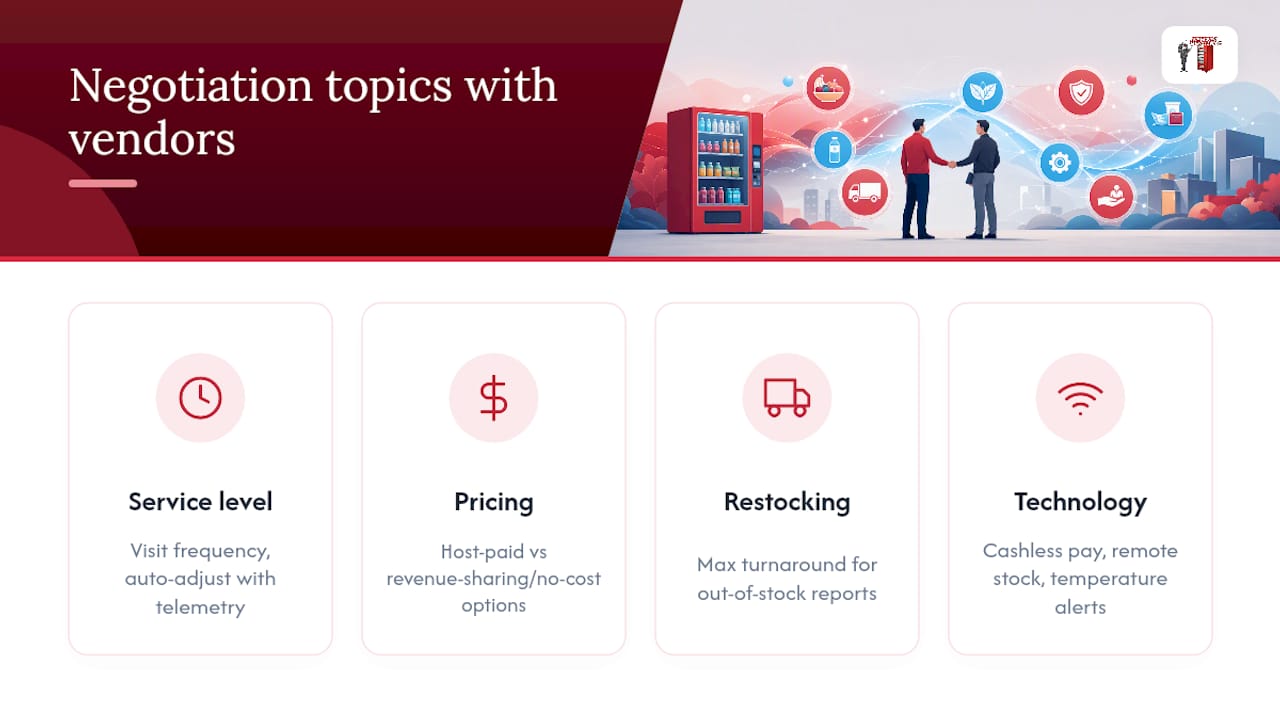
Service level covers how often a driver actually visits, and whether that frequency adjusts automatically when telemetry shows a machine running low faster than expected. A flat weekly visit regardless of demand is a red flag for any location with refrigerated recovery items.
Pricing models vary more than most facility managers expect. Some vendors charge the host business directly; others, including no-upfront-cost providers, generate revenue purely from what end users purchase, meaning the host pays nothing for equipment or service. Confirm which model applies before assuming a quote includes hidden fees.
Restocking guarantees should specify a maximum turnaround time for an out-of-stock report, not just a general “we’ll get to it” promise. Ask what happens if a cooler fails over a weekend, since a slow response on a refrigerated recovery machine means spoiled inventory and an empty machine on Monday.
Technology integration is the piece that separates a modern proposal from an outdated one. Ask specifically whether the machines support cashless payment, remote stock monitoring, and temperature alerts, since those features are what make a fast-perishing recovery assortment operationally sustainable rather than a liability. A vendor who can’t answer clearly on telemetry is likely running an older fleet not built for this category.
What Challenges Come With Recovery Nutrition Vending?
Three problems show up repeatedly once a recovery assortment goes live: theft, perishability, and shifting consumer preferences.
Theft risk rises slightly with premium items simply because a $5 protein shake is a more attractive target than a $1.50 candy bar. Machines with reinforced locking mechanisms and cashless-only payment options reduce this risk, since cash-based machines are the more common target for tampering.
Perishability is the most persistent operational challenge. A shelf-stable protein bar forgives a missed restock visit; a refrigerated shake does not. The fix is procedural rather than technological alone: shorter service intervals for cooler-based machines, temperature alerts that flag a compressor issue before spoilage occurs, and a strict pull policy that moves near-date inventory to higher-velocity locations before it expires unsold.
Consumer trends shift faster in this category than in traditional vending. A plant-based protein bar that sells well this year can lose shelf space to a new RTD format within eighteen months, so locking into a rigid five-year supply contract for specific SKUs is a mistake. Building flexibility into a vendor agreement, room to swap brands or formats based on sell-through data, protects against betting the whole assortment on a trend that fades. Reviewing sales data monthly rather than quarterly catches these shifts early enough to act on them.
Why Start Small When Piloting Recovery Vending?
Every successful recovery vending program I’ve seen described starts the same way: a small assortment, real telemetry, and a weekly review of what actually sold. Skipping straight to a full-machine overhaul is how operators end up with a cooler full of expired shakes and a host business asking hard questions.
A provider that installs equipment at no cost to the host removes the biggest source of hesitation facility managers have. There’s no capital outlay to justify internally before you even know if the location supports recovery-focused demand. That’s the argument for treating the first month as a genuine test, not a commitment.
— Gary
How Jeeves Vending Builds Recovery-Focused Programs
Jeeves Vending runs recovery nutrition pilots the way this article describes: small tailored assortments, telemetry that flags low stock and cooler temperature issues, and a fast restocking cadence built around what a location actually needs.
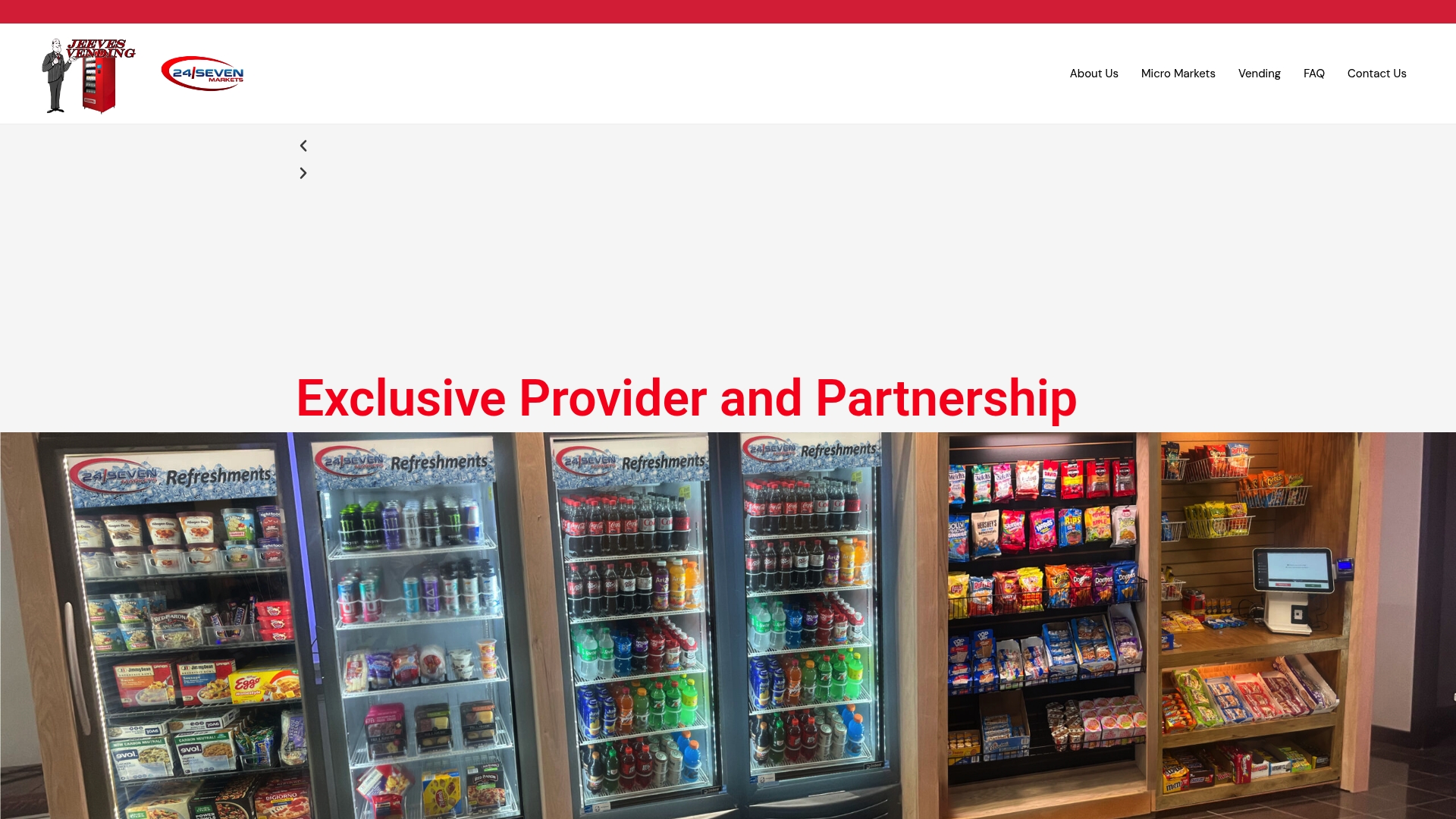
A typical pilot starts with a site walk to assess foot traffic and existing wellness programs, followed by installation of a machine or micro-market stocked with a mix weighted toward protein bars, RTD shakes, and electrolyte drinks. Jeeves Vending covers the equipment cost, so there’s no upfront investment for the host business to approve before testing demand. Within the first few weeks, restocking data shows which SKUs are moving and which need swapping, and the assortment adjusts from there rather than staying frozen from day one.
For gyms specifically, a pre-built protein-first mix shortens the setup process considerably. Offices, hospitals, and schools each carry different service cadence needs, and Jeeves Vending tailors restocking frequency by site type instead of applying one universal schedule.
If your location has the foot traffic to support it, the next step is a straightforward one: request a vending machine or micro-market assessment and see what an assortment tailored to your site actually looks like before committing to anything.
Sources
- Protein Snacks: Trends Fueling the Category’s Growth | NAMA
- Healthy Vending Machines: The Honest Operator’s Guide to Making It Work
- Smart Vending for Corporate Wellness