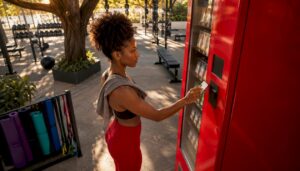

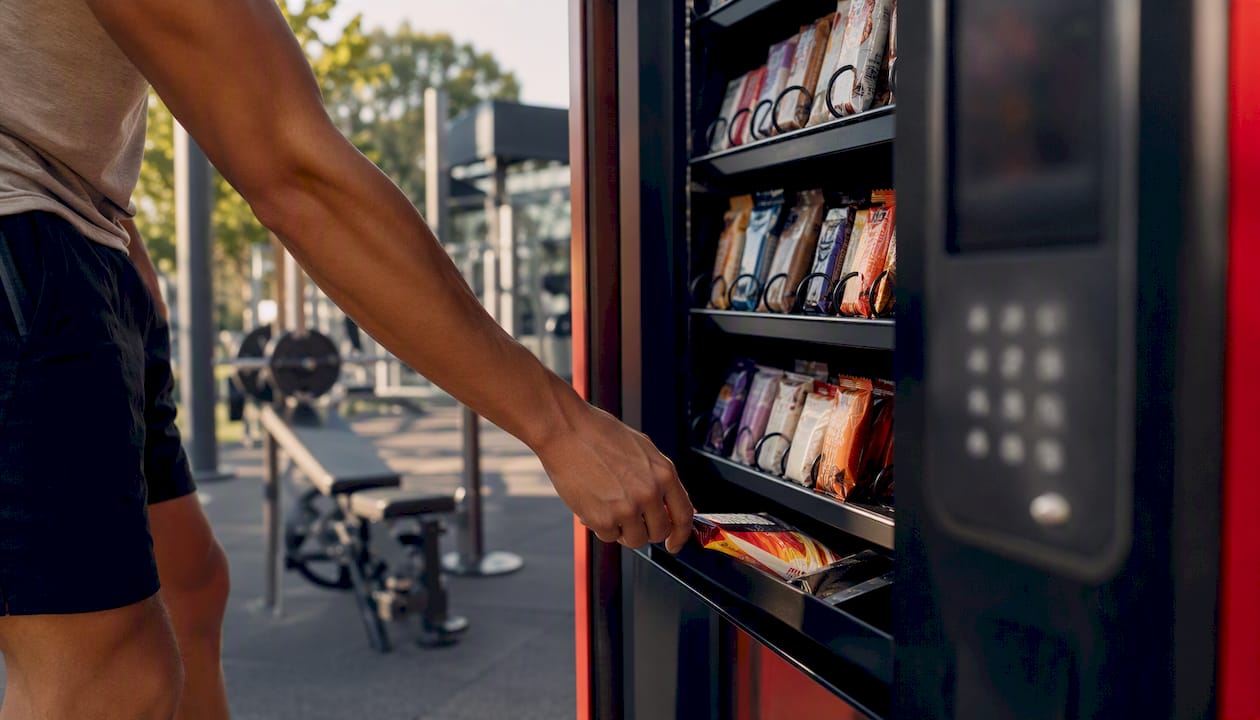
Stock your gym vending machine with a protein-forward, hydration-first mix and you cover what most members actually need after a workout: fast recovery fuel and rehydration. The core categories to start with are:
- Protein bars (Quest Bars and similar high-protein formats)
- Ready-to-drink (RTD) protein shakes, chilled
- Beef jerky and other savory high-protein snacks
- Mixed nuts and trail mix
- Electrolyte drinks (Gatorade and comparable sports drinks)
- Bottled water (still and sparkling)
- Low-sugar energy drinks
- Refrigerated fresh items: Greek yogurt cups, cottage cheese, or chilled RTD shakes
The U.S. Dietary Guidelines support protein and hydration as the two pillars of post-workout recovery. Jeeves Vending builds gym machine mixes around exactly this framework, with remote monitoring to keep the right SKUs in stock.
Key Takeaways
| Point | Details |
|---|---|
| Lead with protein and hydration | Stock protein bars, RTD shakes, jerky, electrolyte drinks, and water before anything else. |
| Pilot five SKUs first | Test protein bar, RTD shake, Gatorade, water, and jerky for two to three weeks before expanding. |
| Price at around double wholesale | Blended margins around half are achievable; water and jerky often run higher. |
| Placement beats product selection early | Near exits and locker rooms outperforms a back hallway regardless of what’s inside the machine. |
| Jeeves Vending | Provides no-cost installation, remote monitoring, and tailored SKU curation for gyms in the Dallas-Denton area. |
Table of Contents
- What gym vending snacks actually belong in your machine?
- Specific SKUs to pilot first
- Pricing and profitability: the math gym owners need
- Placement and machine type: where you put it matters as much as what’s in it
- Stocking, rotation, and food safety
- Match the mix to your members
- Sample slot plans for 20- and 36-slot machines
- How a vending partner optimizes your gym machine
- What actually surprises new gym vending operators
- Jeeves Vending fits gyms that want this done right
- Sources
What gym vending snacks actually belong in your machine?
Not every snack category earns its slot. Here is how the main categories break down by member need and vending practicality.
Protein bars are the workhorse SKU. They are shelf-stable, high-margin, and satisfy the post-workout protein window that most members are chasing. Quest Bars, for example, deliver 20+ grams of protein with low sugar, which aligns with what Healthline identifies as the hallmarks of a portable, nutrient-dense recovery snack.
RTD protein shakes command a higher price point and move well when chilled. They require a refrigerated unit or smart cooler, but the margin per unit tends to justify the equipment investment.
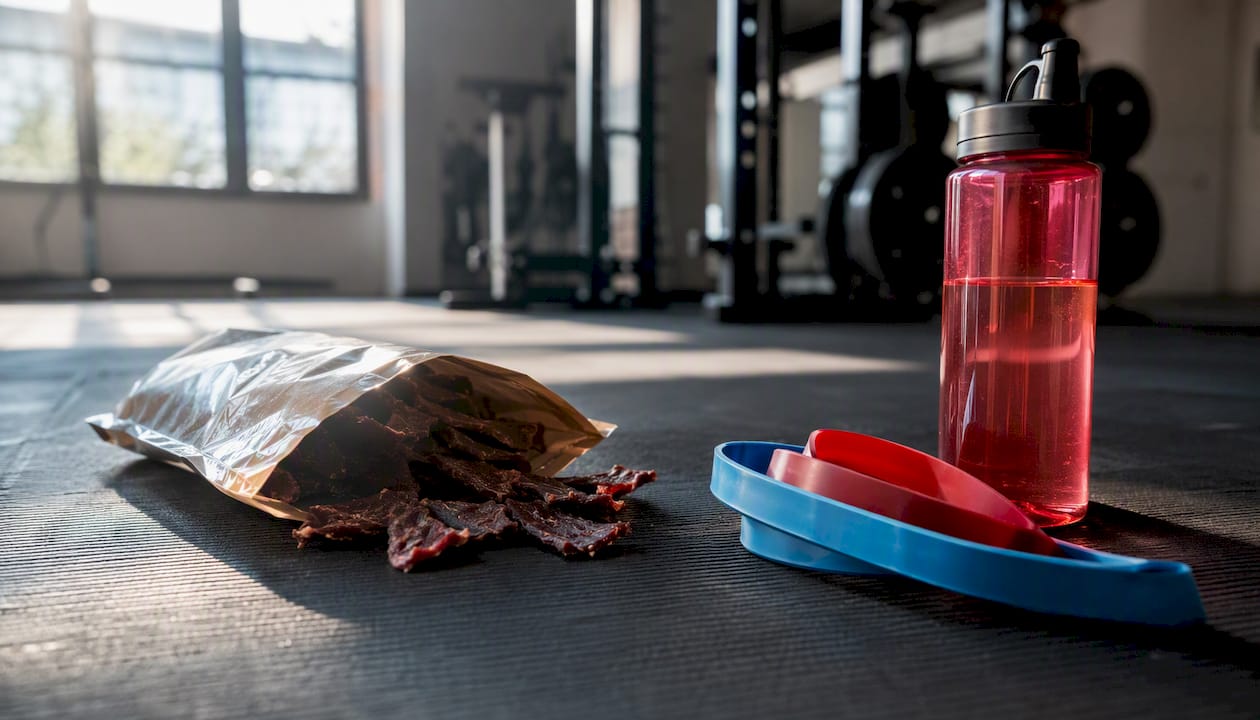
Beef jerky is underrated in gym settings. A single one-ounce serving delivers roughly 9 grams of protein, it needs no refrigeration, and it has a long shelf life. Savory options also appeal to members who are tired of sweet bars.
Nuts and trail mix serve the pre-workout crowd. A small handful of almonds or a mixed nut pack 30 minutes before a session fits the lighter pre-workout snack timing that Abbott Nutrition recommends for members who train within an hour of eating.
Electrolyte drinks and sports drinks like Gatorade are consistent best-sellers in cardio-heavy gyms. They address rehydration directly and members recognize the brands on sight.
Bottled water sounds obvious, but it is often under-stocked. It is your highest-volume, fastest-turning SKU and anchors the hydration side of the machine.
Low-sugar energy drinks serve the pre-workout and early-morning segments. Keep sugar content visible on the label; members in fitness-focused gyms read it.
Refrigerated fresh items (Greek yogurt, cottage cheese cups, or prepared snack packs) add a premium tier. EatingWell’s post-workout snack research targets at least 7 grams of protein per serving for recovery, and most Greek yogurt cups clear that bar easily.
Pro Tip: Swap one or two candy-bar slots for a second protein bar variety. The margin per unit is similar or better, and the product fits your members’ actual goals.
Specific SKUs to pilot first
Before you fill 36 slots, test a tight set. Here are the categories and example SKUs gym operators typically pilot in U.S. gyms, with storage requirements and pack-size notes.
| Category | Example SKU Type | Fridge Required? | Typical Pack Size |
|---|---|---|---|
| Protein bar | Quest Bar (variety) | No | pack |
| RTD protein shake | Bottled ready-to-drink shake (20–30g protein) | Yes | pack |
| Electrolyte drink | Gatorade | No (sells better cold) | case |
| Beef jerky | 1-oz individual jerky pack | No | count |
| Mixed nuts | oz nut pack | No | 48-count box |
| Greek yogurt cup | oz single-serve cup | Yes | case |
| Low-sugar energy drink | can, low sugar | No (sells better cold) | case |
For a first pilot, start with five SKUs: a protein bar, an RTD protein shake, Gatorade, bottled water, and beef jerky. Run them for two to three weeks and track which slots go empty first. Empty slots are your signal to double down; slow movers get replaced. Protein-forward SKUs consistently rank among the fastest-turning items in gym settings.
Pricing and profitability: the math gym owners need
Vending margin math is straightforward once you know your wholesale cost.
Common wholesale and retail pricing ranges exist for gym vending items such as protein bars, RTD protein shakes, Gatorade, beef jerky, and bottled water, with margins typically around half or more, varying by category.
A worked example for a mid-size gym with a typical level of membership and vending activity illustrates that consistent weekly and monthly gross revenues and profits can be generated from one vending machine, depending on average purchase frequency and ticket size.
A few pricing tactics that hold up in practice include using round numbers such as two, three, and five dollars to reduce hesitation, bundling a protein bar and water at a slight discount to lift average transaction value, and reviewing margins quarterly as wholesale prices shift to adjust retail prices accordingly.
Tracking checklist: log cost per unit, retail price, units sold per week, and revenue per slot. A simple spreadsheet works fine until you have remote monitoring in place.
Placement and machine type: where you put it matters as much as what’s in it
Operators report double-digit sales lifts after repositioning machines to higher-footfall corridors. The best placement spots in a gym:
- Near the main exit or lobby (catches members on the way out, post-workout)
- Adjacent to locker rooms (high-traffic, natural pause point)
- By the front desk or check-in area (impulse purchase zone)
- Near group fitness studios or waiting areas (class crowds cluster here)
Machine type should match your gym’s profile. A combo unit (snacks + drinks in one machine) works well for general-purpose gyms. A drink-only machine suits high-cardio environments like cycling studios or boxing gyms where hydration is the primary need. A refrigerated unit or smart cooler is worth the investment if you plan to carry RTD protein shakes and fresh items; the refrigerated capability expands your menu significantly and supports higher price points.
Payment friction kills sales. A machine that only takes cash in 2026 is leaving money on the table. Cashless readers, tap-to-pay, and mobile wallet support (Apple Pay, Google Pay) are now table stakes. Members who just finished a workout rarely have cash on them.
Heat drives hydration purchases, and a sold-out Gatorade slot is a missed sale.*
For more on vending machine placement principles that transfer directly to gym environments, the same visibility and footfall logic applies.
Stocking, rotation, and food safety
Fresh and refrigerated items require a tighter process than shelf-stable snacks. The core practice is FEFO: First Expired, First Out. When you restock, pull older product to the front and load new stock behind it.
Daily and weekly checklist:
- Check refrigeration temperature (RTD protein shakes and dairy items: 35–40°F).
- Scan expiration dates on all refrigerated items; pull anything within 48 hours of expiry.
- Confirm shelf-stable items have at least 30 days remaining; rotate accordingly.
- Wipe down machine surfaces and glass.
- Log any items pulled for waste tracking.
Allergen and dietary labeling: members with dietary restrictions look for signals before they buy. Flag vegan, gluten-free, and nut-free items either on the product packaging (most commercial SKUs already do this) or with a small label or sticker on the machine slot. If your machine has a digital display, use it to show key dietary flags.
Pro Tip: Remote inventory monitoring removes the guesswork. Instead of discovering an empty protein shake slot on Tuesday when you restock Thursday, you get an alert and can adjust the schedule. Jeeves Vending’s machines include this capability as standard.
Match the mix to your members
A CrossFit box and a yoga studio share a zip code but need different machines. Segment your members before you finalize the mix.
Common segments and what they buy:
- Early-morning cardio members: bottled water, low-sugar energy drinks, light pre-workout snacks (nuts, a small bar). They are often in a hurry and price-sensitive.
- Evening lifters: RTD protein shakes, protein bars, jerky. They have more time and will spend $4–$5 on a quality recovery item.
- Group fitness class attendees: electrolyte drinks, water, and lighter snacks. They tend to buy immediately after class.
Pre-workout snack timing matters here. Members who train in the morning often skip breakfast and want something light 30 minutes before they start. Members who train in the evening have already eaten and are focused on recovery after.
Daypart strategy:
- Morning (5–10 AM): stock water, energy drinks, and light snack options prominently.
- Midday (10 AM–2 PM): balanced mix; this crowd is often on a lunch break and may want a fuller snack.
- Evening (4–9 PM): weight toward protein bars and RTD shakes; this is your highest-value purchase window.
Mini-experiment: swap two slots between a morning-focused SKU and an evening-focused SKU for two weeks. Compare sell-through rates before and after. Two weeks gives you enough data to make a confident call without over-committing.
Sample slot plans for 20- and 36-slot machines
20-slot planogram
36-slot planogram
Restock cadence: weekly for low-traffic gyms (under 150 daily visits), twice-weekly for mid-size gyms, daily for high-traffic slots (water, Gatorade) in large facilities.
Restock checklist:
- Pull expired or near-expired items.
- Rotate remaining stock to the front.
- Load new product behind existing stock.
- Log units added per slot.
- Note any slots that were empty before restock (out-of-stock event).
KPIs to track: sell-through rate per SKU (units sold / units stocked), out-of-stock events per week, and revenue per slot per month.
Pro Tip: A self-checkout micro-market is worth considering once your gym exceeds 300 daily visits. It expands fresh-item capacity well beyond what a standard vending machine can hold.
How a vending partner optimizes your gym machine
The difference between a vending machine that collects dust and one that generates consistent revenue usually comes down to the operator behind it. A good partner handles the complexity so you do not have to.
Jeeves Vending’s model for gyms in the Dallas-Denton region covers the full stack: no upfront installation cost, remote inventory monitoring, tailored product curation for your member profile, refrigerated unit options, and local restocking. The gym vending product variety approach Jeeves Vending uses starts with a site survey and builds from there.
Vendor checklist for evaluating any vending partner:
- Site survey: do they visit and assess foot traffic, power access, and placement options before recommending a machine?
- Machine type recommendation: do they match the unit to your gym profile (combo, drink-only, refrigerated)?
- Initial pilot SKUs: do they propose a data-driven starting mix rather than a generic one?
- Payment configuration: cashless, mobile wallet, and card support included?
- Maintenance SLA: what is the guaranteed response time for a machine outage?
- Reporting cadence: do you get regular sell-through data, or are you flying blind?
Pro Tip: Run a 90-day pilot with defined success metrics before committing to a long-term arrangement. Set a target revenue per month, a maximum acceptable out-of-stock rate, and a check-in schedule (weekly for the first month, biweekly after). At 90 days, you have enough data to renegotiate the SKU mix or the machine type with confidence.
What actually surprises new gym vending operators
Most gym owners expect protein bars to be the top seller. They are not always. Bottled water and electrolyte drinks frequently outsell everything else in the first month, especially in cardio-heavy gyms. The protein bar sales build over time as members learn the machine is there and trust the product quality.
The other surprise: location matters more than product selection in the early weeks. Moving a machine from a back hallway to a spot near the exit can lift weekly sales noticeably, sometimes dramatically, without changing a single SKU. Get the placement right first, then optimize the mix.
Jeeves Vending fits gyms that want this done right
Zero upfront cost, a machine matched to your gym’s actual traffic, and a product mix built around your members’ recovery needs: that is what Jeeves Vending delivers to gyms in the Dallas-Denton region. You get refrigerated unit options for RTD protein shakes and fresh items, cashless payment as standard, and remote inventory monitoring so you are never caught with an empty slot on a busy Friday evening.
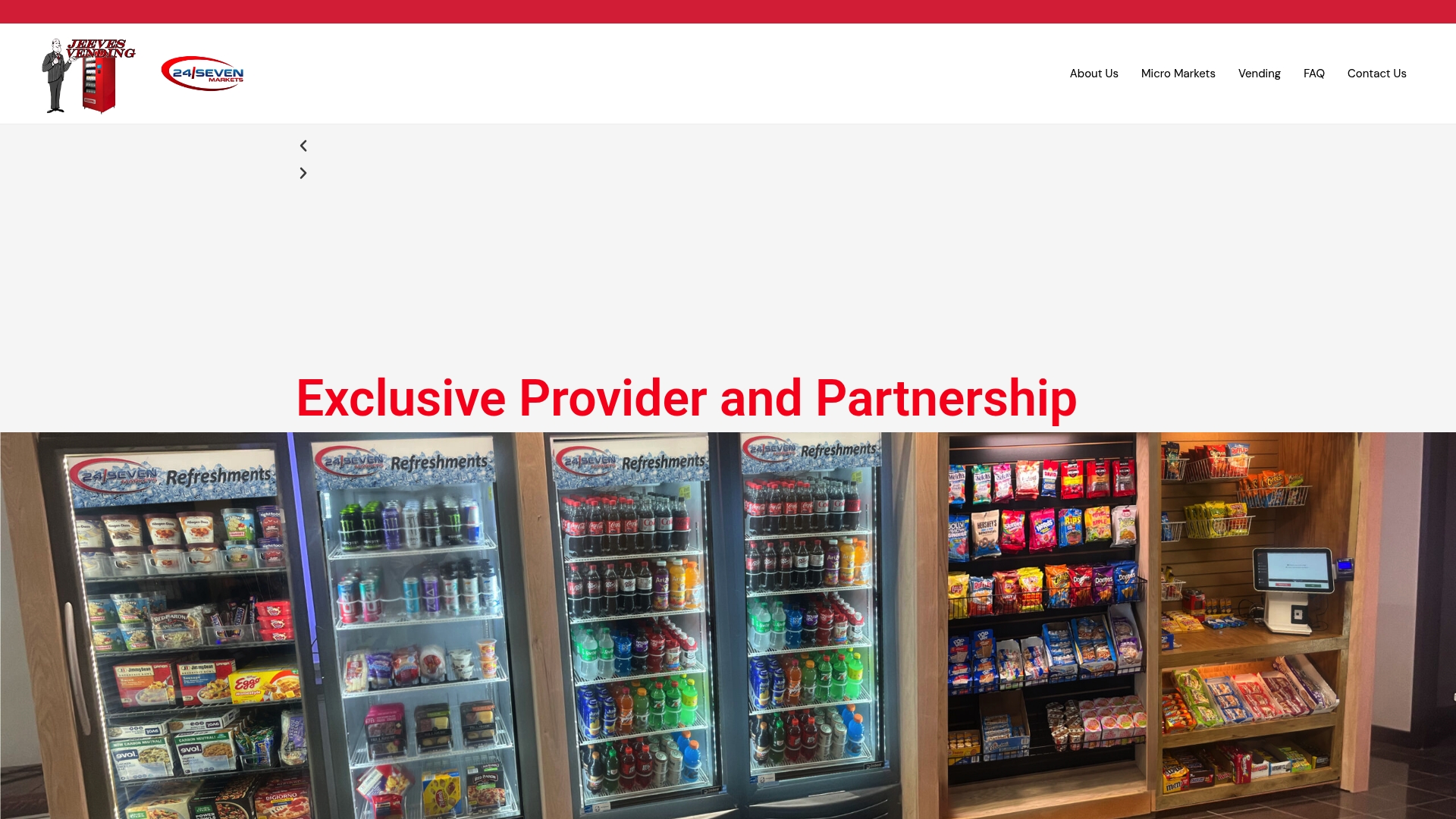
The modern vending machines and smart coolers Jeeves Vending installs are configured for your gym’s profile from day one, not retrofitted from a generic office setup. Operators who want to add a fresh-item tier can also explore a micro-market in Dallas for broader selection without the operational overhead of running a full café. Ready to see what fits your space? Call Jeeves Vending for a free site survey and a recommended starting mix.
Sources
Nutrition references:
- Healthy high-protein snacks — Healthline
- Healthy high-protein snacks — Verywell Health
- 25+ post-workout snack recipes for steady energy — EatingWell
- 5 snacks to eat before a workout — Abbott Nutrition (Nutrition News)
Operational references: